Is your houseplant outgrowing its pot, or does it simply need fresh soil? Learn to recognize crowded roots, choose the right container size, and match potting mixes to different plants. Follow practical repotting steps, avoid common mistakes, and help your indoor plants settle into their new growing environment.
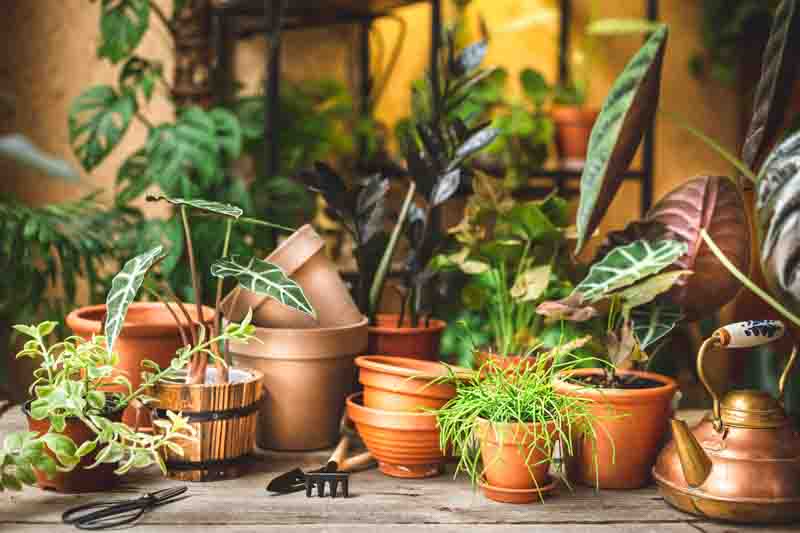


Your houseplant has been in the same pot for two years. Roots are appearing through the drainage holes, the soil seems to dry overnight, and new leaves are smaller than they used to be. Is it time for a bigger pot?
Perhaps. But repotting isn’t always about giving a plant more room. A root-bound Monstera may benefit from a larger container, while a Peace Lily growing in compacted soil might need fresh potting mix without any increase in pot size. A plant with damaged roots could even need a smaller pot.
Knowing when and how to repot houseplants means understanding what’s happening below the soil surface. This guide explains the warning signs, how to choose the right pot size and growing medium, and how to repot without unnecessarily disturbing healthy roots.
When should you repot a houseplant? Quick answer
Before buying a bigger pot: Inspect the roots. A healthy plant doesn’t necessarily need repotting just because a year has passed.
Rather than repotting every spring automatically, look for evidence that the roots or growing medium can no longer support healthy growth.
Check before acting: Gently slide the plant from its pot and examine the root ball. Firm, intact roots are generally reassuring, whether white, cream, tan, or naturally brown. Soft, collapsing, hollow, or easily detached roots are more concerning. Color alone does not establish whether roots are healthy.
Don’t repot based on yellow leaves alone. Wilting, leaf drop, and slow growth can result from watering problems, inadequate light, pests, or root damage. First determine whether the root system or growing medium actually needs attention.
Before selecting a replacement pot, Gardenia recommends considering four things: root health, root crowding, growing-medium condition, and the plant’s desired size. The answers determine whether to repot and what kind of repotting is appropriate.
| What you find | What it means | Best next step |
|---|---|---|
| Healthy, crowded roots | The plant has outgrown its root space | Size up one appropriate pot size |
| Healthy roots, exhausted mix | The medium needs renewal, not necessarily more space | Stay the same size and replace deteriorated mix |
| Few surviving roots, oversized wet pot | Root loss and excess moisture retention | Consider sizing down and correcting the medium |
| Healthy roots, suitable mix, vigorous growth | No clear repotting problem | Leave the plant alone |
| Top-heavy plant, roots not crowded | A stability issue rather than a root-space issue | Add support or a stable cachepot |
For example, a Peace Lily packed with firm roots may benefit from a modestly larger pot. The same species with only a few healthy roots remaining in soggy soil needs a different response: better aeration and a container suited to its reduced root system.
Keeping a plant compact: Some healthy, established plants tolerate division or selective root pruning so they can remain in the same container. But aggressive root reduction is not appropriate for every species, particularly sensitive or already stressed plants.
Spring is usually ideal for common tropical foliage plants such as Monstera, Pothos, and Peace Lily. Increasing daylight encourages active growth, helping healthy roots establish in fresh potting mix.
Early summer also works well. Plants growing actively under stable indoor conditions can often be repotted at other times when necessary.
However, repotting during severe drought, cold stress, or active flowering can add unnecessary strain. When possible, wait until conditions improve or flowering finishes.
When shouldn’t you wait? If the medium has badly decomposed, the roots are deteriorating, or drainage is seriously compromised, prompt corrective action may be more important than the season.
Not automatically. A healthy plant in suitable nursery mix with adequate drainage can often remain in its original container while it adjusts to your home.
Check more carefully if roots are severely crowded, the pot has no effective drainage, or the medium stays persistently saturated. Orchids are a special case because their nursery medium may differ significantly from the conditions you’ll provide at home.
For most healthy, root-bound houseplants, a pot approximately 1-2 inches (2.5-5 cm) wider than the current one is a sensible starting point. A small plant often needs only a 1-inch increase.
But don’t choose based on the foliage alone. A tall Dracaena with a modest root ball may need additional support rather than an enormous pot. A damaged plant with relatively few remaining roots may be better suited to a smaller container.
| Situation | Pot choice |
|---|---|
| 4-inch pot with crowded healthy roots | Usually 5-6 inches |
| 8-inch pot with crowded healthy roots | Usually 9-10 inches |
| Healthy roots, degraded medium | Often the same size |
| Severe root loss | Consider smaller, according to surviving roots |
| Top-heavy, adequately rooted plant | Stable outer container or support may suffice |
Unused potting mix may remain wet longer than the roots can tolerate, particularly in cool, dim conditions. This is one reason pot size and drainage should be chosen together.
Drainage holes matter. Most houseplants are easier to manage in pots with drainage. A decorative pot without holes works best as an outer cachepot around a removable nursery container.
Adding gravel to the bottom does not improve drainage through the growing medium. Use a properly draining pot and suitable mix instead.
The right mix holds enough water for the plant while leaving air around its roots. That balance varies considerably between a fern, a drought-tolerant succulent, and an epiphytic orchid.
| Plant type | Suitable mix | What matters most |
|---|---|---|
| Monstera, Pothos, Philodendron | Well-aerated indoor mix, with bark and perlite or pumice as needed | Moisture with good aeration |
| Peace Lily, Boston Fern | Moisture-retentive, porous indoor mix | Even moisture without saturation |
| Snake Plant, ZZ Plant | Well-drained mix with suitable mineral components | Avoid prolonged wet conditions |
| Jade, Aloe, desert cacti | Gritty, suitably fast-draining succulent mix | Drainage and seasonal drying |
| Phalaenopsis orchids | Orchid bark or suitable sphagnum-based orchid medium | Root aeration matched to conditions |
| African Violets | Light, porous African Violet mix | Consistent moisture and drainage |
What do the ingredients do? Coir and peat-based components retain moisture; perlite and pumice contribute to porosity; bark creates larger air spaces. The finished mix matters more than any one ingredient.
Avoid using ordinary garden soil straight from the yard. It can compact in containers and may introduce unwanted pests or disease organisms.
For most healthy tropical houseplants, the process is straightforward if you prepare the new pot and medium before removing the plant.
Usually not from a healthy tropical root ball. Preserving much of the intact medium reduces disturbance. Remove loose, decomposed, or unsuitable material as necessary.
For orchids: Carefully remove deteriorated bark or moss when renewing their specialized medium.
For root damage: Remove clearly rotten tissue and enough degraded medium to assess and correct the problem. Handle remaining healthy roots gently.
Gardenia’s root-handling rule: Disturb healthy roots as little as the job allows. A severely root-bound plant may need selective loosening or cutting, but stripping all the soil from every plant is not a standard repotting requirement.
These vigorous plants often benefit from modestly larger pots when roots become congested. Use an airy medium, protect healthy aerial roots, and stabilize climbing supports. Explore Gardenia’s Monstera profile for its mature habit and growing requirements.
Their fleshy roots and rhizomes make prolonged saturation particularly undesirable. Use appropriately sized containers and porous mixes. Crowded clumps may be divided when healthy. See Gardenia’s ZZ Plant care guide.
Preserve moisture-loving roots while working. Healthy crowded clumps may be divided, while deteriorated media should be replaced with porous, moisture-retentive mixes. Learn more in Gardenia’s Boston Fern profile.
Protect fleshy stems and roots, and use a suitably fast-draining mix. Freshly cut or damaged roots may need time to dry and heal before watering. The appropriate interval varies by species and extent of injury. See Gardenia’s Succulent care guide.
Repot when the medium deteriorates or root condition requires it. New root growth is an especially useful timing cue, often following flowering, because newly developing roots can establish in fresh medium.
An orchid may need new bark or sphagnum without a larger pot. Choose container size according to its healthy roots, and never assume every orchid needs the same watering method afterward. For detailed instructions, visit Gardenia’s How to Repot an Orchid.
Most healthy plants recover well when root disturbance is limited. Others may need several weeks to establish, especially after extensive trimming or treatment of damaged roots.
Mild temporary wilting can follow root disturbance, especially in thin-leaved tropical plants. But severe or worsening drooping deserves investigation.
If the root ball is dry, the plant may need water. If the mix remains saturated, inspect drainage and root health rather than automatically watering again.
Watch for serious root problems: Persistent wilting in wet soil, a soft stem base, rapidly deteriorating foliage, or roots that collapse when touched are not normal signs of healthy establishment. Diagnose the cause promptly.
Before repotting because of yellow leaves or wilting, consider other causes. Gardenia’s Peace Lily yellow-leaf diagnosis shows why symptoms alone do not prove that a plant needs a new container.
Successful repotting isn’t about moving every houseplant into a bigger container. It’s about improving the growing conditions around its roots.
Inspect their health and space, evaluate the potting mix, and decide whether the plant needs a larger pot, fresh medium, a smaller container, or no change at all.
Gardenia’s Repotting Decision Guide helps you decide what action to take. Your next step is to check the requirements of the actual species you’re growing.
Examine the roots, select the appropriate pot and mix, and give your plant the conditions it needs to establish.
Inspect the root ball for densely crowded roots, very little remaining potting mix, or deteriorating medium. Rapid drying can also indicate root crowding. One root emerging from a drainage hole is not proof that repotting is necessary.
Spring or early summer is usually best for common tropical houseplants because active growth supports root establishment. Serious root damage or badly deteriorated medium may require repotting at other times.
For most healthy root-bound houseplants, increase pot diameter by about 1-2 inches (2.5-5 cm). Smaller plants usually need the smaller increase. A larger pot may not be necessary if only the growing medium needs replacing.
Usually not for a healthy tropical plant. Preserve much of the root ball and gently remove loose or degraded material. Orchids in decomposed media or plants with severe root damage may require more extensive replacement.
Healthy tropical foliage plants can generally be watered thoroughly after repotting, then drained. Succulents with injured roots, some orchids, and plants with serious root damage may need different treatment. Follow the species and condition of the growing medium.
Yes. If the pot still accommodates healthy roots, you can replace deteriorating medium without increasing container size. Suitable established plants may also be divided or selectively root-pruned, but not all species tolerate root pruning equally well.
Updated and reviewed by Gardenia: October 2026
| Plant Type | Houseplants |
|---|---|
| Genus | Dracaena, Epipremnum, Monstera, Phalaenopsis, Philodendron |
| Plant Type | Houseplants |
|---|---|
| Genus | Dracaena, Epipremnum, Monstera, Phalaenopsis, Philodendron |
Create a membership account to save your garden designs and to view them on any device.
Becoming a contributing member of Gardenia is easy and can be done in just a few minutes. If you provide us with your name, email address and the payment of a modest $25 annual membership fee, you will become a full member, enabling you to design and save up to 25 of your garden design ideas.
Join now and start creating your dream garden!