Phylloxera is a destructive pest of grapevines that attacks vine roots and leaves, causing galls and weakening plants. This vineyard pest severely affects fruit production in wine and table grape cultivation. Understanding symptoms, rootstock resistance, and vineyard management helps prevent infestations and protect healthy grape harvests.


Phylloxera is one of the most destructive pests in grape-growing history. The species, Daktulosphaira vitifoliae, is a tiny aphid-like insect that attacks grapevines by feeding on roots and, in some forms, on leaves. Its greatest economic impact comes from root feeding, which weakens vines, reduces water and nutrient uptake, invites secondary infection, and can eventually kill susceptible vines.
The pest is infamous for triggering the 19th-century vineyard collapse that transformed European viticulture. After phylloxera was introduced from North America on infested plant material, it spread through major wine regions and destroyed vast areas of ungrafted vines. The solution that reshaped modern grape production was grafting vulnerable grape varieties onto resistant or tolerant rootstocks.
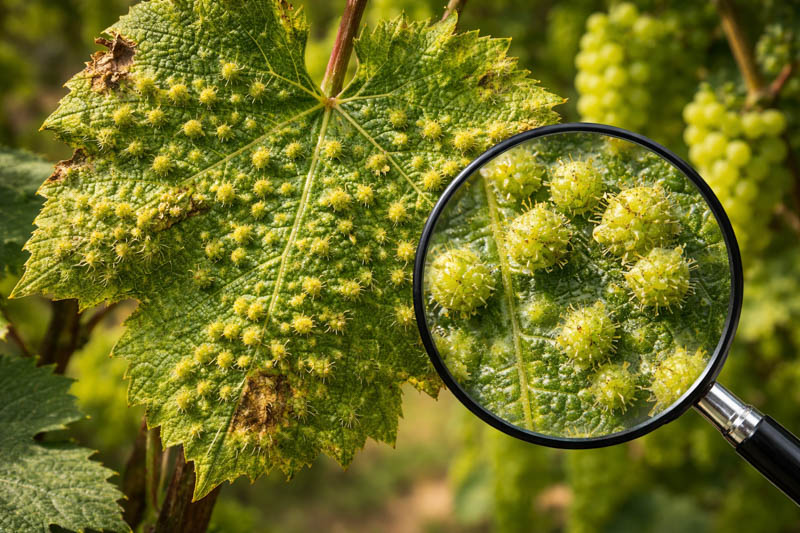
Phylloxera damages grapevines in two main ways: by feeding on roots underground and by inducing leaf galls above ground. Leaf galls are visible and useful for diagnosis, but root infestations are usually far more serious. That is the key distinction growers must understand: leaf injury is noticeable, but root damage is what turns phylloxera into a long-term vineyard threat.

Phylloxera originated in North America and is now established in many grape-growing regions around the world. Once it becomes established in a vineyard area, it is extremely difficult to eliminate. That is why phylloxera is not just a pest issue – it is also a biosecurity issue for the grape industry.
Its impact is not the same everywhere. Soil type, planting material, vineyard history, and rootstock choice all influence how destructive an infestation becomes. Vineyards planted to own-rooted Vitis vinifera are especially vulnerable, while vineyards planted on resistant or tolerant rootstocks are much better protected.
Phylloxera damage begins with feeding. The insect uses piercing-sucking mouthparts to feed on grapevine tissue. In leaves, this feeding stimulates gall formation. In roots, it causes swelling and deformation on young feeder roots and creates necrotic wounds on older roots. These injuries reduce root efficiency and open the way for secondary fungi and other decay organisms.
This is why phylloxera is far more serious than a minor sap-feeding pest. It physically alters root structure, disrupts the vine’s uptake system, and triggers a slow decline in vigor and productivity. Infested vines often become less resilient under drought, nutrient stress, and crop pressure because the root system is no longer performing properly.
In practical vineyard terms, phylloxera is costly because it often works quietly underground. By the time a block shows pale foliage, shortened internodes, reduced vigor, or chronic underperformance, root damage may already be well advanced. That hidden progression is one reason the pest has such a long reputation for causing expensive vineyard decline.
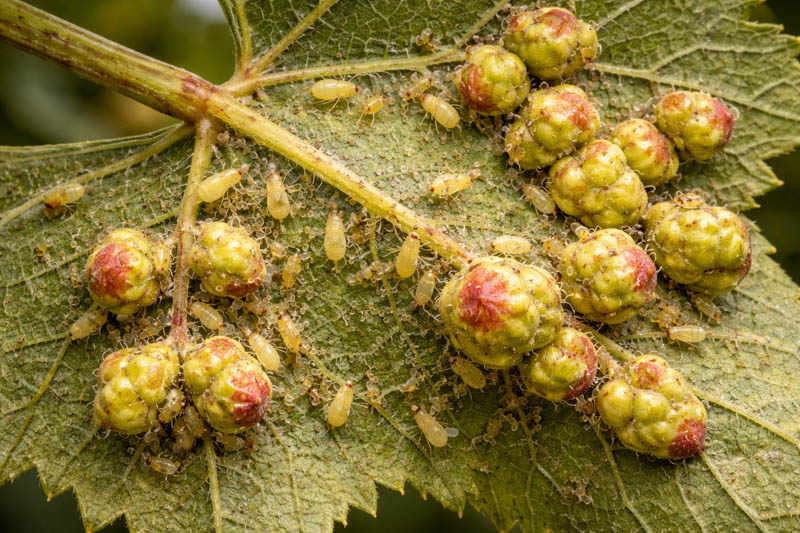
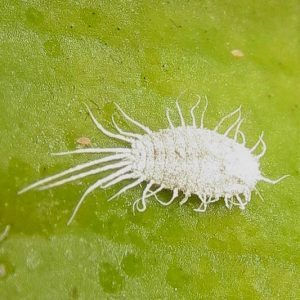
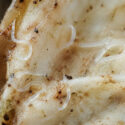
Phylloxera is tiny, so it is usually identified through symptoms and feeding signs rather than by spotting the insect first. Individuals are generally yellowish to brownish and less than 1 millimeter long. They resemble aphids, but their vineyard importance comes from their specialized relationship with grapevines.
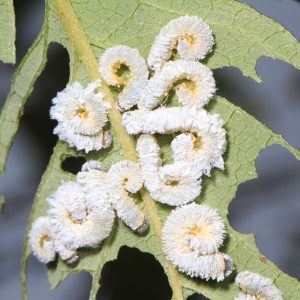
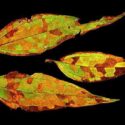
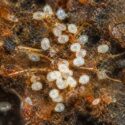
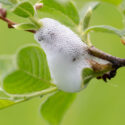
On leaves, phylloxera appears as blister-like galls, often most noticeable on the underside of the leaf. On roots, the signs are more serious and more diagnostic: young feeder roots may show swollen, clubbed tips, while older roots can develop rough, necrotic feeding sites that later decay. Root symptoms matter most because they are the ones tied directly to declining vine performance.
The phylloxera life cycle is complex, involving root-feeding and leaf-galling forms as well as both sexual and asexual reproduction. In many vineyard settings, phylloxera overwinters on roots as immature stages, then resumes feeding and reproduction when conditions become favorable. Multiple generations can occur in a single year, which helps explain how infestations build over time.
The full life cycle is not expressed in exactly the same way in every region. Leaf-galling forms may be more obvious in some areas, while root infestations are the dominant economic issue in others. Winged forms can occur, but local spread through soil, roots, equipment, boots, and plant material is often more important in vineyard management than dramatic long-distance movement.
This matters because phylloxera is not usually a one-season surprise. It is a pest that builds generation after generation, often below ground, until vine performance begins to slip. By the time symptoms become obvious, the infestation may already be well established.
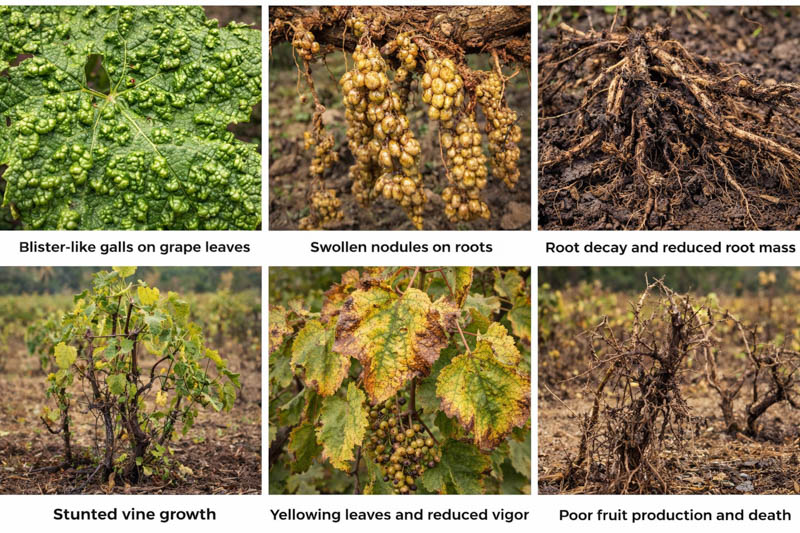
Symptoms vary depending on whether the pest is feeding on leaves or roots, but the most serious losses come from root injury. Leaf galls are visible and useful diagnostically. Root damage is far more destructive because it directly reduces the vine’s ability to function and can remain hidden until a vineyard block begins to underperform.
Aboveground symptoms often include slow growth, uneven vine size, weak shoots, and reduced vigor. In some vineyards, affected vines may resemble plants suffering from potassium deficiency, water stress, or generalized root trouble. That is one reason phylloxera is often missed early: the canopy symptoms are real, but they are not unique until the roots are inspected.
Phylloxera can resemble nutrient deficiency, drought stress, root disease, or general vine decline. That is why it is so often underestimated. Pale foliage, weak shoot growth, and lower yield are all real phylloxera symptoms, but none of them are exclusive to phylloxera.
The distinguishing feature is the presence of characteristic leaf galls or root feeding injury, especially swollen feeder roots and necrotic root lesions. Unlike a simple nutrition problem, phylloxera is a living pest that keeps feeding, reproducing, and spreading. A vineyard that treats only the visible stress symptoms without addressing rootstock vulnerability or infested planting material may solve nothing at all.
Effective phylloxera management starts with smart scouting. Monitor weak, uneven, or chronically underperforming vines. Look for suspicious leaf galls where they occur, but do not stop there. When a block shows unexplained stunting, pale foliage, reduced vigor, or poor uniformity, root inspection becomes essential.
Monitoring matters most in young plantings, replant sites, and vineyards with known regional pressure. It also matters where vineyard traffic, replant activity, or planting material movement could spread the pest from one area to another. Scouting is not only about confirming damage. It is also about protecting cleaner blocks from becoming future problem blocks.
Phylloxera spreads more easily than many growers realize. It can move locally in soil and on roots, and it can be carried between vineyard sites on machinery, tools, boots, planting material, and other contaminated pathways. In some cases, winged forms also occur, but day-to-day spread within and between vineyards is often tied more directly to human activity and plant movement.
That is why sanitation is not a minor add-on. It is a practical part of vineyard protection. A clean block can become infested if contaminated soil or planting material is introduced, especially during establishment, replanting, or heavy equipment movement.
The yield impact of phylloxera can be severe because damaged roots cannot support normal vine performance. As root injuries accumulate, vines absorb water and nutrients less efficiently, grow less vigorously, and carry crop less effectively. The result is lower yield, weaker canopy performance, and reduced consistency across the block.
Fruit quality can decline as well. Stressed vines often struggle with ripening balance, which can mean smaller crops, uneven development, and lower vineyard uniformity. In severe infestations, the issue is not just reduced quality for one season. It is the progressive loss of productivity across multiple seasons, often followed by expensive replanting.
The most dependable long-term phylloxera control strategy is the use of resistant or tolerant rootstocks. Modern vineyards rely on grafting susceptible scion varieties onto rootstocks derived largely from North American grape species that evolved alongside phylloxera. That is the foundation of durable control, not a secondary option.
Chemical control is limited. Because phylloxera feeds on roots underground, insecticide performance is often inconsistent and rarely as dependable as preventive planting decisions. In practical viticulture, resistant or tolerant rootstocks, clean plant material, and strict sanitation remain the cornerstone of management.
Phylloxera damage is usually worst when vineyards are planted on susceptible own roots, when infestations go unnoticed for years, and when vines are already stressed by drought, poor drainage, or heavy crop pressure. The pest is rarely dramatic at the beginning. It is a slow-building root problem that becomes obvious only after vine performance has already been compromised.
That is what makes it so dangerous. A vineyard can look slightly uneven one year, mildly weak the next, and clearly in decline after that. By the time the pattern is visible from the road, the root system may already be telling the full story.
Natural enemies may feed on phylloxera, but biological control plays only a limited practical role in commercial vineyards. The pest is protected by where it feeds – inside leaf galls or on roots in the soil – which reduces its exposure to predators and makes suppression unreliable.
For that reason, biological control is best viewed as incidental rather than central. It may contribute some background suppression, but it does not replace resistant rootstocks, clean planting material, sanitation, or careful scouting.
Preventing phylloxera begins before a vine ever goes into the ground. Vineyard planning should treat rootstock selection, nursery sourcing, site history, sanitation, and soil awareness as core pest-management decisions. In regions where phylloxera is present or possible, planting susceptible own-rooted vines is a risk with long-term consequences.
Use clean planting material, match rootstocks to site conditions, understand the soil profile, and avoid moving suspect soil or roots between properties. Prevention matters because once phylloxera is established, the practical solution is often not rescue – it is replanting on better rootstocks.
Bottom line:
Phylloxera is a destructive grapevine pest caused by the insect Daktulosphaira vitifoliae. Native to North America, it became one of the most consequential pests in wine history after devastating European vineyards. It damages vines primarily by feeding on roots, reducing vine vigor, yield, and long-term survival. The most dependable protection comes from resistant or tolerant rootstocks, clean planting material, sanitation, and site-aware vineyard management.
Create a membership account to save your garden designs and to view them on any device.
Becoming a contributing member of Gardenia is easy and can be done in just a few minutes. If you provide us with your name, email address and the payment of a modest $25 annual membership fee, you will become a full member, enabling you to design and save up to 25 of your garden design ideas.
Join now and start creating your dream garden!
Create a membership account to save your garden designs and to view them on any device.
Becoming a contributing member of Gardenia is easy and can be done in just a few minutes. If you provide us with your name, email address and the payment of a modest $25 annual membership fee, you will become a full member, enabling you to design and save up to 25 of your garden design ideas.
Join now and start creating your dream garden!