Arabian Jasmine, Mohle Flower, White-Flowered Indian Jasmine, Zambac, Sampa Gita
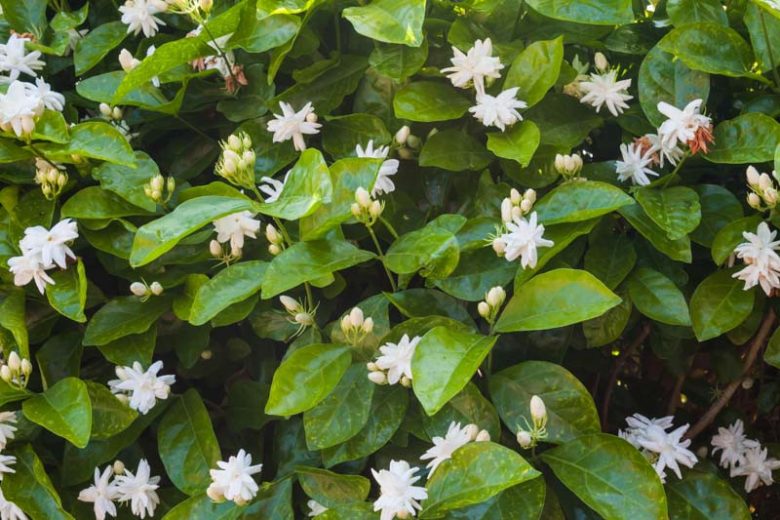


Jasminum sambac, commonly called Arabian Jasmine, is one of the most prized fragrant plants in the world. This evergreen jasmine is loved for its intensely perfumed white flowers, glossy green leaves, and long blooming season in warm conditions. It can be grown as a compact shrub, a loose scrambling plant, or a twining jasmine vine when given support. If your goal is not just flowers, but unforgettable fragrance, elegant evergreen structure, and a plant with real cultural significance, Arabian Jasmine is one of the finest jasmine species you can grow.
Jasminum sambac is a tropical evergreen jasmine shrub or vine grown for intensely fragrant white flowers that bloom through summer and often nearly year-round in warm climates. Plant it in full sun to part shade in fertile, well-drained soil, water regularly during active growth, reduce watering in winter, and prune lightly to shape and encourage repeat flowering.
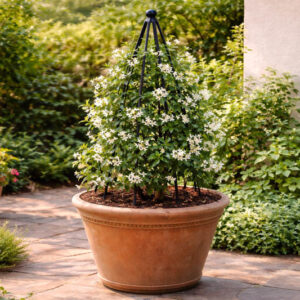
Use: Superb for containers, patios, courtyards, conservatories, porches, sunny windows, trellises, warm walls, and fragrant garden rooms.
Highlight: Intensely fragrant white flowers produced over a long season, often repeatedly in warm climates.
Design note: Plant it where people will actually pass by and notice it – near seating, entries, paths, or outdoor dining spaces.
| Botanical Name | Jasminum sambac |
|---|---|
| Family | Olive family (Oleaceae) |
| Common Names | Arabian Jasmine, Sambac Jasmine, Sampaguita, Pikake |
| Native Range | Native to Bhutan and India; widely cultivated across South, Southeast, and tropical Asia. |
| Plant Type | Evergreen shrub, shrubby vine, fragrant container plant, conservatory jasmine |
| Hardiness (approx. USDA) | Best in USDA Zones 9-11, with winter protection or indoor culture in cooler regions |
| Height | 6-10 ft. (1.8-3 m), sometimes taller in ideal frost-free climates |
| Spread | 6-10 ft. (1.8-3 m), depending on pruning and training |
| Sun Exposure | Full sun to part shade, with bright light for best flowering |
| Soil | Loose, fertile, humus-rich, evenly moist but well-drained soil |
| Bloom Time | Summer and sporadically beyond, often nearly year-round in warm climates |
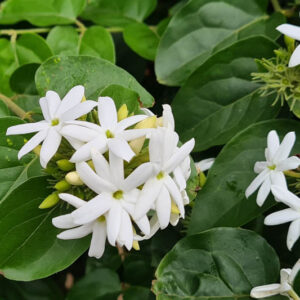
| Flower Color | Pure white flowers, sometimes aging to soft pink |
| Fragrance | Yes – richly sweet, powerful, and among the finest of all jasmine fragrances |
| Foliage | Glossy dark green simple leaves |
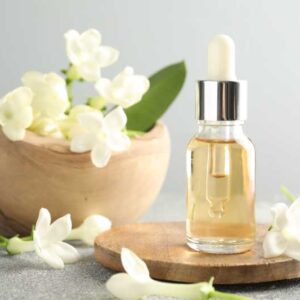
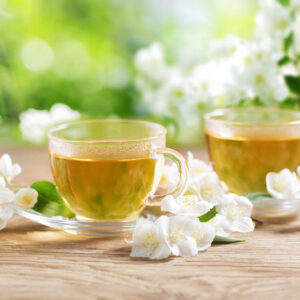
| Edible Flowers | Flowers are traditionally used to scent tea and infusions, but use only unsprayed, culinary-safe flowers |
Arabian Jasmine is one of the most famous true jasmines in cultivation. It belongs to the genus Jasminum and is grown not only for beauty, but for fragrance, cultural importance, and versatility. This is the jasmine people reach for when they want perfume in the garden, on the patio, or indoors in bright light. Unlike some ornamental plants that are admired from a distance, Jasminum sambac is a plant you notice immediately when you walk near it.
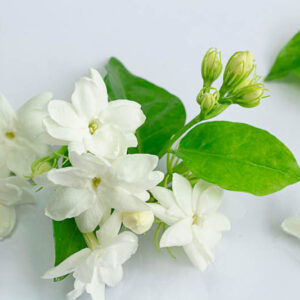
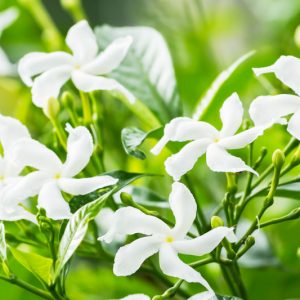
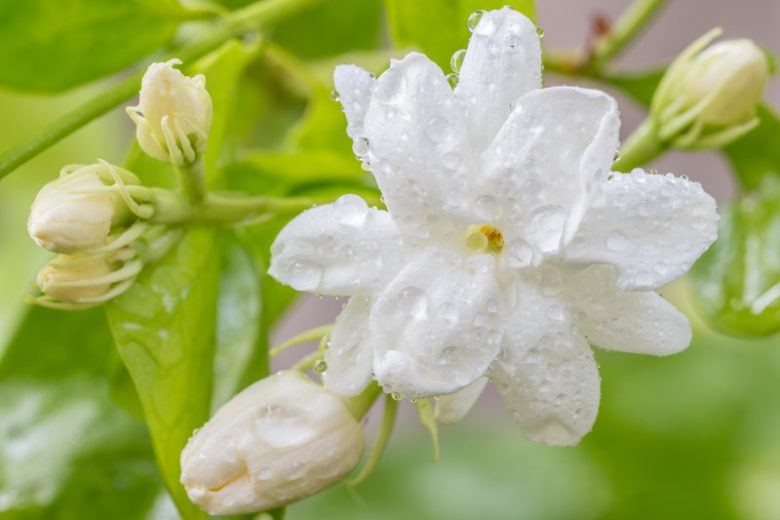
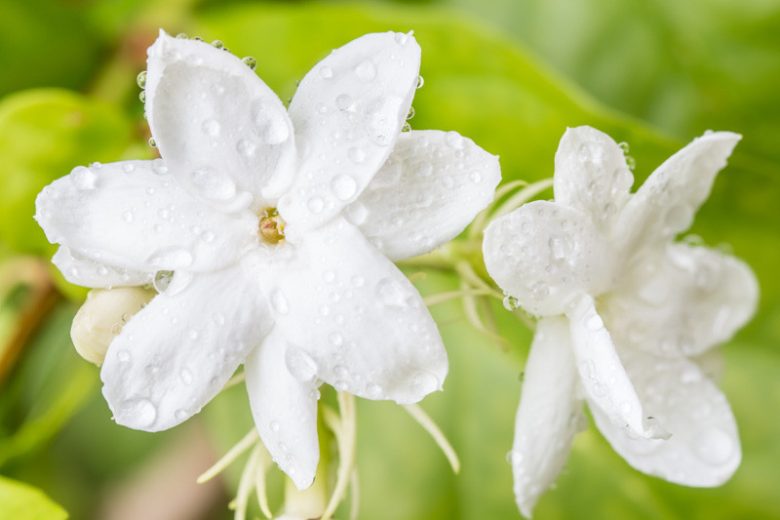
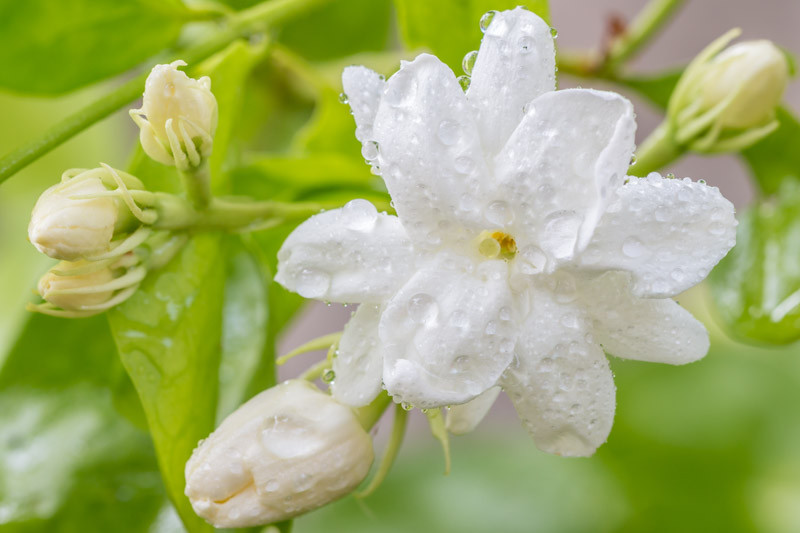
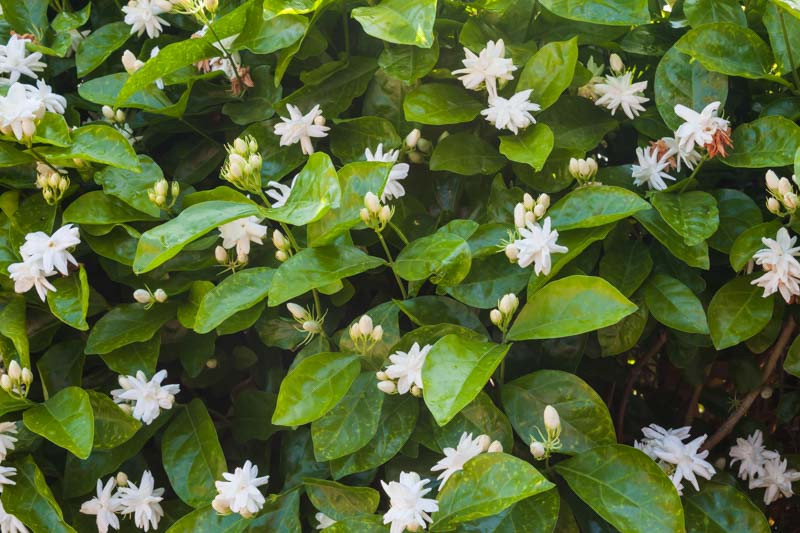
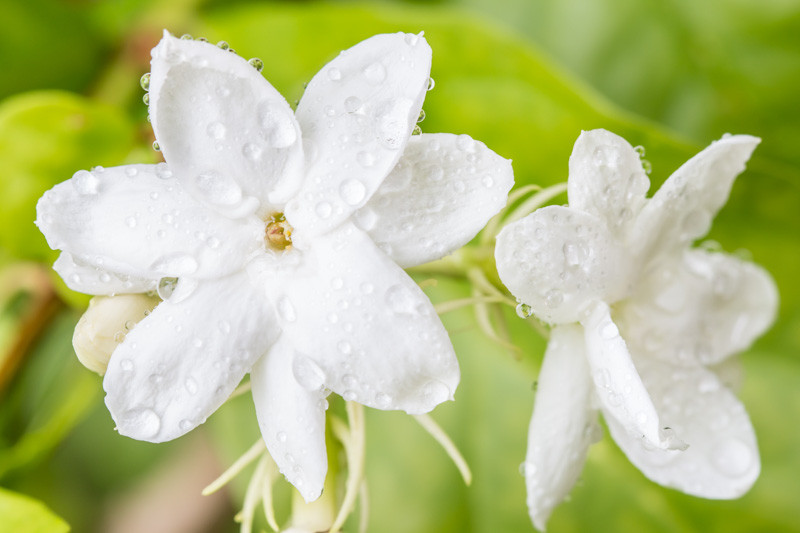
Arabian Jasmine is an evergreen shrub or shrubby vine with glossy simple leaves and clusters of waxy white flowers. Those flowers are often about 1 inch (2.5 cm) across, richly scented, and especially memorable in the evening and early morning. Depending on cultivar and growing conditions, the flowers may be single, semi-double, or double, but the species is most broadly recognized for pure white blossoms that sometimes blush pink as they age. The plant’s overall effect is refined, tropical, and highly aromatic.
Arabian Jasmine is native to Bhutan and India and is widely cultivated across South, Southeast, and tropical Asia, as well as other warm regions of the world. It has become especially important in South and Southeast Asia, tropical gardens, conservatories, and fragrance-focused collections. In many places, it is grown as much for cultural and sensory value as for ornamental display.
Arabian Jasmine usually flowers through summer and may continue in flushes beyond that, especially in warm, humid, frost-free climates. In truly tropical conditions, blooming can be almost continuous. That long flowering window is a major reason it performs so well in containers and patio gardens. Instead of one short dramatic season, it offers repeated reward when grown well.
This is not a stiff, formal shrub unless you prune it that way. Jasminum sambac naturally grows with a soft, somewhat flexible habit. Unsupported, it forms a rounded to sprawling shrub. Given support, it can be trained as a twining jasmine vine or shrubby climber. That flexibility makes it useful in more garden situations than many people realize.
Arabian Jasmine commonly grows about 6 to 10 feet tall and wide (1.8-3 m), though size depends heavily on climate, pruning, cultivar, and whether it is grown in the ground or in a pot. In containers, it usually stays more compact. In warm frost-free regions with time and support, it can become larger and more vine-like.
Jasminum sambac is best suited to USDA Zones 9-11. It is a tropical jasmine and does not appreciate freezing conditions. In cooler climates, it is best grown as a patio container plant, greenhouse specimen, conservatory jasmine, or bright-window houseplant that summers outdoors and winters indoors.
Indoor tip:
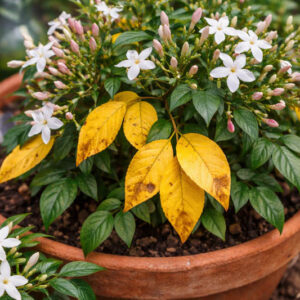
Arabian Jasmine does best indoors in bright rooms with moderate warmth, ideally around 60-75°F (16-24°C). Chilling can cause slowed growth, leaf yellowing or drop, blackened or water-soaked foliage, and bud loss, especially after exposure to cold drafts or near-freezing temperatures.
Jasminum sambac has received the Royal Horticultural Society’s Award of Garden Merit, which reflects dependable garden performance, ornamental quality, and broad appeal.
Takeaway:
Arabian Jasmine is one of the most fragrant jasmine species you can grow, combining tropical beauty, evergreen foliage, and repeat white blooms in a shrub or trainable vine.
Arabian Jasmine is grown primarily for fragrance, ornament, and cultural use, but its flowers can also attract pollinators in warm-climate gardens. It adds nectar-bearing bloom to patios, enclosed gardens, and mixed ornamental plantings. It also works beautifully with other fragrant and tropical-feeling plants and with broader jasmine care guidance for gardeners building a scent-centered planting scheme.
Arabian Jasmine is not usually considered a top deer magnet, but deer resistance is never absolute.
In areas with heavy browsing pressure, tender new growth and flower buds may still be sampled.
Once established, Arabian Jasmine can handle short dry spells better than waterlogged soil, but it is not a desert plant. Flowering, foliage quality, and overall vigor are best when moisture is consistent during the active growing season. In containers, especially in heat or wind, regular watering matters even more.
Arabian Jasmine tolerates light drought once established, but even moisture and fast drainage produce better flowering, healthier foliage, and stronger regrowth.
True jasmines in the genus Jasminum are generally listed as non-toxic to dogs, cats, and horses. Arabian Jasmine is also traditionally associated with tea scenting and floral use in some cultures. Even so, any plant material may cause mild digestive upset if eaten in quantity, and only unsprayed flowers should ever be considered for culinary use.
Arabian Jasmine is vigorous in warm climates and should not be described as universally non-invasive. Its behavior is region-specific. In Florida, the current UF/IFAS assessment says it is not considered a problem species at this time in the status assessment, while also rating it Moderate Risk / Evaluate in the predictive tool. In Hawaii and some Pacific risk resources, Jasminum sambac is treated cautiously because it has been flagged in invasive-species assessments. Its behavior is region-specific, so check current local guidance before planting it widely near natural areas or sensitive habitats.
Arabian Jasmine is not universally invasive, but it has been flagged in some warm-region risk resources. Florida currently does not consider it a problem species at this time, while local behavior elsewhere should be checked before planting near natural areas.
Feed Arabian Jasmine during the growing season, especially from spring into summer, with a balanced fertilizer or one slightly tilted toward flowering. Monthly feeding during active growth often works well for container plants. Avoid excessive nitrogen, which can push leafy growth at the expense of flowers.
Apply a 2-3 in. mulch layer around the root zone to help conserve moisture, moderate soil temperature, and improve root-zone stability. Keep mulch away from the stem base.
Design tip:
Arabian Jasmine belongs close to people. This is not a background filler plant – it is a fragrance centerpiece for patios, porches, paths, and bright indoor rooms.
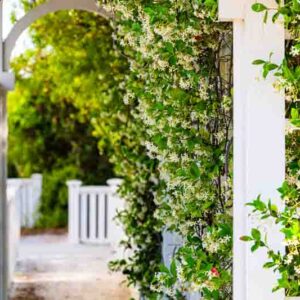
If you want Arabian Jasmine to climb, guide young stems early and tie them loosely to support. It does not cling to walls by itself. Fan stems outward across a support rather than allowing them to pile into one dense cluster. That simple step improves both shape and flower display.
Arabian Jasmine responds well to light shaping. Prune after a major flowering flush or whenever necessary to maintain a tidy framework. Since it often blooms repeatedly in warm conditions, the aim is usually not severe cutting, but selective thinning and shortening to encourage branching and new flower-bearing growth.
Pruning tip:
The best way to prune Arabian Jasmine is lightly and regularly after bloom flushes, shaping the plant without stripping away too much of its flowering potential.
In frost-free climates, outdoor winter care is minimal beyond avoiding waterlogged soil and protecting from unusual cold snaps. In colder regions, Arabian Jasmine should be grown in a container and moved indoors before frost. Indoors, give it the brightest light possible, moderate warmth, decent humidity, and reduced watering compared with summer growth.
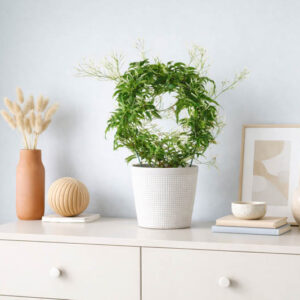
Arabian Jasmine is one of the best fragrant jasmines for container culture. For many gardeners, pot culture is the smartest way to grow it because it allows easy winter protection and ideal placement near outdoor living spaces.
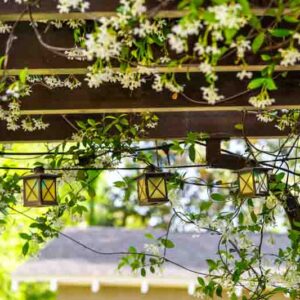
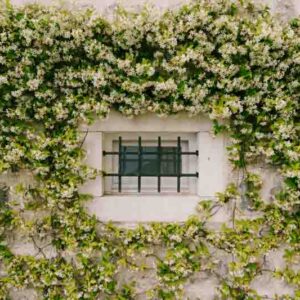
Arabian Jasmine can be beautiful on a warm wall, post, or trellis, especially in sheltered climates where it can stay outdoors year-round. The effect is softer and more intimate than that of a large climber. Think fragrance and elegance, not brute-force coverage.
Bloom trigger:
For indoor flowering, give Arabian Jasmine the brightest light possible, steady warmth, and regular feeding during active growth. A high-potassium fertilizer can help boost bloom, while oversized pots often encourage excess root and leafy growth instead of flowers.
Arabian Jasmine is easiest to manage when you work with its warm-season rhythm.
| Task | Best Time |
|---|---|
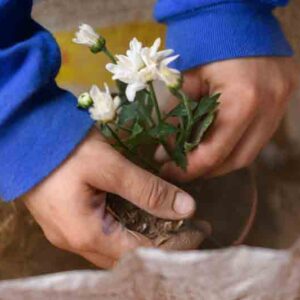
| Planting | Plant in spring or early summer after temperatures warm. |
| Feeding | Feed from spring through summer during active growth. |
| Pruning | Prune after flowering flushes or lightly as needed for shape. |
| Propagation | Take semi-ripe cuttings in summer or layer flexible stems in autumn. |
| Mulching | Refresh mulch in spring. |
| Main display | Expect peak flowering in summer, with repeat bloom in warmth. |
Arabian Jasmine is most often propagated by semi-ripe cuttings or layering.
Take partially matured stems in summer, remove the lower leaves, and insert them into a free-draining propagation mix. Keep the medium evenly moist and place the cuttings in bright indirect light until rooting begins.
Flexible stems can be bent down and pegged into moist soil while still attached to the parent plant. Once roots form, the new plant can be severed and moved.
Among the most popular cultivars of Jasminum sambac, ‘Maid of Orleans’ is especially valued for its bushy habit, frequent flowering, and single white blooms that make it one of the easiest and most floriferous forms for pots and bright indoor spaces. ‘Grand Duke of Tuscany’ is more ornate, with richly double, rosette-like white flowers and a slower, often more compact habit, grown as much for the lush, layered look of its blooms as for its powerful fragrance.
Arabian Jasmine is highly rewarding, but most problems come down to light, water, temperature, or container stress rather than anything mysterious.
Legginess usually means the plant is stretching for light or has not been pinched and shaped often enough. Arabian Jasmine looks best when it is edited regularly rather than left to become a long, sparse tangle.
Arabian Jasmine is often fairly easy to manage outdoors in favorable climates, but container plants and indoor specimens can attract common sap-feeding pests.
Jasminum sambac stands apart because it delivers exceptionally rich fragrance, white waxy flowers, and a tropical shrub-or-vine habit. Compared with Common Jasmine, it is more tropical, more tender, and often more intensely perfumed. Compared with Pink Jasmine, it blooms later and more repeatedly in warmth rather than making its big statement mainly from late winter into spring. Compared with Star Jasmine, it is a true jasmine with softer growth, more tropical character, and a different fragrance profile.
Arabian Jasmine shines when its scent is treated as the main design feature.
Choose companions that enjoy similar warmth, drainage, and bright conditions while either extending the flowering season or creating a lush fragrant composition. Excellent partners include gardenias, dwarf citrus, lavender, rosemary, salvia, plumbago, pentas, heliotrope, angelonia, pelargoniums, mandevilla, and evergreen structure plants such as pittosporum or clipped box in frost-free gardens. The goal is to create a planting that feels layered, warm, and sensory, not crowded or competitive.
Arabian Jasmine, or Jasminum sambac, is a tropical evergreen jasmine grown for its intensely fragrant white flowers and glossy green foliage. It may be grown as a shrub, a container plant, or a trainable vine.
Yes. Arabian Jasmine belongs to the genus Jasminum, so it is a true jasmine.
Yes. Arabian Jasmine is one of the most fragrant jasmine species, known for rich, sweet, powerful perfume.
Arabian Jasmine usually blooms through summer and may flower almost continuously in warm tropical climates.
Arabian Jasmine commonly grows about 6 to 10 feet tall and wide, depending on climate, pruning, and whether it is grown in the ground or in a container.
Arabian Jasmine can be either. Unsupported, it behaves like a sprawling evergreen shrub. With support, it can be trained as a shrubby vine or climber.
Arabian Jasmine grows best in full sun to part shade. Bright light promotes stronger growth and more abundant flowering.
It tolerates light shade, but too much shade reduces flowering and often leads to weaker, leggier growth.
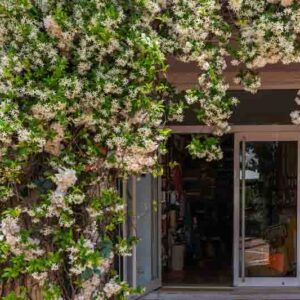
The best place to plant Arabian Jasmine is in a warm, bright, sheltered spot near a patio, doorway, path, or seating area where the fragrance can be enjoyed.
Yes. Arabian Jasmine grows very well in a container with excellent drainage, making it ideal for patios and for overwintering indoors in cold climates.
Yes. Arabian Jasmine is an evergreen shrub or vine in warm climates and in protected indoor conditions.
Prune Arabian Jasmine lightly after flowering flushes by shortening long shoots, thinning crowded stems, and shaping the plant to encourage branching and repeat bloom.
The most common causes are too little light, excessive nitrogen fertilizer, cold stress, poor drainage, or inconsistent watering.
Water Arabian Jasmine regularly while it establishes and during active growth, then reduce watering in winter. Container plants usually need more frequent watering than in-ground plants.
Yes. Arabian Jasmine is one of the best fragrant jasmine plants for patios, balconies, decks, and containers because it is compact, elegant, and powerfully scented.
Yes, as long as it receives very bright light, warmth, good airflow, and careful watering. It is often grown indoors as a conservatory or bright-window jasmine.
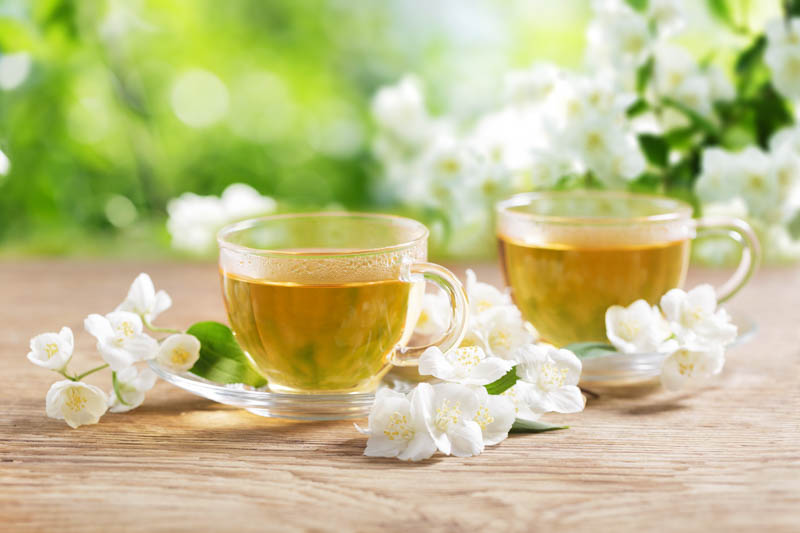
Arabian Jasmine flowers are traditionally used to scent tea and floral preparations in some cultures, but only unsprayed, culinary-safe flowers should be used.
Updated: March 2026 – Reviewed by Gardenia Editors
| Hardiness |
9 - 11 |
|---|---|
| Climate Zones | 13, 14, 15, 16, 17, 18, 19, 20, 21, 23, 24, H1, H2 |
| Plant Type | Climbers, Shrubs |
| Plant Family | Oleaceae |
| Genus | Jasminum |
| Common names | Arabian Jasmine, Jasmine |
| Exposure | Full Sun, Partial Sun |
| Season of Interest | Summer (Early, Mid, Late) |
| Height | 6' - 10' (180cm - 3m) |
| Spread | 6' - 10' (180cm - 3m) |
| Spacing | 72" - 120" (180cm - 3m) |
| Maintenance | Low |
| Water Needs | Average |
| Soil Type | Loam |
| Soil pH | Neutral |
| Soil Drainage | Moist but Well-Drained |
| Characteristics | Fragrant, Plant of Merit, Showy, Evergreen |
| Garden Uses | Patio And Containers |


| Hardiness |
9 - 11 |
|---|---|
| Climate Zones | 13, 14, 15, 16, 17, 18, 19, 20, 21, 23, 24, H1, H2 |
| Plant Type | Climbers, Shrubs |
| Plant Family | Oleaceae |
| Genus | Jasminum |
| Common names | Arabian Jasmine, Jasmine |
| Exposure | Full Sun, Partial Sun |
| Season of Interest | Summer (Early, Mid, Late) |
| Height | 6' - 10' (180cm - 3m) |
| Spread | 6' - 10' (180cm - 3m) |
| Spacing | 72" - 120" (180cm - 3m) |
| Maintenance | Low |
| Water Needs | Average |
| Soil Type | Loam |
| Soil pH | Neutral |
| Soil Drainage | Moist but Well-Drained |
| Characteristics | Fragrant, Plant of Merit, Showy, Evergreen |
| Garden Uses | Patio And Containers |
How many Jasminum sambac (Arabian Jasmine) do I need for my garden?
| Plant | Quantity | |
|---|---|---|
| Jasminum sambac (Arabian Jasmine) | N/A | Buy Plants |
Create a membership account to save your garden designs and to view them on any device.
Becoming a contributing member of Gardenia is easy and can be done in just a few minutes. If you provide us with your name, email address and the payment of a modest $25 annual membership fee, you will become a full member, enabling you to design and save up to 25 of your garden design ideas.
Join now and start creating your dream garden!
Create a membership account to save your garden designs and to view them on any device.
Becoming a contributing member of Gardenia is easy and can be done in just a few minutes. If you provide us with your name, email address and the payment of a modest $25 annual membership fee, you will become a full member, enabling you to design and save up to 25 of your garden design ideas.
Join now and start creating your dream garden!