Primrose Jasmine, Japanese Jasmine, Jasminum Primulinum

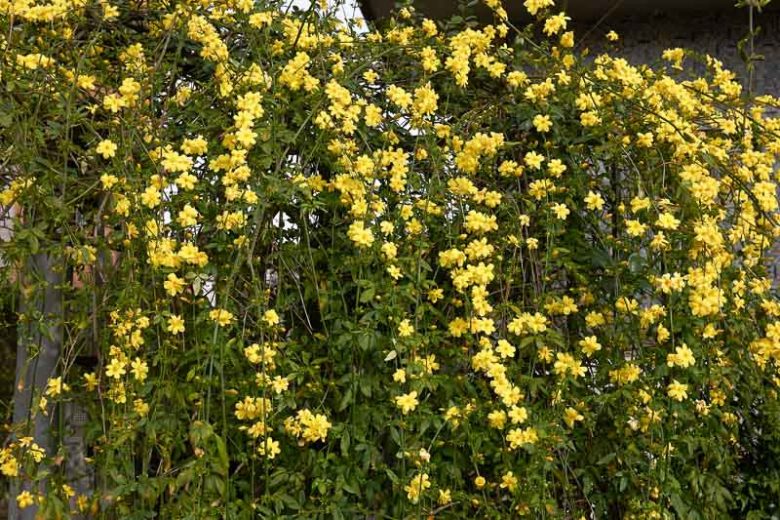


Jasminum mesnyi, commonly called Primrose Jasmine, is a vigorous evergreen to nearly evergreen scrambling shrub prized for its large yellow flowers, arching green stems, and exceptional landscape versatility. This is not a fussy collector’s plant. It is a high-impact, workhorse jasmine for gardeners who want a bold spring display, fast coverage, and a plant that can soften walls, stabilize slopes, and spill beautifully over hard edges. In mild climates, few yellow-flowering jasmines match its scale, texture, and garden presence.
Jasminum mesnyi is a fast-growing evergreen or semi-evergreen scrambling shrub grown for large bright yellow to pale yellow flowers in late winter or spring, glossy trifoliate foliage, and long arching canes. Plant it in full sun to part shade in fertile, well-drained soil, water regularly while establishing, then deeply as needed. Prune after flowering to control spread, improve shape, and preserve next season’s bloom wood.
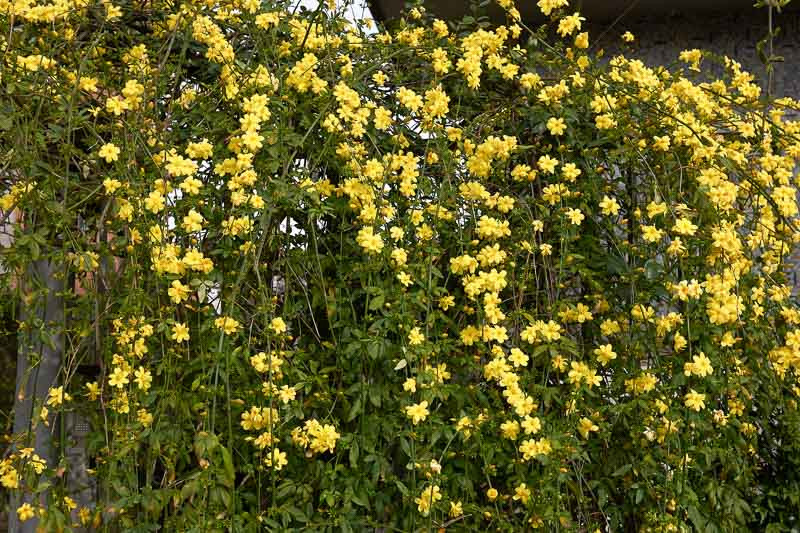
Use: Excellent for banks, slopes, retaining walls, fences, trellises, arbors, and large cascading plantings.
Highlight: Masses of semi-double yellow flowers in late winter to spring on graceful arching stems.
Design note: Plant it where its long canes can drape, trail, or be tied in. Primrose Jasmine looks most convincing when allowed to move naturally through the landscape.
| Botanical Name | Jasminum mesnyi |
|---|---|
| Family | Olive family (Oleaceae) |
| Common Names | Primrose Jasmine, Chinese Jasmine |
| Native Range | Western China |
| Plant Type | Evergreen scrambling shrub, wall shrub, or vine-like arching shrub |
| Hardiness (approx. USDA) | Best in USDA Zones 8-10 |
| Height | 6-10 ft. (1.8-3 m) |
| Spread | 3-5 ft. (0.9-1.5 m) in managed plantings, often broader over time where stems arch and layer |
| Sun Exposure | Full sun to part shade |
| Soil | Fertile, well-drained soil; adaptable to loam, sandy, or chalky soils with good drainage |
| Bloom Time | Late winter to spring |
| Flower Color | Bright yellow to pale primrose yellow |
| Foliage | Dark green, glossy, trifoliate leaves |
| Deer Resistant | Generally deer resistant |
| Attracts | Early pollinators and beneficial insects |
| Edible Flowers | No – Primrose Jasmine is grown as an ornamental landscape jasmine |
Primrose Jasmine is a true jasmine in the genus Jasminum, but it behaves differently from the intensely perfumed summer jasmines many gardeners know first. This species is grown above all for ornamental structure, vivid yellow bloom, evergreen foliage, and landscape performance. It is a shrub with climber-like habits, not a self-clinging vine. That distinction matters. You grow it for its cascading canes, for the way it clothes a slope, and for the drama of those large yellow flowers when much of the garden still looks flat.
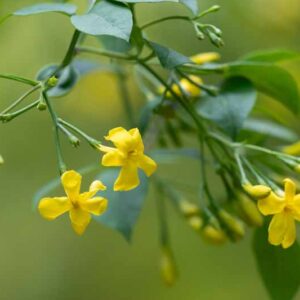
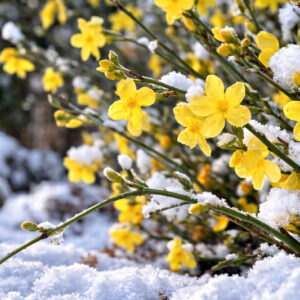
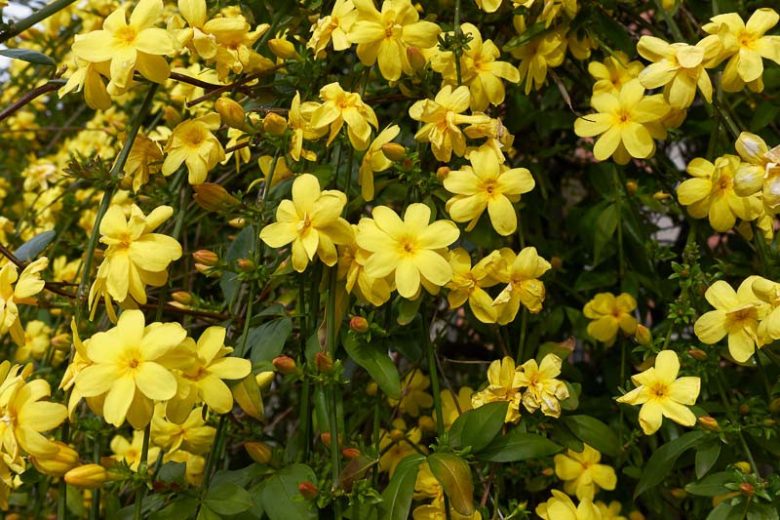
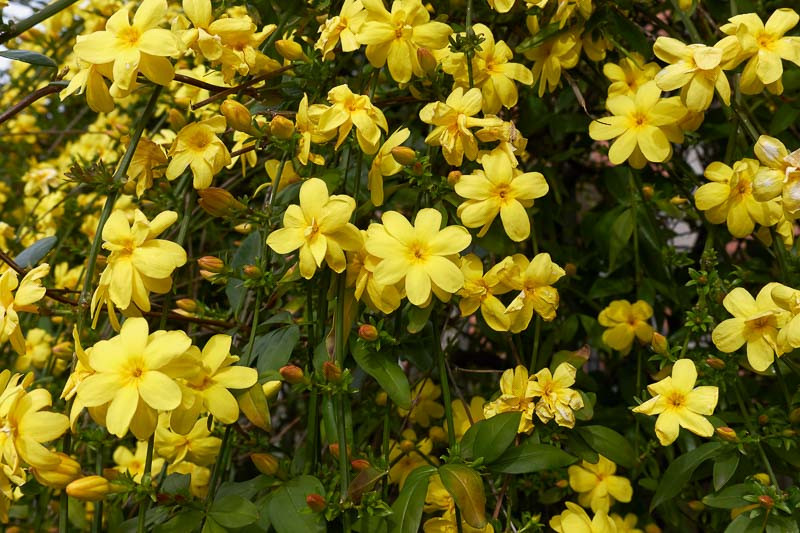
Primrose Jasmine is a large, arching, scrambling shrub with long green stems and glossy trifoliate leaves. The semi-double, pale yellow flowers, about 1.4 in. (4 cm) across, are larger than those of Winter Jasmine, giving the plant a fuller, softer look in bloom. In mild regions, flowering begins in late winter and continues into spring. The effect is lush rather than spare, making this one of the boldest yellow-flowering jasmines for warm-climate gardens.
Native to western China, Jasminum mesnyi has adapted well to cultivation in mild temperate and warm climates. It is especially valued in regions where winter is not severe and where gardeners need a vigorous evergreen shrub that can cover space quickly and flower reliably.
Primrose Jasmine usually flowers from late winter into spring. In the mildest climates, buds may begin opening very early, while cooler gardens see the main show in spring. This timing makes it useful for bridging the gap between winter structure and the first full flush of spring growth.
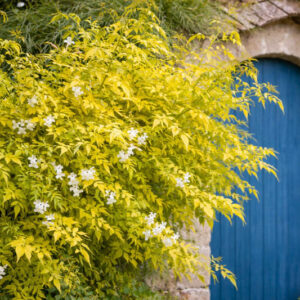
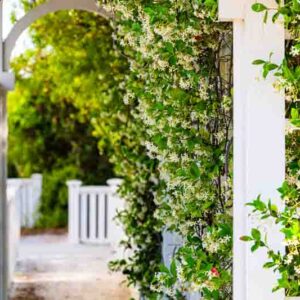
The foliage is dark green, glossy, and composed of three leaflets. In warm climates it is evergreen, though plants may lose some foliage or suffer tip burn in colder weather. The habit is loose, fountain-like, and sprawling. Left unsupported, it forms a broad, mounding mass. Tied to a trellis, arbor, or wires, it behaves like a wall shrub or informal climber.
Primrose Jasmine typically reaches 6 to 10 feet tall (1.8-3 m). With support and time, individual canes can travel farther, and the plant often appears wider than expected because the stems arch, root where they touch the ground, and gradually enlarge the planting area.
Jasminum mesnyi is generally best in USDA Zones 8-10. It is less cold-hardy than Winter Jasmine, so site selection matters. In borderline climates, a warm wall, sheltered exposure, and good drainage make a noticeable difference.
Jasminum mesnyi has received the Royal Horticultural Society’s Award of Garden Merit, a strong signal that it performs well in real gardens and offers reliable ornamental value.
Takeaway:
Primrose Jasmine is a vigorous evergreen jasmine grown for large yellow flowers, arching habit, and landscape coverage. It is a design plant first, a fragrance plant second.
Because it flowers early in the season, Primrose Jasmine can offer nectar resources when relatively few shrubs are in bloom. Its dense branching also provides cover and textural habitat within layered plantings. It combines well with Top 30 Winter Flowers to Bring Color to Your Garden and Home and with shrubs chosen for extended seasonal interest.
Primrose Jasmine is generally considered deer resistant, which increases its value in exposed landscapes and edge-of-woodland gardens.
As always, deer resistance is relative and local browsing pressure can change outcomes.
Once established, Primrose Jasmine is moderately drought tolerant. Still, better moisture usually means better growth, cleaner foliage, and a more generous flower display. Plants on slopes and near walls dry out faster and should be monitored more closely.
Primrose Jasmine tolerates dry spells once established, but it performs best when the root zone does not swing repeatedly from drought to saturation.
True jasmines are generally regarded as non-toxic to dogs, cats, and horses, though any plant material may still cause mild digestive upset if eaten in quantity. Primrose Jasmine is grown as an ornamental, not as an edible flower crop.
Primrose Jasmine is not generally classified as invasive, but it is a vigorous spreader that can enlarge by layering where stems touch the ground. In a large landscape, that is a virtue. In a small bed, it can become a maintenance issue if ignored.
Primrose Jasmine is not usually invasive, but it is vigorous and can spread by rooting stems, especially on banks, slopes, and neglected edges.
Feed lightly in spring with compost or a balanced fertilizer. Avoid pushing the plant with heavy nitrogen. Overfeeding encourages long green shoots and reduces floral impact.
Apply a 2-3 in. layer of mulch around the root zone to conserve moisture and protect roots from heat stress. Keep mulch away from the crown.
Design tip:
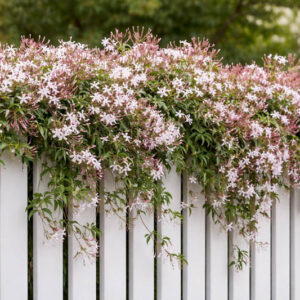
Primrose Jasmine is at its best when it can spill over a wall, descend a slope, or be fanned across a support. It should look generous and flowing, not clipped and rigid.
If you want Primrose Jasmine to climb, tie the shoots loosely to a support. It does not cling or twine aggressively on its own. Fan stems outward for better coverage, stronger framework development, and more even flowering.
Prune immediately after flowering. That preserves the shoots that will carry the next display.
Pruning tip:
The best time to prune Primrose Jasmine is right after flowering. Late pruning reduces next season’s bloom.
In mild climates, established plants need little winter attention. In cooler parts of its range, young plants appreciate a sheltered site, mulch, and protection from severe exposure. Foliage may burn in cold snaps, but established root systems often recover well when spring returns.
The easiest ways to propagate Primrose Jasmine are layering and semi-hardwood cuttings.
Bend a low, flexible stem to the soil, pin part of it down, and keep it lightly moist. Once roots form, cut the new plant away from the parent and transplant it.
Take semi-hardwood cuttings in the warmer months, remove the lower leaves, and root them in a moist, well-drained medium. This is faster and more reliable than growing from seed.
Primrose Jasmine is usually straightforward and often described as relatively pest free. Problems tend to appear when the plant is stressed by poor drainage, crowding, or unsuitable siting.
Usually because of shade, weak pruning strategy, or overfeeding. This plant wants selective thinning and enough sun to stay dense.
Jasminum mesnyi stands apart because it combines evergreen structure, large yellow flowers, and vigorous landscape coverage. Compared with Common Jasmine, it is less about perfume and more about mass and form. Compared with Star Jasmine, it is looser, shrubbier, and more yellow-flowered. Compared with Winter Jasmine, it is larger-flowered, more evergreen, and better suited to warmer climates.
Primrose Jasmine, or Jasminum mesnyi, is a vigorous evergreen or semi-evergreen scrambling shrub grown for its large yellow flowers, glossy trifoliate foliage, and arching stems.
Yes. It belongs to the genus Jasminum, so it is a true jasmine.
Primrose Jasmine has little to light fragrance, but it is grown mainly for its showy flowers, vigorous habit, and excellent landscape value rather than perfume.
It blooms from late winter into spring, with flowering time varying somewhat by climate.
The flowers are bright yellow to soft primrose yellow and are usually semi-double.
It typically grows 6 to 10 feet tall and can spread even wider over time as its arching stems extend and root where they touch the ground.
It can be both. Left unsupported, it forms a broad scrambling shrub, but with support it can be trained as a wall shrub or informal climber.
It performs best in full sun to part shade. More sun usually produces heavier flowering and denser growth.
Yes, in mild climates it is evergreen or nearly evergreen, though colder weather can damage foliage or cause partial leaf loss.
Yes. It is one of the best jasmines for slopes and banks because it spreads readily, roots where stems touch the soil, and helps stabilize the ground.
Yes. It is especially effective when allowed to cascade over retaining walls, terraces, raised beds, and similar structures.
Prune it right after flowering by shortening long shoots, thinning crowded growth, and removing some of the oldest canes when renewal is needed.
The most common causes are too much shade, pruning too late, excess nitrogen fertilizer, or cold damage to flower-bearing shoots.
Updated: March 2026 – Reviewed by Gardenia Editors
| Hardiness |
8 - 10 |
|---|---|
| Heat Zones |
8 - 10 |
| Climate Zones | 4, 5, 6, 7, 8, 9, 10, 11, 12, 13, 14, 15, 16, 17, 18, 19, 20, 21, 22, 23, 24, H1, H2 |
| Plant Type | Climbers, Shrubs |
| Plant Family | Oleaceae |
| Genus | Jasminum |
| Common names | Jasmine, Primrose Jasmine |
| Exposure | Full Sun, Partial Sun |
| Season of Interest | Spring (Early, Mid, Late), Winter |
| Height | 6' - 10' (180cm - 3m) |
| Spread | 3' - 5' (90cm - 150cm) |
| Spacing | 36" - 60" (90cm - 150cm) |
| Maintenance | Low |
| Water Needs | Average |
| Soil Type | Chalk, Loam, Sand |
| Soil pH | Acid, Alkaline, Neutral |
| Soil Drainage | Well-Drained |
| Characteristics | Plant of Merit, Showy, Evergreen |
| Tolerances | Heat, Erosion |
| Garden Uses | Arbors, Pergolas, Trellises, Patio And Containers, Walls And Fences |
| Toxic to Humans | No known toxicity |
| Toxic to Cats | Not toxic |
| Toxic to Dogs | Not toxic |
| Toxic to Horses | Not toxic |


| Hardiness |
8 - 10 |
|---|---|
| Heat Zones |
8 - 10 |
| Climate Zones | 4, 5, 6, 7, 8, 9, 10, 11, 12, 13, 14, 15, 16, 17, 18, 19, 20, 21, 22, 23, 24, H1, H2 |
| Plant Type | Climbers, Shrubs |
| Plant Family | Oleaceae |
| Genus | Jasminum |
| Common names | Jasmine, Primrose Jasmine |
| Exposure | Full Sun, Partial Sun |
| Season of Interest | Spring (Early, Mid, Late), Winter |
| Height | 6' - 10' (180cm - 3m) |
| Spread | 3' - 5' (90cm - 150cm) |
| Spacing | 36" - 60" (90cm - 150cm) |
| Maintenance | Low |
| Water Needs | Average |
| Soil Type | Chalk, Loam, Sand |
| Soil pH | Acid, Alkaline, Neutral |
| Soil Drainage | Well-Drained |
| Characteristics | Plant of Merit, Showy, Evergreen |
| Tolerances | Heat, Erosion |
| Garden Uses | Arbors, Pergolas, Trellises, Patio And Containers, Walls And Fences |
| Toxic to Humans | No known toxicity |
| Toxic to Cats | Not toxic |
| Toxic to Dogs | Not toxic |
| Toxic to Horses | Not toxic |
How many Jasminum mesnyi (Primrose Jasmine) do I need for my garden?
| Plant | Quantity | |
|---|---|---|
| Jasminum mesnyi (Primrose Jasmine) | N/A | Buy Plants |
Create a membership account to save your garden designs and to view them on any device.
Becoming a contributing member of Gardenia is easy and can be done in just a few minutes. If you provide us with your name, email address and the payment of a modest $25 annual membership fee, you will become a full member, enabling you to design and save up to 25 of your garden design ideas.
Join now and start creating your dream garden!
Create a membership account to save your garden designs and to view them on any device.
Becoming a contributing member of Gardenia is easy and can be done in just a few minutes. If you provide us with your name, email address and the payment of a modest $25 annual membership fee, you will become a full member, enabling you to design and save up to 25 of your garden design ideas.
Join now and start creating your dream garden!