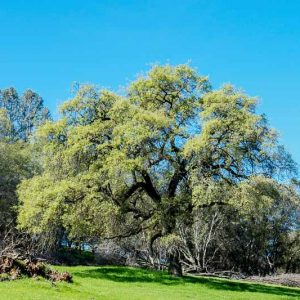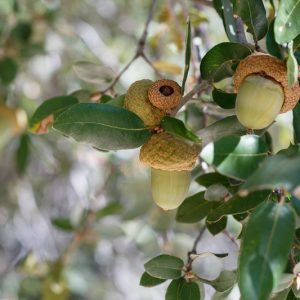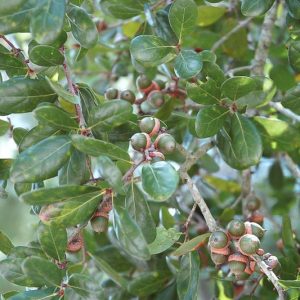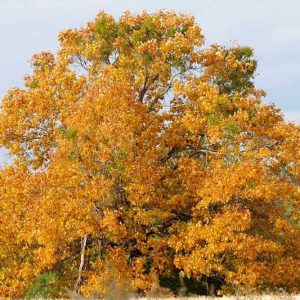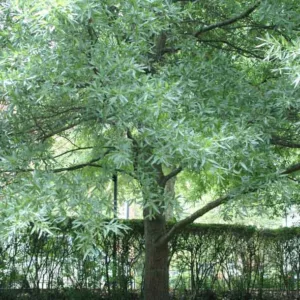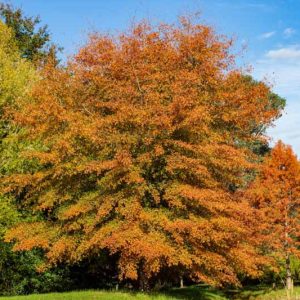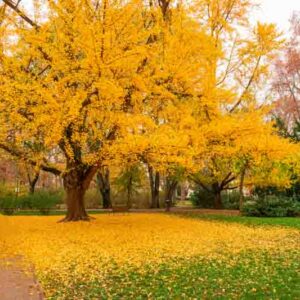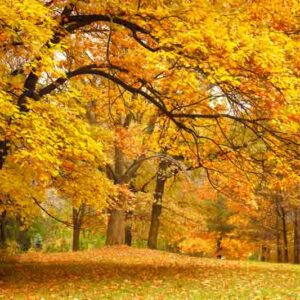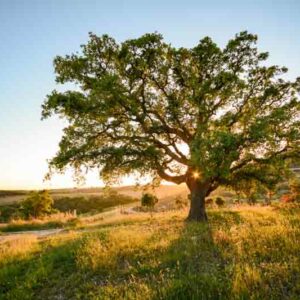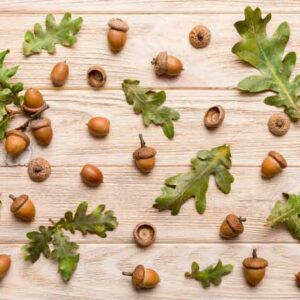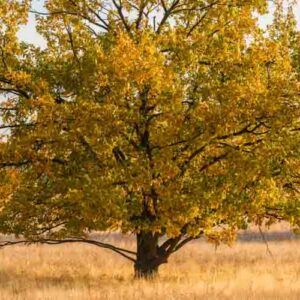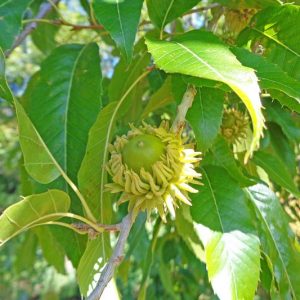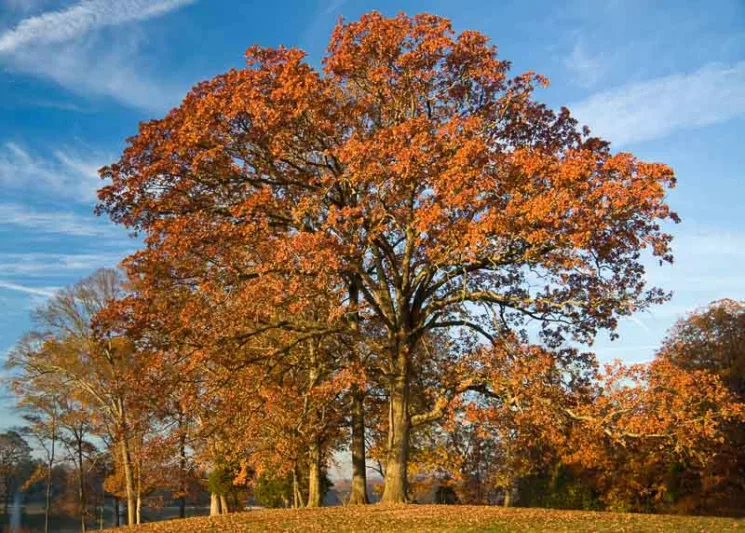


Quercus stellata (Post Oak) is a slow-growing, long-lived deciduous oak with a pyramidal habit in youth, becoming broader and more rounded with spreading branches as it matures. Its rough, leathery, dark green leaves, up to 8 in. long (20 cm), are divided into 3-5 rounded lobes and may turn golden brown in fall. The trunk is gray to light reddish-brown, developing a rugged character with age. Inconspicuous yellow-green male and female flowers appear in spring as the leaves emerge.
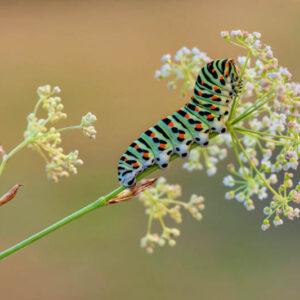
The egg-shaped acorns, about 1 in. long (2.5 cm), provide an important food source for deer, wild turkeys, woodpeckers, jays, squirrels, and other wildlife, although young trees may take many years to begin producing substantial crops. The broad canopy also provides nesting sites, shelter, and cover. Like other oaks, Post Oak supports a wide diversity of butterfly and moth larvae, helping sustain rich woodland and savanna food webs. Top Native Texas Plants to Help Keep Birds Fed Through Every Season
Extremely adaptable once established, Post Oak is especially well suited to dry, difficult sites and poor soils where many other trees struggle. Its deep root system contributes to excellent drought tolerance, although it also makes established trees difficult to transplant. With its sturdy form and broad crown, Post Oak makes a handsome shade or specimen tree for large landscapes.
The oak genus includes many beloved trees, such as Live Oak, White Oak, Red Oak, Blue Oak, Bur Oak, and Pin Oak.
Oaks support an exceptionally wide range of butterfly and moth larvae. Species associated with oaks include the Banded Hairstreak (Satyrium calanus), Edward’s Hairstreak (Satyrium edwardsii), Gray Hairstreak (Strymon melinus), White-M Hairstreak (Parrhasius m-album), Horace’s Duskywing (Erynnis horatius), and Juvenal’s Duskywing (Erynnis juvenalis).
| Hardiness |
5 - 9 |
|---|---|
| Plant Type | Trees |
| Plant Family | Fagaceae |
| Genus | Quercus |
| Common names | Iron Oak, Oak, Post Oak |
| Exposure | Full Sun |
| Season of Interest | Spring (Mid, Late), Summer (Early, Mid, Late), Fall |
| Height | 35' - 50' (10.7m - 15.2m) |
| Spread | 35' - 50' (10.7m - 15.2m) |
| Spacing | 420" - 600" (10.7m - 15.2m) |
| Maintenance | Low |
| Water Needs | Low, Average |
| Soil Type | Chalk, Clay, Loam, Sand |
| Soil pH | Acid, Neutral |
| Soil Drainage | Moist but Well-Drained, Well-Drained |
| Characteristics | Showy |
| Native Plants | United States, Northeast, Pennsylvania, Rhode Island, Connecticut, Delaware, Massachusetts, Maryland, New Jersey, New York, Illinois, Indiana, Iowa, Kansas, Midwest, Missouri, Ohio, Southeast, Louisiana, Mississippi, North Carolina, South Carolina, Tennessee, Virginia, West Virginia, Alabama, Arkansas, Florida, Georgia, Kentucky, Southwest, Texas, Oklahoma |
| Tolerances | Drought, Clay Soil, Dry Soil, Rocky Soil, Poor Soil, Fire |
| Garden Styles | Prairie and Meadow |
| Toxic to Humans | Low severity |
| Toxic to Cats | Not toxic |
| Toxic to Dogs | Not toxic |
| Toxic to Horses | Toxic |


| Hardiness |
5 - 9 |
|---|---|
| Plant Type | Trees |
| Plant Family | Fagaceae |
| Genus | Quercus |
| Common names | Iron Oak, Oak, Post Oak |
| Exposure | Full Sun |
| Season of Interest | Spring (Mid, Late), Summer (Early, Mid, Late), Fall |
| Height | 35' - 50' (10.7m - 15.2m) |
| Spread | 35' - 50' (10.7m - 15.2m) |
| Spacing | 420" - 600" (10.7m - 15.2m) |
| Maintenance | Low |
| Water Needs | Low, Average |
| Soil Type | Chalk, Clay, Loam, Sand |
| Soil pH | Acid, Neutral |
| Soil Drainage | Moist but Well-Drained, Well-Drained |
| Characteristics | Showy |
| Native Plants | United States, Northeast, Pennsylvania, Rhode Island, Connecticut, Delaware, Massachusetts, Maryland, New Jersey, New York, Illinois, Indiana, Iowa, Kansas, Midwest, Missouri, Ohio, Southeast, Louisiana, Mississippi, North Carolina, South Carolina, Tennessee, Virginia, West Virginia, Alabama, Arkansas, Florida, Georgia, Kentucky, Southwest, Texas, Oklahoma |
| Tolerances | Drought, Clay Soil, Dry Soil, Rocky Soil, Poor Soil, Fire |
| Garden Styles | Prairie and Meadow |
| Toxic to Humans | Low severity |
| Toxic to Cats | Not toxic |
| Toxic to Dogs | Not toxic |
| Toxic to Horses | Toxic |
How many Quercus stellata (Post Oak) do I need for my garden?
| Plant | Quantity | |
|---|---|---|
| Quercus stellata (Post Oak) | N/A | Buy Plants |
Create a membership account to save your garden designs and to view them on any device.
Becoming a contributing member of Gardenia is easy and can be done in just a few minutes. If you provide us with your name, email address and the payment of a modest $25 annual membership fee, you will become a full member, enabling you to design and save up to 25 of your garden design ideas.
Join now and start creating your dream garden!