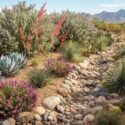
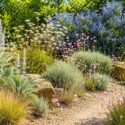
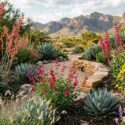
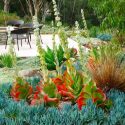
Bring the beauty of the Texas Hill Country home with four heat-loving native plants. Red Autumn Sage and blue Mealycup Sage flower from spring through fall, while white Blackfoot Daisies brighten the border. Lindheimer's Muhly adds graceful foliage and late-season plumes, creating a colorful, water-wise garden for sunny landscapes.
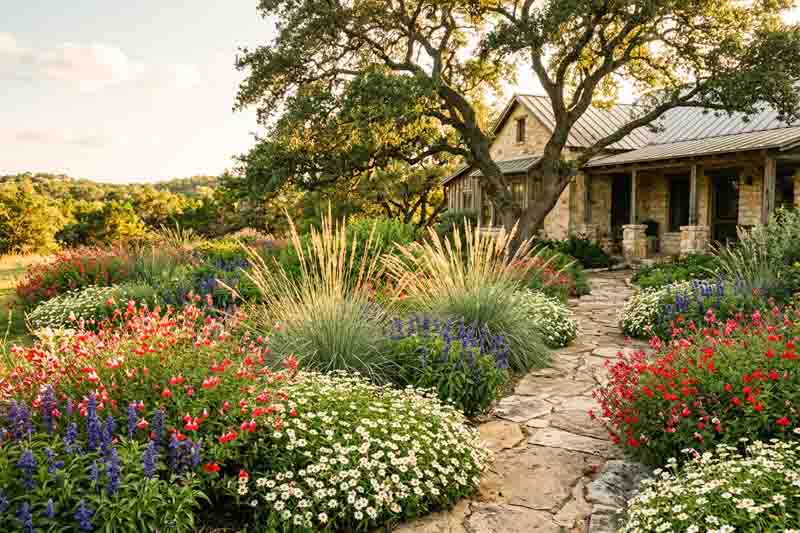


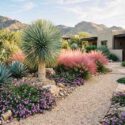
Hot summers and limited rainfall don’t have to mean a garden of gravel and sparse greenery. Inspired by the rugged beauty of the Texas Hill Country, this colorful planting brings together scarlet flowers, rich blue spikes, cheerful white daisies, and graceful ornamental grasses around a winding limestone path.
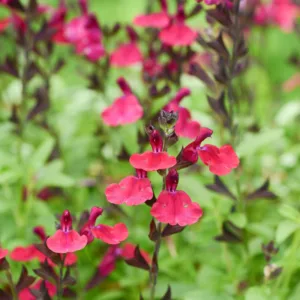
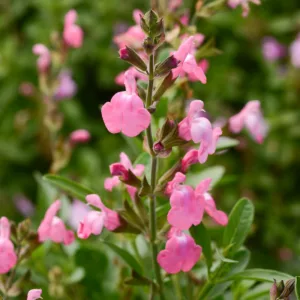
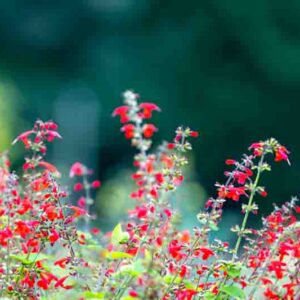
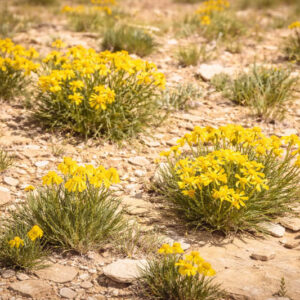
Four heat-loving plants create the display: Salvia greggii (Autumn Sage), Salvia farinacea (Mealycup Sage), Melampodium leucanthum (Blackfoot Daisy), and Muhlenbergia lindheimeri (Lindheimer’s Muhly). All four are native to Texas, and their contrasting shapes create a naturalistic garden that feels abundant without requiring a thirsty lawn.
Warm limestone, open gravel, and loose drifts of flowers give the landscape its unmistakable Hill Country character. The result is relaxed, colorful, and wonderfully suited to sunny, well-drained sites.
Main plants used: Salvia greggii, Salvia farinacea, Melampodium leucanthum, and Muhlenbergia lindheimeri.
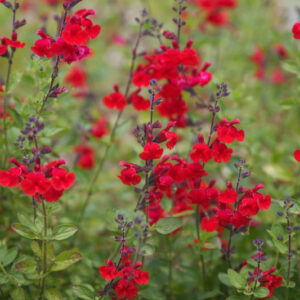
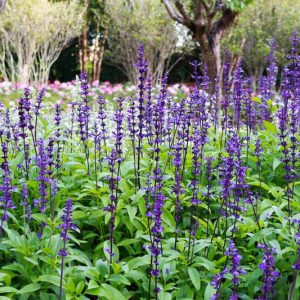
This garden captures the character of the Hill Country through contrasts in height, texture, and color. Autumn Sage provides loose mounds of red flowers, while Mealycup Sage introduces upright blue-violet spikes that give the planting rhythm and definition.
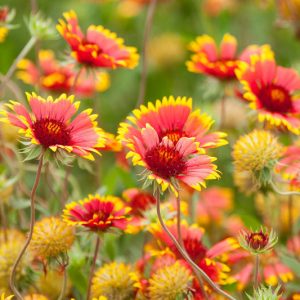
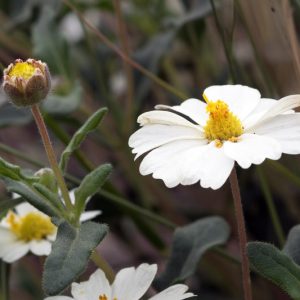
Blackfoot Daisy creates a softer foreground. Its small white flowers with yellow centers brighten the edges of the gravel path, while its compact, airy habit contrasts beautifully with the taller sages.
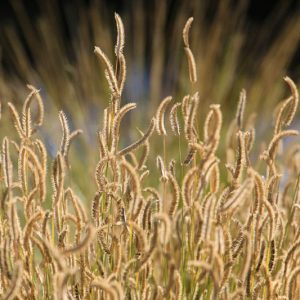
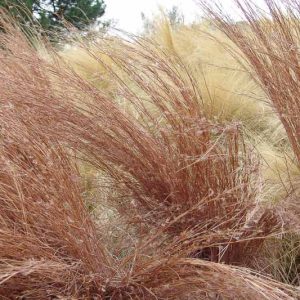
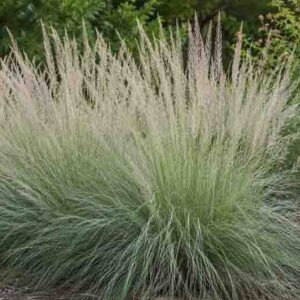
Lindheimer’s Muhly brings the entire composition together. Its graceful, arching foliage forms substantial clumps that remain attractive when flowering slows, and its slender flower panicles add movement and texture later in the season.
The limestone edging and gravel path reinforce the natural setting. Instead of hiding the stone beneath dense planting, the design leaves open areas that highlight the flowers, improve access, and give the garden room to breathe.
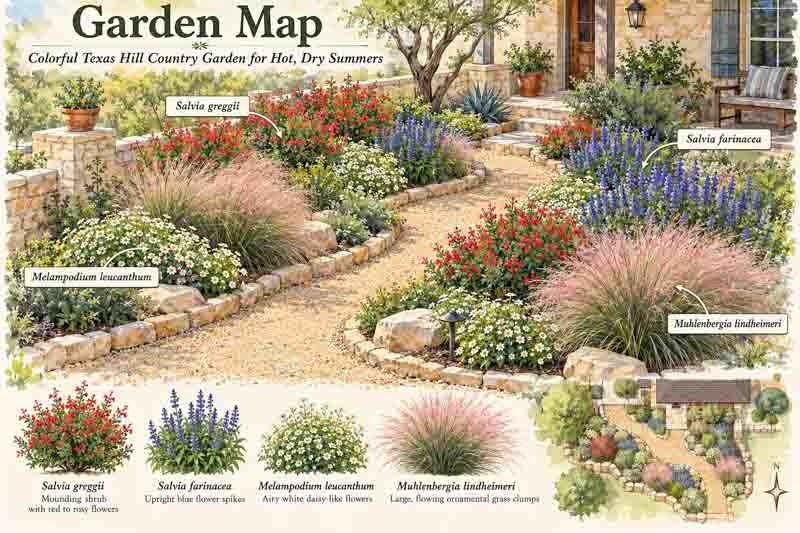
Create a colorful, low-water Texas garden with native flowers, contrasting textures, and an informal limestone walkway.
Approximate visual proportions, not plant quantities.
Position Lindheimer’s Muhly in the widest planting pockets, where its mature clumps can develop without crowding the path. Repeat Autumn Sage along the middle and back of the beds, then weave groups of Mealycup Sage between them for upright blue accents. Finish with Blackfoot Daisy near the limestone edging, allowing its low mounds to soften the transition to gravel.
Spring begins with Autumn Sage and Blackfoot Daisy, followed by the blue spikes of Mealycup Sage. Flowering can continue through summer, although extreme heat and drought may reduce blooms. Cooler autumn weather often brings renewed color, while Lindheimer’s Muhly develops attractive flower panicles and maintains structure into winter.
| Hardiness |
8 - 9 |
|---|---|
| Climate Zones | 10, 12, 13 |
| Exposure | Full Sun |
| Season of Interest | Spring (Early, Mid, Late), Summer (Early, Mid, Late), Fall |
| Maintenance | Low |
| Water Needs | Low, Average |
| Soil Type | Sand |
| Soil pH | Alkaline, Neutral |
| Soil Drainage | Well-Drained |
| Characteristics | Cut Flowers, Showy |
| Native Plants | United States, Southwest, Texas |
| Tolerances | Drought, Deer |
| Attracts | Bees, Butterflies, Hummingbirds, Birds |
| Landscaping Ideas | Beds And Borders |
| Garden Styles | Butterfly Garden, Informal and Cottage, Pollinator Garden |
| Hardiness |
8 - 9 |
|---|---|
| Climate Zones | 10, 12, 13 |
| Exposure | Full Sun |
| Season of Interest | Spring (Early, Mid, Late), Summer (Early, Mid, Late), Fall |
| Maintenance | Low |
| Water Needs | Low, Average |
| Soil Type | Sand |
| Soil pH | Alkaline, Neutral |
| Soil Drainage | Well-Drained |
| Characteristics | Cut Flowers, Showy |
| Native Plants | United States, Southwest, Texas |
| Tolerances | Drought, Deer |
| Attracts | Bees, Butterflies, Hummingbirds, Birds |
| Landscaping Ideas | Beds And Borders |
| Garden Styles | Butterfly Garden, Informal and Cottage, Pollinator Garden |
Recreate this garden. Specify the percentages you would like to have of each plant and input the dimensions of your garden space.We'll give you a shopping list so you know how many plants you need.
| Plant | Quantity | |
|---|---|---|
| Salvia greggii (Autumn Sage) | N/A | Buy Plants |
| Salvia farinacea (Mealy Sage) | N/A | Buy Plants |
| Melampodium leucanthum (Blackfoot Daisy) | N/A | Buy Plants |
| Muhlenbergia lindheimeri (Lindheimer's Muhly Grass) | N/A | Buy Plants |
Create a membership account to save your garden designs and to view them on any device.
Becoming a contributing member of Gardenia is easy and can be done in just a few minutes. If you provide us with your name, email address and the payment of a modest $25 annual membership fee, you will become a full member, enabling you to design and save up to 25 of your garden design ideas.
Join now and start creating your dream garden!