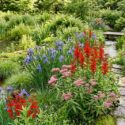
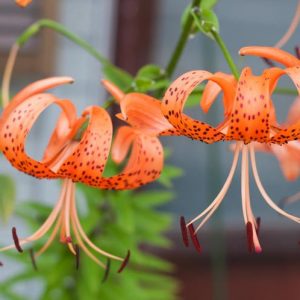
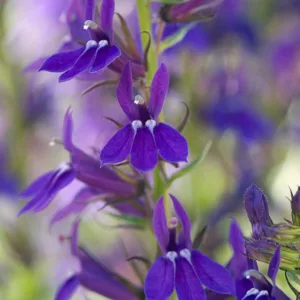
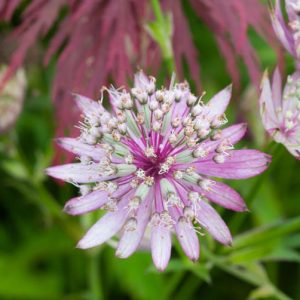
Brilliant orange Tiger Lilies rise above violet Lobelia and rosy Astrantia ‘Penny’s Pink’ in this richly layered late-summer border. The lilies provide drama, the Lobelia adds strong vertical color, and the Astrantia softens the planting with elegant detail. Together they create a vivid yet balanced display for moist garden borders.
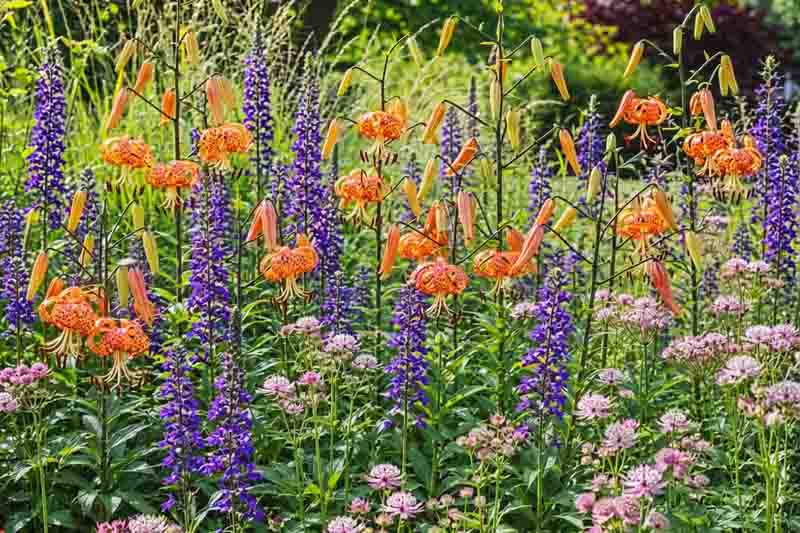


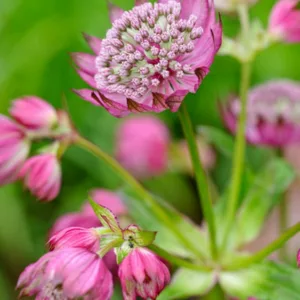
This striking late-summer border combines three very different flowers in a vivid but balanced palette. The tall stems of Lilium lancifolium ‘Splendens’ carry brilliant orange, black-spotted flowers above the planting, while Lobelia × speciosa ‘Vedrariensis’ sends up rich violet-purple spikes through the middle. Around them, Astrantia major ‘Penny’s Pink’ adds a lighter layer of rosy-pink, pincushion-like flowers.
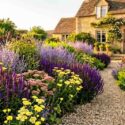
The combination works because each plant plays a distinct role. The Tiger Lilies provide height and drama, the Lobelia supplies strong vertical color, and the Astrantia softens the planting with smaller, more delicate blooms. Repeating all three in loose groups gives the border rhythm without making it look stiff or overly planned.
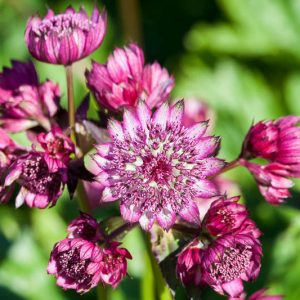
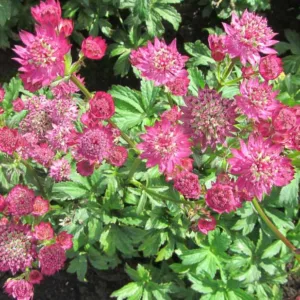
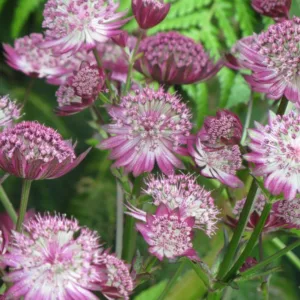
Main plants used: Lilium lancifolium ‘Splendens’ (Tiger Lily), Lobelia × speciosa ‘Vedrariensis’ (Lobelia), and Astrantia major ‘Penny’s Pink’ (Great Masterwort)
Use the Lobelia generously through the middle, let Astrantia soften the edges, and place the Tiger Lilies in smaller groups so their orange flowers remain a highlight.
The color contrast is vivid but well judged. The orange Tiger Lilies immediately catch the eye, while the violet Lobelia cools the composition and prevents the border from feeling too hot. Astrantia ‘Penny’s Pink’ introduces a softer rosy note that helps bridge the stronger orange and purple tones.
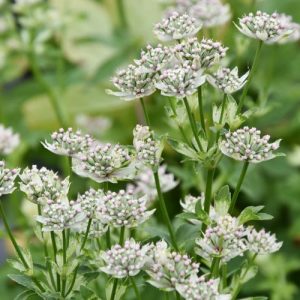
The flower shapes are equally important. Tiger Lilies have recurved, nodding blooms; Lobelia forms narrow upright spikes; and Astrantia carries small, intricate flowerheads above leafy clumps. Those differences keep the border visually interesting even where the colors overlap.
The planting also has a natural sense of depth. The lilies rise above everything else, the Lobelia forms much of the middle layer, and the Astrantia settles into the lower and middle parts of the border. Because the plants are repeated rather than lined up in blocks, the garden feels full and established.
Lilium lancifolium ‘Splendens’ provides the height and strongest warm color. Its nodding orange flowers, marked with dark spots and strongly recurved tepals, should rise through the planting in small, irregular groups.
Lobelia × speciosa ‘Vedrariensis’ creates the main vertical layer beneath the lilies. Its violet-purple flower spikes work best when repeated in noticeable groups rather than used as isolated plants.
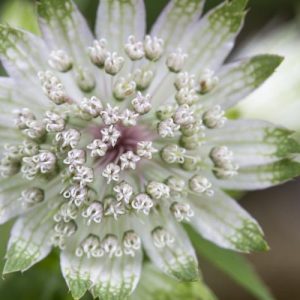
Astrantia major ‘Penny’s Pink’ softens the composition with rosy-pink flowers. Plant it toward the front and middle, allowing it to mingle with the Lobelia and fill the spaces around the lily stems.
Create a lush late-summer border with dramatic orange flowers above a cooler violet and pink planting.
Keep the lilies slightly less abundant so the orange remains a strong accent rather than overwhelming the cooler planting.
Vary the size and position of the groups rather than repeating identical clumps.
Place Astrantia toward the front and through the middle, where its softer flowers can fill the lower layer.
Repeat Lobelia in broader groups through the middle so the violet spikes create continuity across the border.
Set Tiger Lilies through the middle and rear, with a few groups slightly farther forward so the orange flowers appear at different depths.
Astrantia major ‘Penny’s Pink’ begins flowering earlier and helps start the display, while Lobelia gradually builds the cooler vertical structure of the border. As summer progresses, the Tiger Lilies open above them and bring the planting to its most dramatic point.
The border is at its best when all three overlap, with orange lilies floating above violet spikes and rosy Astrantia. Deadheading Astrantia can help encourage continued bloom or repeat flowering, which makes it especially useful in a border designed to look good well into late summer.
This is not a dry-garden combination. Lobelia and Astrantia both appreciate consistent moisture, while lilies also perform best when the root zone does not become excessively dry during active growth.
It is also better not to describe the planting as completely pest-free, disease-free, or deer-proof. Lilies in particular can suffer from pests and diseases, and browsing varies from garden to garden. The real strength of this combination is its layering: three plants with very different flower forms and colors, working together to create a memorable late-summer display.
| Hardiness |
5 - 7 |
|---|---|
| Heat Zones |
5 - 7 |
| Climate Zones | 4, 5, 6, 8, 9, 14, 15, 16, 17 |
| Exposure | Full Sun, Partial Sun |
| Season of Interest | Summer (Mid, Late) |
| Maintenance | Low, Average |
| Water Needs | Average |
| Soil Type | Chalk, Clay, Loam, Sand |
| Soil pH | Acid, Alkaline, Neutral |
| Soil Drainage | Moist but Well-Drained |
| Characteristics | Cut Flowers, Showy |
| Tolerances | Deer |
| Attracts | Bees, Butterflies |
| Landscaping Ideas | Beds And Borders |
| Garden Styles | Butterfly Garden, Informal and Cottage, Pollinator Garden |

| Hardiness |
5 - 7 |
|---|---|
| Heat Zones |
5 - 7 |
| Climate Zones | 4, 5, 6, 8, 9, 14, 15, 16, 17 |
| Exposure | Full Sun, Partial Sun |
| Season of Interest | Summer (Mid, Late) |
| Maintenance | Low, Average |
| Water Needs | Average |
| Soil Type | Chalk, Clay, Loam, Sand |
| Soil pH | Acid, Alkaline, Neutral |
| Soil Drainage | Moist but Well-Drained |
| Characteristics | Cut Flowers, Showy |
| Tolerances | Deer |
| Attracts | Bees, Butterflies |
| Landscaping Ideas | Beds And Borders |
| Garden Styles | Butterfly Garden, Informal and Cottage, Pollinator Garden |
Recreate this garden. Specify the percentages you would like to have of each plant and input the dimensions of your garden space.We'll give you a shopping list so you know how many plants you need.
| Plant | Quantity | |
|---|---|---|
| Lilium lancifolium 'Splendens' (Tiger Lily) | N/A | Buy Plants |
| Lobelia x speciosa 'Vedrariensis' (Cardinal Flower) | N/A | Buy Plants |
| Astrantia major 'Penny's Pink' (Great Masterwort) | N/A | Buy Plants |
Create a membership account to save your garden designs and to view them on any device.
Becoming a contributing member of Gardenia is easy and can be done in just a few minutes. If you provide us with your name, email address and the payment of a modest $25 annual membership fee, you will become a full member, enabling you to design and save up to 25 of your garden design ideas.
Join now and start creating your dream garden!
Create a membership account to save your garden designs and to view them on any device.
Becoming a contributing member of Gardenia is easy and can be done in just a few minutes. If you provide us with your name, email address and the payment of a modest $25 annual membership fee, you will become a full member, enabling you to design and save up to 25 of your garden design ideas.
Join now and start creating your dream garden!