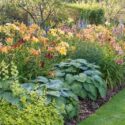
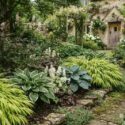
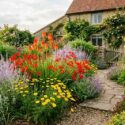
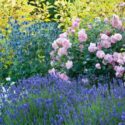
Violet-blue Salvia, soft apricot Achillea, glowing red Gaillardia, and a wandering hardy Geranium come together in a summer border full of color and movement. This cheerful combination feels natural rather than formal, attracts pollinators, and offers a long season of interest in a sunny, well-drained garden.
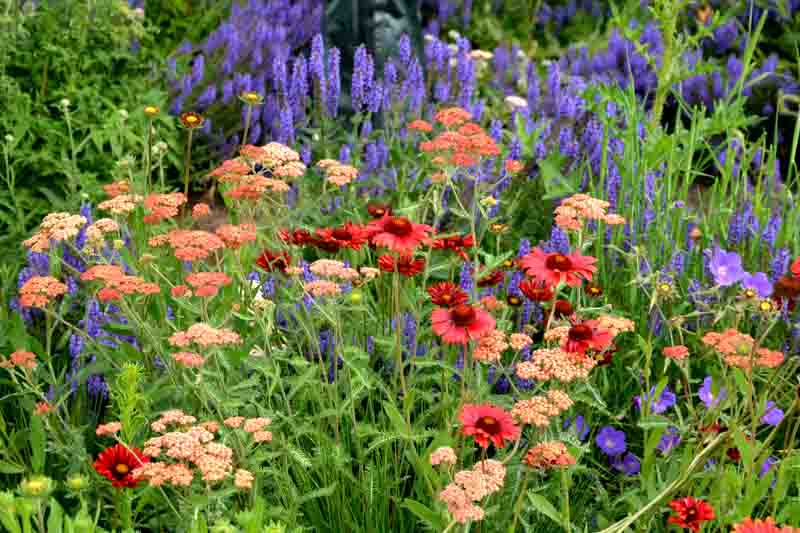


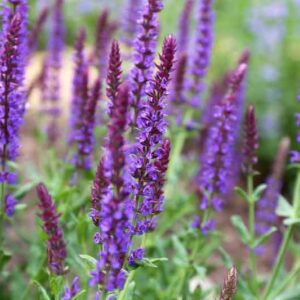
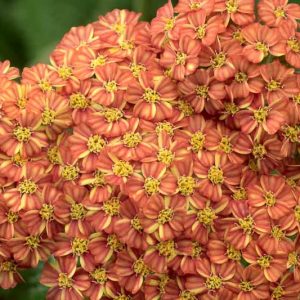
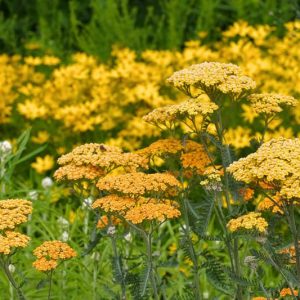
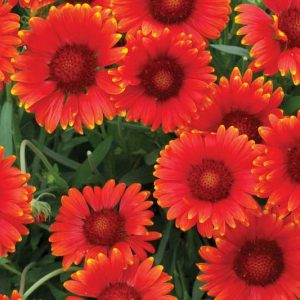
This lively summer border combines strong flower color with a relaxed, natural feel. Upright spires of Salvia nemorosa create a vivid violet-blue backdrop, while soft clusters of Achillea bring warm peachy-apricot tones through the middle. Scattered among them, Gaillardia adds glowing red flowers with darker centers, and a hardy Geranium threads through the planting with looser purple-blue blooms.
The planting feels full and cheerful without becoming heavy. Salvia provides much of the vertical rhythm, Achillea broadens the middle layer, Gaillardia introduces stronger focal color, and the Geranium helps soften the whole composition by filling gaps and linking the other plants together. The result is informal, bright, and easy to adapt to a sunny border.
Main plants used: Salvia nemorosa, Achillea (Yarrow), Gaillardia (Blanket Flower), and hardy Geranium (Cranesbill)
Repeat the Salvia generously, then let the Achillea, Gaillardia, and Geranium mingle around it. That mix of repetition and looseness is what gives the border its charm.
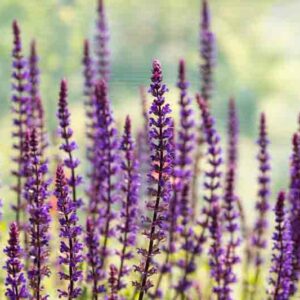
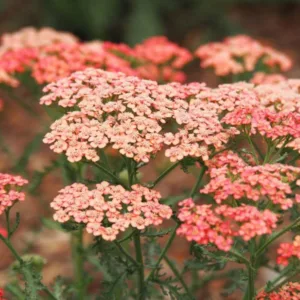
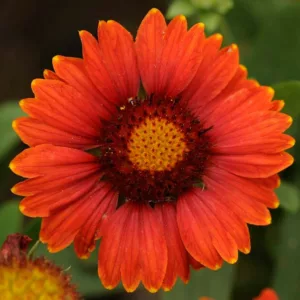
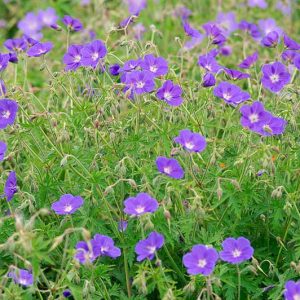
The success of this planting comes from contrast in both color and form. Salvia nemorosa carries narrow, upright flower spikes in cool violet-blue, while Achillea produces flatter, broader flower heads in softer apricot shades. Gaillardia adds bolder, daisy-like blooms in warmer reds, and the hardy Geranium fills spaces with a more relaxed, lightly mounding habit.
The cooler Salvia and Geranium help balance the warmer Achillea and Gaillardia, so the border feels lively without becoming harsh. The shapes are just as important: spikes, flat-topped umbels, open daisies, and smaller saucer-shaped flowers each read differently, even where the planting becomes dense.
This is also the kind of border that looks better when it is not too rigidly arranged. The plants overlap, repeat, and occasionally drift into one another, giving the whole composition a soft, established look rather than a formal planted scheme.
Salvia nemorosa provides the strongest vertical structure and much of the cool color. Use it in noticeable drifts toward the middle and rear, with a few groups closer to the front where space allows.
Achillea broadens the planting with flatter flower heads and softer warm shades. It works best in repeated groups through the middle, where it can bridge the cooler Salvia and brighter Gaillardia.
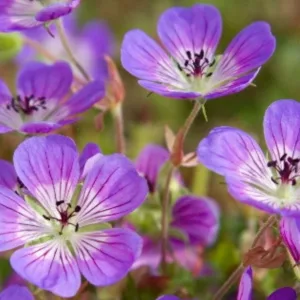
Gaillardia adds the boldest flower color. Its red and warm-toned daisies are most effective when repeated in smaller groups, so the color appears in several places rather than one dense block.
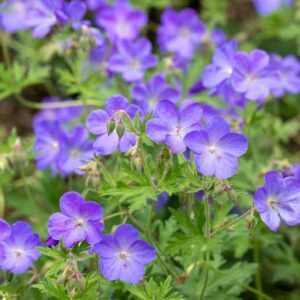
Hardy Geranium helps knit the border together. Use it near the front and through the middle so it can spill between neighboring plants and soften their edges.
Create an informal summer border with strong blue-violet structure, softer warm flower clusters, and bright scattered accents.
Use Salvia as the repeated backbone, then let the others vary more freely in size and placement.
Vary the group sizes. A few broader Salvia drifts with smaller repeated accents of the others usually looks best.
Start with broad groups of Salvia through the middle and rear so its violet-blue spikes form the main rhythm of the border.
Repeat Achillea among and just in front of it, using its flatter flower heads to create broader patches of warm color.
Place Gaillardia in smaller pockets through the lower and middle layers so its red blooms pop up in several places.
Allow the hardy Geranium to weave through the front and middle, softening edges and tying the whole planting together.
Salvia often begins early, followed by Achillea and the first flowers of Geranium and Gaillardia. As summer develops, the border becomes fuller and richer, with the different flower shapes overlapping rather than peaking all at once.
Deadheading can help prolong the display, especially for Salvia and Gaillardia, and some hardy Geraniums will continue producing flowers for a long season. Even when one plant eases off, the others help keep the border looking lively.
This kind of planting works best where the border gets plenty of light and is not overly rich or wet. Too much fertility can make some plants grow lush and floppy, while poor drainage may shorten the life of Salvia or Gaillardia.
Most importantly, do not make the layout too stiff. The appeal of this border comes from a balance of repetition and freedom: enough structure to feel intentional, but enough variation to keep it relaxed and garden-like.
| Hardiness |
5 - 9 |
|---|---|
| Heat Zones |
5 - 8 |
| Climate Zones | 2, 2A, 2B, 3, 3A, 3B, 4, 5, 6, 7, 8, 9, 10, 14, 15, 16, 17, 18, 19, 20, 21, 22, 23, 24 |
| Exposure | Full Sun |
| Season of Interest | Summer (Early, Mid, Late) |
| Maintenance | Average |
| Water Needs | Low, Average |
| Soil Type | Chalk, Loam, Sand |
| Soil pH | Acid, Neutral, Alkaline |
| Soil Drainage | Moist but Well-Drained, Well-Drained |
| Characteristics | Cut Flowers, Showy |
| Tolerances | Drought, Deer, Rabbit |
| Attracts | Bees, Butterflies |
| Landscaping Ideas | Beds And Borders |
| Garden Styles | Butterfly Garden, Informal and Cottage, Pollinator Garden |

| Hardiness |
5 - 9 |
|---|---|
| Heat Zones |
5 - 8 |
| Climate Zones | 2, 2A, 2B, 3, 3A, 3B, 4, 5, 6, 7, 8, 9, 10, 14, 15, 16, 17, 18, 19, 20, 21, 22, 23, 24 |
| Exposure | Full Sun |
| Season of Interest | Summer (Early, Mid, Late) |
| Maintenance | Average |
| Water Needs | Low, Average |
| Soil Type | Chalk, Loam, Sand |
| Soil pH | Acid, Neutral, Alkaline |
| Soil Drainage | Moist but Well-Drained, Well-Drained |
| Characteristics | Cut Flowers, Showy |
| Tolerances | Drought, Deer, Rabbit |
| Attracts | Bees, Butterflies |
| Landscaping Ideas | Beds And Borders |
| Garden Styles | Butterfly Garden, Informal and Cottage, Pollinator Garden |
Recreate this garden. Specify the percentages you would like to have of each plant and input the dimensions of your garden space.We'll give you a shopping list so you know how many plants you need.
| Plant | Quantity | |
|---|---|---|
| Salvia nemorosa 'Caradonna' (Woodland Sage) | N/A | Buy Plants |
| Achillea millefolium 'Apricot Delight' (Yarrow) | N/A | Buy Plants |
| Gaillardia x grandiflora 'Arizona Red Shades' (Blanket Flower) | N/A | Buy Plants |
| Geranium 'Brookside' (Cranesbill) | N/A | Buy Plants |
Create a membership account to save your garden designs and to view them on any device.
Becoming a contributing member of Gardenia is easy and can be done in just a few minutes. If you provide us with your name, email address and the payment of a modest $25 annual membership fee, you will become a full member, enabling you to design and save up to 25 of your garden design ideas.
Join now and start creating your dream garden!
Create a membership account to save your garden designs and to view them on any device.
Becoming a contributing member of Gardenia is easy and can be done in just a few minutes. If you provide us with your name, email address and the payment of a modest $25 annual membership fee, you will become a full member, enabling you to design and save up to 25 of your garden design ideas.
Join now and start creating your dream garden!