Hydrangea macrophylla, Hydrangea paniculata, Hydrangea quercifolia, Hydrangea serrata, Hydrangea arborescens, Climbing Hydrangea, Bigleaf Hydrangeas, Oakleaf Hydrangea, Panicle Hydrangea, Smooth Hydrangea
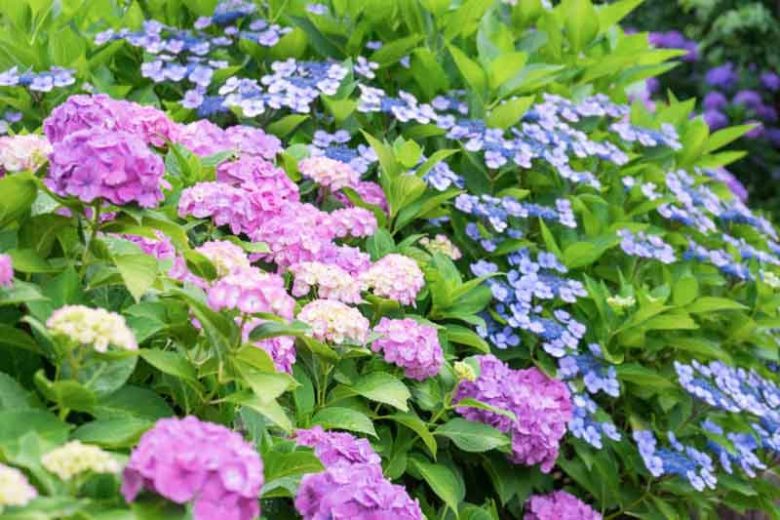


With over 70 species and countless cultivars, hydrangeas range from shade-loving foundation shrubs to sun-tough, privacy-making hedges. This guide compares the main types—what climates they suit, how much sun they want, and which ones bloom on old vs. new wood—so you can plant with confidence.
TL;DR: Cold winters? Choose Panicle or Smooth (bloom on new wood). Want color-changing blooms? Go for Bigleaf or Mountain (old wood). Need four-season foliage drama? Oakleaf. Shady vertical coverage? Climbing.
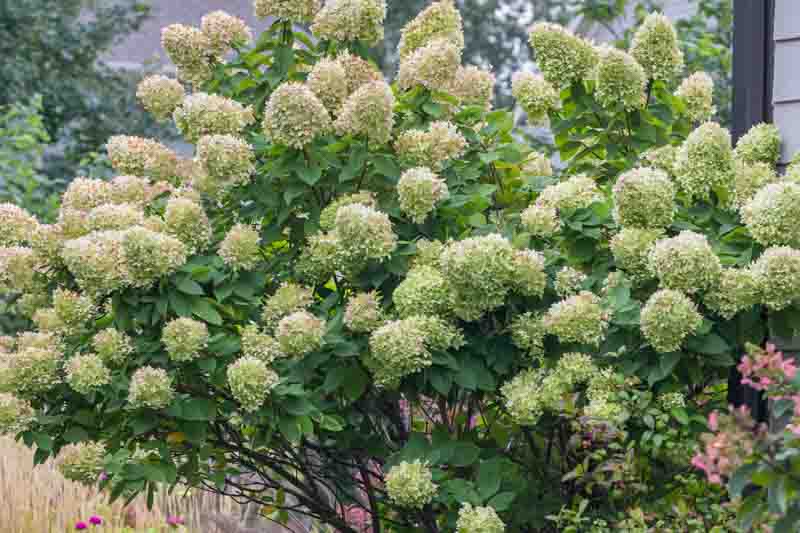
Summary: Six popular hydrangea groups differ in sun, hardiness, and pruning wood.
Panicle (H. paniculata) & Smooth (H. arborescens) bloom on new wood (reliable after harsh winters).
Bigleaf (H. macrophylla) & Mountain (H. serrata) bloom on old wood (pH can shift blue↔pink).
Oakleaf (H. quercifolia) brings four-season interest; Climbing (H. anomala subsp. petiolaris) covers shade walls and arbors.
Match type to USDA zone, sun, and pruning comfort.
| Covered Types | Bigleaf (H. macrophylla), Panicle (H. paniculata), Smooth (H. arborescens), Oakleaf (H. quercifolia), Mountain (H. serrata), Climbing (H. anomala subsp. petiolaris) |
|---|---|
| Sun & Exposure | Panicle: full sun–part sun · Smooth: part sun/shade tolerant · Bigleaf/Mountain: morning sun + afternoon shade · Oakleaf: part shade (sun OK if soil stays moist) · Climbing: part–full shade |
| Hardiness (USDA) | Panicle 3–8 · Smooth 3–8 · Bigleaf 5–9 · Oakleaf 5–9 · Mountain 6–9 · Climbing 4–9 |
| Bloom & Pruning Wood | New wood: Panicle, Smooth (prune late winter/early spring). Old wood: Bigleaf, Mountain, Oakleaf (prune right after flowering). Climbing: blooms late spring–early summer on established vines. |
| Color Notes | Soil pH can shift Bigleaf/Mountain blossom color (acid → bluer, alkaline → pinker). Panicle/Smooth open white then age to pink/rose; Oakleaf white to pink/bronze. |
| Typical Size | Bigleaf 2–6 ft (0.6–1.8 m) · Mountain 2–4 ft (0.6–1.2 m) · Smooth 3–6 ft (0.9–1.8 m) · Panicle 8–20 ft (2.4–6.0 m) · Oakleaf 2–8 ft (0.6–2.4 m) · Climbing 30–50 ft (9–15 m; vine) |
| Soil & Water | Moist, well-drained soil; mulch 2–3 in. Keep evenly watered in heat. Oakleaf becomes more drought-tolerant once established. |
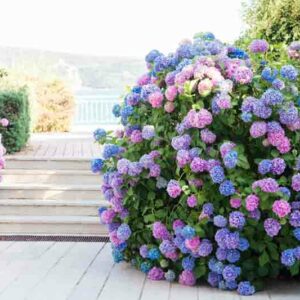
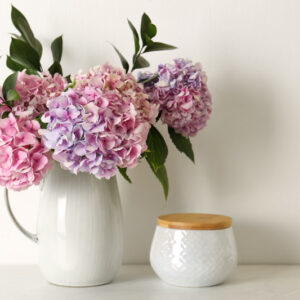
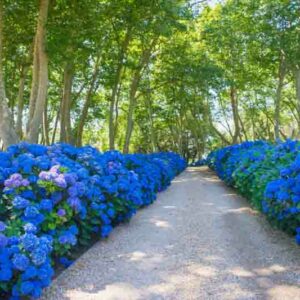
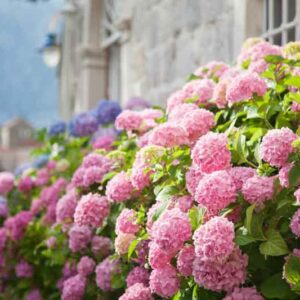
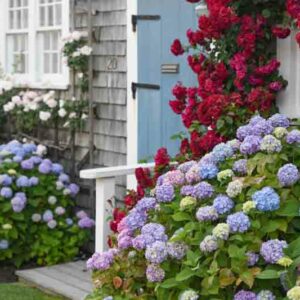
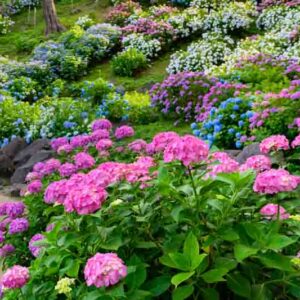
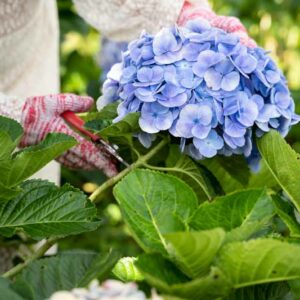
Bigleaf hydrangeas are among the most popular ornamental varieties, admired for their large, showy blooms and lush foliage. Known for their ability to change flower color based on soil pH, they offer dynamic beauty throughout the growing season. There are two types:
Native Region: Japan, China, Korea, parts of Southeast Asia.
Bloom Time: Late spring to early fall; deadheading can extend display.
Size: Typically 2–6 ft (0.6–1.8 m) tall and wide.
Hardiness Zones: USDA 5–9; best in partial shade with moist, well-drained soil; sensitive to extreme cold/heat.
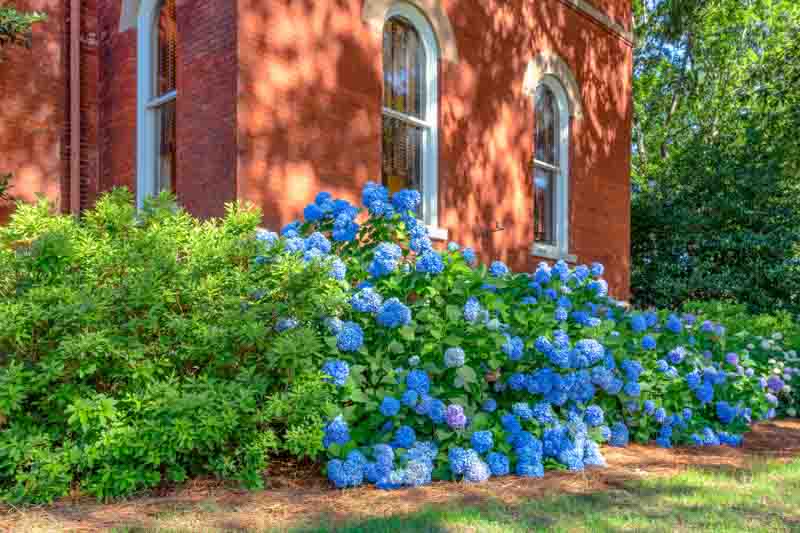
Nikko Blue Hydrangea
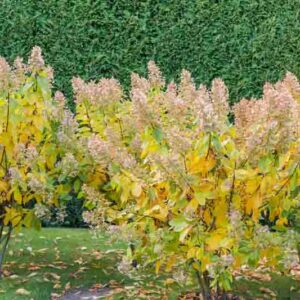
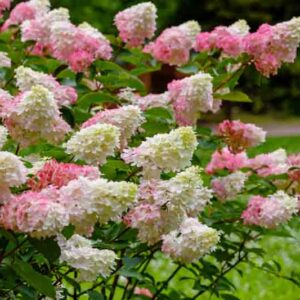
Panicle hydrangeas are known for their cone-shaped flower clusters and tolerance to full sun. They bloom on new wood, making them reliable even after harsh winters. Flowers typically open white and age to pink or red.
Native Region: Asia (including Japan and China).
Bloom Time: Mid-summer through fall, often changing color as nights cool.
Size: 8–20 ft (2.4–6.0 m) tall; 6–8 ft (1.8–2.4 m) spread.
Hardiness Zones: USDA 3–8; among the most cold-tolerant hydrangeas; blooms on new wood.
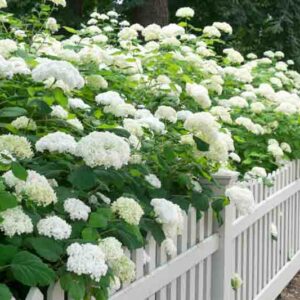
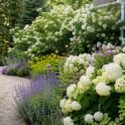
Rounded white clusters and dependable flowering define Smooth hydrangeas. They bloom on new wood, so winter dieback won’t cost you flowers the next year. The beloved ‘Annabelle’ is a classic choice.
Native Region: Eastern United States (woodlands to meadows).
Bloom Time: Early summer to fall; lime-green buds to bright white, aging tan.
Size: 3–6 ft (0.9–1.8 m) tall and wide.
Hardiness Zones: USDA 3–8; new-wood bloomers for dependable performance.
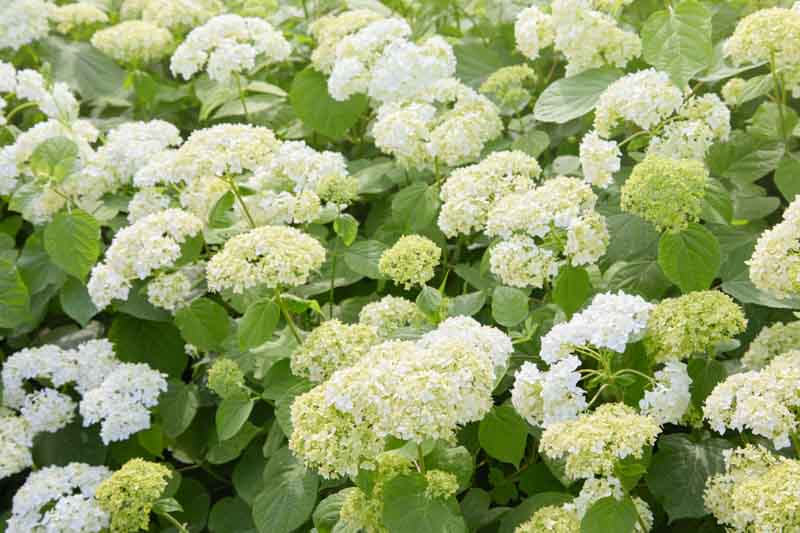
Annabelle Hydrangea
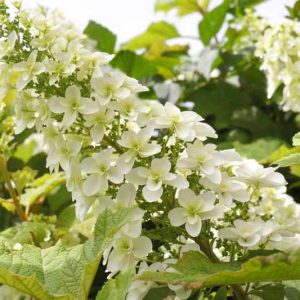
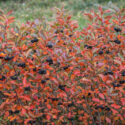
Oakleaf hydrangeas bring bold, lobed foliage and spectacular fall color (red, orange, purple), plus white cones that blush pink/bronze. They bloom on old wood; prune right after flowering.
Native Region: Southeastern United States (woodlands).
Bloom Time: Late spring to mid-summer; cones age attractively.
Size: 2–8 ft (0.6–2.4 m) tall and wide; dwarf forms available.
Hardiness Zones: USDA 5–9; partial shade preferred; more drought-tolerant once established.
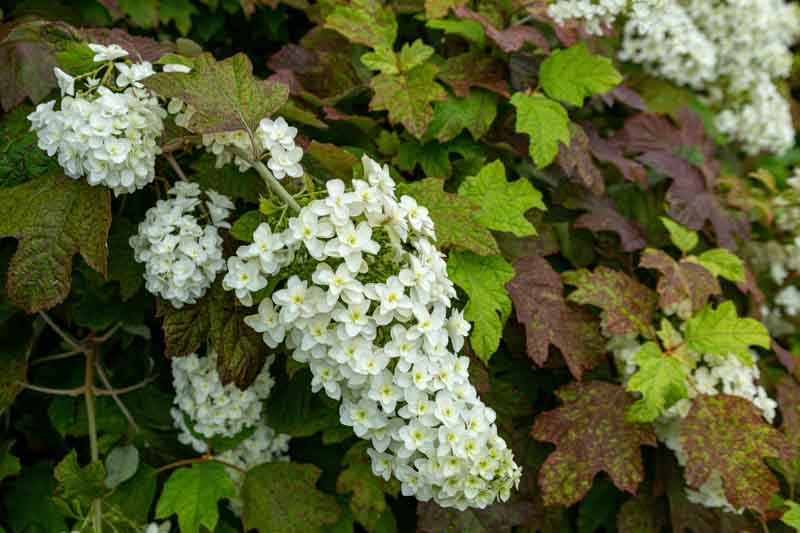
Oakleaf Hydrangea
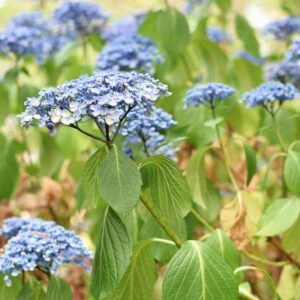
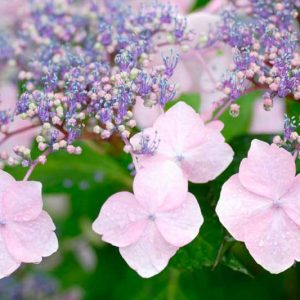
Compact and elegant, Mountain hydrangeas resemble Bigleaf but with smaller leaves and delicate lacecaps. They bloom on old wood and excel in cooler climates and part shade.
Native Region: Mountains of Japan and Korea.
Bloom Time: Early to late summer; refined lacecap effect.
Size: 2–4 ft (0.6–1.2 m) tall and wide.
Hardiness Zones: USDA 6–9; partial shade; best where summers are mild.
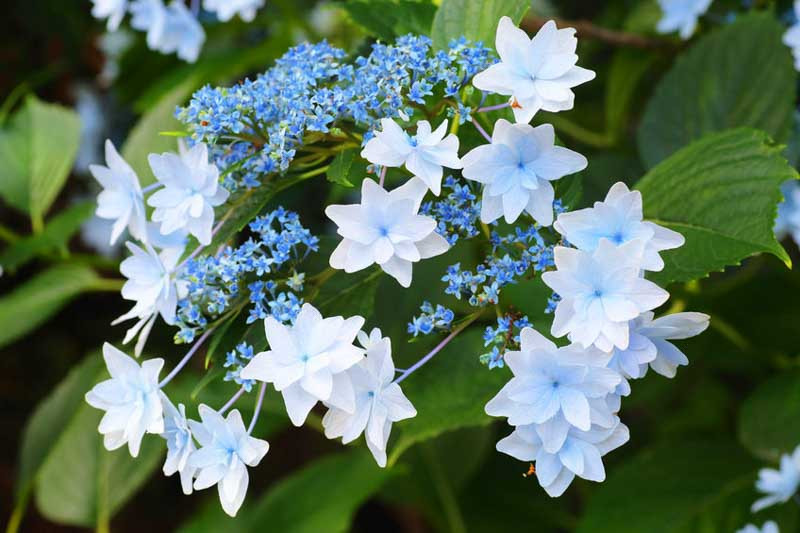
Sumida-no-hanabi Hydrangea
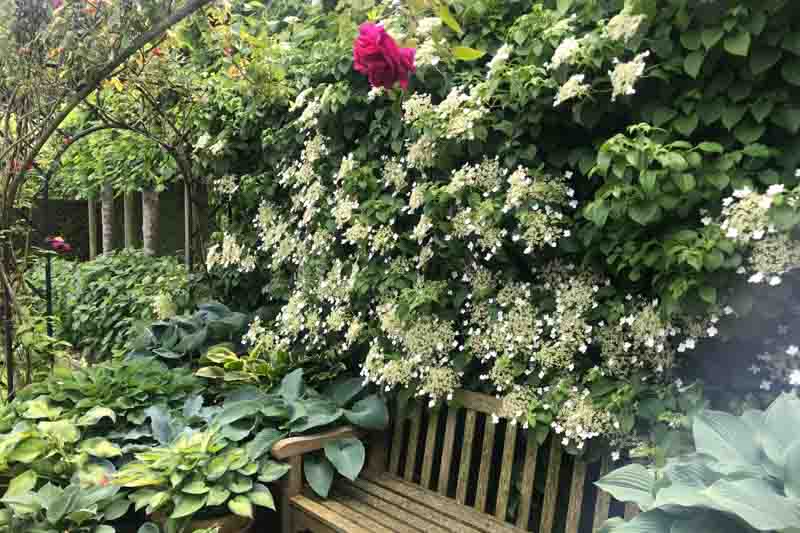
A vigorous, self-clinging vine for shade walls, fences, and trees, with heart-shaped leaves (golden fall color) and fragrant, lacy white bloom plates in late spring to early summer.
Native Region: Woodlands of Japan and Korea.
Bloom Time: Late spring to early summer; attracts pollinators.
Size: 30–50 ft (9–15 m) tall; 5–6 ft (1.5–1.8 m) wide.
Hardiness Zones: USDA 4–9; partial to full shade; tolerates morning sun with moisture.
Match the plant to your climate, light, and space. Look for healthy foliage and sturdy stems (no pests or wilt). For blue/pink effects choose Bigleaf (pH influences color). Confirm USDA zone and mature size, and seek reblooming varieties if you want flowers across the season.
Panicle hydrangea (Hydrangea paniculata). It tolerates full sun, varied soils, and blooms on new wood—so it flowers reliably even after harsh winters or imperfect pruning. Low water needs once established and generally pest-resistant.
Smooth hydrangea (Hydrangea arborescens), e.g., ‘Annabelle’. It flowers on new wood, giving dependable blooms regardless of winter dieback. Also more tolerant of shade and cold than many types.
Avoid low spots with standing water (root rot risk), deep full shade (poor flowering), heat-reflective walls, and sites with intense tree-root competition. Choose moist, well-drained soil with consistent irrigation.
Bigleaf hydrangeas (H. macrophylla)—especially reblooming types—often flower from late spring into fall (old + new wood). Many panicles also hold blooms for months as they color from white to pink/rose.
Six popular groups: Bigleaf (H. macrophylla), Mountain (H. serrata), Oakleaf (H. quercifolia), Panicle (H. paniculata), Smooth (H. arborescens), and Climbing (H. anomala subsp. petiolaris).
Panicle and Smooth are the most cold-tolerant (typically USDA 3–8) and bloom reliably on new wood.
No. Color shift mainly affects Bigleaf and Mountain types. Panicle and Smooth generally do not change color with pH (their flowers age from white to pink).
For blue Bigleaf/Mountain blooms, soil should be acidic (≈pH ≤5.5) with available aluminum. For pink, raise pH toward neutral/alkaline and limit aluminum.
Panicle: full sun–part sun; Smooth: sun–part shade; Bigleaf/Mountain: morning sun, afternoon shade; Oakleaf: part shade; Climbing: shade–part shade.
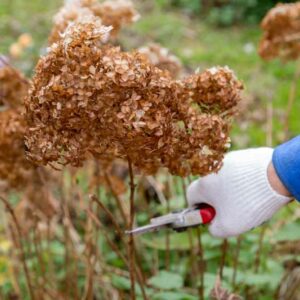
New-wood bloomers (Panicle, Smooth): late winter/early spring. Old-wood bloomers (Bigleaf, Mountain, Oakleaf, Climbing): prune right after flowering. Remove dead wood anytime.
Common causes: pruning at the wrong time (removing flower buds on old-wood types), winter bud damage, too much shade, or drought stress.
Yes. Some Bigleaf/Mountain series (e.g., Endless Summer®, Let’s Dance®) flower on both old and new wood for extended bloom.
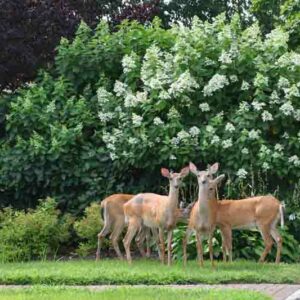
Not reliably—deer may browse many types. Protect in high-pressure areas; Oakleaf can be somewhat less palatable.
Yes. Hydrangea leaves and flowers contain cyanogenic glycosides; ingestion can be harmful to pets. Plant out of reach.
Absolutely. Choose compact cultivars (often Bigleaf/Mountain), use a quality potting mix, water consistently, and protect roots in winter.
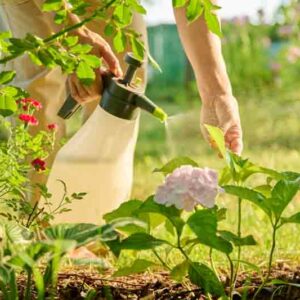
Keep soil evenly moist—especially in summer. Mulch to conserve moisture; containers dry out faster and need more frequent watering.
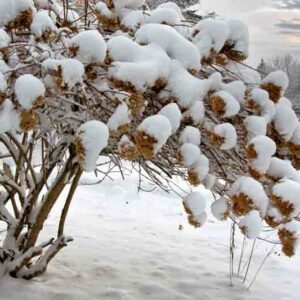
In cold regions, mulch the root zone; for Bigleaf/Mountain, consider wrapping or covering flower buds to prevent winter kill.
Yes. Harvest when petals feel papery and color is set; air-dry upright in a vase with a little water, or hang small clusters upside-down in a dry room.
| Hardiness |
3 - 9 |
|---|---|
| Heat Zones |
1 - 9 |
| Plant Type | Shrubs |
| Plant Family | Hydrangeaceae |
| Genus | Hydrangea |
| Exposure | Full Sun, Partial Sun |
| Season of Interest | Spring (Late), Summer (Early, Mid, Late), Fall |
| Maintenance | Low |
| Water Needs | Average |
| Soil Type | Clay, Loam, Sand |
| Soil pH | Acid, Alkaline, Neutral |
| Soil Drainage | Moist but Well-Drained |
| Characteristics | Dried Arrangements, Cut Flowers, Showy |
| Attracts | Butterflies, Hummingbirds |
| Landscaping Ideas | Beds And Borders, Hedges And Screens, Patio And Containers |

All parts of the plant are considered poisonous if ingested due to the presence of cyanogenic glycoside. It’s generally safe for humans to handle, but ingestion can cause discomfort. Hydrangea is considered toxic to pets, including dogs and cats.
tkaiworks / 123RF Stock Photo
| Hardiness |
3 - 9 |
|---|---|
| Heat Zones |
1 - 9 |
| Plant Type | Shrubs |
| Plant Family | Hydrangeaceae |
| Genus | Hydrangea |
| Exposure | Full Sun, Partial Sun |
| Season of Interest | Spring (Late), Summer (Early, Mid, Late), Fall |
| Maintenance | Low |
| Water Needs | Average |
| Soil Type | Clay, Loam, Sand |
| Soil pH | Acid, Alkaline, Neutral |
| Soil Drainage | Moist but Well-Drained |
| Characteristics | Dried Arrangements, Cut Flowers, Showy |
| Attracts | Butterflies, Hummingbirds |
| Landscaping Ideas | Beds And Borders, Hedges And Screens, Patio And Containers |
Create a membership account to save your garden designs and to view them on any device.
Becoming a contributing member of Gardenia is easy and can be done in just a few minutes. If you provide us with your name, email address and the payment of a modest $25 annual membership fee, you will become a full member, enabling you to design and save up to 25 of your garden design ideas.
Join now and start creating your dream garden!
Create a membership account to save your garden designs and to view them on any device.
Becoming a contributing member of Gardenia is easy and can be done in just a few minutes. If you provide us with your name, email address and the payment of a modest $25 annual membership fee, you will become a full member, enabling you to design and save up to 25 of your garden design ideas.
Join now and start creating your dream garden!