Build a gorgeous shade garden with plant lists, recipes, and care tips. Ideas for dry, moist, and dappled shade - all zones, all seasons.
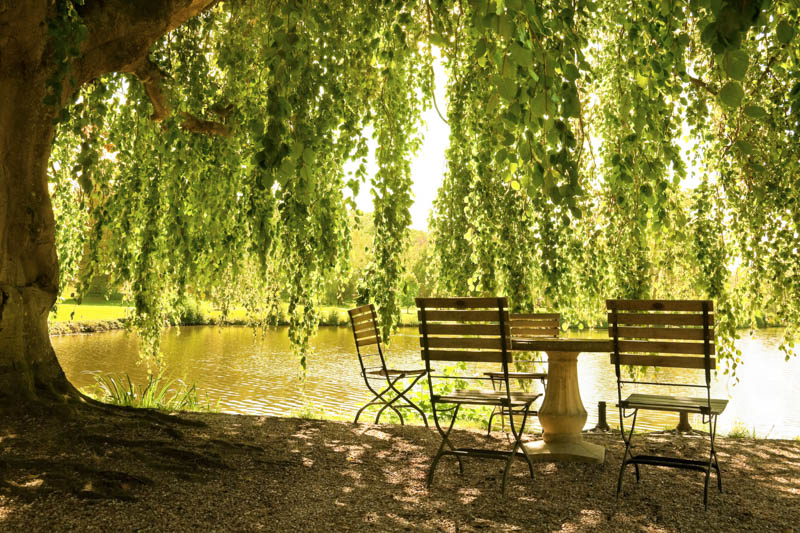


Turn dim corners into green retreats with texture, fragrance, and four-season calm. This hub guides you through shade garden design principles, plant lists by layer, ready-to-copy planting ideas, regional care tips, and FAQs – so you can create an inviting, low-stress garden from a north-facing stoop to a woodland backyard.
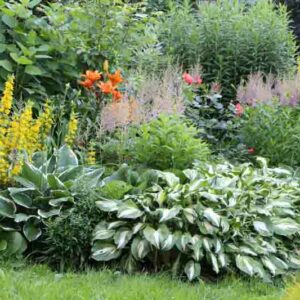
A shade garden celebrates light that is soft and indirect. Instead of chasing blazing sun, it leans into dappled canopies, lush foliage, layered textures, and quiet color. Think glossy leaves against matte ferns, spring bulbs that sparkle before trees leaf out, and evergreen anchors that look good when the days are short. Shade gardens thrive where buildings, fences, or trees filter light. The goal is comfort – for plants and people – using forms and textures that glow in low light: variegated leaves, lime greens, deep blues, burgundy accents, and silvers that catch any glint.
Core ideas include reading your light (deep shade vs. part shade), right plant, right moisture (dry shade under eaves vs. moist shade in low spots), soil building with leaf mold and compost, gentle irrigation, and four-season bones using structural evergreens, broadleaf shrubs, and bold perennials. Flowers are a bonus. Foliage is the star.
Design from tall to small for structure, contrast, and seasonal interest. Always check USDA hardiness zone, light, and soil moisture before choosing varieties.
🔎 Find more with our Plant Finder
🔎 Find more with our Plant Finder
Note: some groundcovers (Ajuga, Lamium, Convallaria, creeping Jenny) can be invasive in certain regions. Always check local guidance and consider native alternatives.
🔎 Find more with our Plant Finder
🔎 Find more with our Plant Finder
Where possible, pair these classics with shade-tolerant native woodland plants suited to your region for extra habitat value.
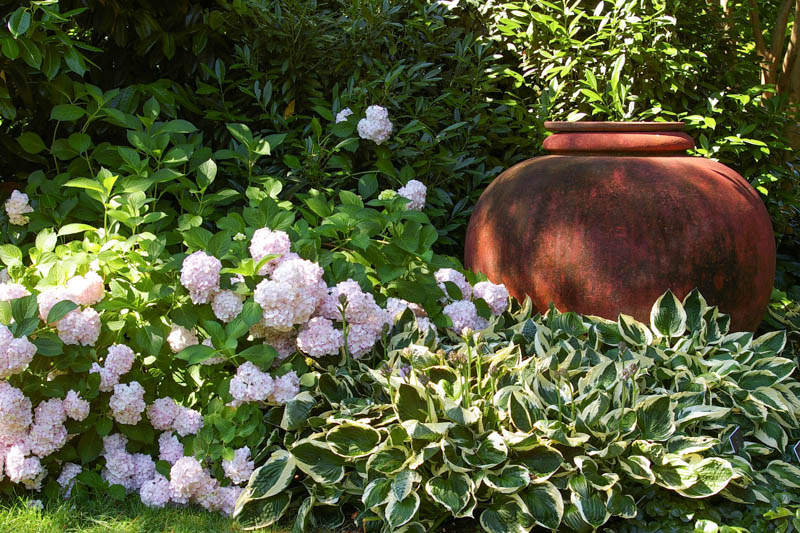
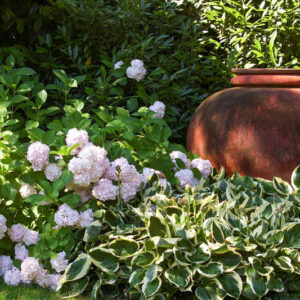
This NYBG-inspired shade combo is all soft light and quiet elegance—perfect for brightening dim corners from summer into fall. Luminous Hydrangea macrophylla ‘Emile Mouillère’ pairs with crisp, variegated Hosta ‘Patriot’, while a terracotta urn adds warmth and a subtle “wow” moment. Low-maintenance, easy to replicate, and undeniably classy.
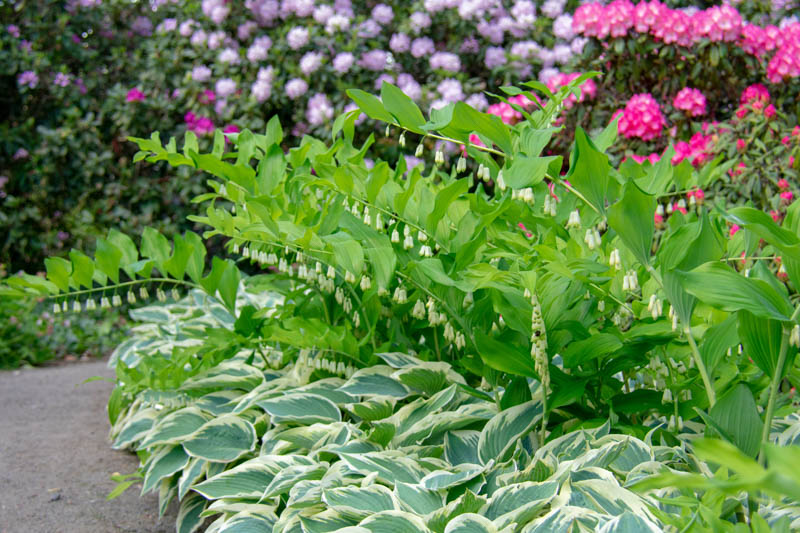
This shade combo feels like a quiet woodland walk—soft greens, cream highlights, and gentle movement-elegant without trying.
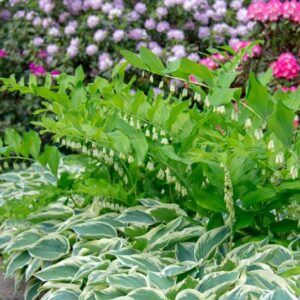
Solomons’s seal (Polygonatum biflorum) arches overhead with dangling white bells, while variegated Hostas lay a luminous carpet below. A backdrop of pink Rhododendrons lifts the whole scene with spring color and year-round structure.
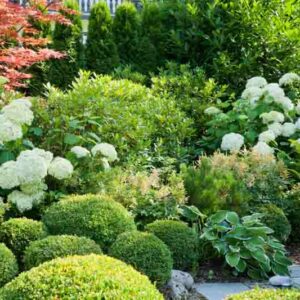
Charming Shade Garden with Hydrangea, Japanese Maple and Clipped Boxwood
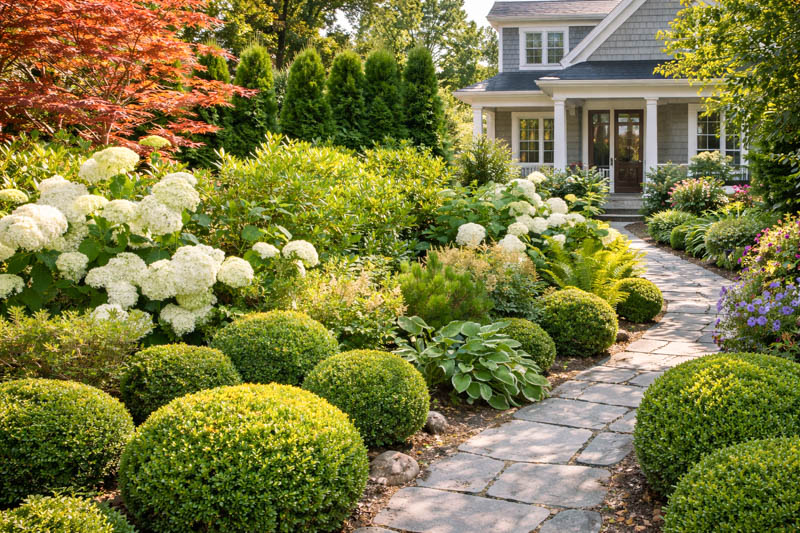
This shade-loving mix feels like a calm, green-and-white sanctuary—cool in summer, glowing in spring and fall, and beautifully structured year-round. Clipped Boxwood ‘Suffruticosa’ sets the bones; spring deciduous azaleas scent the air; Hydrangea arborescens ‘Annabelle’ dazzles with summer snowball blooms; and Acer palmatum ‘Elegans’ finishes the year with fiery autumn color. Variegated Hostas, feathery Astilbes, and fresh Ostrich Fern fronds weave in soft texture and polish.
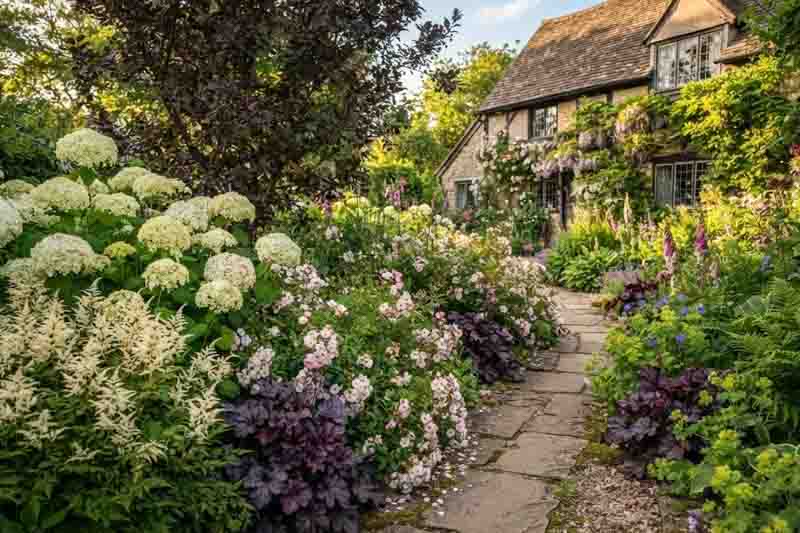
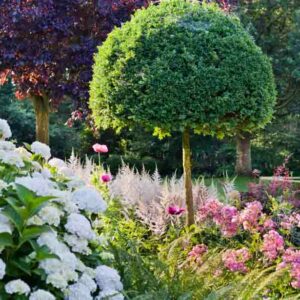
This summer border feels like a soft, romantic cloud—layered whites and pinks with just enough deep purple to make everything pop. At the back, Hydrangea arborescens ‘Annabelle’ glows with big, luminous white blooms for months. She’s paired with charming Rosa ‘Ballerina’, scattering sprays of small pink, white-eyed flowers, and Astilbe ‘Deutschland’, whose brilliant white plumes age to warm caramel for winter interest. At their feet, Heuchera ‘Plum Royale’ and Prunus cerasifera ‘Nigra’ add rich, dark foliage that gives the whole planting depth and drama.
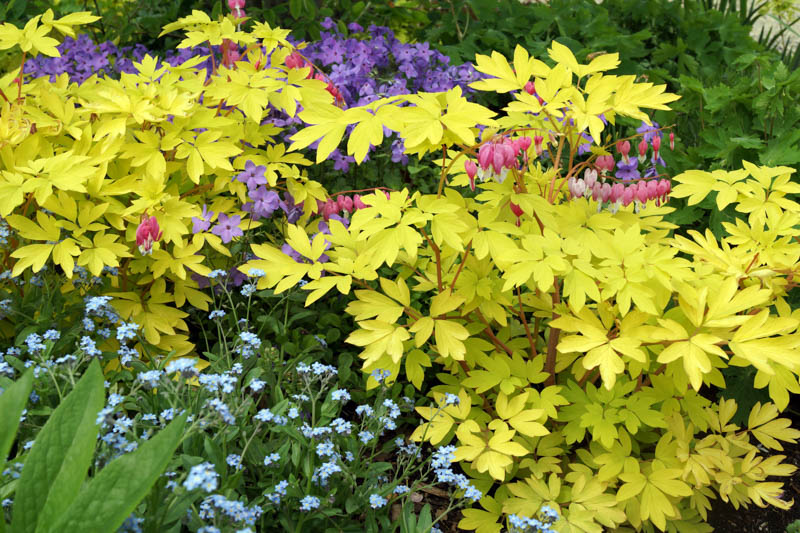
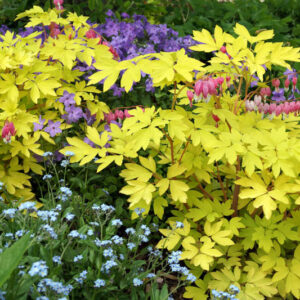
This spring trio turns a shady nook into a little jewel box—glowing, romantic, and full of life. The chartreuse leaves of Lamprocapnos spectabilis ‘Gold Heart’ (Bleeding Heart) light up the border, dangling pink hearts above a soft carpet of Myosotis sylvatica (Forget-me-not) in sky blue and rich violet Phlox stolonifera (Creeping Phlox).
Gold Heart brings height, movement, and that electric golden foliage; Forget-me-nots gently weave everything together; Creeping Phlox knits the ground with evergreen mats that stay pretty long after the Bleeding Heart takes its midsummer rest.
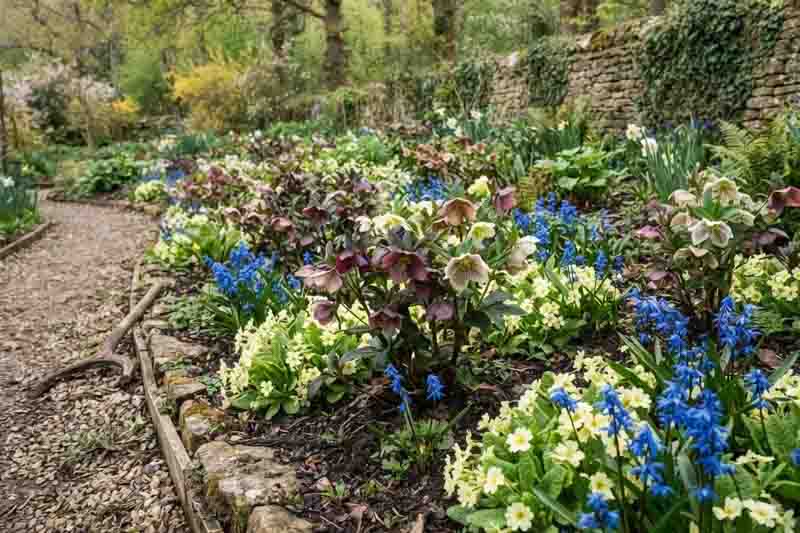
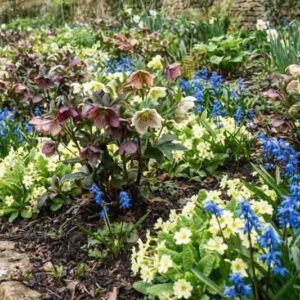
This early-spring trio is like flipping the “on” switch after winter—soft, romantic color when almost nothing else is blooming. Nodding pink flowers of Helleborus × hybridus (Lenten Rose) stand above glossy evergreen foliage, mingling with the fresh, pale-yellow faces of Primula vulgaris (Common Primrose) and pools of vivid blue Scilla sibirica (Siberian Squill).
Hellebores bring long-lasting structure and bloom from late winter into spring, Primroses add fragrance and cheerful edging, and Scilla threads through as a naturalizing bulb that returns in ever-larger drifts each year.
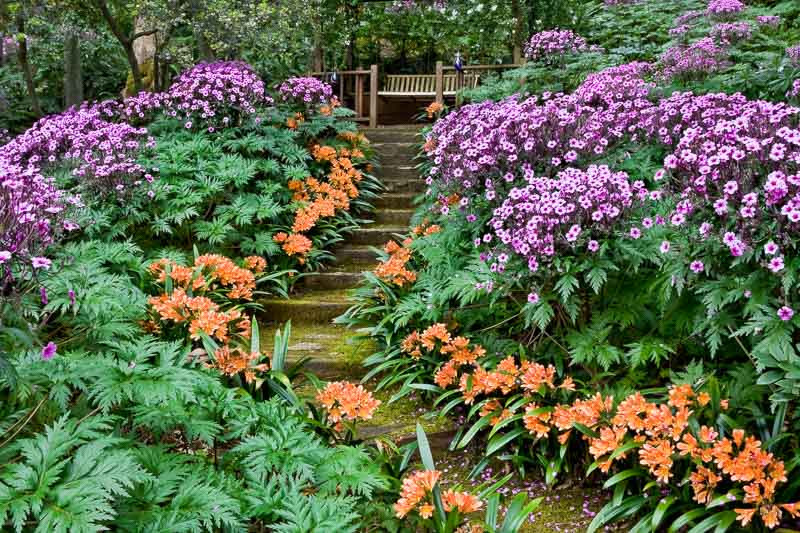
This path feels like a tropical ribbon of color—lush, evergreen, and glowing for months. Towering Geranium maderense (Madeira Cranesbill) throws up huge domes of purplish-pink blooms, underplanted with Clivia miniata (Natal Lily) and its bold orange-red trumpets. Even when they’re off bloom, both plants keep the scene rich and full with their dark, textured foliage—perfect for a frost-free, part-shade garden that always looks “on.”
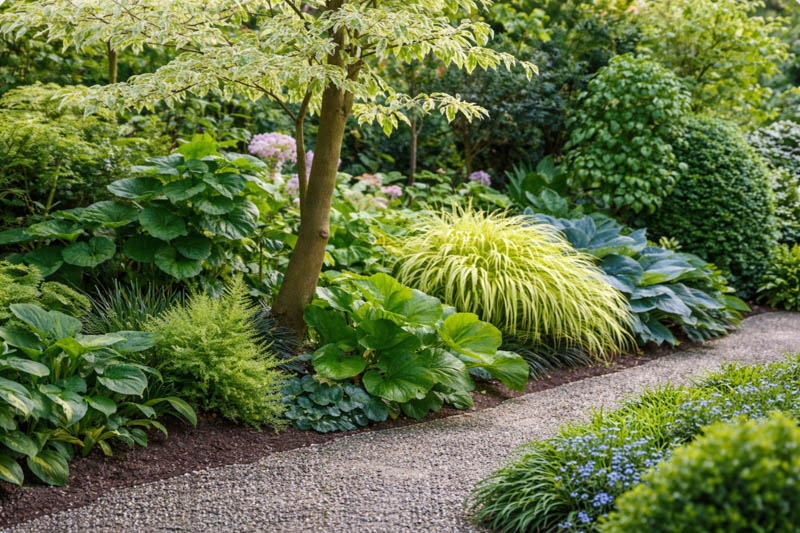
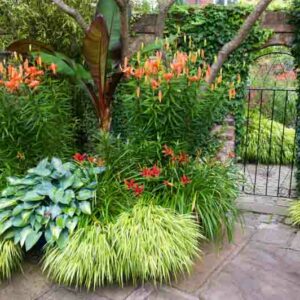
This border feels like a quiet, modern woodland—cool, layered, and elegant in every season. Under the tiered canopy of Cornus controversa ‘Variegata’ (Wedding Cake Tree), foliage takes center stage: blue, gold, green, and near-black working together like a calm, living painting.
Hosta ‘Halcyon’ makes dense, steely blue mounds, while Hakonechloa macra ‘Aureola’ threads golden ribbons of grass between them. Bergenia cordifolia anchors everything with bold, glossy leaves and spring flowers, and Ophiopogon planiscapus ‘Nigrescens’ (Black Mondo Grass) adds inky tufts that make every lighter tone glow.
Find More Shade Garden Design Ideas
Entry stoop that never sees noon sun – no problem. Pair late winter hellebores with colorful heuchera and a trio of clipped evergreens for year round polish.
Thirsty roots overhead and dry soil below. Choose plants that tolerate competition and still look refined.
A calm ribbon that glows all season on the north side of a fence or house.
A soft transition between lawn and trees that brings summer flowers and fall color.
Build a portable shade vignette on a patio or balcony with layered pots and spills of lime green.
Respect the root zone. Do not pile soil against trunks. Plant small and water to establish. Choose epimedium, hellebores, brunnera in part shade, asparagus fern in warm zones, pachysandra, and carex. Add 2 inches of leaf mold each fall and a meandering soaker hose. Mulch lightly so roots can breathe. Check local invasive lists before planting asparagus fern outdoors, and keep away from pets that might nibble.
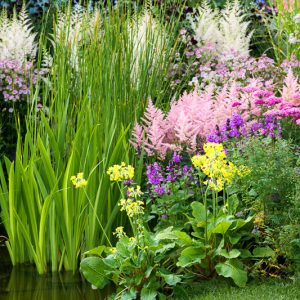
Think rain garden light. Mound beds a bit, add organic matter, and use moisture lovers like astilbe, ligularia, Japanese iris near wetter edges, and royal fern. Keep mulch coarse so crowns stay dry.
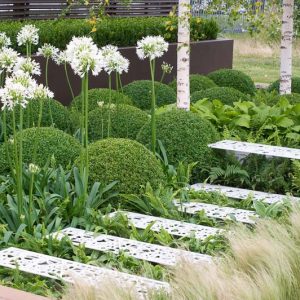
Go vertical and rhythmic. Alternate clipped evergreens with repeated grasses or ferns. Choose narrow forms – columnar yew or holly – then soften with hosta and tiarella. Use pale pavers to bounce light.
No plant is deer proof but many are deer savvy. Try ferns, hellebores, boxwood, sweet box, epimedium, hakone grass, and brunnera. Use scent and texture diversity and protect new plantings while they establish.
Plant in wide holes between major roots, use plugs and small containers, and irrigate slowly so water infiltrates. Raised stone pockets work if you keep soil depth modest over roots and open at the sides so moisture can move.
Match plants to place using USDA zones, light levels from deep to bright shade, and moisture from dry to wet. Favor durable foliage plants and note deer behavior locally.
Style menu: Woodland ribbon, courtyard evergreen calm, path glow with hosta and ferns, rain garden in light shade, side yard rhythm with clipped forms, spring bulb meadow under deciduous trees, and container based shade deck.
Browse ideas or jump straight into planning:
Filter by zone, light, moisture, height, and color to plan with confidence.
A shade garden is any planting area that receives less than about 4 hours of direct sun per day, or where light is filtered through trees, fences, or buildings. Design focuses on foliage, texture, and structure instead of sun loving flowers. Shade gardens can range from bright, dappled woodland edges to deep, building cast shade.
Full shade: Less than 2 hours of direct sun per day, but with bright ambient light.
Part shade: About 2 to 4 hours of direct sun, often morning only, or bright reflected light.
Dappled shade: Sunlight that moves through branches, creating shifting patches of light and shadow. Many plants labeled for part shade thrive in dappled shade.
Many shade tolerant plants flower well, especially in part shade or in spring before trees leaf out. Hellebores, astilbe, bleeding heart, epimedium, foxglove, primrose, hydrangea, and some roses bloom in lower light. However, long term success usually comes from designing with foliage first and treating flowers as a bonus rather than the main feature.
Pick a clear day and check the area every 2 to 3 hours from morning to late afternoon. Note where and when you see direct sun on the ground, and how long it lasts. Also note whether the shade is from trees, buildings, or both. This simple light map lets you choose plants labeled for full shade, part shade, or part sun with much better accuracy.
Dependable shade plants include hosta, ferns (such as Dryopteris, Athyrium, and Polystichum), hellebores, heuchera, brunnera, epimedium, pulmonaria, tiarella, astilbe, Japanese forest grass, wild ginger, sweet woodruff, and many hydrangeas. Evergreen structure can come from boxwood, Japanese holly, yew, sweet box, camellia, and certain rhododendrons, depending on climate and soil. Guide to shade plants for lush garden design
In deep shade, flowers are limited and foliage carries the design. Choose ferns, wild ginger, pachysandra, certain heuchera cultivars, evergreen grasses like mondo grass, and groundcovers like sweet woodruff. Hellebores and epimedium can bloom even in quite low light if soil is reasonably good and moisture is steady.
Dry shade occurs where tree roots or roof overhangs absorb most of the water, leaving soil dry even after rain. To plant in dry shade, select species that tolerate root competition (such as epimedium, hellebores, brunnera in cooler climates, certain ferns, and pachysandra), use small plants or plugs, add a thin layer of compost or leaf mold each year, mulch lightly, and water deeply but infrequently to encourage deeper rooting.
Yes, if you respect the tree’s root system. Plant between larger roots, using shallow, wide planting holes and small sized plants. Do not cut major roots or raise soil level against the trunk. Keep mulch a few centimeters away from bark, and water slowly during the first two seasons so new plants and tree roots share moisture rather than compete for quick surface water.
Shredded bark, leaf mold, and partially decomposed wood chips work well in shade, mimicking woodland litter. A layer about 5 to 8 centimeters deep helps retain moisture, suppress weeds, and moderate soil temperature. Keep mulch off plant crowns and away from tree trunks to prevent rot and pest problems. In heavy slug areas, avoid overly wet, dense mulches around vulnerable perennials.
Most fruiting vegetables such as tomatoes, peppers, cucumbers, and squash need at least 6 hours of direct sun to yield well. In part shade, you can successfully grow leafy crops like lettuce, spinach, arugula, Asian greens, some herbs such as parsley, mint, and chives, and root crops like beets grown mainly for their greens. Use the brightest, most evenly lit area for edibles and reserve deeper shade for ornamentals.
Shade gardens tend to need less watering and usually have fewer weed problems once plants fill in and mulch is in place. However, they do need thoughtful setup. Good soil preparation, appropriate plant choice for moisture and light, and consistent mulching reduce long term work. Ongoing tasks are mainly seasonal cleanup, occasional division, and pruning or grooming of evergreen structure.
Plant a range of species that flower and fruit at different times, even if flowers are subtle. Hellebores, pulmonaria, bulbs, hydrangeas, and native woodland plants provide nectar and pollen. Ferns, shrubs, and groundcovers offer shelter and nesting sites. Add a shallow water source with gently sloping sides and avoid using broad spectrum insecticides, especially on blooming plants.
Updated: November 2025 • Reviewed by Garden Editors
| Plant Type | Ferns, Ornamental Grasses, Perennials, Shrubs |
|---|---|
| Genus | Actaea, Astilbe, Astrantia, Brunnera, Buxus, Camellia, Dicentra, Epimedium, Hakonechloa, Helleborus, Heuchera, Heucherella, Hosta, Hydrangea, Pieris, Pulmonaria, Rhododendron, Tiarella |
| Exposure | Partial Sun, Shade |
| Plant Type | Ferns, Ornamental Grasses, Perennials, Shrubs |
|---|---|
| Genus | Actaea, Astilbe, Astrantia, Brunnera, Buxus, Camellia, Dicentra, Epimedium, Hakonechloa, Helleborus, Heuchera, Heucherella, Hosta, Hydrangea, Pieris, Pulmonaria, Rhododendron, Tiarella |
| Exposure | Partial Sun, Shade |
Create a membership account to save your garden designs and to view them on any device.
Becoming a contributing member of Gardenia is easy and can be done in just a few minutes. If you provide us with your name, email address and the payment of a modest $25 annual membership fee, you will become a full member, enabling you to design and save up to 25 of your garden design ideas.
Join now and start creating your dream garden!
Create a membership account to save your garden designs and to view them on any device.
Becoming a contributing member of Gardenia is easy and can be done in just a few minutes. If you provide us with your name, email address and the payment of a modest $25 annual membership fee, you will become a full member, enabling you to design and save up to 25 of your garden design ideas.
Join now and start creating your dream garden!