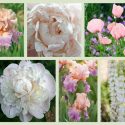
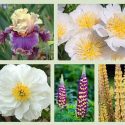
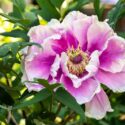
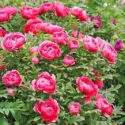
Peonies may bloom for only a week, but your peony garden can flower for six weeks or more. Learn how to combine Very Early through Late cultivars, use side buds and different peony types, and balance bloom time with fragrance, color, strong stems, and your local spring climate.
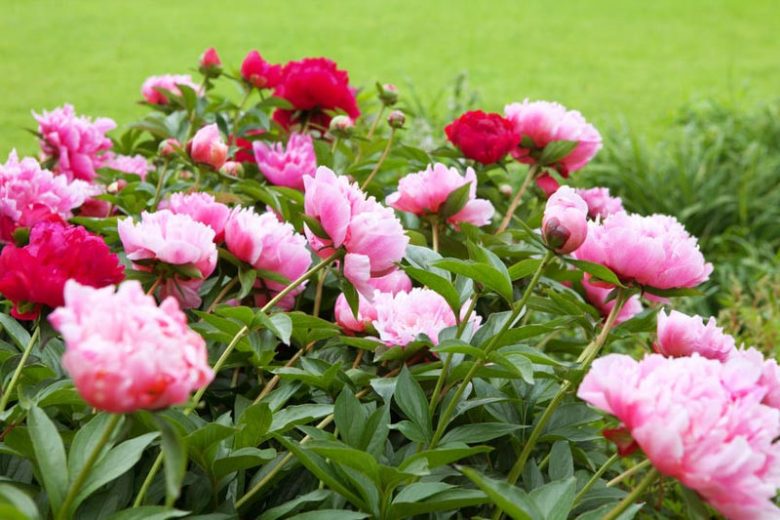


Peonies are famous for spectacular flowers, but they are not famous for blooming forever. An individual herbaceous peony cultivar typically puts on its main show for about a week, sometimes longer when spring weather stays cool.
That does not mean your peony season has to last only a week.
The secret is succession planting. Different peony cultivars flower at different points in spring, from Very Early through Very Late. Combine those bloom periods thoughtfully and your garden can move from one wave of peonies to the next for six weeks or more instead of peaking all at once.
But bloom time is only the beginning. The longest and most satisfying display also depends on choosing the right mix of peony types, using cultivars with side buds, planning for your spring climate, and balancing flowering time with fragrance, color, stem strength, and weather resistance.
Gardenia’s key advice: Do not choose all your peonies first and check their bloom times afterward. Identify the gaps in your flowering season first, then choose the best cultivar for each gap. That simple change in approach can transform a brief peony display into weeks of flowers.
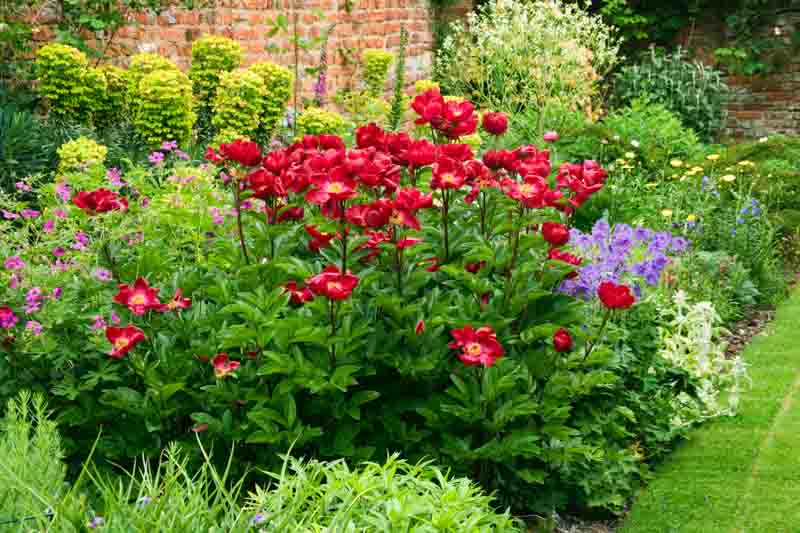
Most individual herbaceous peony cultivars have a relatively concentrated main flowering period, commonly around 7-10 days. The exact duration depends on the cultivar, the number of buds it carries, and the weather while those flowers are opening.
Cool spring weather is a peony lover’s friend. Flowers develop more slowly and usually remain attractive longer. A sudden spell of hot, sunny weather can have the opposite effect, opening several buds quickly and shortening the display. Heavy rain may damage large double flowers, while strong winds can reduce their ornamental value even before flowering is technically finished.
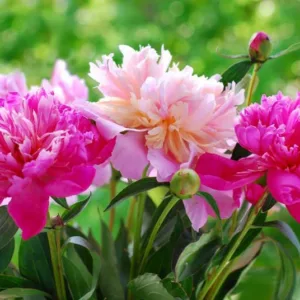
Some cultivars also produce several smaller side buds beneath the main terminal bud. Instead of every flower opening at once, those lateral buds open progressively, adding valuable days to the display.
Still, no cultural trick turns one ordinary herbaceous peony cultivar into a six-week bloomer. To enjoy peonies for weeks, you need several cultivars with different flowering times.
Peony bloom times are usually described as Very Early, Early, Early Midseason, Midseason, Late Midseason, Late, and Very Late. These classifications are relative. They describe when a cultivar normally blooms compared with other peonies, rather than assigning it a universal date.
That distinction matters because spring arrives at different times in different places. An Early peony may bloom in April in one garden and May in another. A warm spring may move the entire season forward, while a cool spring may delay it. What usually remains much more useful is the sequence: the Early cultivar still tends to flower before the Midseason cultivar, which tends to flower before the Late one.
For a detailed explanation of the seven bloom periods and how the American Peony Society compares cultivar flowering dates, see Gardenia’s new When Do Peonies Bloom? Early to Late Season Calendar.
Think in flowering slots: A garden containing six different Midseason peonies may still have only a short peak. A garden containing six carefully chosen peonies spread from Very Early to Late can provide a far longer succession.
You do not need to memorize dozens of bloom dates. Start by looking at the part of your season that is empty, then explore cultivars from that flowering group.
| Hardiness |
3 - 8 |
|---|---|
| Heat Zones |
1 - 8 |
| Climate Zones | 1, 2, 3, 4, 5, 6, 7, 8, 9, 10, 11, 14, 15, 16, 17, 18, 19, 20, A1, A2, A3 |
| Plant Type | Perennials |
| Genus | Paeonia |
| Exposure | Full Sun, Partial Sun |
| Season of Interest | Spring (Late), Summer (Early) |
| Maintenance | Average |
| Water Needs | Average |
| Soil Type | Chalk, Clay, Loam, Sand |
| Soil pH | Acid, Alkaline, Neutral |
| Soil Drainage | Moist but Well-Drained |
| Characteristics | Cut Flowers, Fragrant, Plant of Merit, Showy |
| Tolerance | Deer, Rabbit |
| Attracts | Butterflies |
| Landscaping Ideas | Beds And Borders |
| Garden Styles | City and Courtyard, Informal and Cottage, Japanese Garden |
These seasonal groups should overlap rather than behave like rigid weekly appointments. That overlap is useful: one group begins flowering while the preceding group is still finishing, preventing obvious gaps in the display.
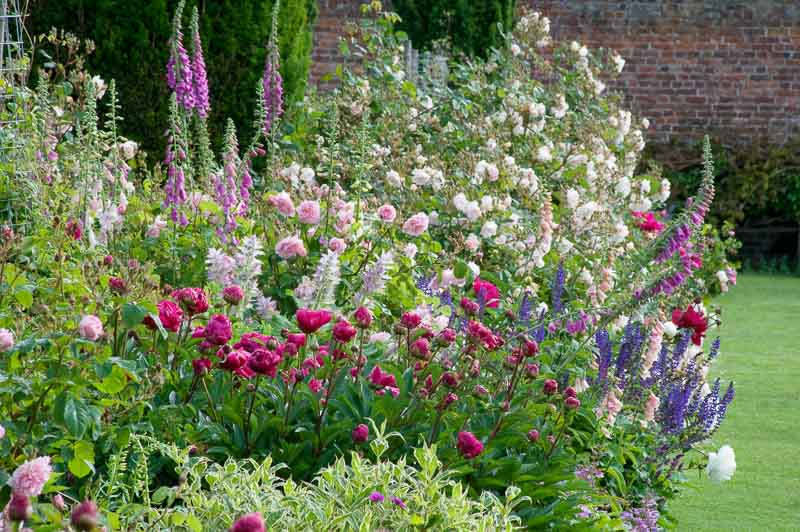
There is no magic number of plants required for a long peony season. What matters is their distribution.
A useful starting framework is:
This does not mean seven plants will produce exactly seven weeks of bloom. Flowering periods overlap and spring temperatures can compress or stretch the sequence. But this approach is much more likely to produce continuous flowers than choosing seven cultivars without considering bloom time.
For a smaller garden, even four carefully chosen plants can make a dramatic difference. A Very Early, Early Midseason, Midseason, and Late cultivar will usually provide much better seasonal coverage than four peonies that all reach peak bloom together.
A common mistake: More peonies do not automatically mean a longer peony season. If every cultivar is Midseason, adding another Midseason peony may increase the number of flowers at peak bloom without adding a single extra week.
A collection made entirely from traditional Paeonia lactiflora cultivars can be glorious, but mixing peony types can broaden the flowering window.
The important point is not to force every peony into the same calendar. It is to use their different genetics to your advantage.
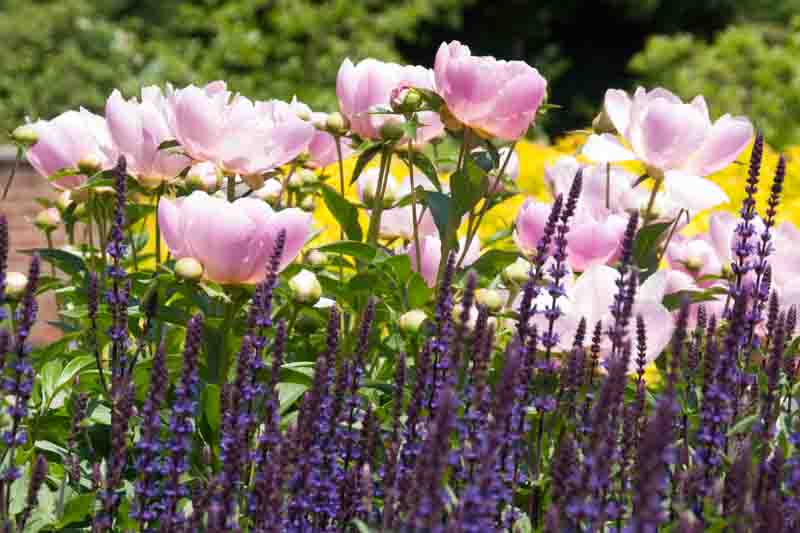
Two cultivars that begin flowering on the same day do not necessarily finish together.
Some peonies produce a large terminal bud with several smaller lateral buds on the same flowering stem. The terminal flower opens first. As it fades, the side buds begin to open, naturally staggering the display.
For a gardener trying to maximize flowering time, this is a useful trait. A floriferous plant with numerous side buds may remain visually effective for longer than a cultivar whose stems each carry a single flower.
There is an interesting tradeoff. Growers producing exhibition flowers sometimes remove lateral buds so the plant directs resources into one exceptionally large bloom. In the landscape, leaving those side buds intact usually makes more sense if your priority is longevity rather than maximum individual flower size.
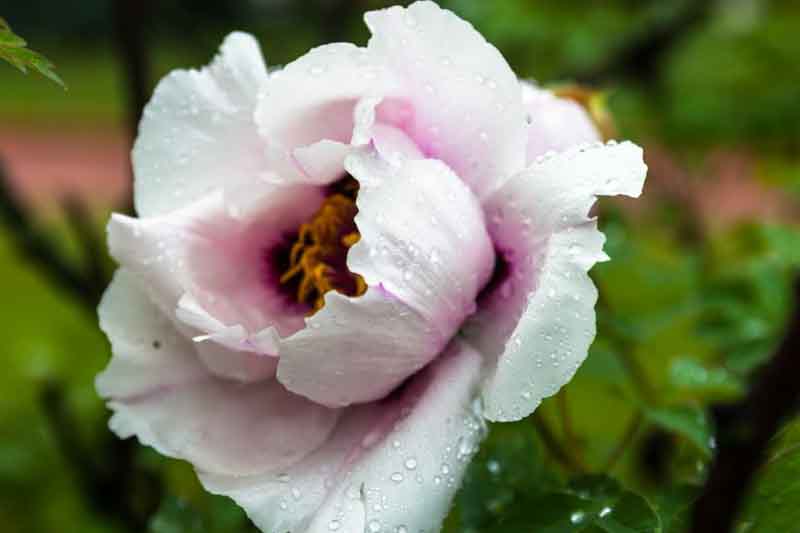
Even a perfectly planned collection cannot control spring weather.
You cannot prevent every bad-weather event, but spreading flowering across several weeks provides a form of insurance. If one hot spell or rainstorm damages the Midseason flowers, your earlier or later cultivars may still give you an excellent show.
For gardens regularly exposed to difficult spring weather, compare Gardenia’s peonies resistant to rain and heat.
Do not chase the longest theoretical calendar: The best peony season is the longest sequence of good-quality flowers your climate can support. In a warm-spring garden, six excellent early-to-midseason weeks may be more rewarding than forcing a Very Late cultivar into unfavorable heat.
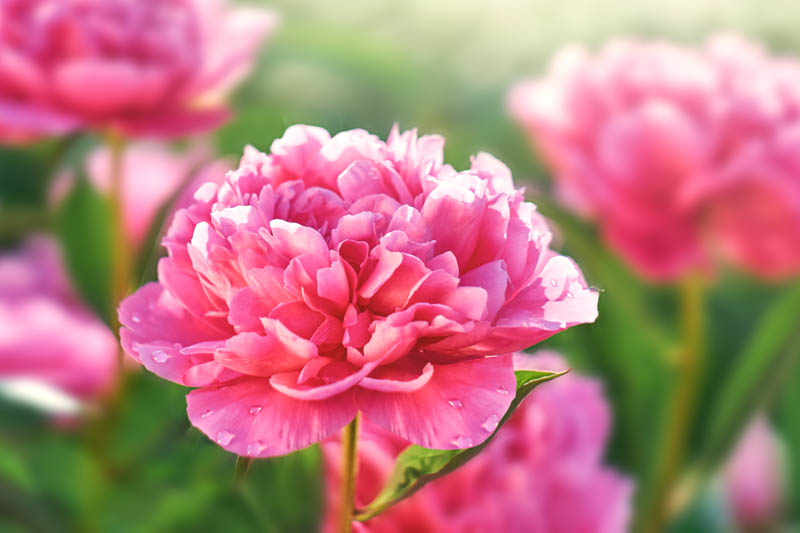
If fragrance is one of the reasons you grow peonies, bloom timing becomes even more interesting.
Do not simply select the five most fragrant cultivars and assume you will enjoy perfume for five weeks. If all five flower at roughly the same time, you may have a wonderfully scented garden for ten days and little fragrance afterward.
The strongest fragrance is not distributed evenly across all peony groups. Many of the classic, highly fragrant lactiflora peonies flower from the main season into the later part of the herbaceous peony season, while intensely fragrant choices are harder to find among the earliest peonies.
This creates an interesting planning challenge: you may choose a lightly fragrant early cultivar because it extends scent into a part of the season where strong fragrance is scarce, then use highly fragrant cultivars later when the choice is much greater.
Gardenia’s guide to fragrant peonies compares cultivars by fragrance intensity as well as color and bloom season.
A peony can still be technically in bloom but contribute little to the garden if heavy flowers collapse after rain. Stem strength therefore affects the effective flowering display, especially in exposed or wet-spring gardens.
Explore Gardenia’s peonies that do not require staking when selecting strong-stemmed cultivars for your succession.
Succession planting does not mean your border has to become a random collection of unrelated colors.
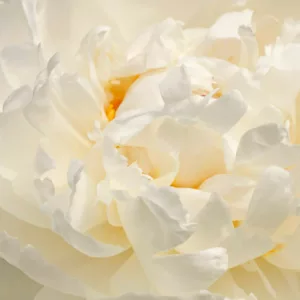
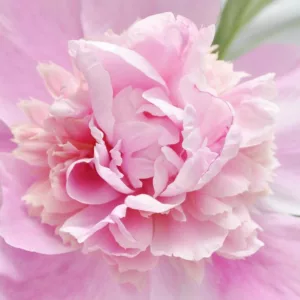
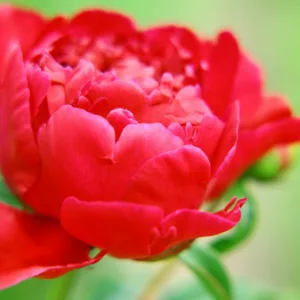
A gardener who loves white peonies can choose white-flowered cultivars from several flowering periods. The same strategy works for pink, red, and yellow.
Gardenia has already organized many cultivars by both color and flowering season, making it easier to maintain a coherent palette without sacrificing longevity:
Want to build your own sequence? Use Gardenia’s Plant Finder to narrow peonies by color, bloom time, height, fragrance, and other garden traits.
Already have a shortlist? Compare peonies side by side to evaluate bloom season, size, fragrance, and other key traits.
This is particularly useful in formal gardens or coordinated borders where the transition between plants matters almost as much as the length of the flowering season.
A long succession works best when the border still looks attractive as individual peonies finish flowering.
Peony foliage usually remains an important structural element long after the flowers disappear. Use that foliage as part of the design and weave other perennials through the planting so the garden does not depend entirely on peony flowers for interest.
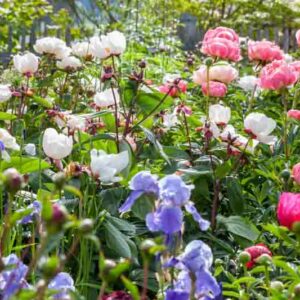
Spring bulbs, irises, hardy geraniums, salvias, alliums, foxgloves, roses, and other complementary plants can overlap with different parts of peony season and disguise the transition from one flowering wave to another.
See how this works in Gardenia’s garden ideas
Published bloom classifications are an excellent starting point. Your own garden eventually provides even better information.
Each spring, record when the first flower opens on each cultivar. Do this for several years. Do not worry if the absolute dates move from one season to another. Instead, watch the order.
You may discover that three cultivars consistently flower together, leaving a gap before the next one opens. Or you may realize that your garden has excellent Early and Midseason coverage but almost nothing afterward.
That information makes the next purchase much more strategic.
Instead of asking, “Which peony do I like best?” you can ask, “Which excellent peony fills the flowering gap I actually have?”
A useful buying rule: If two cultivars are equally beautiful, choose the one that adds a new bloom period, better stem strength, useful fragrance, or another trait your existing collection lacks.
Several common garden practices may improve plant health or appearance, but they do not fundamentally change a peony’s genetically determined flowering period.
Bloom timing is genetic, but good growing conditions allow each cultivar to perform to its potential.
Peonies generally flower best with plenty of sun, fertile but well-drained soil, appropriate moisture, good air circulation, and correct planting depth. Herbaceous peony eyes planted too deeply are a classic reason for disappointing flowering.
Avoid crowding plants excessively. Good spacing improves air movement and gives mature clumps enough room to develop. Water during extended dry periods, particularly while plants are establishing, but avoid persistently waterlogged soil.
For planting depth, soil preparation, watering, fertilizing, dividing, and long-term maintenance, see Gardenia’s complete guide to growing and caring for peonies.
The best long-season peony garden is not simply the garden with the most cultivars.
It is the garden in which each cultivar has a reason to be there.
One may open the season. Another may bridge an awkward gap. A Midseason cultivar may provide the largest floral display. An Itoh may add sturdy structure and numerous buds. A later lactiflora may bring intense fragrance. A strong-stemmed cultivar may keep the border standing after rain.
That is where Gardenia’s cultivar-level information becomes especially useful. Instead of evaluating bloom time in isolation, compare bloom season, flower color, fragrance, flower form, stem strength, mature size, weather resistance, and landscape performance together.
The result is not just a longer peony season. It is a better one.
An individual herbaceous peony cultivar commonly gives its main display for about 7-10 days. Cool weather and multiple side buds may extend flowering, while heat, heavy rain, and strong wind can shorten the effective display.
Choose cultivars from several relative bloom periods instead of planting many peonies that flower simultaneously. Combining Very Early, Early, Early Midseason, Midseason, Late Midseason, and Late or Very Late cultivars can create a succession lasting six weeks or more.
No ordinary herbaceous peony cultivar normally flowers continuously for six weeks. A long peony season is created by succession planting, with later cultivars beginning as earlier ones finish.
No. Herbaceous peonies do not normally rebloom after deadheading. Removing faded flowers improves appearance and prevents seed development, but extending the flowering season requires cultivars with different bloom times.
They can. On cultivars with multiple lateral buds, the side buds open after the main terminal flower and can add several days to the plant’s display. Side buds cannot replace succession planting when the goal is a multi-week peony season.
Cultivars classified as Very Early open the standard herbaceous peony season. Species peonies and herbaceous hybrids also include many of the earliest flowering peonies.
Late and Very Late cultivars form the final part of the peony sequence. Their performance is often best where spring remains cool enough for late buds and flowers to develop without excessive heat.
Generally, yes. Cool spring temperatures slow flower development and help blooms remain attractive longer. Hot, sunny weather accelerates opening and fading and can cause several bloom periods to overlap more closely.
There is no fixed number because cultivars and climates differ. A carefully chosen collection covering several bloom periods is more important than plant count. Even four well-spaced bloom periods can produce a much longer display than a larger collection of Midseason cultivars.
Where spring heats up quickly, Very Early through Midseason cultivars may provide a longer, higher-quality display because they flower before the hottest conditions arrive. Late cultivars are especially valuable where spring remains relatively cool.
Yes. Choose white, pink, red, or yellow cultivars from several different flowering periods. Gardenia’s color-by-bloom-season guides make it possible to create a coordinated palette without concentrating all the flowers into one short period.
Updated: August 2026 • Reviewed by Gardenia Editors
All pictures are courtesy of Peony's Envy, 123rf
| Hardiness |
3 - 8 |
|---|---|
| Heat Zones |
1 - 8 |
| Climate Zones | 1, 2, 3, 4, 5, 6, 7, 8, 9, 10, 11, 14, 15, 16, 17, 18, 19, 20, A1, A2, A3 |
| Plant Type | Perennials |
| Genus | Paeonia |
| Exposure | Full Sun, Partial Sun |
| Season of Interest | Spring (Late), Summer (Early) |
| Maintenance | Average |
| Water Needs | Average |
| Soil Type | Chalk, Clay, Loam, Sand |
| Soil pH | Acid, Alkaline, Neutral |
| Soil Drainage | Moist but Well-Drained |
| Characteristics | Cut Flowers, Fragrant, Plant of Merit, Showy |
| Tolerance | Deer, Rabbit |
| Attracts | Butterflies |
| Landscaping Ideas | Beds And Borders |
| Garden Styles | City and Courtyard, Informal and Cottage, Japanese Garden |
Create a membership account to save your garden designs and to view them on any device.
Becoming a contributing member of Gardenia is easy and can be done in just a few minutes. If you provide us with your name, email address and the payment of a modest $25 annual membership fee, you will become a full member, enabling you to design and save up to 25 of your garden design ideas.
Join now and start creating your dream garden!
Create a membership account to save your garden designs and to view them on any device.
Becoming a contributing member of Gardenia is easy and can be done in just a few minutes. If you provide us with your name, email address and the payment of a modest $25 annual membership fee, you will become a full member, enabling you to design and save up to 25 of your garden design ideas.
Join now and start creating your dream garden!