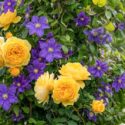
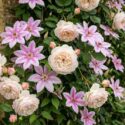
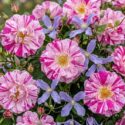
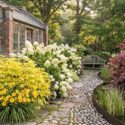
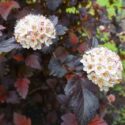
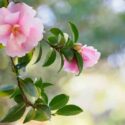
Enjoy a garden filled with flowers from early summer into autumn. Discover 20 beautiful shrubs, including reblooming weigelas, landscape roses, colorful spireas, hydrangeas, and hummingbird favorites. Compare genuine repeat bloomers with seasonal performers, learn what each needs to flourish, and plan a succession of color with Gardenia's bloom calendar.
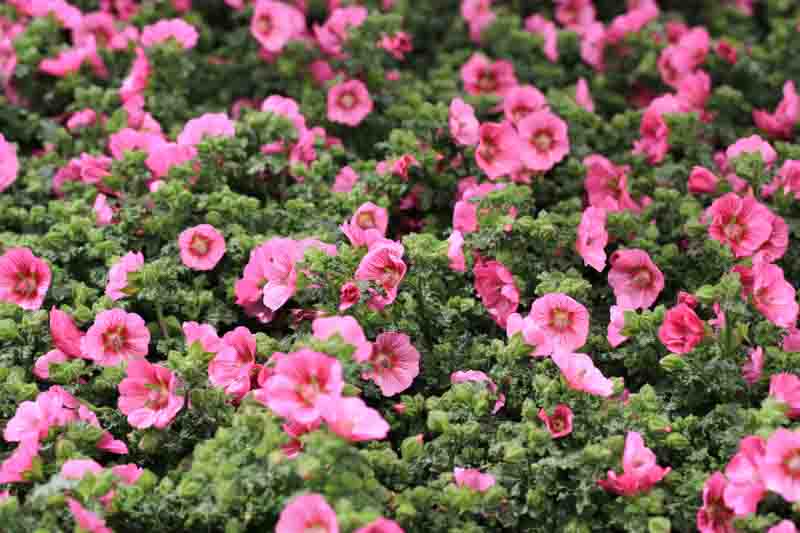


Some shrubs put on a spectacular show for two weeks. Others keep producing flowers long after spring has passed, bringing fresh color to the garden through July, August, and sometimes well into autumn.
If you’re looking for flowering shrubs that bloom all summer, the difference matters. A rose that repeatedly opens new flowers is not the same as a hydrangea whose existing flower heads remain attractive for months. And a shrub that starts blooming in August cannot provide color in June, however beautiful its flowers.
Here are 20 flowering shrubs with extended summer interest, selected from Gardenia’s plant profiles. The strongest repeat bloomers come first, followed by plants that provide dependable summer color in suitable climates and a few valuable late-season companions. You’ll also learn how to compare flowering patterns and use Gardenia’s bloom calendar to plan a more colorful garden.
These are among the strongest choices when your priority is fresh flowers across much of summer. Their blooming patterns differ, but all have a documented capacity for repeat or extended flowering.
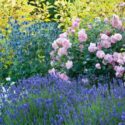
Rosa Oso Easy Peasy (Shrub Rose) produces brilliant pink double flowers continuously from summer to frost. Gardenia records a rounded habit, good disease resistance, and minimal pruning requirements. This is one of the most convincing selections for gardeners who want a compact shrub that stays colorful over an exceptionally long season.
Rosa Red Drift (Groundcover Rose) is covered with clusters of rich cardinal-red, semi-double flowers from spring until frost. Its low, spreading growth makes it attractive at the front of borders or along sunny pathways. Flowers continue appearing through the growing season, with the strongest performance in well-drained soil and full sun.
Rosa Sweet Drift (Groundcover Rose) offers a softer combination of delicate pink flowers and compact, arching growth. Like Red Drift, it flowers repeatedly from spring into autumn. It is particularly beautiful in cottage-style borders, containers, and low flowering groups where visitors can appreciate the flowers up close.
Weigela florida Sonic Bloom Pink delivers a generous spring display followed by additional hot pink trumpet-shaped flowers through summer and into autumn. It does not require deadheading to rebloom. The flowers attract hummingbirds, and its naturally substantial form makes it better suited to mixed borders than very small planting strips.
Weigela florida Sonic Bloom Red brings another reliable reblooming option, this time with striking red flowers. It produces its first major display in spring, followed by fresh flowers during summer under suitable conditions. Full sun encourages the heaviest flowering, while moist, well-drained soil supports healthy growth.
| Plant Type | Shrubs |
|---|---|
| Genus | Abelia, Hydrangea, Potentilla, Rosa, Weigela |
| Season of Interest | Summer (Early, Mid, Late) |
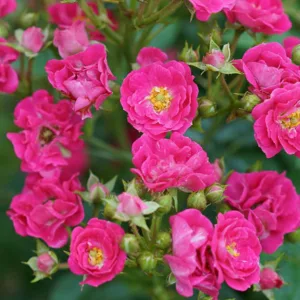



Gardenia’s first choice for summer-long flowers: Start with a repeat-flowering landscape rose or a verified reblooming weigela. These produce genuinely new blossoms across the growing season, although flowering intensity naturally varies with weather and plant health.
These shrubs combine summer flowers with ornamental foliage, graceful form, or the ability to produce additional blossoms. Their flowering periods vary by climate, so compare the individual Gardenia profiles rather than expecting identical performance everywhere.
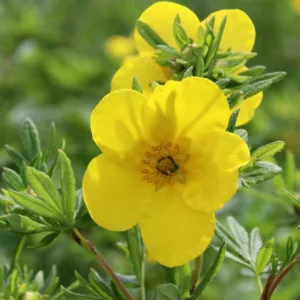
Potentilla fruticosa ‘Goldfinger’ (Shrubby Cinquefoil) produces masses of rich yellow flowers from late spring to the first frosts. Cold-hardy and easy to maintain, it thrives in well-drained soil and is particularly valuable in cooler regions. Flowering can slow during periods of intense summer heat.
Hypericum × hidcoteense ‘Hidcote’ (St. John’s Wort) brightens summer borders with large, golden-yellow flowers and prominent stamens. Its extended flowering season and relatively undemanding nature make it appealing for informal hedges and sunny slopes. Gardenia identifies toxicity concerns for cats, dogs, and horses, so consider its placement carefully.
Abelia × grandiflora (Glossy Abelia) offers graceful arching branches decorated with small white to pale pink flowers from summer into autumn. Its flowers and persistent colorful calyces create a delicate, long-lasting effect. This is a particularly good choice for mild-climate gardens where its natural, informal habit can be appreciated.
Lantana involucrata (Buttonsage) is a wonderfully free-flowering evergreen shrub native to Florida and the Caribbean. Its fragrant clusters of white to pale lavender flowers appear throughout the year in suitable frost-free climates, attracting butterflies, bees, and hummingbirds. Tolerant of heat, drought, and coastal exposure, it makes an excellent choice for sunny, well-drained gardens. Unlike the widely invasive Lantana camara, this species is native to parts of the southeastern United States, although its suitability should still be checked locally.
Hydrangea macrophylla Endless Summer BloomStruck is a genuine reblooming bigleaf hydrangea, capable of producing flowers on both old and new wood. Large pink, purple, or blue mopheads develop over summer when moisture and light conditions are favorable. Additional flowering is possible, not guaranteed, particularly after prolonged heat or drought.



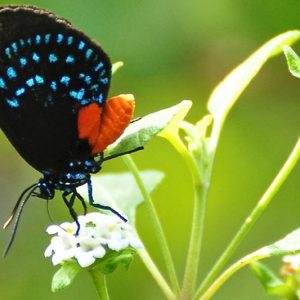

Understanding hydrangea rebloom: BloomStruck can produce fresh flowers on new growth. Many panicle hydrangeas appear colorful for months because their original flower heads persist and change color. Gardenia distinguishes those two flowering patterns in its hydrangea bloom guide.
Warm-climate shrubs can deliver an extraordinarily long season of flowers. Some remain in bloom for much of the year where frost is rare, while others pause during extreme heat before flowering again when conditions improve.
Rosa ‘Westerland’ (Shrub Rose) produces large, fragrant, apricot-orange flowers repeatedly from summer into autumn. A vigorous shrub that can also be trained as a climber, it brings height, warmth, and fragrance to sunny borders. Give it sufficient room and support if grown vertically.
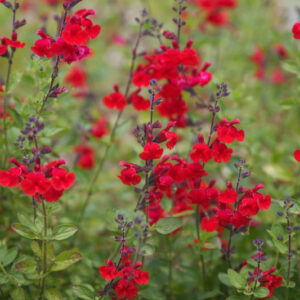
Salvia greggii (Autumn Sage) carries tubular flowers in shades of red, coral, pink, purple, or white from spring into autumn. This semi-woody shrub attracts hummingbirds and thrives in sunny, well-drained conditions. Gardenia notes that flowering may diminish during the hottest part of summer before recovering in fall.
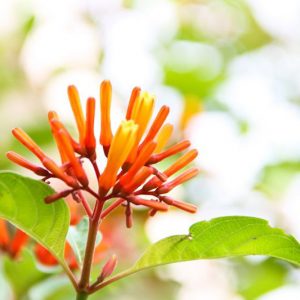
Hamelia patens (Firebush) produces vivid orange-red tubular flowers through summer and fall, or nearly year-round in frost-free regions. It is excellent for hummingbird gardens and warm-climate borders. Give it ample room, since established plants can become large shrubs, and expect frost damage where winters are cold.
Plumbago auriculata (Cape Leadwort) creates clouds of sky-blue flowers over a long warm-weather season. The loose, arching stems look especially attractive spilling over a retaining wall or filling a generous sunny border. It flowers for exceptionally long periods in mild climates but is vulnerable to hard freezes.
Cuphea ignea (Cigar Flower) produces distinctive orange-red tubular flowers with dark tips from late spring until frost. Nectar-rich blossoms attract hummingbirds, and its compact, bushy growth works well in containers or warm-climate borders. It is a perennial subshrub in mild regions but generally an annual in cold-winter gardens.

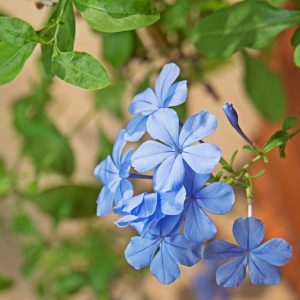

Match flowering claims to climate: Firebush and plumbago may flower for many months in frost-free gardens, while a hard freeze can end their display abruptly. Autumn sage often blooms in waves. These differences are essential when planning a dependable summer garden.
The following selections offer additional ways to extend summer color. Some perform exceptionally well only in certain regions; others contribute late-season interest rather than a completely uninterrupted display.
Anisacanthus quadrifidus var. wrightii (Flame Acanthus or Desert Honeysuckle) brings brilliant red-orange tubular flowers to sunny gardens from early summer into fall. Native to Texas and Mexico, this drought-tolerant shrub attracts hummingbirds and butterflies and thrives in well-drained soils, including rocky and relatively poor sites. Flowering often intensifies after summer rainfall, creating successive bursts of color rather than an uninterrupted display. Growing approximately 3-5 feet tall, it is a wonderful choice for informal borders and water-wise landscapes in USDA zones 7-10.
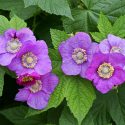
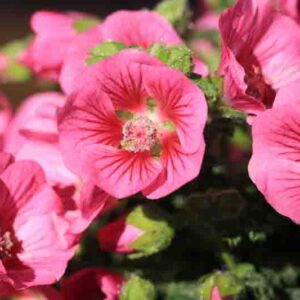
Anisodontea capensis (African Mallow) is a remarkably free-flowering evergreen subshrub, producing charming pink flowers with raspberry-red centers from spring until frost, sometimes year-round in warm climates. Compact, heat-tolerant, and attractive to pollinators, it is an excellent choice for sunny Mediterranean-style gardens and containers. It needs well-drained soil and protection from severe winter cold.
Lavatera × clementii ‘Rosea’ (Tree Mallow) produces masses of soft pink, hibiscus-like flowers from early summer into autumn. Fast-growing and wonderfully floriferous, it creates an impressive display in sunny cottage gardens and mixed borders. Give it well-drained soil, a sheltered position, and plenty of room. Tree mallows can be relatively short-lived, particularly in heavy, wet soils.
Lagerstroemia Double Feature (Crape Myrtle) offers a long display of vivid summer flowers on a rounded shrub. Gardenia records flowering interest across early, mid-, and late summer, making it a valuable choice for hot, sunny gardens. Growing approximately 6-8 feet tall and wide, it is particularly effective as a flowering specimen or at the back of a generous border. It requires full sun for its strongest display.
Gardenia jasminoides ‘Four Seasons’ (Everblooming Cape Jasmine) combines glossy evergreen leaves with exquisitely fragrant, double white flowers from spring into fall. Its compact 2-3-foot habit makes it especially attractive near entrances, patios, and in containers, where the perfume can be enjoyed. Hardy in USDA zones 8-11, it prefers acidic, organically rich, consistently moist but well-drained soil, with protection from intense afternoon sunshine in hot climates. Unlike drought-tolerant summer shrubs, it requires attentive watering and is toxic to pets.



Not every shrub labeled “summer flowering” performs in the same way. Some produce fresh blossoms for months, while others rebloom in distinct waves or depend on favorable weather for additional flowers. Gardenia’s Summer Bloom Classification helps you distinguish these patterns before choosing plants for your garden.
These are practical editorial categories based on typical flowering behavior, not guarantees of uninterrupted blooms in every climate.
A – Repeat or extended fresh flowering: Shrubs produce new flowers repeatedly or across a substantial portion of the growing season. Some bloom almost continuously, while others flower in successive flushes. Flowering intensity varies with climate, rainfall, temperature, and plant health.
B – Conditional or intermittent rebloom: Shrubs can produce additional flowers after an initial display, but rebloom depends on climate, moisture, plant health, and growing conditions. BloomStruck hydrangea and autumn sage are examples, although autumn sage often flowers in distinct seasonal waves.
Use this comparison alongside Gardenia’s individual plant cards to understand which shrubs are likely to produce fresh flowers across summer and which need complementary plants to maintain continuous color.
| Shrub | Bloom Class | Best Summer Contribution |
|---|---|---|
| Oso Easy Peasy Rose | A | Repeated pink flowers through summer to frost |
| Red Drift Rose | A | Repeated red flowers through the growing season |
| Sweet Drift Rose | A | Repeated soft pink flowers into autumn |
| Sonic Bloom Pink Weigela | A | Summer rebloom after a strong spring display |
| Sonic Bloom Red Weigela | A | Red flowers in spring with summer rebloom |
| Goldfinger Cinquefoil | A | Extended yellow flowering season |
| Hidcote St. John’s Wort | A | Golden-yellow flowers over much of summer |
| Glossy Abelia | A | Extended summer-to-fall flowering |
| Buttonsage (Lantana involucrata) | A | White-to-lavender flowers throughout summer and often year-round in frost-free climates |
| BloomStruck Hydrangea | B | Early flowers with potential later summer rebloom |
| Westerland Rose | A | Repeated fragrant apricot-orange flowers |
| Autumn Sage | B | Spring-to-fall flowering waves, sometimes with a summer pause |
| Firebush | A | Extended orange-red flowers in warm climates |
| Cape Plumbago | A | Long-lasting succession of blue flowers in warmth |
| Cigar Flower | A | Abundant tubular flowers through the warm season |
| African Mallow | A | Fresh pink flowers from spring to frost in suitable climates |
| Rosea Tree Mallow | A | Continuous pink flowers from early summer into autumn |
| Double Feature Crape Myrtle | A | Ruby-red flowers from early summer into early fall |
| Flame Acanthus | A | Red-orange flowers from early summer to fall, often in rainfall-triggered flushes |
| Four Seasons Cape Jasmine | A | Fragrant white flowers repeatedly from spring to fall in suitable mild climates |
A garden filled with flowers all summer doesn’t depend on one perfect shrub. Combine dependable long-season performers with contrasting flower shapes and plants that continue blooming as the season advances.
In temperate gardens, repeat-flowering roses and shrubby cinquefoils provide a useful foundation. For milder climates, African mallow, Rosea tree mallow, and glossy abelia are additional possibilities. Choose plants suited to your hardiness zone rather than assuming a long flowering season means universal winter hardiness.
Pair rounded rose flowers with the open pink blossoms of African mallow or tree mallow, or contrast them with the airy flowers of abelia. In hot, sunny gardens, the ruby-red clusters of Double Feature crape myrtle can provide a striking focal point. Use compatible plants that share similar soil, sunlight, and watering requirements.
In warm, sunny gardens, Double Feature crape myrtle can continue producing ruby-red flowers into early fall. Flame acanthus adds red-orange flowers in successive summer-to-fall flushes, often after rainfall, while autumn sage may bloom more generously as temperatures moderate. Select plants suited to the same climate and watering conditions.
Flowering dates are never identical everywhere. A shrub that begins flowering in June in a mild climate may start later in a cooler region. Extreme heat, drought, frost, and pruning also influence bloom duration.
Use Gardenia’s recorded flowering seasons as a starting point, then compare plants suited to your actual growing conditions. The aim is a dependable succession of color rather than an unrealistic promise of uninterrupted flowers every day.
Will Your Garden Have Flowers Every Month This Summer?
Add your favorite shrubs to Gardenia’s Garden Design Tool and review their typical flowering periods in the bloom calendar. Compare June, July, August, and September to identify potential gaps before planting.
Start free with up to five plants, check growing-condition compatibility, estimate quantities, and create a shopping list.
Combine: Rosa Oso Easy Peasy, Potentilla ‘Goldfinger’, and Weigela Sonic Bloom Pink.
Bright pink roses and golden cinquefoil provide flowers through much of summer, while Sonic Bloom Pink weigela adds a spectacular spring display followed by smaller reblooming flushes. This combination is best in a sunny temperate garden with well-drained soil, consistent establishment watering, and enough space for the weigela to mature.
Combine: Anisodontea capensis, Lavatera × clementii ‘Rosea’, and Salvia greggii.
Small pink African mallow flowers with raspberry-red centers contrast with the larger, softly colored blossoms of tree mallow. Autumn sage adds fine-textured foliage and a complementary display of tubular flowers. Choose a sunny, sheltered, well-drained garden in a suitable mild climate. Allow plenty of space for the larger tree mallow, and select a salvia flower color that complements the pinks.
Combine: Hamelia patens, Cuphea ignea, and Plumbago auriculata.
Orange-red tubular flowers contrast with clouds of blue plumbago, creating a vibrant display through warm weather. This combination suits mild winters and benefits from generous planting space, good drainage, and appropriate irrigation during establishment.
Provide suitable sunlight. Most repeat-flowering roses, mallows, crape myrtles, and warm-climate shrubs flower most heavily in full sun. Reblooming hydrangeas may appreciate afternoon shade in hotter regions.
Prevent moisture stress. Prolonged drought can reduce flowering, especially while plants are establishing. Water according to the species and soil conditions, avoiding excessive irrigation around drought-adapted shrubs.
Prune at the correct time. Crape myrtles flower on new wood and are generally pruned in winter or early spring if shaping is required. Tree mallows benefit from appropriate seasonal pruning, while other shrubs require different approaches. Follow the individual plant profile rather than pruning everything alike.
Deadhead selectively. Some modern landscape roses and reblooming weigelas produce fresh flowers without routine deadheading. Removing spent blooms can improve the appearance or flowering performance of other shrubs, depending on the species.
Avoid excessive fertilizer. Heavy nitrogen applications can promote lush foliage rather than abundant flowers. Feed according to the plant’s requirements and soil fertility instead of fertilizing repeatedly throughout summer.
Repeat-flowering landscape roses, Sonic Bloom weigelas, shrubby cinquefoil, African mallow, Rosea tree mallow, and certain warm-climate shrubs can provide fresh flowers across much of summer. Performance depends on climate, sunlight, and plant health.
Yes. Gardenia describes Anisodontea capensis as flowering profusely from spring until frost, sometimes nearly year-round in warm climates. It needs suitable winter temperatures and well-drained soil.
Lavatera × clementii ‘Rosea’ typically produces abundant pink flowers from early summer into autumn. Its performance is strongest in sunny, well-drained, sheltered sites, and it needs room for its substantial mature growth.
Goldfinger cinquefoil, appropriately hardy repeat-flowering landscape roses, and suitable reblooming weigelas can provide an extended flowering season in cooler climates. Always check the individual cultivar’s hardiness.
Reblooming hydrangeas such as BloomStruck can flower in suitable partial shade. Glossy abelia also tolerates some shade, although flowering may be reduced. Most long-blooming roses and mallows perform better with abundant sunshine.
Some reblooming bigleaf hydrangeas, including BloomStruck, can produce additional fresh flowers through summer. Other hydrangeas remain attractive because existing flower heads persist and change color rather than because new flowers open continuously.
Sonic Bloom weigela, firebush, cigar flower, and autumn sage provide nectar-rich blooms in suitable climates. The length of the flowering season and winter survival depend on local conditions.
Firebush, Cape plumbago, Flame Acanthus, and Double Feature crape myrtle are useful choices in suitable warm climates. African mallow and tree mallow also offer long flowering seasons where drainage and winter conditions favor them.
Flame Acanthus can provide fresh red-orange flowers from summer into autumn, often in flushes following rainfall. Double Feature crape myrtle may also continue blooming into early fall in warm, sunny gardens.
Choose a dependable repeat bloomer, add shrubs with complementary flower shapes and flowering periods, and include a late-season performer. Compare typical bloom periods in Gardenia’s Garden Design Tool and check growing-condition compatibility before planting.
The secret to summer-long color isn’t finding twenty shrubs that flower at precisely the same intensity every day. It’s combining reliable repeat bloomers with plants that offer fresh flowers at different points in the season.
Start with shrubs suited to your climate, choose contrasting flower colors and shapes, and use Gardenia’s bloom calendar to compare their typical flowering periods. The result will be a more dependable succession of color from early summer into autumn.
Check Your Garden’s Summer Bloom Calendar
Save your favorite shrubs in Gardenia’s Garden Design Tool and review their typical flowering periods. Look for potential gaps between June and September, check growing-condition compatibility, estimate planting quantities, and create a shopping list.
Start free with up to five plants.
Updated and reviewed by Gardenia: November 2026
| Plant Type | Shrubs |
|---|---|
| Genus | Abelia, Hydrangea, Potentilla, Rosa, Weigela |
| Season of Interest | Summer (Early, Mid, Late) |
Create a membership account to save your garden designs and to view them on any device.
Becoming a contributing member of Gardenia is easy and can be done in just a few minutes. If you provide us with your name, email address and the payment of a modest $25 annual membership fee, you will become a full member, enabling you to design and save up to 25 of your garden design ideas.
Join now and start creating your dream garden!