Discover beautiful small flowering shrubs that stay compact without constant pruning. From dwarf hydrangeas and colorful weigelas to fragrant daphne and miniature roses, these 20 garden favorites bring flowers to foundations, borders, patios, and containers. Compare mature height, spread, blooming seasons, and care before choosing your perfect plants.
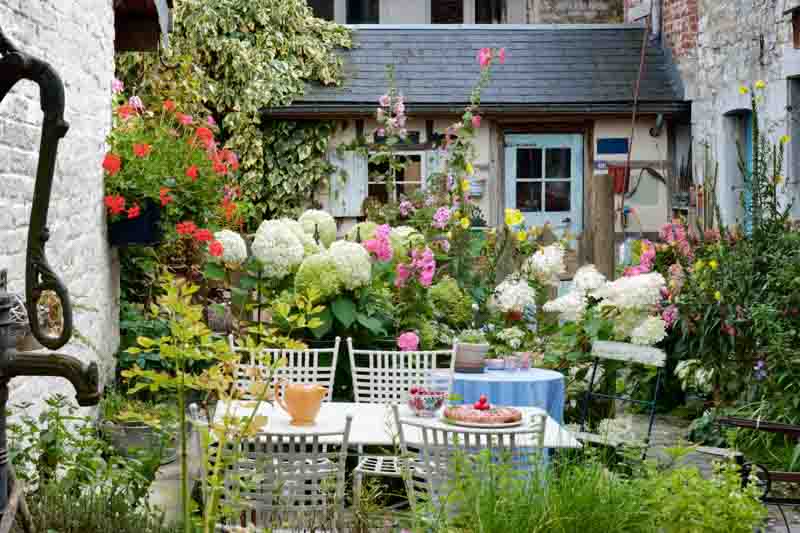


A small garden doesn’t need to settle for small displays. Imagine a dwarf hydrangea overflowing with summer flowers, a miniature weigela brightening a front path, or a compact rose blooming beside the patio without taking over the entire bed.
The challenge is finding small flowering shrubs that really stay compact. A plant described as dwarf may remain only 2 feet tall but eventually spread 5 feet wide. Others look perfectly proportioned at the nursery yet need constant pruning once established.
These 20 best small flowering shrubs offer generous blooms on naturally restrained plants. Most remain around 1-3 feet tall, with a few reaching 4 feet. Some are ideal for narrow borders and containers; others have wider, spreading habits better suited to foundation beds, low hedges, or woodland edges.
You’ll find their mature sizes, flowering seasons, and growing preferences, along with Gardenia’s Compact Shrub Fit Check to help you choose a plant that fits your space beautifully at maturity.
Dwarf hydrangeas and modern weigelas deliver impressive flowers on plants that fit comfortably into smaller landscapes. The trick is choosing the right cultivar rather than relying on the mature size of the species.
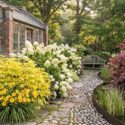
Hydrangea paniculata ‘Bobo’ is covered in white summer flower panicles that gradually turn pink. This compact panicle hydrangea flowers on new growth, making pruning straightforward. Its generous spread suits wider foundation beds and flowering borders.
Hydrangea macrophylla Cityline Paris produces striking red-pink mophead flowers. Its naturally restrained habit makes it attractive in pots or sheltered borders. Protect overwintering flower buds and avoid hard pruning if you want reliable blooms.
Hydrangea serrata Tuff Stuff offers delicate pink or blue-purple lacecap flowers. This reblooming mountain hydrangea brings an airy, romantic appearance to gardens receiving morning sun and afternoon shade.
Weigela florida My Monet is a truly petite shrub with cream-edged green leaves, pink-tinted new growth, and soft pink spring flowers. It tolerates partial shade, but good daylight produces the richest foliage color and most generous flowering.
Weigela florida Spilled Wine pairs deep burgundy foliage with bright pink spring flowers. Its low, broad habit is beautiful beneath windows or along a sunny border, where the leaves remain attractive long after flowering.
| Plant Type | Shrubs |
|---|---|
| Genus | Abelia, Buddleia, Hydrangea, Lavandula, Potentilla, Rhododendron, Weigela |


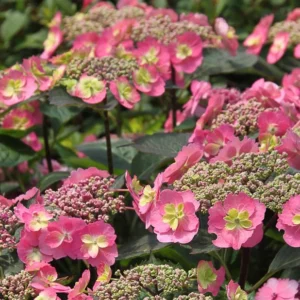

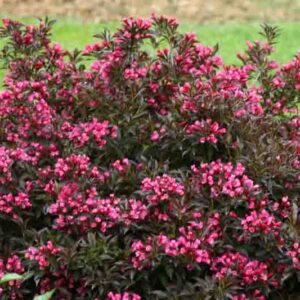
Know when to prune: ‘Bobo’ flowers on new wood and can be pruned before spring growth. Cityline Paris relies substantially on flower buds formed the previous season. Cutting both hydrangeas back in early spring can cost you the Cityline Paris display.
For a small garden that stays colorful well beyond spring, look for shrubs with extended blooming seasons or late-summer flowers that bridge the gap into autumn.
Potentilla fruticosa Happy Face Yellow produces bright yellow flowers from late spring until autumn. Exceptionally hardy and easy to care for, this shrubby cinquefoil is especially dependable in sunny gardens with relatively cool summers.
Caryopteris × clandonensis Beyond Midnight forms a neat mound covered in intensely blue flowers during late summer. Bees and butterflies visit the blooms. Give it full sun, good drainage, and spring pruning for vigorous new growth.
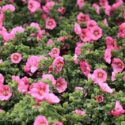
Rosa Oso Easy Double Pink produces clusters of pink double roses repeatedly through the growing season. Its compact, spreading shape is ideal for border fronts and large containers, with less demanding care than many traditional roses.
Buddleja ‘Blue Chip’ is a miniature butterfly bush with fragrant blue-violet summer flowers. Unlike larger butterfly bushes, it fits comfortably into a small sunny bed. Its low fertility reduces seed production, but always check local restrictions before planting buddleja.
Hibiscus syriacus Lil’ Kim is a dwarf Rose of Sharon with white flowers marked by deep red centers. It blooms in summer when many spring shrubs have finished. Allow for its mature width, and check local guidance about Rose of Sharon self-seeding.
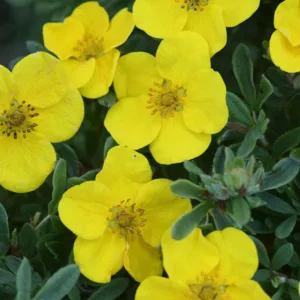





For a long season of color: Combine a repeat-flowering rose with a summer-blooming cinquefoil and late-flowering bluebeard. Choose a sunny location and allow for their differing moisture requirements.
A lightly shaded entrance or woodland border can still enjoy a beautiful succession of flowers. These shrubs appreciate filtered daylight, although their preferences for moisture and soil differ considerably.
Deutzia gracilis ‘Nikko’ produces a cloud of white flowers in late spring. Its arching branches look particularly graceful cascading over a low wall. It is compact in height rather than footprint, so give it room to spread.
Rhododendron ‘Ramapo’ forms a dense evergreen mound decorated with violet-purple spring flowers. It suits cool, acidic woodland gardens, sheltered rock gardens, and appropriately sized containers.
Rhododendron ‘Hino Crimson’ is an evergreen azalea with a striking display of scarlet spring flowers. Its broad, low-growing shape makes an attractive woodland edging but requires more horizontal space than its height suggests.
Clethra alnifolia ‘Hummingbird’ produces wonderfully fragrant white flower spikes in midsummer. It is a lovely choice for moist, acidic sites and partly shaded gardens. Its spreading, suckering habit makes it better suited to informal beds than very narrow borders.
Daphne odora ‘Aureomarginata’ offers intensely fragrant late-winter to early-spring flowers and cream-edged evergreen leaves. Plant it near an entrance where its perfume can be appreciated, in a sheltered position with excellent drainage.


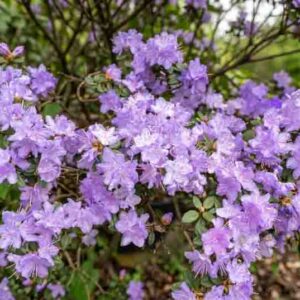
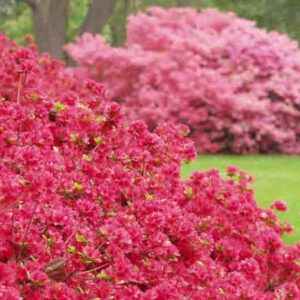

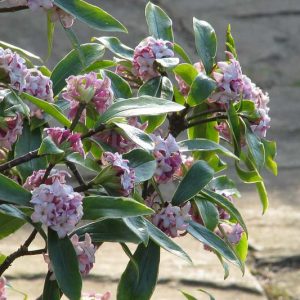
Small height, generous spread: ‘Nikko’, ‘Hino Crimson’, and ‘Hummingbird’ may grow 5 feet wide. These are excellent choices where a low, spreading shrub is desirable, but not for tightly confined foundations. Rhododendrons and daphne are poisonous if ingested; daphne sap may also irritate skin.
When garden space is limited, the best shrubs earn their place beyond flowering season. Attractive leaves, fragrance, and natural shape keep these selections interesting for months.
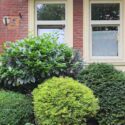
Abelia × grandiflora ‘Kaleidoscope’ changes color throughout the year, from yellow-green spring foliage to orange and red autumn tones. Small white flowers add summer interest. It remains evergreen or semi-evergreen in mild climates but may lose leaves during colder winters.
Loropetalum chinense Purple Daydream offers richly purple foliage and bright pink spring flowers. It forms a naturally low mound, making it particularly attractive in warm-climate foundations and courtyard gardens.
Hypericum kalmianum (Kalm St. John’s Wort) produces cheerful golden-yellow summer flowers among slender blue-green leaves. This hardy North American native suits sunny borders, naturalistic plantings, and pollinator gardens.
Lavandula angustifolia ‘Munstead’ offers aromatic foliage and fragrant purple flower spikes. Technically a woody subshrub, it works beautifully as a low flowering hedge in sunny, sharply drained borders.
Potentilla fruticosa ‘Pink Beauty’ produces masses of clear pink flowers from late spring into autumn. Especially attractive in cooler climates, its blossoms may fade toward pale pink or white during intense summer heat. It needs little more than occasional light pruning.

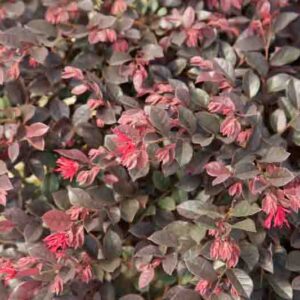

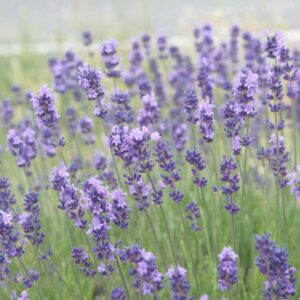

Match the shrub to the garden: Lavender needs full sun and excellent drainage, while cinquefoil favors cooler summers. Kalm St. John’s Wort is listed by Gardenia as toxic to cats, dogs, and horses. Avoid placing it where grazing animals or pets might chew the plant.
Not all small shrubs have a small footprint. Some remain low but spread widely, making them better suited to border fronts or slopes than narrow foundation beds. Use the Gardenia plant cards to compare mature height and width, then consult this table for flowering interest, growing conditions, and landscape suitability.
| Shrub | Flowering Interest | Best Location | Key Consideration |
|---|---|---|---|
| Bobo Hydrangea | White-to-pink summer flowers | Wider foundations, borders | Consistent moisture |
| Cityline Paris Hydrangea | Red-pink summer mopheads | Containers, sheltered borders | Protect flower buds |
| Tuff Stuff Hydrangea | Pink or blue lacecaps | Partial-shade borders | Moist, well-drained soil |
| My Monet Weigela | Pink spring flowers | Small borders, edging | Good light for best color |
| Spilled Wine Weigela | Pink flowers, burgundy foliage | Sunny foundations | Sun for best blooms |
| Happy Face Yellow | Long-season yellow flowers | Sunny borders | Prefers cooler summers |
| Beyond Midnight Bluebeard | Deep-blue late-summer flowers | Sunny pollinator borders | Excellent drainage |
| Oso Easy Double Pink Rose | Repeat pink blooms | Edging, patio containers | Full sun |
| Blue Chip Butterfly Bush | Blue-violet summer flowers | Sunny pollinator gardens | Check local planting rules |
| Lil’ Kim Rose of Sharon | White flowers with red centers | Small sunny gardens | Allow natural spread |
| Nikko Deutzia | White spring flowers | Border fronts, low walls | Wide spreading habit |
| Ramapo Rhododendron | Violet spring flowers | Woodland borders | Acidic soil |
| Hino Crimson Azalea | Scarlet spring flowers | Woodland edging | Broad mature footprint |
| Hummingbird Summersweet | Fragrant summer flowers | Moist woodland borders | Moisture and suckering |
| Variegated Winter Daphne | Fragrant winter-spring flowers | Sheltered entrances | Drainage and toxicity |
| Kaleidoscope Abelia | White flowers, colorful foliage | Warm-climate foundations | Broader than tall |
| Purple Daydream Loropetalum | Pink flowers, purple foliage | Warm-climate borders | Mild winters |
| Kalm St. John’s Wort | Golden summer flowers | Sunny naturalistic borders | Pet toxicity |
| Munstead Lavender | Fragrant purple spikes | Sunny edging, gravel gardens | Sharp drainage |
| Pink Beauty Cinquefoil | Long-season pink flowers | Cool-climate borders | Color fades in heat |
A nursery label calling a shrub “dwarf” does not guarantee that it will fit beneath your window or beside a narrow path. Gardenia’s Compact Shrub Fit Check considers mature footprint, mature height, natural growth habit, and growing conditions before you plant.
Measure the width of your planting bed first. A 2-foot-tall shrub that spreads 5 feet may be perfect for a slope but unsuitable beside a 2-foot-wide walkway. Allow room for neighboring plants and normal growth without constant clipping.
Measure from soil level to the lowest window, railing, or desired view. Check the shrub’s mature height, not its nursery size, and remember that flower stems may rise above the foliage.
A true dwarf selection usually requires less size control than a vigorous shrub pruned repeatedly. My Monet weigela, for example, maintains a petite habit with little intervention, while wider-growing deutzias need more room.
Consider USDA hardiness, summer heat, sunlight, drainage, and soil pH. Lavender dislikes wet roots, rhododendrons need acidic soil, and hydrangeas require moisture. Correct plant selection reduces corrective pruning and repeated rescue care.
Gardenia’s compact-shrub rule: For narrow beds, choose by mature width first, then check height and growth habit. For larger border fronts or slopes, low-growing shrubs with wider spreads may be more useful than tightly rounded dwarfs.
| Your Garden Situation | Good Starting Choices | Check Carefully |
|---|---|---|
| Very small sunny border | My Monet, Oso Easy Double Pink, Blue Chip | Light and mature spread |
| Low foundation bed | Spilled Wine, Tuff Stuff, Ramapo | Soil and mature width |
| Bright partial shade | Tuff Stuff, Ramapo, My Monet | Acidic soil and good daylight |
| Wider woodland edge | Hino Crimson, Hummingbird, Nikko | 3-5 ft mature spread |
| Fragrant sheltered entrance | Winter daphne, Hummingbird | Different moisture requirements |
| Warm sunny courtyard | Kaleidoscope, Purple Daydream, Lil’ Kim | Climate and irrigation |
| Cool sunny border | Happy Face Yellow, Pink Beauty, Spilled Wine | Summer temperatures |
| Patio containers | Cityline Paris, Oso Easy Double Pink, My Monet | Pot size and watering |
Find Flowering Shrubs That Actually Fit Your Garden
Don’t rely on a dwarf label alone. Use Gardenia’s Plant Finder to compare hardiness, sunlight, mature size, soil, and maintenance, then choose compact shrubs suited to your growing conditions.
Combine: Bobo hydrangea, Spilled Wine weigela, and Oso Easy Double Pink rose.
White summer hydrangea blooms mingle with pink roses, while the weigela’s burgundy foliage adds contrast long after its spring flowers fade. Give Bobo a moisture-retentive planting area, keep the rose in plenty of sun, and provide room for each shrub’s mature spread.
Combine: Tuff Stuff mountain hydrangea, Ramapo rhododendron, and My Monet weigela.
Violet spring flowers give way to pink or blue lacecaps, while the weigela’s variegated foliage brightens the planting. Choose a sheltered site with compatible soil and sufficient filtered daylight, positioning My Monet in the brightest location.
Combine: Beyond Midnight bluebeard, Happy Face Yellow cinquefoil, and Oso Easy Double Pink rose.
Sunny yellow flowers, vivid blue late-summer blooms, and repeat-flowering pink roses offer color through much of the growing season. A sunny, well-drained site is essential, with irrigation adjusted to each shrub’s needs.
Small-garden design tip: Repeat a few complementary shrubs rather than filling every opening with a different variety. Leave room for their mature footprints, then add low perennials or spring bulbs for extra color.
Buy the exact cultivar. Species and dwarf selections may differ dramatically in size. Check the botanical name on the nursery label before buying.
Plant for mature width. Crowded shrubs lose their natural shapes, compete for resources, and need more pruning. Leave enough space for the plants to develop comfortably.
Prune according to bloom time. Spring-flowering weigelas, deutzias, and azaleas are generally pruned after flowering. Panicle hydrangeas and bluebeard can be pruned before spring growth.
Avoid excessive feeding. Too much nitrogen encourages vigorous foliage growth, sometimes at the expense of flowers. Fertilize only when appropriate.
Choose containers carefully. Patio pots don’t turn large shrubs permanently dwarf. Use naturally compact cultivars, adequate drainage, and containers large enough to support healthy roots.
Good choices include My Monet weigela, Tuff Stuff mountain hydrangea, Spilled Wine weigela, Oso Easy Double Pink rose, Ramapo rhododendron, and Happy Face Yellow cinquefoil. Compare mature width as well as height before planting.
My Monet weigela, Blue Chip butterfly bush, Oso Easy Double Pink rose, Ramapo rhododendron, and Beyond Midnight bluebeard generally mature around 1-3 feet tall. Actual dimensions vary by cultivar and conditions.
Spilled Wine weigela, Tuff Stuff hydrangea, My Monet weigela, and suitable dwarf rhododendrons are useful choices. Bobo hydrangea works in wider beds. Check height below windows and spread near walkways.
Dwarf means smaller-growing than typical forms, not that growth stops. Every dwarf shrub has a natural mature size, and some become considerably wider than tall.
Tuff Stuff hydrangea, Ramapo rhododendron, Hino Crimson azalea, and Hummingbird summersweet suit appropriate partial-shade gardens. My Monet weigela tolerates partial shade but develops its best foliage color and flowering in good light.
Happy Face Yellow cinquefoil, Pink Beauty cinquefoil, and Oso Easy Double Pink rose can flower for long periods in suitable conditions. Beyond Midnight bluebeard contributes especially valuable late-summer color.
Yes. Cityline Paris hydrangea, My Monet weigela, and Oso Easy Double Pink rose are good candidates for adequately sized containers with drainage, regular watering, and suitable winter protection.
Naturally compact shrubs usually need less size control. Spring-flowering shrubs are generally pruned after bloom, while panicle hydrangeas and bluebeard can be pruned before spring growth.
Dwarf generally means much smaller than typical forms. Compact describes restrained or dense growth but doesn’t guarantee a small footprint. Always compare mature height and spread.
Measure bed width first, then check mature height, growth habit, light, soil, and climate. Gardenia’s Compact Shrub Fit Check helps distinguish genuinely space-saving shrubs from low-growing plants that spread widely.
Small gardens can offer wonderful flowering displays without feeling crowded. Choose shrubs that naturally fit your space, combine complementary flowering seasons, and allow every plant enough room to reach its mature size.
The most important measurement may not be how tall a shrub grows, but how wide it becomes. Get that right from the beginning, and your planting can remain attractive for years without constant corrective pruning.
See Whether Your Favorite Shrubs Will Fit
Use Gardenia’s Garden Design Tool to save compact shrubs, check compatibility, compare mature sizes and seasonal interest, estimate planting quantities, and create a shopping list.
Start free with up to five plants and plan a border that stays beautiful as it matures.
Updated and reviewed by Gardenia: October 2026
| Plant Type | Shrubs |
|---|---|
| Genus | Abelia, Buddleia, Hydrangea, Lavandula, Potentilla, Rhododendron, Weigela |
Create a membership account to save your garden designs and to view them on any device.
Becoming a contributing member of Gardenia is easy and can be done in just a few minutes. If you provide us with your name, email address and the payment of a modest $25 annual membership fee, you will become a full member, enabling you to design and save up to 25 of your garden design ideas.
Join now and start creating your dream garden!