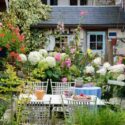
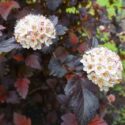
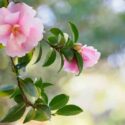
Discover 20 beautiful foundation shrubs for year-round curb appeal, from compact evergreens and flowering hydrangeas to shade-loving favorites and drought-tolerant choices. Learn how to select shrubs that fit beneath windows, leave room beside exterior walls, and thrive in your climate. Create a welcoming, low-maintenance landscape around your home.
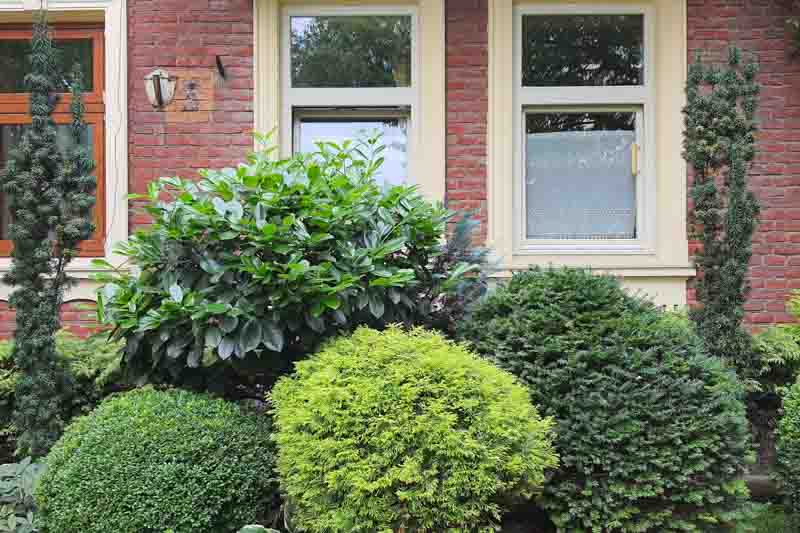


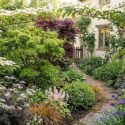
The best foundation shrubs make a home feel welcoming without hiding its architecture. Fragrant flowers brighten the entrance, evergreen foliage softens bare walls, and colorful leaves add interest long after spring blossoms fade.
There are far more possibilities than the usual boxwoods and hydrangeas. Dwarf fothergilla offers fragrant spring flowers and spectacular fall color. Mexican orange blossom perfumes a sheltered doorway, while compact native shrubs and drought-tolerant evergreens bring character to difficult sites.
These 20 best shrubs for foundation planting include unusual favorites, dependable flowering varieties, shade-loving evergreens, and plants for warm, dry climates. Some fit beneath windows; others belong beside broad walls or in spacious borders. Discover how to choose and position them for lasting curb appeal without constant pruning.
Evergreens give foundation beds structure throughout the year. These selections offer different leaf colors, textures, and natural shapes, making them attractive alternatives to clipped hedges.
Distylium ‘Vintage Jade’ forms a low, broad mound of glossy evergreen leaves. It needs little pruning and works beautifully along spacious foundation beds in suitable mild climates. Its spreading habit makes it less useful for narrow strips.
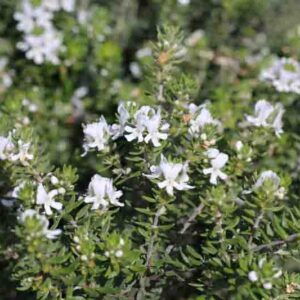
Choisya × dewitteana WHITE DAZZLER (Mexican Orange Blossom) produces masses of fragrant white spring flowers, often followed by lighter repeat blooms. Fine, aromatic evergreen foliage gives it an elegant appearance. Choose a sheltered entrance in a mild climate.
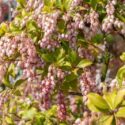
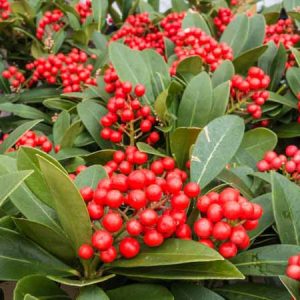
Skimmia japonica (Japanese Skimmia) brings glossy evergreen leaves and fragrant spring flowers to shaded foundations. Female plants can produce red winter berries when compatible male flowers provide pollination. It prefers sheltered, acidic, moisture-retentive but well-drained soil.
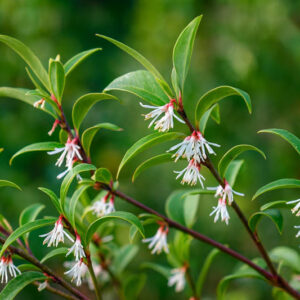
Sarcococca hookeriana (Sweet Box) offers glossy leaves and intensely fragrant winter flowers. It is wonderful near shady doorways where its perfume can be appreciated. Choose a lower-growing selection such as var. humilis for smaller beds, allowing for gradual spread.
Osmanthus heterophyllus ‘Goshiki’ (Holly Osmanthus) features beautifully variegated leaves in green, cream, gold, and bronze. Slow-growing but potentially sizeable, it makes an attractive evergreen accent beside a porch or spacious building corner.
| Plant Type | Shrubs |
|---|---|
| Genus | Abelia, Aronia, Callistemon, Ceanothus, Choisya, Cistus, Fothergilla, Hydrangea, Osmanthus, Potentilla, Sarcococca, Spiraea, Viburnum |
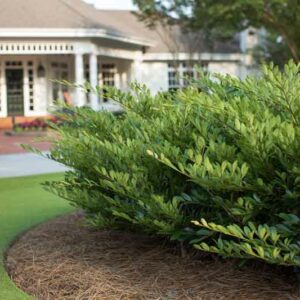



Flowering shrubs bring fragrance, seasonal color, and a softer appearance to the front of a house. The best selections offer interest beyond their blooming season.
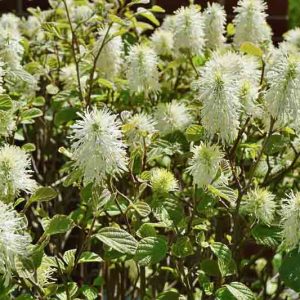
Fothergilla gardenii (Dwarf Fothergilla) produces honey-scented white bottlebrush flowers in spring. Its blue-green foliage turns brilliant shades of yellow, orange, and red in autumn. This compact native prefers moist, acidic, well-drained soil.
Viburnum carlesii ‘Compactum’ (Koreanspice Viburnum) is an excellent choice near an entrance. Pink buds open into wonderfully fragrant white spring flowers. Its restrained, rounded habit is attractive in foundation beds with room for its mature spread.
Hydrangea quercifolia ‘Munchkin’ (Oakleaf Hydrangea) combines white summer flowers that age pink with richly colored autumn foliage. This compact native cultivar suits sheltered foundation beds with adequate moisture. Avoid unnecessary pruning because flower buds develop on old wood.
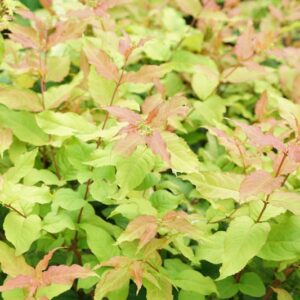
Spiraea betulifolia ‘Tor Gold’ (Birchleaf Spirea) forms a rounded mound of bright golden foliage topped with white late-spring flowers. Brilliant autumn colors add another season of interest. It is particularly beautiful repeated along sunny foundation borders.
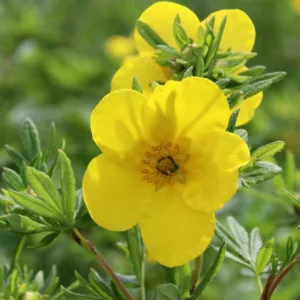
Potentilla fruticosa ‘Goldfinger’ (Shrubby Cinquefoil) produces cheerful golden-yellow flowers from late spring into autumn. Exceptionally hardy and generally easy to maintain, it performs especially well in sunny gardens with cooler summers.


For fragrance near your front door: Koreanspice viburnum, fothergilla, and Mexican orange blossom are especially rewarding. Choose according to your climate and available space rather than planting all three together.
For informal foundations, partial shade, or changing seasonal conditions, these shrubs offer alternatives to traditional evergreen hedges.
Diervilla Kodiak Fresh (Bush Honeysuckle) offers colorful young foliage, yellow summer flowers, and warm autumn tones. Adaptable and resilient, it tolerates partial shade and dry conditions after establishment. Allow for its gradual spreading habit.
Deutzia gracilis ‘Nikko’ (Slender Deutzia) produces a cascade of white late-spring flowers. It stays low but spreads widely, making it beautiful along a generous border front or low wall rather than in a narrow foundation strip.
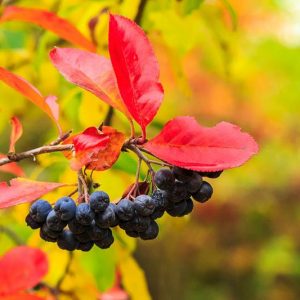
Aronia melanocarpa (Black Chokeberry) combines white spring flowers, dark berries attractive to birds, and brilliant red fall foliage. The species can become quite large and sucker. Use it in spacious borders or choose a verified compact cultivar for smaller areas.
Hypericum kalmianum (Kalm St. John’s Wort) offers golden-yellow summer flowers and slender blue-green foliage. This compact North American native suits sunny, naturalistic foundation borders. Consider its potential toxicity when planting around pets or grazing animals.
Abelia × grandiflora ‘Little Richard’ (Glossy Abelia) produces fragrant white flowers above glossy foliage over a long season. Its relatively compact habit makes it appealing for informal foundations in suitable climates, although winter leaf retention varies.




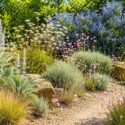
Sunny walls and dry-summer gardens call for shrubs that tolerate heat and well-drained soil. Several of these selections spread widely, so they are best reserved for generous foundation beds.
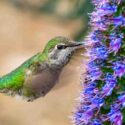
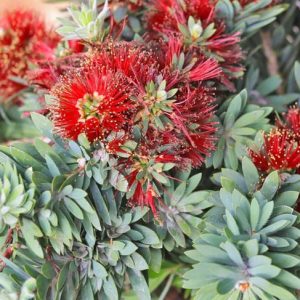
Callistemon viminalis ‘Little John’ (Dwarf Bottlebrush) produces vivid red flower spikes among narrow blue-green leaves. Attractive to hummingbirds, it suits sunny foundation borders in warm climates. Give it room to spread and some irrigation during extended drought.
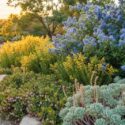
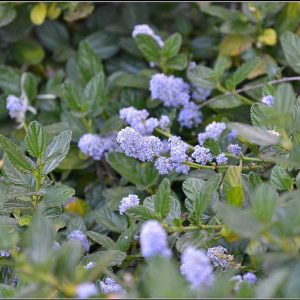
Ceanothus ‘Yankee Point’ (California Lilac) creates a spectacular carpet of blue spring flowers. This low evergreen can spread 8-10 feet, making it ideal for broad borders or slopes, not narrow beds beside walkways. It prefers excellent drainage and limited summer irrigation after establishment.
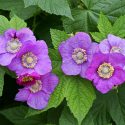
Cistus × purpureus (Purple-Flowered Rockrose) offers large pink-purple flowers with distinctive darker centers. Its aromatic evergreen foliage suits sunny Mediterranean gardens. Provide excellent drainage and avoid severe pruning into old wood.
Westringia fruticosa (Coast Rosemary) forms soft gray-green mounds with delicate pale flowers. Tolerant of coastal winds and relatively dry conditions once established, it is an appealing evergreen for sunny, mild-climate foundations.
Salvia clevelandii (Cleveland Sage) offers wonderfully aromatic foliage and violet-blue summer flowers. It thrives in dry-summer California gardens with excellent drainage. Give it ample room and avoid regular summer watering once established.


Small height doesn’t mean a small footprint. Yankee Point ceanothus and Little John bottlebrush may spread considerably wider than expected. Always check mature width before planting beside a house or walkway.
Gardenia’s plant cards provide mature height and width. This comparison focuses on where each shrub works best and the growing conditions that matter most.
| Shrub | Best Landscape Use | Main Consideration |
|---|---|---|
| Vintage Jade Distylium | Broad evergreen edging | Mature width |
| White Dazzler Choisya | Fragrant sheltered entrance | Winter hardiness |
| Japanese Skimmia | Shaded evergreen foundation | Soil acidity; moisture |
| Sweet Box | Winter-fragrant shaded entrance | Spreading habit |
| Goshiki Osmanthus | Evergreen corner accent | Potential mature size |
| Dwarf Fothergilla | Flowering native border | Acidic, moist soil |
| Compact Koreanspice Viburnum | Fragrant entrance shrub | Room for natural growth |
| Munchkin Oakleaf Hydrangea | Flowering, fall-color accent | Moisture; pruning time |
| Tor Gold Birchleaf Spirea | Sunny colorful foundation | Mature footprint |
| Goldfinger Cinquefoil | Long-blooming sunny border | Cooler summers |
| Kodiak Fresh Diervilla | Informal resilient planting | Suckering |
| Nikko Deutzia | Low spring-flowering edge | Wide spread |
| Black Chokeberry | Wildlife and autumn color | Size; suckering |
| Kalm St. John’s Wort | Sunny native flower garden | Animal toxicity |
| Little Richard Abelia | Informal flowering border | Winter foliage |
| Little John Bottlebrush | Warm-climate flowering accent | Bed width; irrigation |
| Yankee Point Ceanothus | Wide low-growing foundation | Very broad spread |
| Purple Rockrose | Dry Mediterranean garden | Drainage |
| Coast Rosemary | Coastal evergreen foundation | Climate suitability |
| Cleveland Sage | Dry-summer native border | Room; summer irrigation |
Foundation shrubs should complement a house at maturity, not just on planting day. Gardenia’s Foundation Fit Check helps you evaluate five essential considerations.
Measure bed width and the height beneath windows. A low shrub may still spread several feet across. Choose naturally compact forms where space is limited, and reserve larger shrubs for broad walls or corners.
Plan using mature spread rather than nursery-pot size. A shrub expected to grow 6 feet wide may extend about 3 feet from its center. If planted 2.5 feet from the wall, its branches could eventually reach the siding. Leave additional room for cleaning, inspections, and exterior maintenance.
South- and west-facing walls may become extremely hot, while north-facing walls receive less sun. Roof overhangs can create dry shade even in wet climates. Check actual light, drainage, and moisture conditions.
Keep soil and mulch below siding, vents, and weep holes. Maintain drainage away from the house and preserve access to utility meters, walkways, HVAC equipment, and emergency exits.
Choose shrubs whose mature shapes suit the available space. Avoid plants requiring repeated severe pruning, especially species that respond poorly to cutting into old wood.
Gardenia’s Foundation Fit Rule: Select the planting position first, then choose a shrub whose mature footprint, natural habit, and growing needs suit that space. A well-chosen shrub frames the home without becoming a maintenance problem.
Is your foundation bed too narrow for shrubs? Use suitable low perennials, bulbs, or groundcovers instead. A spacious, well-proportioned planting is better than shrubs constantly cut back to fit.
Discover Shrubs That Suit Your Home
Use Gardenia’s Plant Finder to compare hardiness, sunlight, soil, water needs, maintenance, and mature dimensions. Explore more varieties before choosing the plants for your foundation beds.
Combine: Fothergilla gardenii, Viburnum carlesii ‘Compactum’, and Spiraea betulifolia ‘Tor Gold’.
Spring fragrance, golden foliage, and brilliant autumn color create a welcoming front garden. Allow adequate room for the viburnum and choose soil conditions suitable for fothergilla.
Combine: Sarcococca hookeriana, Skimmia japonica, and Osmanthus ‘Goshiki’.
Glossy foliage, winter perfume, and colorful evergreen leaves provide year-round appeal. Choose a sheltered, sufficiently spacious planting bed, positioning Goshiki where it can mature naturally.
Combine: Ceanothus ‘Yankee Point’, Cistus × purpureus, and Salvia clevelandii.
Blue spring flowers, pink-purple rockroses, and aromatic sage create a striking dry-summer planting. Give these shrubs generous room, excellent drainage, and an irrigation regime appropriate to their needs.
Design tip: Repeat a few structural shrubs for continuity, then arrange flowering varieties in relaxed groups. Leave windows, entrances, and walkways open rather than forcing perfect symmetry.
Planting too close to walls. Plan for mature growth and exterior maintenance, not just the shrub’s nursery size.
Ignoring dry shade. Check moisture beneath roof overhangs before selecting shade-loving plants.
Mixing incompatible plants. Group shrubs with similar water, light, and soil requirements.
Choosing overly vigorous shrubs. Select varieties that fit naturally rather than relying on constant pruning.
Overlooking drainage. Correct pooling water and grading problems before planting.
Good choices include dwarf fothergilla, Vintage Jade distylium, Compactum Koreanspice viburnum, Tor Gold birchleaf spirea, skimmia, and other shrubs that suit the home’s space, climate, and soil.
Choose naturally low shrubs with suitable mature widths, such as dwarf fothergilla, compact oakleaf hydrangeas, or low-growing evergreen selections. Check each plant’s dimensions before buying.
Vintage Jade distylium, White Dazzler Mexican orange, Japanese skimmia, sweet box, and Goshiki osmanthus offer varied evergreen options for different climates and growing conditions.
Koreanspice viburnum, dwarf fothergilla, White Dazzler Mexican orange, and sweet box provide distinctive fragrance in different seasons.
Skimmia and sweet box are useful for sheltered shade, while Kodiak Fresh diervilla tolerates partial shade and established dry conditions. Check local climate and soil moisture.
There is no universal distance. Allow for the shrub’s mature width plus room for wall maintenance, airflow, and access. Larger shrubs need greater clearance than compact varieties.
Yes. Dwarf fothergilla, Kalm St. John’s Wort, black chokeberry, and regionally appropriate California natives can provide flowers and seasonal interest when matched to the planting site.
In appropriate climates, coast rosemary, Cleveland sage, rockrose, and selected California lilacs tolerate dry-summer conditions once established. Allow room for mature growth.
Choose suitable compact perennials, bulbs, or groundcovers instead of forcing shrubs into a strip too narrow for their mature spread and house clearance.
Choose shrubs for mature size, light, soil, moisture, and natural habit. Leave access to the house clear and group compatible plants. Gardenia’s Foundation Fit Check helps guide the selection.
A beautiful foundation garden doesn’t hide the house. It frames entrances, softens bare walls, and creates seasonal interest without overwhelming windows or pathways.
Choose shrubs that naturally fit your climate and available space, and combine their flowering seasons, foliage, and textures for a garden that looks attractive as it matures.
Plan a Foundation Garden That Won’t Outgrow Your Home
Use Gardenia’s Garden Design Tool to save plants, check growing-condition compatibility, review mature sizes and seasonal interest, estimate planting quantities, and create a shopping list.
Start free with up to five plants and create your planting plan before buying.
Updated and reviewed by Gardenia: October 2026
| Plant Type | Shrubs |
|---|---|
| Genus | Abelia, Aronia, Callistemon, Ceanothus, Choisya, Cistus, Fothergilla, Hydrangea, Osmanthus, Potentilla, Sarcococca, Spiraea, Viburnum |
Create a membership account to save your garden designs and to view them on any device.
Becoming a contributing member of Gardenia is easy and can be done in just a few minutes. If you provide us with your name, email address and the payment of a modest $25 annual membership fee, you will become a full member, enabling you to design and save up to 25 of your garden design ideas.
Join now and start creating your dream garden!