Discover 25 beautiful low-maintenance shrubs that make landscaping easier, from flowering hydrangeas and colorful abelias to hardy natives and drought-tolerant evergreens. Find the best choices for sunny borders, shady foundations, privacy screens, and wildlife gardens. Compare watering, pruning, and climate needs before creating your ideal easy-care landscape.


A beautiful landscape shouldn’t require every weekend of your time. Imagine a border filled with flowers, handsome foliage, and evergreen structure, without constant clipping, spraying, or watering. With the right low-maintenance shrubs, that is entirely achievable.
The secret isn’t finding plants that need no care. It’s choosing shrubs that naturally suit your climate, soil, sunlight, and available space. A hydrangea may be wonderfully easy in a moist garden but demanding on a dry California hillside. A compact evergreen can save hours of pruning, provided it doesn’t struggle with recurring pests.
These 25 best low-maintenance shrubs for landscaping include reliable flowering plants, compact evergreens, wildlife-friendly natives, and drought-tolerant favorites. Each offers beauty with relatively modest upkeep in the right conditions. Gardenia’s Landscape Upkeep Check helps you decide which will actually be easy in your garden.
For effortless-looking color, choose flowering shrubs that maintain a naturally attractive shape and don’t require constant deadheading.
Hydrangea paniculata ‘Bobo’ covers itself in white summer flowers that gradually blush pink. Its compact habit suits foundation beds and small borders. It flowers on new wood, so pruning is straightforward, but regular moisture remains important.
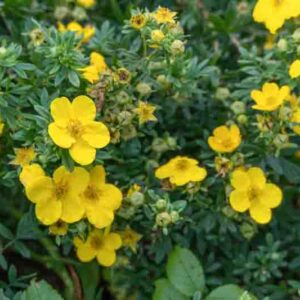
Potentilla fruticosa (Shrubby Cinquefoil), also known as Dasiphora fruticosa, produces cheerful flowers over a long season. Exceptionally cold-hardy, it tolerates poor soil and some drought once established, although it dislikes excessive summer heat and humidity.
Weigela florida brings a generous spring display of pink, red, or white trumpet-shaped flowers. Choose compact cultivars rather than large traditional varieties for less pruning. Occasional shaping after flowering is usually sufficient.
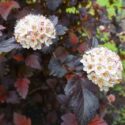
Physocarpus opulifolius ‘Diabolo’ (Ninebark) offers deep burgundy leaves, clusters of pale spring flowers, and attractive peeling bark. Its arching branches create a relaxed border without formal clipping.
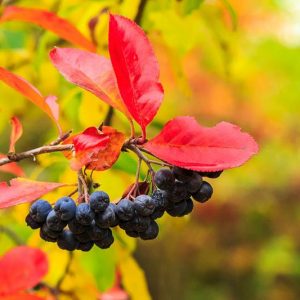
Aronia melanocarpa (Black Chokeberry) combines white spring flowers, dark berries, and brilliant autumn foliage. This adaptable native suits informal landscapes where its gradual suckering habit is welcome.
| Plant Type | Shrubs |
|---|---|
| Genus | Abelia, Aronia, Callicarpa, Ceanothus, Cistus, Clethra, Juniperus, Pieris, Potentilla, Viburnum |
| Maintenance | Low |





Save time with the right cultivar: A compact shrub that fits its planting space naturally is easier to maintain than a large variety repeatedly cut back. Hydrangeas are relatively easy in moisture-retentive soil, but are not drought-tolerant shrubs.
Native shrubs can simplify landscaping when their natural habitat resembles your garden. Many also support birds, butterflies, and other beneficial wildlife.
Itea virginica (Virginia Sweetspire) produces cascading white flowers and rich autumn color. It tolerates clay and periodically wet soil, making it useful for rain gardens and moist borders. Allow room for gradual spreading.
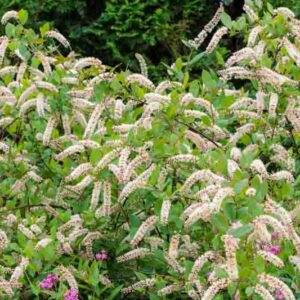
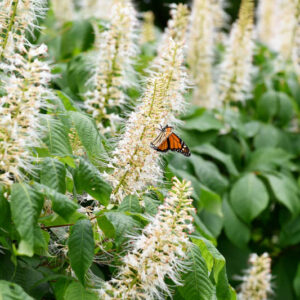
Clethra alnifolia (Summersweet) perfumes the summer garden with fragrant white or pink flower spikes. It thrives in moist, acidic soil and partial shade, where many sun-loving shrubs struggle.
Viburnum dentatum (Arrowwood Viburnum) provides spring flowers, blue-black berries, and colorful autumn foliage. It makes an excellent informal wildlife hedge where viburnum leaf beetle is not a recurring local problem.
Diervilla Kodiak Fresh (Bush Honeysuckle) is a compact, resilient shrub with yellow flowers and changing foliage colors. It tolerates sun, shade, and occasional drought after establishment. Its tendency to spread by suckers makes it especially useful for naturalistic borders and slopes.
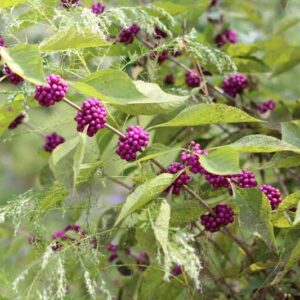
Callicarpa americana (American Beautyberry) carries vivid purple berries along its arching stems in autumn. In suitable Southern gardens, it requires little more than occasional shaping and room to develop naturally.
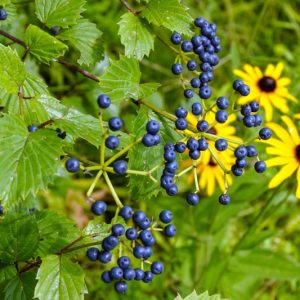
Native doesn’t automatically mean maintenance-free: Summersweet prefers consistently moist, acidic soil. Sweetspire and diervilla can spread. Choose natives suited to your region and use their natural growth habits to your advantage.
Evergreens provide year-round structure, but the easiest ones are not necessarily the slowest growing. Look for naturally compact forms, appropriate hardiness, and limited pest pressure.
Ilex glabra ‘Shamrock’ (Inkberry) forms a rounded mound of spineless evergreen leaves. It suits acidic, moisture-retentive soil and makes a handsome informal foundation planting.
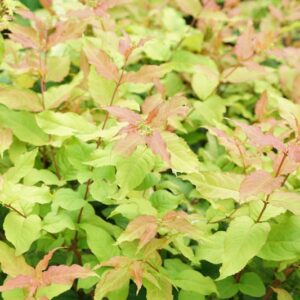
Abelia × grandiflora ‘Kaleidoscope’ (Glossy Abelia) combines bright yellow-green spring foliage with orange and red autumn tones. Delicate white flowers add interest from late spring into fall. Its compact growth and generally low pest pressure make it especially appealing for smaller landscapes.
Taxus × media ‘Hicksii’ (Hicks Yew) provides upright evergreen screening in cooler climates and tolerates partial shade. Well-drained soil is important, and all parts are highly poisonous if ingested.
Juniperus horizontalis ‘Blue Chip’ (Creeping Juniper) spreads into a silver-blue evergreen carpet. It is excellent for sunny banks and slopes, requiring little pruning once established. Avoid poorly drained soil and humid sites prone to juniper diseases.
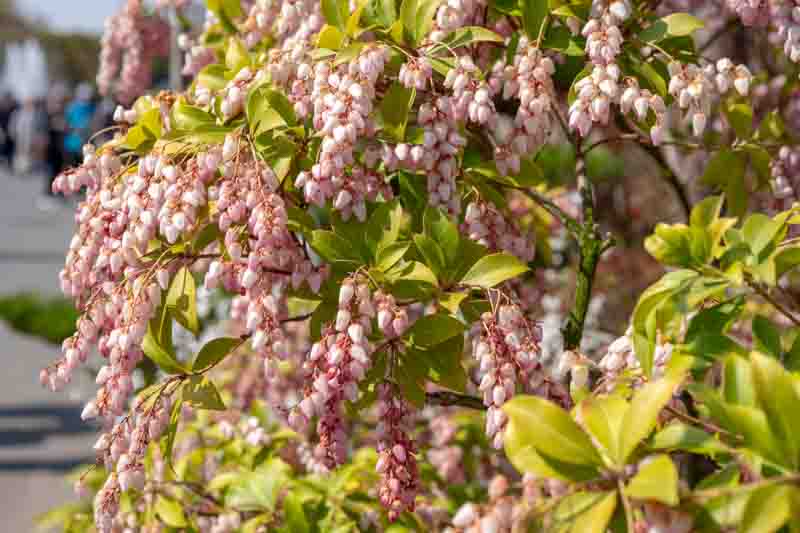
Pieris japonica (Japanese Andromeda) brings graceful spring flowers and colorful new growth to sheltered, partially shaded gardens. It is easy in suitable acidic soil but struggles where drainage or pH is wrong.


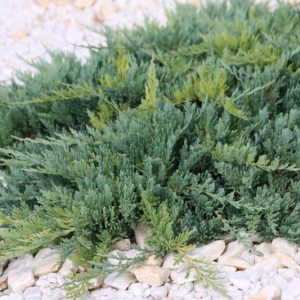
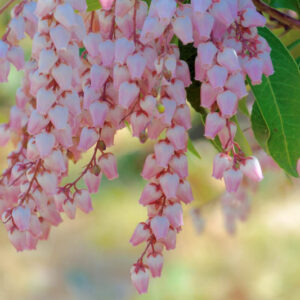
Evergreen selection tip: Don’t choose a hedge solely because it grows slowly. Consider disease risks, soil requirements, and natural width. Abelia may be semi-evergreen or deciduous in colder climates; yew and pieris are poisonous if eaten.
In dry-summer and arid climates, the right shrubs can dramatically reduce irrigation after establishment. The key is excellent drainage and choosing plants adapted to your region.
Westringia fruticosa (Coast Rosemary) forms tidy gray-green evergreen mounds with small pale flowers. It suits sunny Mediterranean and coastal gardens, tolerating drought, wind, and salt in well-drained soil.
Leucophyllum frutescens (Texas Sage) produces silvery foliage and flushes of purple flowers, often following summer humidity or rainfall. It thrives in hot Southwestern landscapes and needs little pruning when allowed its natural shape.
Cistus ladanifer (Crimson-Spot Rockrose) produces striking white flowers marked with maroon spots. Its aromatic leaves and informal habit suit gravel gardens and sunny dry slopes. Avoid wet soil and hard pruning into old wood.
Salvia clevelandii (Cleveland Sage) brings fragrant foliage and violet-blue flower clusters to California gardens. Pollinators love its flowers, and established plants generally need little summer irrigation.
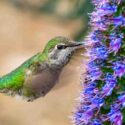
Ceanothus ‘Concha’ (California Lilac) delivers a breathtaking spring display of deep-blue flowers. It can be low-upkeep in a well-drained, dry-summer landscape, but is less suitable for humid regions or regularly irrigated borders.
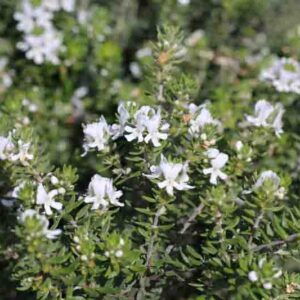
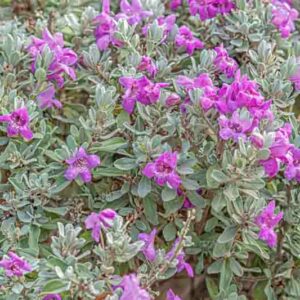


Less watering, not no watering: Every newly planted shrub needs establishment care. Once rooted, these plants generally require far less irrigation in appropriate climates. Avoid watering California sage and ceanothus like hydrangeas.
Warm-winter gardens benefit from shrubs that provide year-round structure without demanding constant shaping.
Acca sellowiana (Pineapple Guava) combines handsome silver-green foliage, unusual flowers, and edible fruit. It makes an attractive informal hedge or specimen in mild, well-drained gardens. Compatible cultivars and adequate moisture improve fruiting.
Dodonaea viscosa (Hopbush) offers upright evergreen growth and decorative papery seed capsules. Give it room to develop as a natural screen rather than repeatedly clipping it into a narrow hedge.
Pittosporum tobira (Japanese Pittosporum) produces glossy evergreen foliage and fragrant spring flowers. It is valuable in mild coastal landscapes but dislikes persistently wet soil.
Myrtus communis (Common Myrtle) adds aromatic leaves, small white flowers, and dark berries to sunny Mediterranean-style gardens. An informal hedge typically needs only occasional trimming.
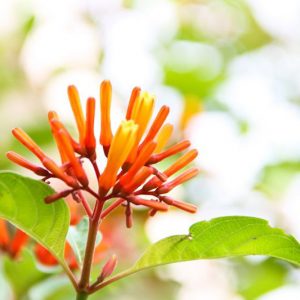
Hamelia patens (Firebush) bears brilliant orange-red flowers attractive to hummingbirds. It is especially useful in warm subtropical landscapes and can be left to grow naturally in wildlife-friendly borders.


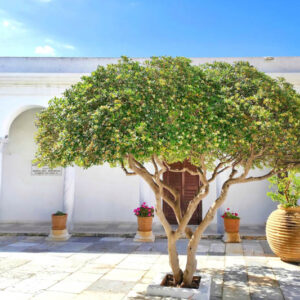

These recommendations are selected for relatively modest care in their appropriate climates, not because every plant is effortless everywhere. Gardenia’s plant cards provide mature dimensions; this comparison focuses on landscape use and the care most likely to become a chore.
| Shrub | Best Use | Climate / Site | Main Consideration |
|---|---|---|---|
| Bobo Hydrangea | Compact flowering border | Temperate, moist | Water; annual pruning |
| Shrubby Cinquefoil | Long-season flowers | Cool, sunny | Dislikes hot humidity |
| Weigela | Spring flowering border | Temperate, sunny | Choose compact cultivar |
| Ninebark ‘Diabolo’ | Foliage contrast | Cool / temperate | Natural spread |
| Black Chokeberry | Wildlife, fall color | Temperate, moist | Suckering |
| Virginia Sweetspire | Rain garden, partial shade | Moist, acidic | Colonizing habit |
| Summersweet | Fragrant summer border | Moist, acidic | Dry soil |
| Arrowwood Viburnum | Wildlife hedge | Temperate eastern | Leaf beetle risk |
| Diervilla Kodiak Fresh | Slopes, mixed borders | Cool / temperate | May sucker |
| American Beautyberry | Autumn berries | Warm southeastern | Allow natural shape |
| Inkberry ‘Shamrock’ | Evergreen foundation | Acidic, moist | Soil pH |
| Abelia ‘Kaleidoscope’ | Colorful compact border | Mild / temperate | Cold-related leaf loss |
| Hicks Yew | Evergreen screen | Cool, well-drained | Highly toxic |
| Blue Chip Juniper | Sunny groundcover | Dry, well-drained | Wet soil, shade |
| Japanese Andromeda | Flowering evergreen | Cool, acidic, partly shaded | Soil pH; toxicity |
| Coast Rosemary | Coastal low hedge | Dry-summer | Waterlogging |
| Texas Sage | Low-water border | Hot, arid | Overwatering |
| Crimson-Spot Rockrose | Sunny dry bank | Mediterranean | Hard pruning |
| Cleveland Sage | Fragrant pollinator garden | California dry-summer | Summer irrigation |
| Ceanothus ‘Concha’ | Blue flowering screen | California dry-summer | Humidity, drainage |
| Pineapple Guava | Informal hedge, fruit | Mild, well-drained | Fruit pollination |
| Hopbush | Privacy screen | Warm, sunny | Mature spread |
| Japanese Pittosporum | Evergreen boundary | Mild coastal | Wet roots |
| Common Myrtle | Fragrant hedge | Mediterranean | Regional suitability |
| Firebush | Hummingbird border | Warm subtropical | Cold damage |
Not all maintenance is equal. A shrub needing one annual trim may be easier than an evergreen requiring repeated pest treatment. Gardenia’s Landscape Upkeep Check evaluates four practical questions before you plant.
Check winter hardiness, summer heat, soil, drainage, and sunlight. A shrub that needs regular protection, soil correction, or rescue watering is unlikely to be genuinely low-maintenance.
Choose a shrub that can mature without blocking windows or pathways. Compact plants reduce corrective pruning; informal hedges usually require less trimming than precisely clipped shapes.
Check disease pressure, invasive potential, unwanted suckers, and wildlife browsing. Gardenia considers these ongoing risks alongside routine care, not as separate afterthoughts.
Group plants with compatible watering needs. A water-wise California border and a moisture-loving hydrangea bed should not depend on the same irrigation schedule.
Gardenia’s low-maintenance decision rule: Favor shrubs that fit your climate and space, require few recurring interventions, and can share a practical watering and care routine with neighboring plants. The easiest shrub is the one you rarely need to correct.
| Your Priority | Good Starting Choices | Avoid |
|---|---|---|
| Minimal pruning | Abelia ‘Kaleidoscope’, Bobo, compact weigela | Oversized varieties |
| Less irrigation, dry West | Westringia, Texas sage, rockrose | Moisture-loving shrubs |
| Moist partial shade | Sweetspire, summersweet | Dry alkaline ground |
| Wildlife-friendly planting | Beautyberry, chokeberry, arrowwood | Constant shearing |
| Sunny evergreen slope | Blue Chip juniper, coast rosemary | Wet soil and deep shade |
| Mild-climate privacy | Pineapple guava, pittosporum, myrtle | Narrow planting spaces |
| Cool-climate screening | Hicks yew, inkberry in acidic soil | Waterlogged roots |
Which Low-Maintenance Shrubs Will Be Easy in Your Garden?
A shrub that grows effortlessly in one climate can become a constant chore in another. Use Gardenia’s Plant Finder to compare hardiness, sunlight, soil, watering, maintenance requirements, and mature size.
Combine: Bobo hydrangea, compact weigela, ninebark ‘Diabolo’, and abelia ‘Kaleidoscope’.
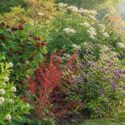
White hydrangea blooms contrast with burgundy ninebark foliage, spring weigela flowers, and the changing colors of abelia. Give the ninebark room to spread naturally, and position the hydrangea where it receives consistent moisture without overwatering the more drought-tolerant shrubs.
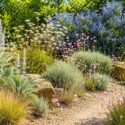
Combine: Coast rosemary, crimson-spot rockrose, Cleveland sage, and Ceanothus ‘Concha’.
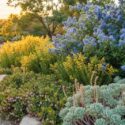
Silvery foliage, crisp white rockrose flowers, fragrant violet sage blooms, and brilliant blue ceanothus create a natural-looking garden with little summer irrigation once established.
Best conditions: Full sun, excellent drainage, and dry summers.
Combine: Virginia sweetspire, summersweet, arrowwood viburnum, and American beautyberry.
Spring and summer flowers support pollinators, while berries and autumn foliage extend the garden’s appeal. Give these shrubs enough room and choose a site with sufficient moisture for sweetspire and summersweet.
Choose the right planting site. Avoid forcing acid-loving plants into alkaline soil or drought-adapted shrubs into poorly drained beds.
Allow mature spacing. Check Gardenia’s plant cards before placing shrubs near windows, paths, and neighboring plants.
Water thoroughly during establishment. Gradually adjust irrigation as roots develop. Even drought-tolerant shrubs need early care.
Use mulch appropriately. Suppress weeds and moderate soil moisture while keeping mulch away from stems and the crowns of dry-climate shrubs.
Inspect seasonally. Remove dead branches, check for emerging pests, and prune only when needed. Preventive attention is usually easier than rescuing a neglected planting.
Good choices include compact weigela, abelia ‘Kaleidoscope’, shrubby cinquefoil, inkberry, Virginia sweetspire, coast rosemary, and Texas sage. Select according to climate, sunlight, soil, and water needs.
In appropriate dry climates, established coast rosemary, Texas sage, rockrose, Cleveland sage, and ceanothus generally need little supplemental irrigation. All require establishment watering.
Virginia sweetspire, summersweet, inkberry, yew, and pieris can grow in partial shade when their soil and moisture requirements are met.
Depending on climate, abelia ‘Kaleidoscope’, inkberry, juniper, coast rosemary, pittosporum, and pineapple guava provide lasting structure with modest upkeep.
Naturally compact choices such as abelia ‘Kaleidoscope’, Bobo hydrangea, and suitable dwarf weigelas reduce repeated shaping. Bobo may still benefit from an annual prune.
No. Native shrubs perform best when matched to regional climate, sunlight, and soil. Some spread through suckers or need periodic pruning.
Not necessarily. Hydrangeas and summersweet may be easy in moist gardens but need substantial irrigation in dry landscapes. Low maintenance depends on site compatibility.
Inkberry, yew, pineapple guava, hopbush, and Japanese pittosporum can provide screening in suitable climates. Choose plants whose mature size fits the space.
Spring and early autumn are suitable in many temperate regions. Autumn is particularly helpful in dry-summer Mediterranean climates. Avoid extreme heat and maintain establishment watering.
Choose shrubs suited to local conditions, group plants with similar water needs, allow mature spacing, and minimize unnecessary clipping. Gardenia’s Landscape Upkeep Check considers climate, size, recurring problems, and compatible care routines.
The easiest landscape isn’t necessarily the one with the fewest plants. It’s one where shrubs are well matched to the site, grow naturally into their allotted space, and share compatible care needs.
Choose the right plants from the beginning, and you can enjoy seasonal flowers, evergreen structure, and wildlife interest without turning every weekend into a maintenance project.
Build Your Own Low-Maintenance Garden
Use Gardenia’s Garden Design Tool to save plants, check compatibility, compare mature sizes and seasonal interest, calculate planting quantities, and create a shopping list.
Start free with up to five plants and refine your choices before buying.
Updated and reviewed by Gardenia: October 2026
| Plant Type | Shrubs |
|---|---|
| Genus | Abelia, Aronia, Callicarpa, Ceanothus, Cistus, Clethra, Juniperus, Pieris, Potentilla, Viburnum |
| Maintenance | Low |
Create a membership account to save your garden designs and to view them on any device.
Becoming a contributing member of Gardenia is easy and can be done in just a few minutes. If you provide us with your name, email address and the payment of a modest $25 annual membership fee, you will become a full member, enabling you to design and save up to 25 of your garden design ideas.
Join now and start creating your dream garden!