Fairy Bellflower 'Takion Blue', Fairy Bells 'Takion Blue', Peach Bells 'Takion Blue', Petticoat Bellflower 'Takion Blue', Willow Bell 'Takion Blue', Peachleaf Bellflower 'Takion Blue'
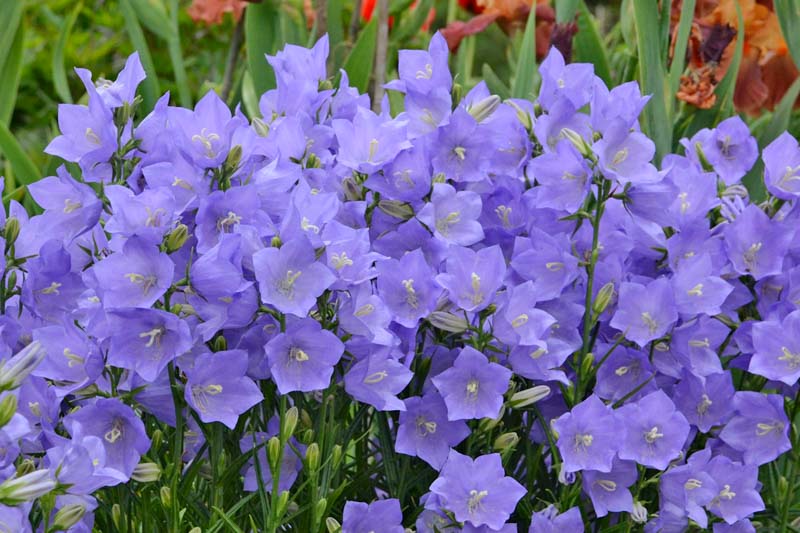
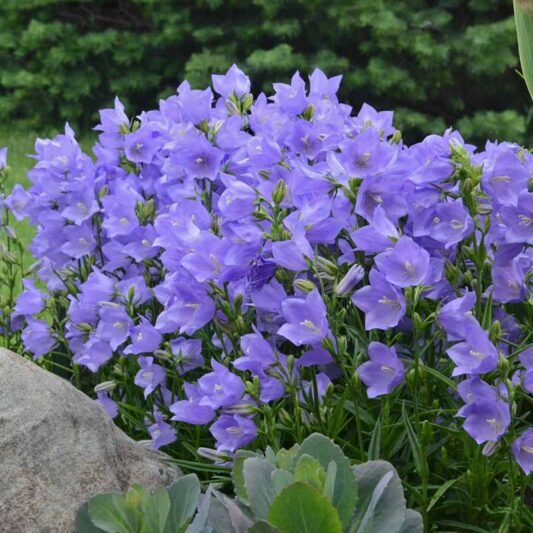
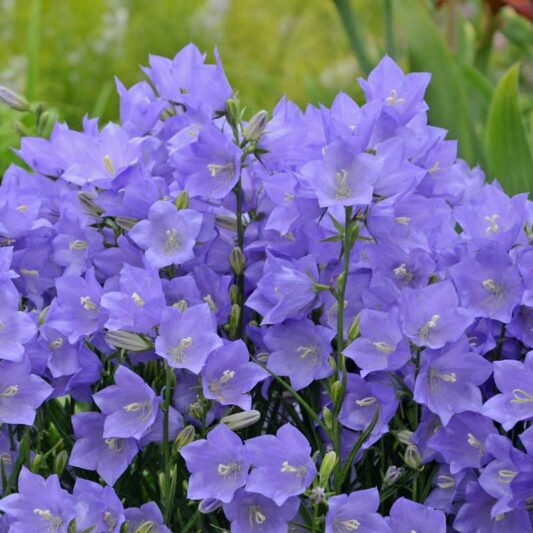
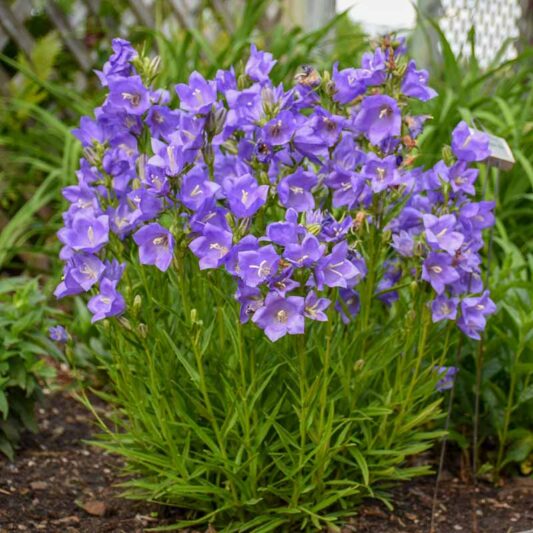
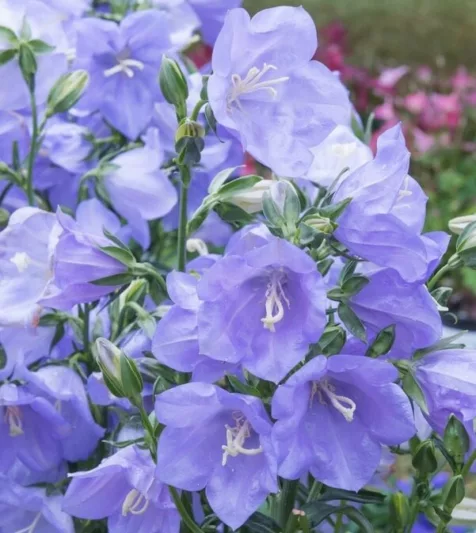


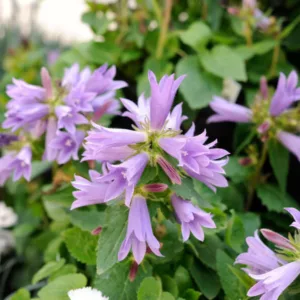
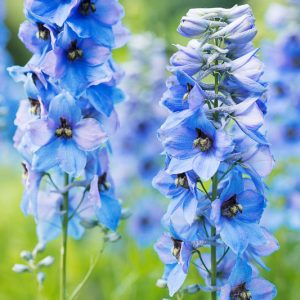
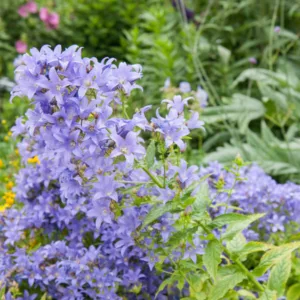
Campanula persicifolia ‘Takion Blue’ is a compact peach-leaved bellflower with violet-blue, outward-facing blooms on sturdy upright stems. It brings cool color, graceful movement, and a polished cottage-garden feel to perennial borders, pollinator plantings, patio containers, and cutting gardens without the legginess or floppiness sometimes seen in taller bellflowers. Part of the Takion Series, this refined perennial is valued for its shorter habit, strong branching, and long summer display. At about 16 to 20 inches tall, it fits beautifully near the front or middle of a border, where its lavender-blue flowers blend effortlessly with whites, silvers, pinks, yellows, burgundy foliage, and deeper purples.
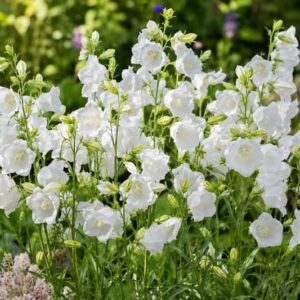
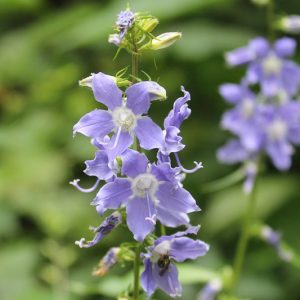
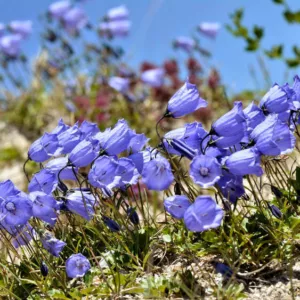
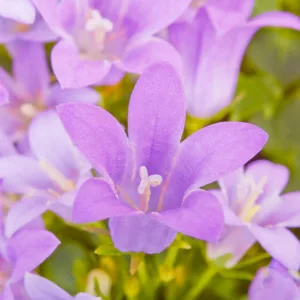
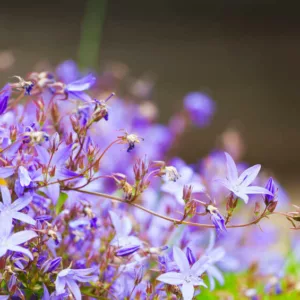
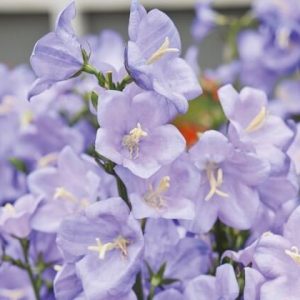
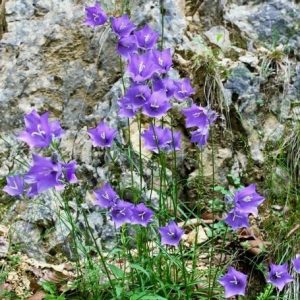
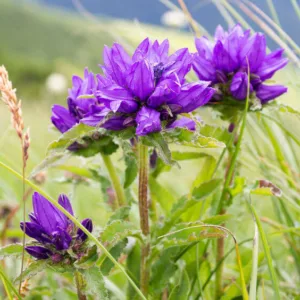
Compact peach-leaved bellflower with large, violet-blue, cup-shaped to bell-shaped flowers above narrow green foliage.
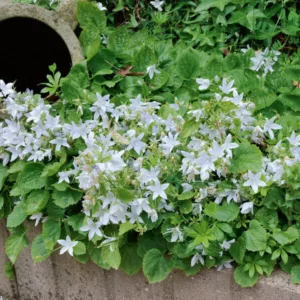
Use: Excellent for perennial borders, cottage gardens, pollinator gardens, containers, edging, small gardens, and cutting gardens.
Highlight: A shorter, sturdier Campanula with upward and outward-facing blooms, strong stems, and easy design appeal.
| Botanical Name | Campanula persicifolia ‘Takion Blue’; Takion Series |
|---|---|
| Family | Campanulaceae |
| Common Names | Takion Blue bellflower, peach-leaved bellflower, blue peachleaf bellflower, blue campanula |
| Plant Type and Habit | Clump-forming herbaceous perennial; compact, upright, basal rosette-forming |
| Hardiness | USDA Zones 3 to 8 |
| Size | About 16 to 20 inches tall and 10 to 12 inches wide |
| Sun and Exposure | Full sun to part shade; afternoon shade helps in hot-summer climates |
| Soil | Average to fertile, neutral to alkaline, medium moisture, well-drained soil |
| Bloom Time | Early summer to late summer, with longer display if deadheaded |
| Flower Color | Violet-blue to lavender-blue |
| Wildlife Value | Attracts bees, butterflies, hummingbirds, and other pollinators |
Give ‘Takion Blue’ bright light, steady moisture, and good drainage. Removing spent stems after the first flush keeps the plant fresh and can encourage more flowers.
Wet crowns and stagnant winter soil are the biggest risks. Peach-leaved bellflowers enjoy moisture, but they need drainage and airflow to stay vigorous.
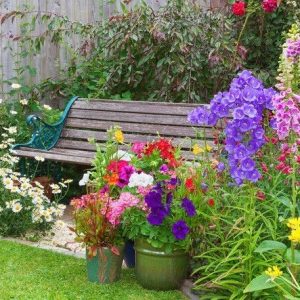
Use ‘Takion Blue’ as a cool-color thread through the border. Its lavender-blue bells calm hot flowers, brighten silver foliage, and make white companions look crisp and intentional.
Campanula persicifolia ‘Takion Blue’ is a compact, clump-forming perennial grown for violet-blue bells carried on upright stems. The species name persicifolia means peach-leaved, referring to the plant’s narrow, lance-shaped foliage. Unlike some taller bellflowers, this cultivar keeps a tidy shape, so it fits comfortably in small gardens, formal mixed borders, relaxed cottage plantings, and patio containers.
‘Takion Blue’ usually reaches 16 to 20 inches tall with a spread of about 10 to 12 inches. It forms a low rosette of green leaves before sending up several sturdy flowering stems. The Takion Series is known for good basal branching, which helps the plant look fuller and more finished than many older peach-leaved bellflowers.
Blooming from early summer into late summer, the flowers face upward and outward, making them easy to enjoy from paths, patios, steps, and seating areas. Each bloom is open, cup-shaped to bell-shaped, and often around 2 inches wide. Regular deadheading can extend the show and prevent the plant from spending too much energy on seed.
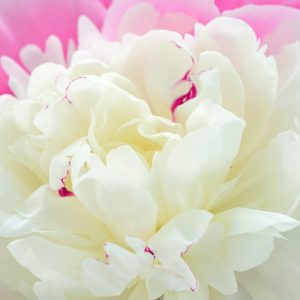
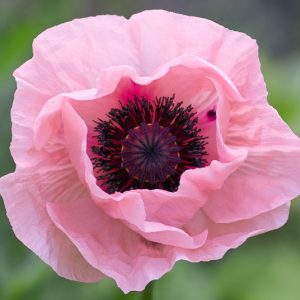
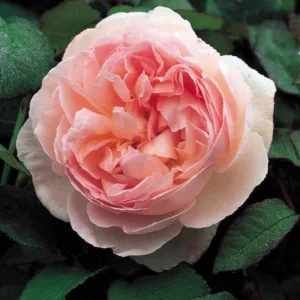
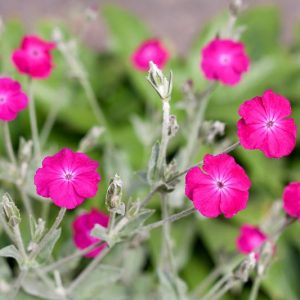
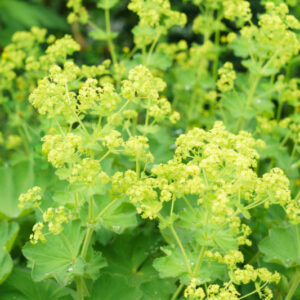
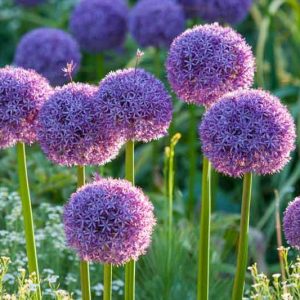
The foliage is narrow, green, and refined rather than bulky. This makes ‘Takion Blue’ easy to weave among geraniums, salvias, lady’s mantle, catmint, roses, peonies, alliums, oriental poppies, and ornamental grasses. It adds vertical lift without overpowering neighboring plants, which is why it works equally well in cottage gardens, blue-and-white gardens, pollinator borders, and modern perennial schemes.
‘Takion Blue’ is generally hardy in USDA Zones 3 to 8. It performs best in cool to moderate summer climates, where full sun supports strong flowering. In hotter regions, morning sun with afternoon shade helps protect the blooms and foliage from stress. In cold climates, drainage matters more than heavy winter cover; wet winter soil can weaken the crown.
‘Takion Blue’ attracts bees, butterflies, hummingbirds, and other beneficial insects. Its early to late summer bloom helps fill a useful seasonal window between spring flowers and late-summer nectar plants.
Campanula is not usually among the most heavily browsed ornamentals, and Gardenia lists ‘Takion Blue’ as tolerant of deer and rabbits. Still, no plant is browse-proof. Young shoots and flower buds may be eaten where deer pressure is high, and rabbits may nibble tender new growth in spring, so protect young plants if browsing is common in your garden.
‘Takion Blue’ prefers average to moist soil and is not a true dry-garden perennial. Once established, it can tolerate short dry spells, but prolonged drought reduces bloom and may cause premature decline. Mulch lightly to conserve moisture, but keep mulch away from the crown.
Campanula species are widely grown as ornamental perennials and are not generally regarded as highly toxic. Still, this plant is best treated as ornamental rather than edible unless a reliable edible-use source says otherwise.
Campanula persicifolia ‘Takion Blue’ is clump-forming and not generally considered invasive, though peach-leaved bellflowers may self-sow lightly in favorable sites. Deadheading controls seedlings and keeps the plant looking polished.
Grow ‘Takion Blue’ in full sun to part shade. Full sun is best in cool regions, while afternoon shade is helpful in hot areas. Too much shade can reduce flowering and cause stems to lean.
Plant in average to fertile, neutral to alkaline, moist but well-drained soil. Compost improves both moisture retention and drainage. Heavy clay should be loosened and planted slightly high, while very sandy soil benefits from added organic matter.
Water regularly during the first growing season. Established plants like consistent moisture during bud formation and bloom, but they dislike standing water. In containers, water when the upper layer of potting mix begins to dry.
A spring layer of compost is usually enough. If growth is weak, apply a light balanced fertilizer. Avoid overfeeding, which can produce soft growth and fewer flowers.
Plant in spring or early fall, spacing plants about 12 inches apart. Set the crown level with the soil surface, water well, and keep nearby plants from smothering the basal rosette.
Remove spent stems after the first bloom flush. This keeps the plant tidy, reduces seed set, and may encourage additional flowers. After flowering, cut back to basal foliage. If leaves look tired later in summer, trim lightly and water during dry weather.
Divide established clumps in spring or fall. Replant healthy rooted sections promptly at the same depth and keep them evenly moist while they settle in. Division is the best way to maintain the exact character of this named cultivar.
‘Takion Blue’ is generally easy to grow when light, moisture, and drainage are balanced. Most problems are linked to wet crowns, overcrowding, drought stress, poor airflow, or humid weather.
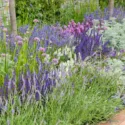
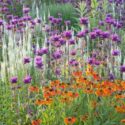
‘Takion Blue’ pairs best with plants that enjoy similar conditions: full sun to part shade, fertile well-drained soil, and average to moderate moisture. Its violet-blue flowers work as a cooling thread, tying together whites, silvers, purples, soft yellows, pinks, burgundy foliage, and warm late-spring color.
Plant ‘Takion Blue’ in groups of three or five, then repeat blue, purple, or silver accents nearby. The color is soft enough for cottage gardens but clean enough for formal borders.
Campanula persicifolia ‘Takion Blue’ is a compact peach-leaved bellflower with violet-blue, outward-facing flowers on sturdy stems. It is a clump-forming herbaceous perennial for borders, cottage gardens, pollinator gardens, containers, edging, and cut flower plantings.
Campanula ‘Takion Blue’ usually grows about 16 to 20 inches tall and 10 to 12 inches wide. Its compact size makes it useful near the front or middle of perennial borders and in containers.
Yes. Campanula persicifolia ‘Takion Blue’ is a herbaceous perennial, generally hardy in USDA Zones 3 to 8 when grown in well-drained soil.
Campanula ‘Takion Blue’ grows in full sun to part shade. Full sun is best in cool climates, while afternoon shade is helpful in hotter regions.
Campanula persicifolia ‘Takion Blue’ typically blooms from early summer into late summer. Deadheading spent stems can extend the display and keep the plant neat.
Yes. Campanula ‘Takion Blue’ attracts bees, butterflies, hummingbirds, and other pollinators. Plant several together for a stronger visual effect and better pollinator visibility.
Yes. Campanula ‘Takion Blue’ can grow in containers if the pot has drainage holes and the potting mix stays evenly moist but not soggy.
Gardenia – Campanula persicifolia ‘Takion Blue’: https://www.gardenia.net/plant/campanula-persicifolia-takion-blue-bellflower
Gardenia – Campanula / Bellflowers: https://www.gardenia.net/plants/genera/campanula-bellflower
Walters Gardens – Campanula persicifolia Takion Series Blue: https://www.waltersgardens.com/variety.php?ID=CAMTB
RHS – Campanula persicifolia ‘Takion Blue’: https://www.rhs.org.uk/plants/256907/campanula-persicifolia-takion-blue-%28takion-series%29/details
Takii Europe – Takion F1 Blue: https://takii.eu/products/camp-pers-takion-f1-blue/
Updated: June 2026 • Reviewed by Gardenia Editors
| Hardiness |
3 - 8 |
|---|---|
| Heat Zones |
1 - 9 |
| Climate Zones | 1, 1A, 1B, 2, 2A, 2B, 3, 3A, 3B, 4, 5, 6, 7, 8, 9, 14, 15, 16, 17, 18, 19, 20, 21, 22, 23, 24 |
| Plant Type | Perennials |
| Plant Family | Campanulaceae |
| Genus | Campanula |
| Common names | Bellflower |
| Exposure | Full Sun, Partial Sun |
| Season of Interest | Summer (Early, Mid, Late) |
| Height | 1' - 2' (30cm - 60cm) |
| Spread | 1' - 2' (30cm - 60cm) |
| Spacing | 12" - 16" (30cm - 40cm) |
| Maintenance | Low |
| Water Needs | Average |
| Soil Type | Chalk, Loam, Clay, Sand |
| Soil pH | Acid, Neutral, Alkaline |
| Soil Drainage | Moist but Well-Drained |
| Characteristics | Cut Flowers, Showy |
| Tolerances | Deer |
| Attracts | Butterflies, Hummingbirds, Bees |
| Garden Uses | Beds And Borders, Small Gardens |
| Garden Styles | Butterfly Garden, City and Courtyard, Informal and Cottage, Pollinator Garden |
| Toxic to Humans | No known toxicity |
| Toxic to Cats | No known toxicity |
| Toxic to Dogs | No known toxicity |
| Toxic to Horses | No known toxicity |


| Hardiness |
3 - 8 |
|---|---|
| Heat Zones |
1 - 9 |
| Climate Zones | 1, 1A, 1B, 2, 2A, 2B, 3, 3A, 3B, 4, 5, 6, 7, 8, 9, 14, 15, 16, 17, 18, 19, 20, 21, 22, 23, 24 |
| Plant Type | Perennials |
| Plant Family | Campanulaceae |
| Genus | Campanula |
| Common names | Bellflower |
| Exposure | Full Sun, Partial Sun |
| Season of Interest | Summer (Early, Mid, Late) |
| Height | 1' - 2' (30cm - 60cm) |
| Spread | 1' - 2' (30cm - 60cm) |
| Spacing | 12" - 16" (30cm - 40cm) |
| Maintenance | Low |
| Water Needs | Average |
| Soil Type | Chalk, Loam, Clay, Sand |
| Soil pH | Acid, Neutral, Alkaline |
| Soil Drainage | Moist but Well-Drained |
| Characteristics | Cut Flowers, Showy |
| Tolerances | Deer |
| Attracts | Butterflies, Hummingbirds, Bees |
| Garden Uses | Beds And Borders, Small Gardens |
| Garden Styles | Butterfly Garden, City and Courtyard, Informal and Cottage, Pollinator Garden |
| Toxic to Humans | No known toxicity |
| Toxic to Cats | No known toxicity |
| Toxic to Dogs | No known toxicity |
| Toxic to Horses | No known toxicity |
How many Campanula persicifolia ‘Takion Blue’ (Peach-Leaved Bellflower) do I need for my garden?
| Plant | Quantity | |
|---|---|---|
| Campanula persicifolia ‘Takion Blue’ (Peach-Leaved Bellflower) | N/A | Buy Plants |
Create a membership account to save your garden designs and to view them on any device.
Becoming a contributing member of Gardenia is easy and can be done in just a few minutes. If you provide us with your name, email address and the payment of a modest $25 annual membership fee, you will become a full member, enabling you to design and save up to 25 of your garden design ideas.
Join now and start creating your dream garden!
Create a membership account to save your garden designs and to view them on any device.
Becoming a contributing member of Gardenia is easy and can be done in just a few minutes. If you provide us with your name, email address and the payment of a modest $25 annual membership fee, you will become a full member, enabling you to design and save up to 25 of your garden design ideas.
Join now and start creating your dream garden!