Chinese Dwarf Banana, Golden Lotus Banana, Chinese Yellow Banana, Yellow Lotus Banana, Rock Banana, Blompiesang, Musella splendida, Musella lasiocarpa var. rubribracteata, Musa lasiocarpa, Ensete lasiocarpum



Summary: A striking ornamental relative of bananas celebrated for its long-lasting golden-yellow, lotus-like bloom (often months). Native to the high mountains of Yunnan, China, it’s unusually hardy for a banana family member.
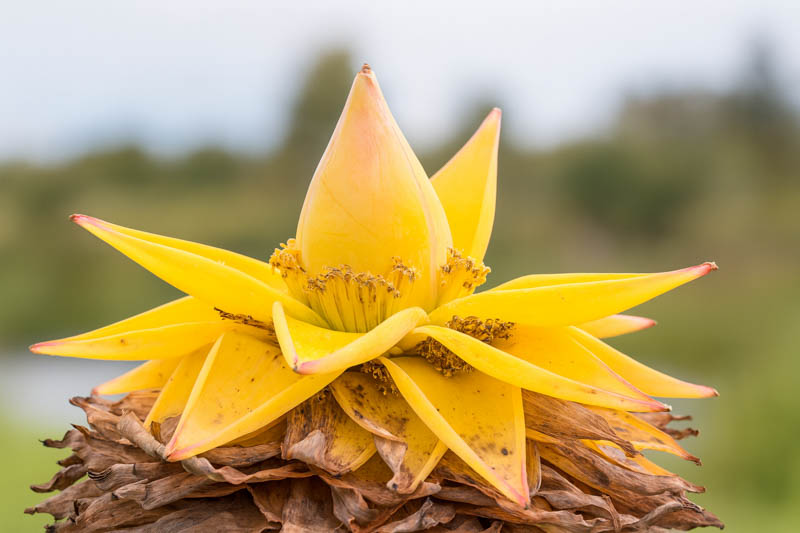
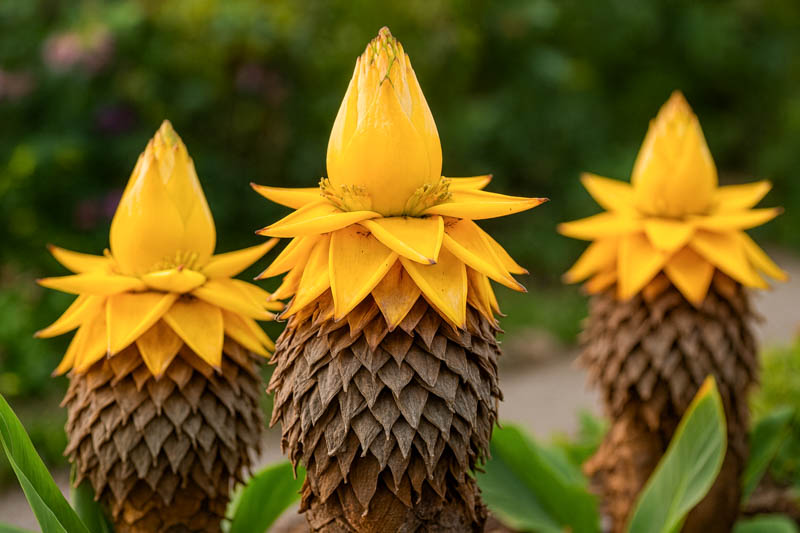
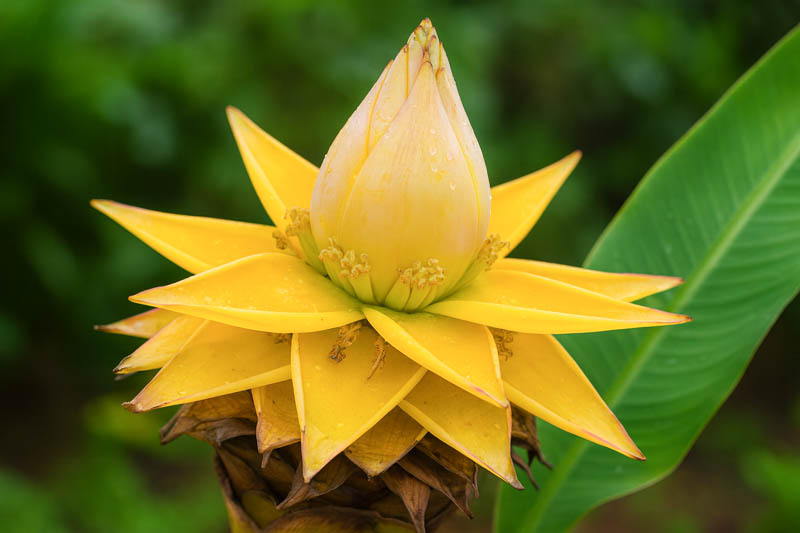
Flower: Golden, lotus-shaped, held above lush foliage for up to 6 months.
Use: Ornamental focal point, container specimen, patio feature, hardy tropical accent.
Growing Note: Prize it for the flower, not fruit. Keep crowns dry in winter; mulch and shelter in cold zones.
| Botanical Name | Musella lasiocarpa (syn. Ensete lasiocarpum) |
|---|---|
| Family | Musaceae (monotypic genus Musella) |
| Common Names | Golden Lotus Banana, Chinese Yellow Banana, Hardy Banana Lotus |
| Plant Type & Habit | Perennial herb with pseudostem; clumping, upright; ornamental “banana” relative |
| Hardiness (USDA) | 7b–10; occasionally 6 with very deep, dry winter protection and superb drainage (not dependable). Wet winters reduce survival. |
| Size | 3–6 ft (0.9–1.8 m) tall; 3–5 ft (0.9–1.5 m) wide; compact for a banana relative |
| Sun & Exposure | Full sun to part shade; shelter from strong, tearing winds |
| Soil | Moist, rich, well-drained; slightly acidic to neutral; dislikes waterlogging (keep crowns/corms dry in winter) |
| Bloom | Golden-yellow, lotus-shaped bracts, often vivid for 3–6 months |
| Pruning | Remove tattered leaves; cut spent flowering stems to soil level after bloom |
| Primary Uses | Ornamental feature, containers, hardy tropical look, patio display |
If bananas make you think of fruit bowls, the Golden Lotus Banana flips the script. This is a banana cousin grown not for food, but for a dazzling, golden lotus-like bloom that can last half a year. Compact, hardy, and surprisingly easygoing, Musella lasiocarpa is the gardener’s secret for tropical drama even outside the tropics.
Musella lasiocarpa is a rare, ornamental member of the banana family Musaceae. Unlike its fruit-bearing cousins (Musa species), this plant is grown for its golden-yellow flower bracts that resemble a lotus blossom. Each bloom rises from the pseudostem and can remain vivid for 3–6 months, making it one of the longest-lasting ornamental banana-family flowers in cultivation.
The Golden Lotus Banana is the recipient of the prestigious Award of Garden Merit of the Royal Horticultural Society.
Endemic to the high mountains of Yunnan, China (≈1,900–2,500 m). Its alpine heritage explains why it’s so much more cold-tolerant than tropical bananas—cool summers, misty air, and occasional frosts built toughness into the species.
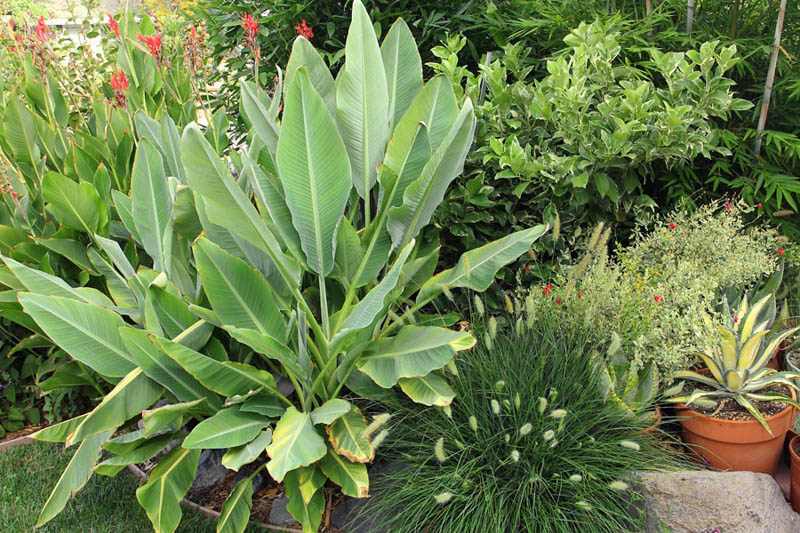
Golden Lotus Banana stays compact compared to its giant cousins. Mature plants usually stand 3–6 feet (0.9–1.8 m) tall, forming clumps of upright green leaves about 2–3 feet (0.6–0.9 m) long. Its tidy habit makes it perfect for smaller gardens and large containers.
A plant usually flowers when it’s 1–2 years old. Each pseudostem blooms once, then dies back, while new pups (suckers) emerge to keep the clump going. The corm (rhizome-like base) sends up new stems to renew the plant.
Individual pseudostems are short-lived (2–3 years), but the clump can persist indefinitely, producing new flowering stems year after year with proper care.
The foliage is lush green, slightly leathery, and paddle-shaped—smaller than edible bananas but still distinctly tropical. Even without flowers, the plant adds architectural beauty to gardens.
The easiest way is by dividing pups from the base. Slice off suckers with attached roots and replant in well-prepared, free-draining soil. Tissue-cultured plants are also commercially available for uniform, disease-free stock.
Best as a conversation-starting focal point. Place it where the long-lasting bloom can be admired—by patios, entryways, or as a centerpiece in a tropical bed. Its compact form also makes it container-friendly for balconies and small courtyards.
Yes, it is hardy to USDA zones 7–10 with mulch for winter protection—occasionally even zone 6 with heavy winter cover. Container growing is recommended for colder regions.
It survives mild winters with thick mulch over the roots. For colder climates, bring container plants indoors before frost or overwinter in a cool, frost-free spot.
No, the fruit is small and inedible. The plant is grown for flowers and foliage only.
Mature plants typically reach 3–6 ft (0.9–1.8 m) tall and up to 3-5 ft (10.9–1.5 m) wide.
It is native to mountainous regions of China, Vietnam, Laos, and Myanmar, often at high elevations.
Yes, large, healthy container plants may flower—just provide rich, moist soil and bright indirect light.
The upright, lotus-like blooms can persist for months, sometimes up to six months.
Bees and wasps are the main pollinators in cultivation, especially for female flowers that produce abundant nectar
Divide suckers (pups) from the base—this is the fastest method. Seeds are also possible, but less common.
Cut back any cold-damaged vegetation, mulch the crown deeply, and, for containers, remove leaves and store indoors with just a touch of moisture through winter.
No, there are no reports of toxic effects for Musella lasiocarpa
Wind can damage leaves easily—site in a sheltered spot for best foliage.
Updated: September 2025 • Reviewed by Gardenia Editors
| Hardiness |
7 - 10 |
|---|---|
| Plant Type | Perennials |
| Plant Family | Musaceae |
| Common names | Banana |
| Exposure | Full Sun |
| Season of Interest | Spring (Early, Mid, Late), Summer (Early, Mid, Late), Fall, Winter |
| Height | 3' - 6' (90cm - 180cm) |
| Spread | 3' - 5' (90cm - 150cm) |
| Spacing | 60" (150cm) |
| Maintenance | Average |
| Water Needs | Average |
| Soil Type | Chalk, Clay, Loam, Sand |
| Soil pH | Acid, Alkaline, Neutral |
| Soil Drainage | Moist but Well-Drained, Well-Drained |
| Characteristics | Plant of Merit, Showy, Evergreen |
| Tolerance | Clay Soil |
| Garden Uses | Patio And Containers |
| Garden Styles | Mediterranean Garden |


| Hardiness |
7 - 10 |
|---|---|
| Plant Type | Perennials |
| Plant Family | Musaceae |
| Common names | Banana |
| Exposure | Full Sun |
| Season of Interest | Spring (Early, Mid, Late), Summer (Early, Mid, Late), Fall, Winter |
| Height | 3' - 6' (90cm - 180cm) |
| Spread | 3' - 5' (90cm - 150cm) |
| Spacing | 60" (150cm) |
| Maintenance | Average |
| Water Needs | Average |
| Soil Type | Chalk, Clay, Loam, Sand |
| Soil pH | Acid, Alkaline, Neutral |
| Soil Drainage | Moist but Well-Drained, Well-Drained |
| Characteristics | Plant of Merit, Showy, Evergreen |
| Tolerance | Clay Soil |
| Garden Uses | Patio And Containers |
| Garden Styles | Mediterranean Garden |
How many Musella lasiocarpa (Golden Lotus Banana) do I need for my garden?
| Plant | Quantity | |
|---|---|---|
| Musella lasiocarpa (Golden Lotus Banana) | N/A | Buy Plants |
Create a membership account to save your garden designs and to view them on any device.
Becoming a contributing member of Gardenia is easy and can be done in just a few minutes. If you provide us with your name, email address and the payment of a modest $25 annual membership fee, you will become a full member, enabling you to design and save up to 25 of your garden design ideas.
Join now and start creating your dream garden!
Create a membership account to save your garden designs and to view them on any device.
Becoming a contributing member of Gardenia is easy and can be done in just a few minutes. If you provide us with your name, email address and the payment of a modest $25 annual membership fee, you will become a full member, enabling you to design and save up to 25 of your garden design ideas.
Join now and start creating your dream garden!