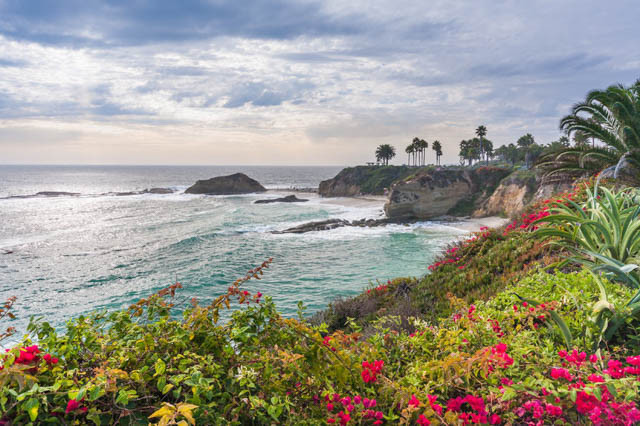
Coastal Garden Plants
Coastal garden plants need to cope with more than sun and drought. Salt spray, strong wind, sandy soil, exposure, and fast drainage can all shape what succeeds near the sea.
The best planting schemes combine tough groundcovers, wind-resistant shrubs, flowering perennials, architectural plants, and grasses that suit your local climate and degree of coastal exposure.
Start with Tough Coastal Groundcovers
Low-growing plants are useful at the front of borders, along paths, and in exposed rock or gravel areas where they can tolerate wind and fast-draining soil. Sea Thrift forms compact grassy mounds topped with pink or white flowers, making it especially useful for borders, rock gardens, and exposed coastal sites.
Use Salt-Tolerant Shrubs for Structure
Shrubs can help anchor a coastal garden and provide screening, flowers, fruit, and shelter from wind. Beach Rose (Rosa rugosa) is valued for fragrant flowers, colorful hips, and tolerance of difficult coastal conditions where it is appropriate and permitted locally.
Add Flowering Plants for Color & Pollinators
Flowering perennials bring color and wildlife value to exposed planting, especially when matched carefully to drainage and salt tolerance. Sea Holly offers distinctive blue-green foliage and metallic flowers, while Lavender can thrive in sunny, well-drained coastal gardens where winters are not too wet or severe.
Choose Plants for Sand & Fast Drainage
Many coastal sites drain quickly and can dry out fast, so plants need to suit both the soil texture and the available moisture. Sea Kale (Crambe maritima) combines bold blue-green foliage with white flowers and is naturally associated with coastal, freely draining conditions.
Use Grasses for Movement & Wind Tolerance
Grasses add movement, texture, and structure, and some are well adapted to exposed, sandy sites. Explore ornamental grasses for coastal planting, choosing species according to salt exposure, wind, soil, moisture, and local invasiveness concerns.