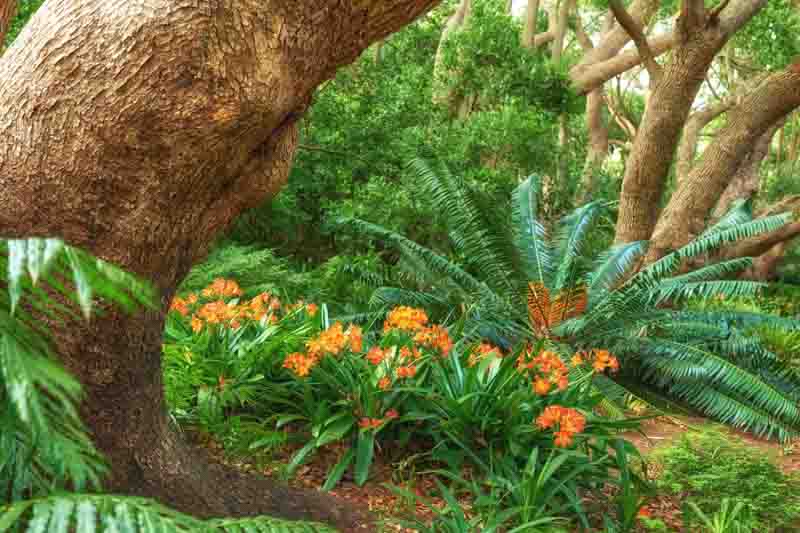
Woodland Garden Plants
A woodland garden takes its cue from the edge of a forest, where trees, shrubs, ferns, perennials, and ground covers grow in loose layers rather than neat rows. The first thing to work out is how much shade you really have. A spot beneath deciduous trees may get bright, filtered light for part of the day, while another area may stay in deep shade from morning to evening.
Flowers are only part of the picture. In a woodland garden, foliage, texture, bark, berries, and the shape of the plants often do just as much work. Choose plants that are comfortable with your climate, soil, moisture, and light, then let them knit together into a planting that feels relaxed and natural without looking neglected.
Choose the Right Plants for Woodland Shade
Shade can be surprisingly variable. Dappled shade beneath an open canopy may suit many flowering shrubs and perennials, while dense shade gives you a much shorter list to work with. Before buying plants, spend a little time watching the area. Notice where the sun reaches, how long it stays, and whether the soil remains moist or becomes dry because of thirsty tree roots.
For more ideas, browse Gardenia’s guide to the best shade plants. If you garden on naturally acidic soil, these shade- and acid-loving woodland plants are also worth exploring.
Find Woodland Plants for Your USDA Zone
It is easy to focus on shade and forget about climate, but both matter. A plant may be perfectly happy in low light and still struggle if your winters are too cold or your summers too hot.
If you garden in USDA Zone 6, start with these Zone 6 shade perennials and Zone 6 shade shrubs. In Zone 7, explore the best Zone 7 shade perennials and Zone 7 shade shrubs. For warmer Zone 8 gardens, see these Zone 8 shade perennials and Zone 8 shade shrubs.
Design a Woodland Garden That Looks Natural
The easiest way to make a woodland garden feel convincing is to plant in layers. Use small trees and taller shrubs at the back or overhead, medium shrubs and perennials through the middle, and ferns, bulbs, and ground covers lower down. You do not need dozens of different plants. Repeating a few favorites in loose groups usually creates a calmer, more natural effect.
Foliage matters enormously in shade. Try pairing large leaves with delicate ferns, fine grassy foliage, evergreens, or plants in different shades of green. Then use flowers for bursts of color through the seasons. Gardenia’s shade garden design guide has more ideas for arranging plants and creating a lush garden where sunlight is limited.
Add Flowers and Care for Your Woodland Garden
A shady garden can still have plenty of flowers. Spring ephemerals, woodland perennials, flowering shrubs, and native wildflowers often bloom beautifully beneath trees, especially before the canopy fills out completely. For particularly dark corners, take a look at these wildflowers for full shade.
Woodland gardens often become easier to care for once established, but new plants can need extra help at first. Tree roots compete hard for moisture, so water young plants well during their first seasons and leave fallen leaves in place where practical to act as a natural mulch. Try not to dig repeatedly around mature trees. The less you fight the site, the better the garden usually does.