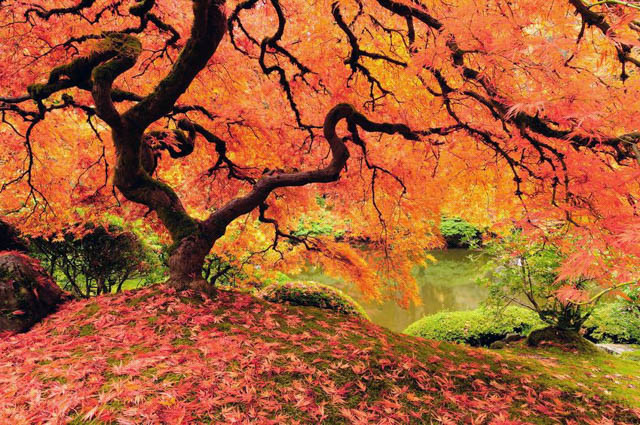
Japanese Garden Plants
Japanese garden plants are chosen for more than flowers. The most effective combinations balance elegant trees, evergreen structure, sculptural foliage, seasonal color, and plants that soften water, stone, and paths.
Start by matching plants to your climate, light, soil, and moisture conditions. Then combine them with restraint so each plant contributes to the overall composition rather than competing for attention.
Start with a Graceful Focal Tree
Trees establish the character of the garden and create the strongest visual anchors. Choose forms with attractive branching, foliage, bark, or seasonal color. Japanese Maples (Acer palmatum) are among the most recognizable choices, valued for delicate foliage, graceful branching, and vivid autumn color. Their form works especially well near paths, rocks, courtyards, and water features.
Add Evergreen Structure
Evergreens provide permanence and help the garden retain its form through winter. Pines are especially useful where you want strong silhouettes and carefully shaped structure. Japanese Black Pine (Pinus thunbergii) is an iconic choice and can be selectively pruned to emphasize branching and sculptural form.
Use Flowering Shrubs with Restraint
Flowering shrubs bring concentrated bursts of color, especially in spring. In a Japanese-inspired planting, they usually work best as accents within a larger framework of foliage and evergreen structure. Azaleas (Rhododendron spp.) are classic choices for spring color and can be especially effective beneath or near taller trees where the site provides suitable acidic, well-drained soil.
Layer Foliage for Shade & Texture
Foliage plants soften the ground beneath trees and shrubs and add depth without relying on continuous bloom. Contrasting leaf shapes and shades of green create a calm, layered effect. Hostas are especially useful in shaded areas, where their broad leaves bring texture and contrast in shades ranging from blue-green to gold and variegated forms.
Add Movement & Plants for Water’s Edge
Plants with graceful movement or moisture-loving habits can soften the edges of paths, ponds, and garden structures. Bamboos can add height, movement, and sound, but choose species carefully because some spread aggressively and require containment or selection of clumping types. Japanese Iris (Iris ensata) brings elegant early-summer flowers and is especially effective near ponds, streams, or other sites with consistently moist soil during the growing season.