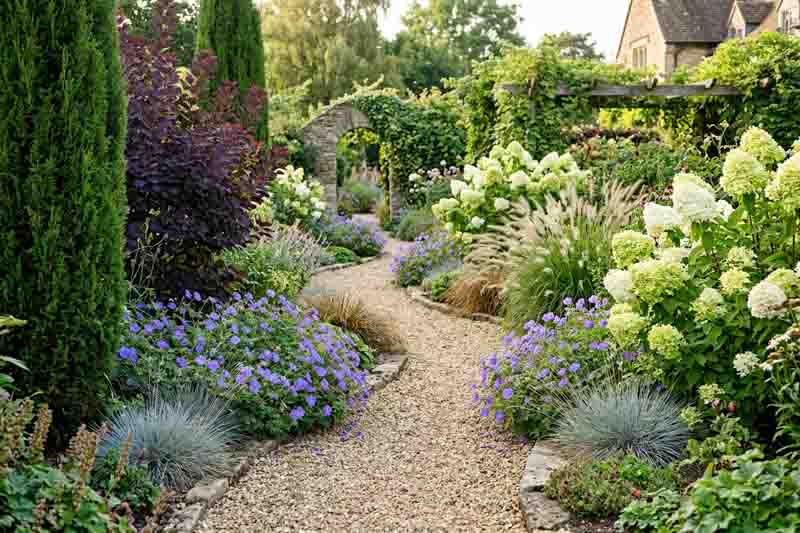
Best Plants for Mixed Borders
Some of the most beautiful gardens begin with a mixed border, where flowering shrubs, colorful perennials, graceful ornamental grasses, and spring bulbs come together in one irresistible planting. Imagine fragrant roses rising above lavender-blue catmint, generous hydrangea flowers surrounded by lush foliage, or golden grasses catching the light among late-summer blooms. Discover the best plants for mixed borders, including long-flowering perennials, compact shrubs, ornamental grasses, evergreen accents, and easy-care combinations for sun and partial shade. Whether you’re planting a narrow garden border, redesigning a front yard, or creating an abundant cottage garden, find plants suited to your climate, soil, sunlight, and available space.
Discover Beautiful Flowering Shrubs and Perennials for Mixed Borders
The loveliest mixed borders have something many flower beds lack: structure. Flowering shrubs give the planting height and presence, while perennials weave colorful flowers and attractive foliage around them. The result feels generous and natural, yet holds together beautifully as the seasons change.
Six outstanding plants for mixed garden borders:
- Rosa ‘Ballerina’ (Hybrid Musk Rose): Clouds of small, single pink-and-white flowers create a wonderfully romantic display. This graceful, spreading shrub rose works beautifully in informal mixed borders, particularly with blue-flowering perennials and ornamental grasses. Allow room for its mature width and avoid crowding its branches.
- Hydrangea paniculata ‘Limelight’: A spectacular flowering shrub with large, cone-shaped summer blooms that begin lime-green, turn creamy white, and often develop pink tones as they age. Its generous size makes it a natural focal point toward the back of a spacious border. Smaller gardens may need a compact hydrangea selection instead.
- Salvia nemorosa ‘Caradonna’ (Woodland Sage): Deep violet-purple flower spikes rise on nearly black stems, creating the kind of strong vertical accent every mixed border needs. Particularly striking against pale roses, rounded peony blossoms, and golden foliage. Best in a sunny, well-drained position.
- Nepeta ‘Walker’s Low’ (Catmint): Soft, spreading mounds of aromatic foliage carry lavender-blue flowers from late spring into summer, with possible repeat flowering after trimming. Lovely along pathways and at the front of sunny borders, where its relaxed growth helps soften the edges of larger shrubs.
- Geranium ‘Rozanne’ (Hardy Geranium): Violet-blue flowers with pale centers appear over a long season in suitable conditions. Its spreading habit makes this perennial especially valuable for filling spaces between shrubs and taller flowers. It can grow in sun or partial shade, although flowering may be reduced in lower light.
- Baptisia australis (Blue False Indigo): Tall blue-violet spring flowers rise above handsome blue-green foliage, followed by decorative seedpods. This long-lived perennial develops a substantial, shrub-like presence and makes an excellent structural anchor in sunny borders. Give it room to mature and avoid unnecessary transplanting.
Gardenia’s favorite combination: For a romantic sunny border, combine Rosa ‘Ballerina’, Salvia ‘Caradonna’, Nepeta ‘Walker’s Low’, and Geranium ‘Rozanne’. The rose provides height and soft pink flowers, salvia adds vertical rhythm, and catmint and hardy geraniums create a flowing lower layer. Repeat the perennials in irregular groups rather than placing one of each in a row.
What is the difference between a mixed border and a perennial border? A perennial border is primarily composed of herbaceous perennials, while a mixed border combines several plant types, especially woody shrubs and perennials, often with grasses, bulbs, and evergreens. This allows greater variation in height, structure, flowering season, and winter appearance.
For more inspiration, discover Gardenia’s best English roses for mixed borders and explore how to design a beautiful flower border.
Choose Ornamental Grasses, Foliage Plants, and Flowers for Every Season
Flowers might catch your attention first, but attractive foliage and contrasting plant shapes are what make a mixed border beautiful long after its main flowering season. Ornamental grasses introduce movement, evergreen plants provide winter structure, and foliage perennials connect different groups of flowers.
Four excellent plants for texture and seasonal interest:
- Hakonechloa macra ‘Aureola’ (Japanese Forest Grass): Gracefully arching golden-green leaves brighten partially shaded borders. Its flowing habit looks especially beautiful beside bold hostas, coral bells, and woodland shrubs. Best where soil remains reasonably moist and summer heat is moderated.
- Heuchera ‘Caramel’ (Coral Bells): Warm apricot, amber, and caramel-colored foliage brings lasting color to the front of a border. Combine it with blue-green leaves or darker foliage for a rich contrast that doesn’t depend on flowers.
- Hylotelephium ‘Autumn Joy’ (Upright Stonecrop): Succulent foliage and broad flowerheads provide late-summer and autumn interest. The flowers gradually deepen in color, while the sturdy seedheads can remain decorative during winter. Particularly useful in sunny, well-drained mixed borders.
- Hydrangea ‘Limelight’: Beyond its summer flowers, this shrub adds substantial foliage, height, and changing flowerhead colors. Its dried blooms can remain attractive into winter, although the plant itself is deciduous.
Plan for overlapping flowering seasons:
- Spring: Spring bulbs, hellebores, peonies, baptisias, and early-flowering shrubs create the first highlights.
- Early summer: Roses, salvias, catmint, hardy geraniums, and other compatible perennials provide generous color.
- Midsummer: Hydrangeas, coneflowers, rudbeckias, phlox, and summer-flowering shrubs take center stage.
- Autumn: Asters, upright stonecrops, late-flowering perennials, colorful foliage, and ornamental grass seedheads extend the display.
- Winter: Evergreen shrubs, architectural branches, retained seedheads, and selected evergreen grasses maintain shape when herbaceous plants die back.
Does every plant need to flower at the same time? Absolutely not. A successful mixed border has a succession of highlights. Attractive foliage and permanent structure provide continuity as different flowers appear and fade.
Design tip: Repeat one foliage color through the planting. Golden leaves, silver foliage, or deep burgundy accents can tie together flowers of different colors and flowering periods.
Explore Gardenia’s perennial bloom calendar and guide to filling seasonal flowering gaps for help planning a border that stays interesting throughout the year.
Find the Right Mixed Border Plants for Sun, Shade, Small Gardens, and Easy Care
Before falling in love with a particular flower combination, take a good look at your garden. The most successful mixed borders are designed around the space and conditions you actually have, not the ones you wish you had.
For sunny mixed borders: Combine roses, salvias, catmint, baptisias, coneflowers, ornamental grasses, and other plants that tolerate your local summer conditions. Pay particular attention to drainage and available water. Even sun-loving plants may have different moisture preferences.
For partially shaded mixed borders: Build around suitable hydrangeas, shade-tolerant shrubs, hostas, heucheras, Japanese forest grass, and woodland perennials. Foliage provides much of the visual interest, while flowers bring seasonal highlights. Choose plants suited to the soil moisture as well as the light.
For narrow or small mixed borders: Choose compact shrubs and restrained, clump-forming perennials. A border approximately 3 ft. deep may accommodate a compact shrub with lower-growing companions, but a much deeper planting area is needed for large hydrangeas and broad drifts of tall perennials.
For drought-tolerant borders: Select plants suited to sunny, well-drained conditions and group them by water requirements. Catmint, certain salvias, yarrow, and suitable ornamental grasses are useful choices. Newly planted drought-tolerant plants still need adequate watering during establishment.
For low-maintenance borders: Favor naturally well-shaped, disease-resistant varieties, avoid overcrowding, and use repeated groups of compatible plants. Selecting shrubs that fit the available space reduces the need for constant pruning.
For wildlife-friendly planting: Include accessible flowers, regionally appropriate native plants, and overlapping bloom periods. Roses, flowering shrubs, perennials, and grasses can contribute nectar, pollen, seeds, and habitat, but their ecological value differs by species and cultivar.
How many plants should you choose? A smaller border may look more cohesive with one or two structural shrubs and four to six complementary perennial varieties than with a different plant every few feet. Larger beds can support more diversity, but repetition remains important.
The most important rule: Match plants for hardiness, sunlight, soil pH, drainage, and moisture before choosing them for color. A beautiful combination on paper won’t thrive if its plants require incompatible growing conditions.
Discover Gardenia’s best small perennials for borders, low-maintenance perennials, and shade garden companion plants.
From the first spring bulbs to the glowing colors of autumn, a thoughtfully planted mixed border can bring beauty to your garden in every season. Start with a few plants you love, choose companions that share their growing needs, and let the border grow into a harmonious, layered landscape.