A Practical Guide to Continuous Seasonal Interest
Every gardener has experienced it. The garden looks spectacular for a few weeks, then the excitement tapers off. Tulips fade, roses pause, and borders that felt lively suddenly look much quieter. In most cases, this is not a sign that the planting is poor. It is a sign that the garden was designed around a peak moment instead of a full-season sequence.
That is why learning how to find plants that bloom when yours do not is such a valuable skill. It helps you move beyond one short burst of color and build a garden with continuous seasonal interest. Instead of relying on a single high point, you create a landscape that shifts gracefully from late winter flowers to spring bulbs, summer perennials, autumn performers, and winter structure.
The best gardens are not memorable because everything blooms at once. They are memorable because they always feel like something is happening. The composition changes, the atmosphere evolves, and each season contributes something distinct. That is the real secret behind a garden that feels professionally designed.
Colorful Callout: Think of your garden as a sequence, not a single show. If all the headliners appear at the same time, the rest of the season can feel empty. A stronger plan spreads beauty across the calendar.
In this guide, you will learn how to identify bloom gaps, choose plants more strategically, match them to real garden conditions, and use the
Gardenia Plant Finder and
Gardenia Design Tool to create a garden that delivers color, structure, and interest across a much longer season. This is designed to be a practical, reference-worthy resource rather than a quick overview.
Why Bloom Gaps Happen in the First Place
Most bloom gaps start at the garden center. Gardeners buy what looks beautiful in the moment, which is perfectly understandable. In spring, that often means spring bloomers. In early summer, it means whatever is at its peak in June. Over time, this leads to plantings that look impressive during one window, then noticeably quieter afterward.
This is why so many home landscapes deliver one standout flush followed by long stretches of foliage with relatively little floral impact. The plants themselves may be excellent. The problem is usually timing, not quality.
Another common mistake is focusing too much on flower color and not enough on bloom timing, bloom duration, and seasonal overlap. A plant with extraordinary flowers may still contribute very little to the overall garden if it blooms only briefly and leaves nothing to carry the display afterward. By contrast, a less dramatic plant that blooms for six weeks can transform the rhythm of a border.
Microclimates matter too. A warm south-facing wall can push flowering earlier. A cooler, shadier part of the garden can delay it. Soil drainage, moisture, humidity, and local weather patterns all affect bloom timing. That is why copying a plant list from another garden is rarely enough. A sequence that works beautifully in one setting may need adjusting in another.
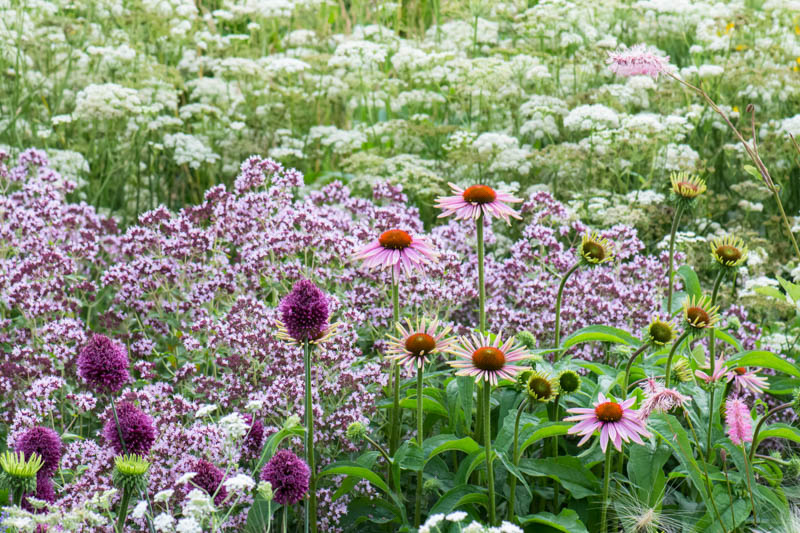
The Core Idea – Build for Continuous Seasonal Interest
If you want a garden that looks rewarding far beyond its main peak, the best approach is to stop thinking in isolated plant purchases and start thinking in seasonal roles. For every plant you add, ask a practical question:
What part of the season does this plant support?
A strong plan for continuous seasonal interest usually includes four layers:
- Seasonal stars – plants that create a strong display during a specific period, such as peonies, alliums, iris, or asters.
- Long bloomers – plants that flower for weeks or repeat reliably, such as salvia, catmint, coreopsis, or some roses.
- Bridge plants – plants that smooth transitions between one flowering period and the next.
- Structural plants – evergreen shrubs, berries, grasses, seed heads, and handsome foliage that keep the garden visually grounded when flowers are fewer.
Colorful Callout: A successful garden does not rely on flowers alone. Foliage, bark, berries, seed heads, shape, and movement all help keep the garden visually satisfying from one season to the next.
This framework is useful because it turns planting into a system rather than a series of isolated choices. It also makes the article easier to reference because the design logic is explicit and repeatable.
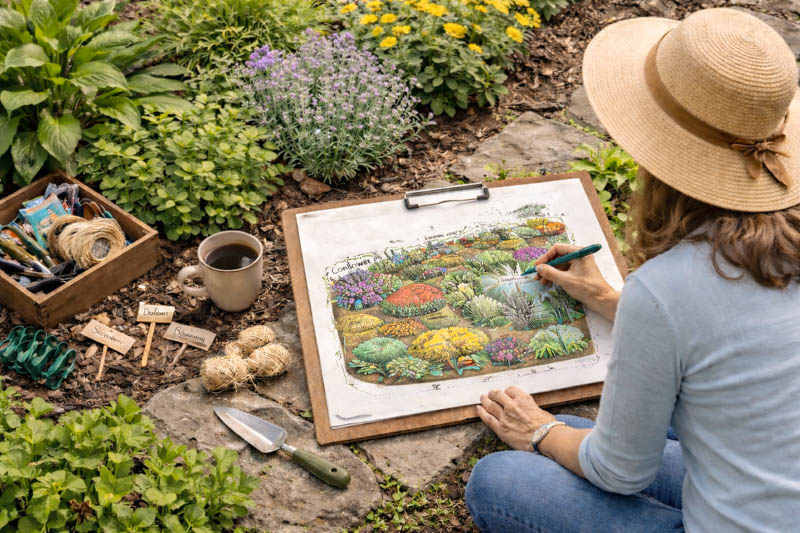
Step 1 – Map Your Current Bloom Calendar
Before you add anything new, map what you already have. Many gardeners discover that several plants they assumed were spreading color across the year are actually blooming almost simultaneously. A simple chart listing plant names and flowering months is usually enough to reveal the pattern.
Sort your existing plants into these seasonal windows:
- Late winter to early spring
- Mid-spring
- Late spring to early summer
- Midsummer
- Late summer to early fall
- Late fall to winter structure and interest
Once you do this, the quiet periods become obvious. You may see that April and May are strong, July is decent, and late August into October is where the garden loses momentum. Or you may notice that one border performs beautifully in spring but offers very little later on. These gaps tell you exactly where to focus your next plant choices.
This is where the
Gardenia Plant Finder becomes especially useful. Instead of guessing which plants bloom during the periods you need to strengthen, you can filter by flowering season, hardiness, light exposure, and soil conditions. That turns a vague problem into a targeted solution.
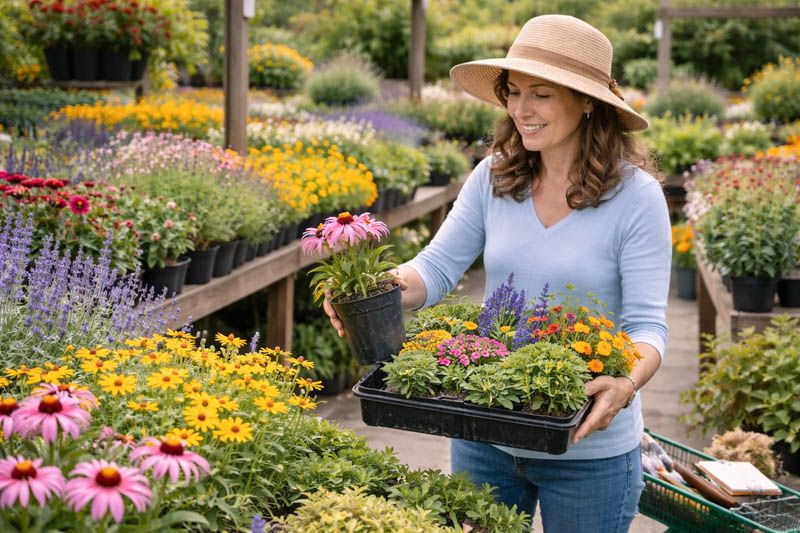
Step 2 – Choose Plants by Season, Not Just by Appearance
Once you understand where your garden goes quiet, you can select plants more intelligently. Instead of buying what looks best on the day you shop, you choose what strengthens the seasonal sequence.
Late Winter to Early Spring
This is often when the garden feels most starved for color, which makes early bloomers particularly valuable. Even small flowers feel striking when little else is happening.
Hellebores are among the best options because they combine long-lasting flowers, evergreen or semi-evergreen foliage, and shade tolerance.
Snowdrops and
crocus add early sparkle, while
witch hazel brings fragrance and striking form. Early
daffodils help bridge the transition into spring.
These plants are important for more than appearance. They support early pollinators and make the garden feel awake well before its main season begins.
Mid-Spring to Early Summer
This is often the most colorful period in established gardens, but it still benefits from careful planning.
Tulips,
alliums,
iris,
peonies, and early
roses can combine beautifully when their timing is intentionally layered.
The challenge here is not a lack of good choices. It is avoiding an overly narrow peak. Pair shorter-lived showpieces with longer-running companions such as
nepeta and
salvia so the border stays vibrant beyond one concentrated flush.
Midsummer
Midsummer is where many spring-focused gardens start to feel thin. To maintain visual energy, add dependable long bloomers and repeat performers such as
coneflowers,
black-eyed Susans,
daylilies,
hardy geraniums,
garden phlox, and reblooming roses where conditions allow.
salvia and
coreopsis are especially useful because deadheading can prolong their performance.
This is also the point in the season when foliage and texture become even more important. Pair flowering plants with
ornamental grasses,
heuchera, or
shrubs so the border still feels full between stronger floral waves.
Late Summer to Fall
This is one of the most common weak spots in home gardens and one of the easiest areas to improve.
sedums,
asters,
Japanese anemones,
sunflowers,
gaillardia, late salvias, and
rudbeckia can keep the garden looking lively long after early-season performers have finished.
Late-season flowers are also especially valuable for pollinators, which makes them important both visually and ecologically.
Winter Interest
Winter may not offer many flowers in most climates, but it should still offer beauty. Evergreen shrubs, conifers, red twig dogwood, berrying plants, ornamental grasses, bark interest, and seed heads all help the garden remain visually structured.
Learn How to Create a Garden with Winter Interest.
Colorful Callout: Continuous seasonal interest does not mean nonstop flowers. It means the garden always offers something worth noticing, whether that is blossom, foliage, texture, movement, fragrance, berries, or form.
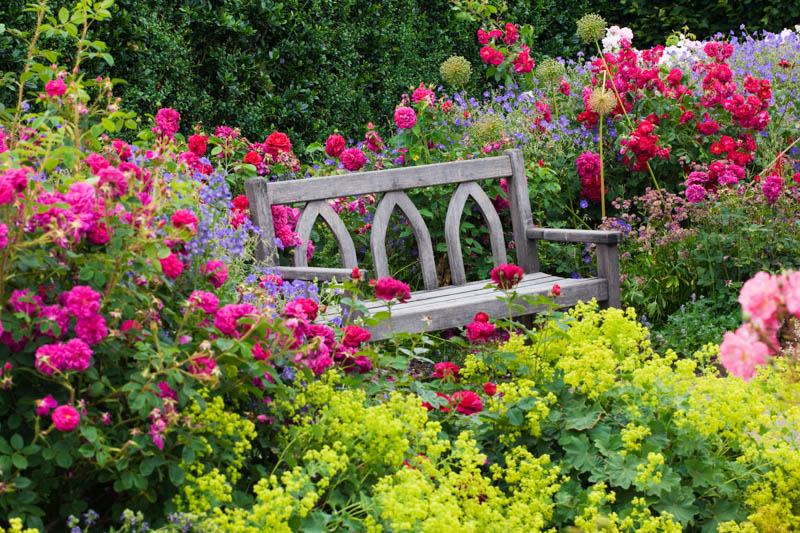
Step 3 – Prioritize Bloom Duration, Not Just Bloom Time
One of the most overlooked parts of garden planning is duration. Two plants may both bloom in June, but one may flower for ten days while the other performs for six weeks. That difference matters enormously when you are trying to reduce gaps.
When selecting plants, aim for a mix of:
- Short, spectacular bloomers for drama
- Long bloomers for continuity
- Repeat bloomers for renewed color
- Plants with attractive foliage after flowering
The
Gardenia Plant Finder is particularly useful here because it helps you move beyond simple flower color and search more intentionally for plants with the right performance characteristics.
Step 4 – Match Plants to Real Garden Conditions
No seasonal strategy works well if the plants are unhappy. A plant that should bloom beautifully in midsummer may underperform if it is planted in the wrong light, poor drainage, or a climate that does not suit it. Bloom planning only works when it is tied to growing conditions.
Pay close attention to:
- USDA hardiness zone or equivalent climate guidance
- Sun exposure – full sun, part shade, or full shade
- Soil type and drainage
- Moisture levels
- Heat and humidity tolerance
Bloom timing also varies by region. A plant that flowers in March in a mild coastal climate may bloom in May in a colder inland garden. That does not mean published bloom times are inaccurate. It means they are approximate starting points. The smart approach is to adapt them to your site. The
Gardenia Plant Finder helps with exactly that by connecting flowering season with practical growing requirements.
How to Choose Plants by Condition
One of the most effective ways to improve a planting plan is to match bloom-gap solutions to real site conditions. Use the table below as a quick planning reference, then refine your shortlist with the
Gardenia Plant Finder.
| Condition or Goal |
Good Plant Directions |
Examples |
Why It Works / Best Use |
| Full sun |
Favor dependable summer and fall performers with strong flower production. |
Salvia, coreopsis, echinacea, rudbeckia, gaillardia, sedum |
Excellent for extending color through the hottest part of the season and keeping borders energetic. |
| Part shade |
Look for plants that brighten transitional spaces and stretch spring interest into summer or fall. |
Hellebores, hardy geraniums, heuchera, Japanese anemones |
Useful for woodland edges, sheltered borders, and gardens that need softer seasonal transitions. |
| Dry soil |
Choose resilient, drought-tolerant plants that flower well without regular extra water. |
Lavender, salvia, nepeta, gaillardia, sedum |
Ideal for low-maintenance borders, hot sites, gravel gardens, and water-wise planting. |
| Moist soil |
Use plants that thrive in richer or consistently moist conditions. |
Garden phlox, some iris, Japanese anemones, certain asters |
Helpful for fuller borders where moisture-retentive soil supports lush midsummer and fall growth. |
| Small gardens |
Prioritize compact, hardworking plants that earn their footprint. |
Coreopsis, compact salvia, heuchera, dwarf asters, compact roses |
Best when every plant must deliver either a long season of bloom or strong foliage value. |
| Long bloomers |
Use these to reduce visible gaps and hold the garden together across changing seasons. |
Salvia, catmint, coreopsis, some roses, hardy geraniums |
These are the backbone plants that prevent the garden from feeling stop-start. |
| Late-season stars |
Choose bold finishers that sustain interest after midsummer. |
Asters, sedums, rudbeckia, Japanese anemones, ornamental grasses |
Essential for autumn color, pollinator support, and preventing the garden from fading too early. |
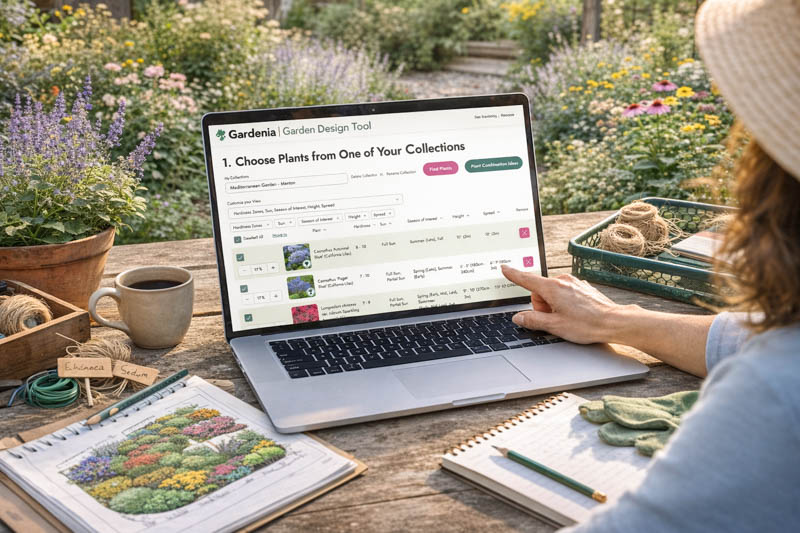
Step 5 – Design for Overlap with the Gardenia Design Tool
Finding the right plants is only part of the process. The next step is arranging them so they work together visually. That is where the
Gardenia Design Tool becomes more than a convenience. It becomes a planning tool in the fullest sense.
A good planting plan should not only answer, “What will bloom in August?” It should also answer, “How will these plants look together? Will the colors harmonize? Are the heights balanced? Is there enough contrast in texture and foliage?”
The
Gardenia Design Tool helps you build combinations that feel deliberate rather than improvised. It supports a garden that stays coherent from season to season, not just a collection of plants that happen to flower at different times.
Colorful Callout: The Gardenia Plant Finder helps you identify what to plant. The Gardenia Design Tool helps you decide how to arrange it. Used together, they make seasonal planning far more precise.
Step 6 – Use a Sample Bloom Calendar as a Reference
One of the best ways to make a planting plan more practical is to sketch a simple bloom calendar. The exact plants will vary by climate, but the structure stays useful almost everywhere. This kind of table makes it easier to identify weak windows and decide what should be added next.
| Seasonal Window |
Typical Plant Roles |
Example Plants |
Why It Works / Best Use |
| January to February |
Early interest, winter flowers, fragrance, structure |
Witch hazel, hellebores, snowdrops in mild climates |
Helps the garden feel alive before spring fully begins and supports early pollinators where present. |
| March to April |
Spring awakening, bulbs, early border color |
Crocus, daffodils, tulips, pulmonaria, early iris |
Provides a strong early wave of color and creates momentum going into late spring. |
| May to June |
Peak spring display, showpiece flowers, bridges into summer |
Peonies, alliums, roses, salvia, catmint |
Combines dramatic focal flowers with longer performers that keep the border going after the peak. |
| July to August |
Long bloomers, repeat bloomers, summer structure |
Coneflowers, daylilies, phlox, coreopsis, reblooming roses |
Maintains energy through midsummer and prevents a sharp drop after spring flowers finish. |
| September to October |
Late-season color, pollinator support, warm tones |
Asters, sedums, Japanese anemones, rudbeckia, ornamental grasses |
Keeps the garden visually strong into autumn and supports wildlife when nectar is scarcer. |
| November to December |
Structure, berries, bark, dried form |
Evergreens, berries, bark interest, dried seed heads |
Prevents the garden from disappearing visually in winter and adds depth to the off-season. |
This kind of bloom calendar is practical, memorable, and especially useful as a reference. It helps gardeners make decisions month by month instead of treating the whole season as one blur.
Step 7 – Mix Perennials, Bulbs, Annuals, and Shrubs
Gardeners often try to solve bloom gaps with perennials alone, but the strongest gardens use a broader mix.
Bulbs provide powerful seasonal bursts.
Shrubs add structure and, in many cases, a long season of value.
Annuals can fill temporary gaps or keep containers lively.
Perennials provide the backbone of the border.
This layered approach gives you more flexibility. If a perennial bed feels thin in late summer, annuals and containers can reinforce the display while permanent plantings mature. If spring feels weak, bulbs can solve it quickly. If winter looks lifeless, shrubs and evergreens can change the entire character of the garden.
Common Mistakes That Make Gaps Worse
Even enthusiastic gardeners tend to repeat a few avoidable mistakes when trying to build a stronger seasonal sequence:
- Buying by impulse – choosing plants only because they look beautiful on the day of purchase often leads to clustered bloom periods.
- Ignoring late season – many gardens are lovely in spring and early summer, then noticeably weaker by late August.
- Relying too heavily on short bloomers – dramatic flowers are valuable, but brief displays need support from longer-lasting plants.
- Skipping structure – without grasses, shrubs, foliage plants, and winter form, the garden can feel empty between floral peaks.
- Overlooking site conditions – plants chosen for bloom time alone may disappoint if they do not suit the climate, soil, or light.
- Designing without overlap – if each plant performs in isolation, the border can feel stop-start rather than continuous.
Why This Matters for Beauty, Pollinators, and Long-Term Garden Success
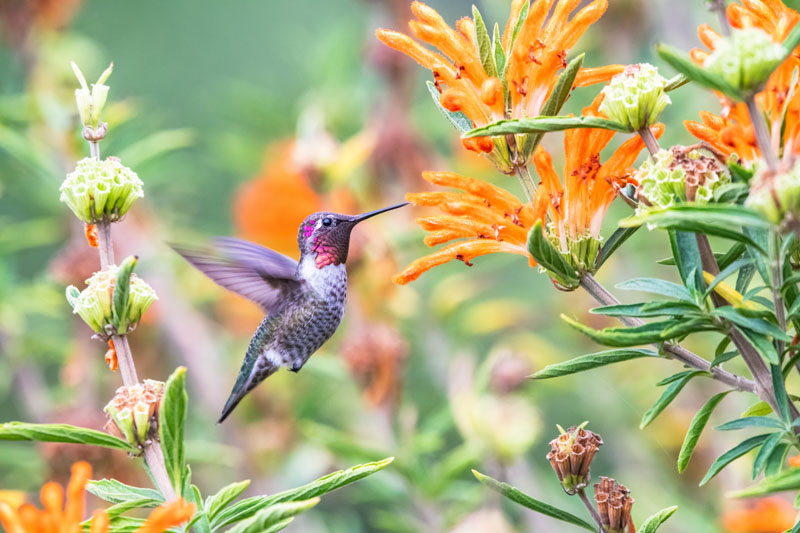
A garden with a better seasonal sequence is not only more beautiful. It is also more useful. Pollinators benefit from a steadier supply of flowers through the growing season. Gardeners benefit from a space that feels rewarding for far longer. The landscape becomes easier to appreciate because it is no longer judged by a single short-lived peak.
This is why more authoritative garden advice goes beyond simple lists of pretty plants. The real question is not just which plants are beautiful. It is which plants perform well
when your garden most needs them. That shift in thinking creates a garden that feels intentional, adaptable, and resilient.
Final Thoughts
If your garden looks beautiful for a few weeks and then starts to lose some of its energy, you do not need to start over. You need a more deliberate seasonal sequence. Once you learn how to find plants that bloom when yours do not, the whole garden becomes easier to refine. Gaps become opportunities. Plant choices become more strategic. The landscape carries interest much more gracefully from one season to the next.
The most efficient way to do that is to combine observation with the right tools. Use the
Gardenia Plant Finder to identify plants by bloom time, site needs, and seasonal role. Then use the
Gardenia Design Tool to arrange those plants into combinations that look balanced and cohesive across the year.
That is how you move beyond one beautiful moment and create a garden with genuine continuous seasonal interest.
FAQs
What does continuous seasonal interest mean in a garden?
Continuous seasonal interest means the garden remains visually rewarding across the year by combining flowers, foliage, berries, structure, bark, seed heads, and plants with staggered bloom times. It is about sustained appeal rather than nonstop flowering.
How do I find plants that bloom when my current plants do not?
Start by mapping your existing bloom calendar month by month. Identify the quieter periods, then choose plants specifically for those windows. The Gardenia Plant Finder makes this easier by letting you filter plants by flowering season, light, soil, and hardiness.
What are the best plants for strengthening late-season interest?
Excellent late-season choices include asters, sedums, Japanese anemones, rudbeckia, late salvias, and ornamental grasses. These help maintain color, movement, and pollinator value after many earlier plants have finished.
Do I need only perennials to create a longer season of interest?
No. The strongest gardens usually combine perennials, bulbs, shrubs, annuals, and structural plants. This layered approach gives you more flexibility and helps the garden remain attractive across multiple seasons.
Why is bloom duration so important?
Bloom duration affects how long a plant supports the display. Short-lived flowers can be spectacular, but long bloomers and repeat bloomers are essential for reducing visible gaps and creating a more continuous sense of abundance.
How can the Gardenia Design Tool help with seasonal planning?
The Gardenia Design Tool helps you arrange plants so they work together in timing, height, color, and structure. It is especially useful for building borders and combinations that stay balanced and attractive from season to season.
Updated: April 2026 • Reviewed by Gardenia Editors
While every effort has been made to describe these plants accurately, please keep in mind that height, bloom time, and color may differ in various climates. The description of these plants has been written based on numerous outside resources.