Beautiful gardens don't need big plants. Discover 18 charming small perennials for sunny borders, shady paths, rock gardens, and patio containers. Compare their mature sizes, flowering seasons, and spreading habits, then explore planting combinations that bring color and texture to compact spaces without creating an endless maintenance chore.
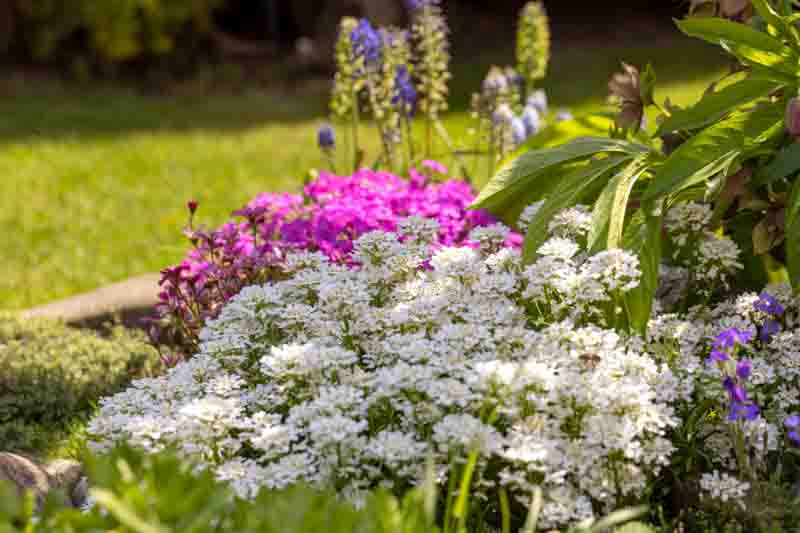


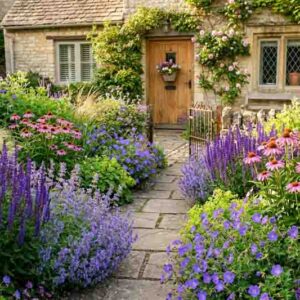
A small perennial can make a surprisingly big difference. A ribbon of purple flowers softens a stone path, silver foliage brightens a shady corner, and a few carefully chosen plants can turn a patio pot into a miniature garden.
But there’s a catch. Some perennials grow only 4 inches tall yet spread 2 feet across. Others form tidy mounds that stay comfortably within a narrow border. The trick is knowing which is which.
Here are 18 beautiful small perennials for sunny borders, shady edges, rock gardens, and containers, with a practical comparison of their mature sizes, flowering seasons, and growth habits. You’ll also find planting ideas, spacing advice, and a simple way to choose plants that will look just as good in three years as they do today.
Quick answer: What are the best small perennials?
For sunny edging, choose Geranium ‘Max Frei’, Dianthus ‘Firewitch’, sea thrift, or evergreen candytuft. Compact catmint and Coreopsis ‘Zagreb’ offer a longer summer display. In shade, try heuchera, brunnera, pulmonaria, and golden hakone grass. Creeping phlox, thyme, and stonecrops are excellent for walls and rock gardens, but may spread too widely for narrow borders.
Terms such as dwarf, miniature, compact, and low-growing can be confusing. For practical garden design, it helps to think in three approximate height categories:
These are Gardenia’s practical design categories, not formal botanical classifications. Flower stems may rise above the foliage mound.
More important than height is mature spread. Sea thrift typically forms a small, defined tuft, while creeping phlox produces a much broader mat. Both are short, but they serve different purposes.
Growth habit matters too. Clump-forming plants generally stay in recognizable mounds. Mat-forming plants spread across the soil, while running perennials may gradually colonize neighboring spaces.
For narrow borders, favor compact clumps. For banks, walls, and larger groundcover areas, spreading plants can be an advantage.
Before choosing a plant for its flowers, compare its mature size and growth habit. This table brings together 18 useful perennials, making it easier to find plants that genuinely fit your space.
Height refers approximately to the foliage mound or main plant body. Flower stems may be taller, and the dimensions will vary with cultivar and growing conditions.
| Small perennial | Height | Spread | Growth habit | Main bloom | Best use |
|---|---|---|---|---|---|
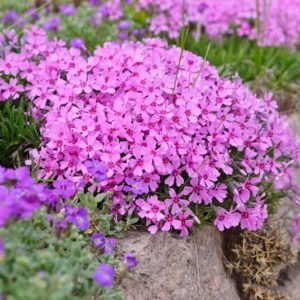
| Creeping phlox | 3-6″ | 12-24″ | Spreading mat | Spring | Sunny slopes, walls |
| Evergreen candytuft | 6-12″ | 12-18″ | Low woody mound | Spring | Edging |
| Geranium ‘Max Frei’ | 8-12″ | 12-15″ | Compact mound | Late spring-early summer | Narrow borders |
| Dianthus ‘Firewitch’ | 6-8″ | 6-12″ | Tufted cushion | Spring; possible rebloom | Sunny edging, pots |
| Nepeta ‘Purrsian Blue’ | 14-18″ | 18-30″ | Rounded clump | Summer-early fall | Wider border fronts |
| Coreopsis ‘Zagreb’ | 12-18″ | 12-18″ | Fine-textured clump | Summer | Sunny borders |
| Heuchera ‘Caramel’ | 8-12″ | 18-20″ | Foliage mound | Early summer | Shade edging, pots |
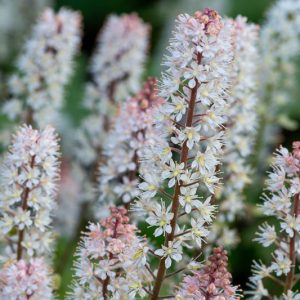
| Tiarella cordifolia | 6-12″ | 12-18″+ | Running colonies | Spring | Woodland groundcover |
| Pulmonaria ‘Trevi Fountain’ | 10-12″ | 18-24″ | Expanding clump | Spring | Moist shade |
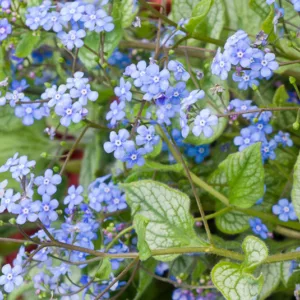
| Brunnera ‘Jack Frost’ | 12-18″ | 12-18″ | Clump-forming | Spring | Shaded accents |
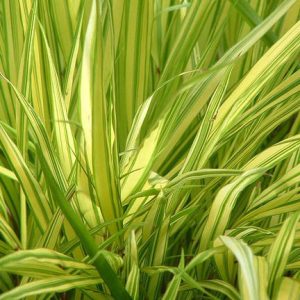
| Hakone grass ‘Aureola’ | 12-18″ | 18-24″ | Arching mound | Late summer, subtle | Foliage contrast |
| Ajuga ‘Chocolate Chip’ | 2-3″ | Spreading | Running carpet | Spring | Contained groundcover |
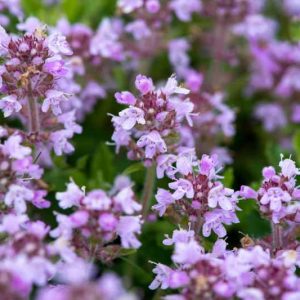
| Creeping thyme | 2-4″ | 12-18″ | Aromatic mat | Summer | Sunny stone joints |
| Sedum ‘Dragon’s Blood’ | 4-6″ | 12-18″ | Spreading succulent | Summer | Dry borders, troughs |
| Sedum ‘Angelina’ | 4-6″ | 18-24″ | Vigorous mat | Summer | Walls, trailing pots |
| Aubrieta deltoidea | 4-9″ | 12-24″ | Trailing mat | Spring | Rock walls |
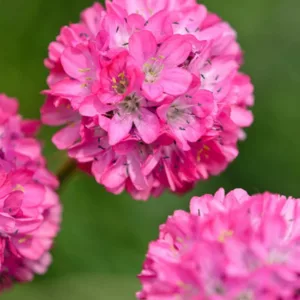
| Sea thrift | 6-12″ | 6-12″ | Evergreen tuft | Spring | Neat edging, pots |
| Campanula carpatica | 6-12″ | 12-18″ | Rounded mound | Summer | Rock gardens, pots |
Gardenia’s key takeaway
The shortest perennial isn’t necessarily the smallest. Sea thrift may occupy only a foot of space, while Nepeta ‘Purrsian Blue’ can spread 30 inches. Both are excellent border plants, but they require very different amounts of room.
Sunny edging looks best when low plants contribute different flowering seasons and foliage textures. These six offer everything from spring carpets to long-lasting summer color.
| Plant Type | Perennials |
|---|---|
| Genus | Ajuga, Armeria, Brunnera, Campanula, Coreopsis, Dianthus, Geranium, Hakonechloa, Heuchera, Nepeta, Phlox, Pulmonaria, Sedum, Thymus, Tiarella |
| Landscaping Ideas | Beds And Borders, Edging, Patio And Containers, Small Gardens |
Design idea: Combine white candytuft with magenta geraniums for a fresh spring border, then repeat compact catmint and coreopsis farther back for summer color.
Pet safety: Dianthus is toxic to cats and dogs. Check individual plant profiles before using potentially harmful plants where pets have access.
Shade gardens benefit from plants whose foliage is beautiful even when nothing is flowering. Silver, amber, burgundy, and gold leaves can transform a narrow, sheltered border.
Design idea: Pair the warm foliage of Heuchera ‘Caramel’ with silver-leaved brunnera. Add golden hakone grass where there is enough room for its arching leaves.
Watch out for dry shade.
Brunnera and pulmonaria generally prefer moisture-retentive, well-drained soil. Dry ground beneath mature trees can be unsuitable without additional watering. Shade tolerance doesn’t automatically mean drought tolerance.
Rock gardens and raised beds are natural homes for low-growing perennials. Their small leaves, trailing stems, and compact flowers bring texture and color without hiding attractive stonework.
Design idea: Combine golden stonecrop with sea thrift for year-round foliage contrast. Place them in gritty soil with excellent drainage, and allow the stonecrop to soften the edge without smothering its neighbor.
Remember that rock-garden plants have different water requirements. Creeping thyme and stonecrops tolerate relatively dry conditions once established, while Carpathian bellflowers generally appreciate more dependable moisture.
A narrow border benefits from restraint. Too many varieties can make it feel crowded, while a few repeated plants create an attractive, unified design.
Imagine a planting strip measuring 10 ft long by 2 ft deep (3 x 0.6 m) beside a sunny path. Instead of filling it with a dozen different flowers, try two complementary perennials:
Both plants prefer well-drained soil, and the contrasting flowers create a fresh, harmonious combination. The geraniums also contribute attractive autumn foliage.
Allow approximately 15-18 inches between centers as an initial guide for compact plants of this size, adjusting for their individual spreads. The six-plant layout is illustrative rather than a scale-verified plan. Sketch the mature footprints before planting, keeping sufficient clearance from the path.
For a larger border, repeat the combination and add a compact summer-flowering perennial behind it. A limited palette often looks more sophisticated than planting one of every attractive variety.
Don’t plant for the first year alone.
New perennials may look small in freshly prepared soil. Resist filling every gap. Their mature foliage should eventually meet or overlap gently without burying neighboring plants or obstructing the path.
Small perennials can create wonderful patio displays, returning for several seasons with appropriate care. The secret is choosing plants that suit both the pot’s dimensions and its growing conditions.
1. Sunny Stone Trough – Approximately 24 in. (60 cm) Long
This combination suits a wide, freely draining trough. Use a gritty potting mix and trim the stonecrop as needed. If the trough is narrow or shallow, reduce the planting rather than crowding the sea thrifts.
2. Romantic Patio Pot – Approximately 18-20 in. (45-50 cm) Wide
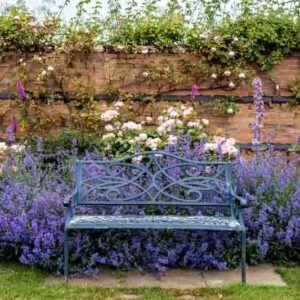
Its aromatic foliage and violet-blue flowers create a wonderfully soft, rounded display. One healthy catmint can eventually occupy most of the container, making additional plants unnecessary.
3. Shaded Foliage Container – Approximately 20-24 in. (50-60 cm) Wide
Give both plants room to grow. For a longer-lasting arrangement, separate coordinated pots may be preferable once their mature clumps begin to compete.
For North American gardens, Phlox subulata and Tiarella cordifolia are useful native species in appropriate parts of their natural ranges. Creeping phlox brings spring color to sunny sites, while foamflower suits woodland conditions.
Native status is regional, however. A species native to eastern North America is not automatically native to your state. Check its natural distribution before including it in a locally native planting.
Plants such as ajuga and vigorous stonecrops can spread farther than expected. Ajuga reptans, in particular, has invasive potential in some regions and is best avoided near vulnerable natural habitats where it could escape cultivation.
For a low-maintenance border, choose plants whose growth habits suit the available space. Trim spreading mats after flowering when appropriate, divide aging clumps as needed, and deadhead dianthus or sea thrift if you want a tidier appearance.
Before buying, run your shortlist through these five questions:
Use Gardenia’s Plant Finder to discover perennials that match your conditions and preferred sizes. Explore perennial garden combinations for inspiration, then save your favorites to a collection.
Gardenia’s Garden Design Tool helps you compare growing conditions, mature dimensions, seasonal interest, and planting quantities, so you can refine your choices before purchasing. You can start with up to five plants in a free collection.
For sunny borders, choose compact hardy geraniums, candytuft, dianthus, sea thrift, or catmint. In partial shade, heucheras, brunneras, and pulmonarias are attractive choices. Always compare mature spread as well as height.
Creeping phlox, evergreen candytuft, Dianthus ‘Firewitch’, sea thrift, creeping thyme, and many stonecrops remain low-growing. Flower stems may rise above their foliage, while spreading varieties can become much wider than their height suggests.
Compact catmint, including Nepeta ‘Purrsian Blue’, and Coreopsis ‘Zagreb’ can provide a long summer display. Dianthus may rebloom after deadheading. Creeping phlox, candytuft, and aubrieta concentrate their main flowering display in spring.
Heuchera ‘Caramel’, Brunnera ‘Jack Frost’, Pulmonaria ‘Trevi Fountain’, foamflower, and golden hakone grass are useful for partial shade. Many woodland perennials prefer humus-rich, moisture-retentive but well-drained soil.
Many compact perennials grow successfully in containers for several seasons when given sufficient root space, suitable drainage, and appropriate care. Winter protection, regular watering, and occasional repotting may be necessary.
Use each plant’s mature spread as your starting point. Compact clumps can be spaced to allow gentle foliage overlap, while vigorous groundcovers need room to expand. Adjust distances according to border depth, neighboring plants, and maintenance access.
Updated and reviewed by Gardenia: October 2026
| Plant Type | Perennials |
|---|---|
| Genus | Ajuga, Armeria, Brunnera, Campanula, Coreopsis, Dianthus, Geranium, Hakonechloa, Heuchera, Nepeta, Phlox, Pulmonaria, Sedum, Thymus, Tiarella |
| Landscaping Ideas | Beds And Borders, Edging, Patio And Containers, Small Gardens |
Create a membership account to save your garden designs and to view them on any device.
Becoming a contributing member of Gardenia is easy and can be done in just a few minutes. If you provide us with your name, email address and the payment of a modest $25 annual membership fee, you will become a full member, enabling you to design and save up to 25 of your garden design ideas.
Join now and start creating your dream garden!