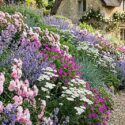
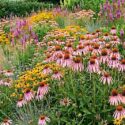
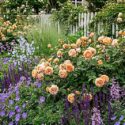
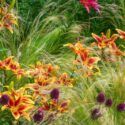
Turn an ordinary flower bed into a beautiful perennial border that looks wonderful year after year. Discover how to arrange plants by height, create natural-looking drifts, combine colors and textures, and calculate spacing. Follow a practical planting plan, explore inspiring combinations, and design a garden that truly works together.
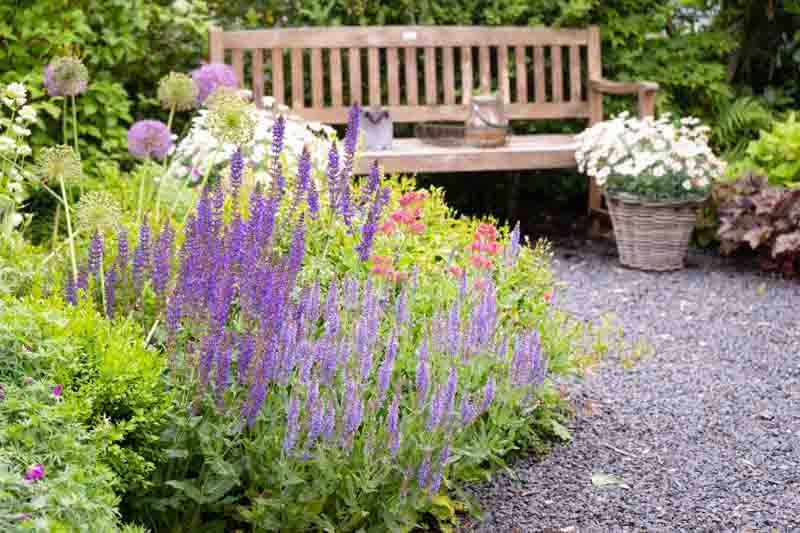


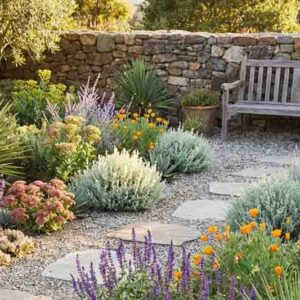
Some perennial borders seem to have everything: billowing flowers, graceful grasses, beautiful foliage, and just enough informality to feel natural. From spring to fall, one plant takes over as another finishes, and the entire planting feels wonderfully balanced.
What makes these borders successful isn’t simply the choice of flowers. It’s the way those plants are arranged.
Designing a beautiful perennial flower border means balancing height, mature spread, color, texture, flowering seasons, and growing conditions. It also means knowing when to repeat a favorite plant, when to leave space, and how to create a planting that looks better as it matures.
Whether you’re starting a cottage garden border beside a path or transforming a long, narrow flower bed, this guide takes you from an empty space to a practical planting plan, with real plant combinations, spacing advice, and design examples you can adapt.
Quick answer: How do you design a perennial flower border?
Measure your planting area, assess sunlight and soil, and choose perennials suited to those conditions. Arrange plants in layers based on mature height, repeat key varieties in informal groups, and combine contrasting foliage and flower shapes. Plan overlapping bloom periods, allow room for mature growth, and calculate quantities before planting.
Before choosing plants, look carefully at the space you’re designing. A border beside a sunny fence behaves very differently from one beneath mature trees, even when both are the same size.
Observe sunlight during the growing season. Many flowering perennials perform best with at least six hours of direct sun, while woodland plants may prefer morning light, dappled shade, or protection from strong afternoon heat.
Check drainage, soil texture, summer moisture, wind exposure, and competition from nearby trees. These conditions should guide your plant choices rather than forcing favorite flowers into unsuitable positions.
Border depth determines how many planting layers you can create. A narrow bed may accommodate compact perennials and a few taller accents, while a deeper border allows broad, interlocking drifts.
| Border depth | Design possibilities | Best approach |
|---|---|---|
| 2-3 ft (60-90 cm) | Compact border or path edging | Choose restrained, compact plants with limited layering |
| 4-6 ft (1.2-1.8 m) | Versatile perennial flower border | Create a foreground, middle layer, and taller accents |
| 6-10 ft (1.8-3 m) | Deep mixed or naturalistic border | Use generous drifts, grasses, structural perennials, and shrubs |
These dimensions are practical design guidelines, not strict minimums. A well-planned 3-foot border can be beautiful, but a 5-foot-deep border offers more freedom to create overlapping layers.
Think about how you’ll see the planting. Along a fence, taller plants generally sit toward the back. In an island bed viewed from several sides, taller groups often belong toward the center. Deep beds also need maintenance access, whether from both sides or discreet stepping stones.
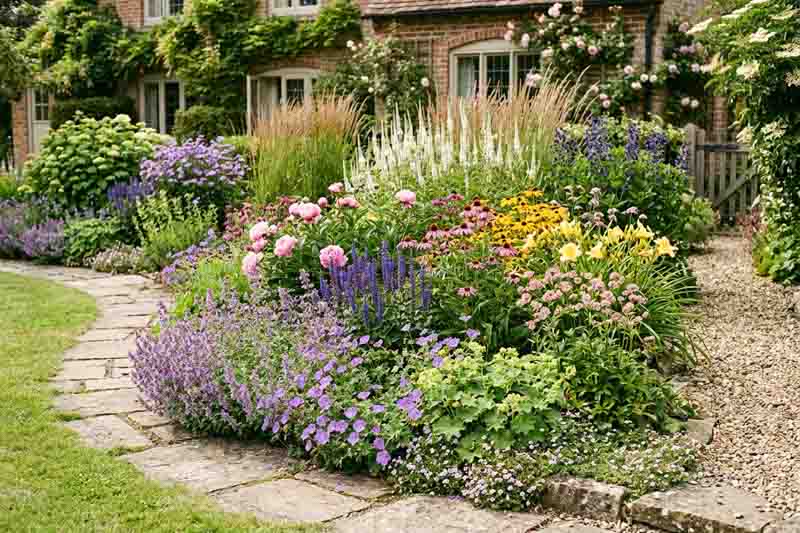
Professional-looking borders have depth. Taller flowers rise above lower mounds, foliage overlaps gently, and the eye moves through the planting rather than stopping at a flat line of identical plants.
For a border viewed from one side, imagine three broad layers.
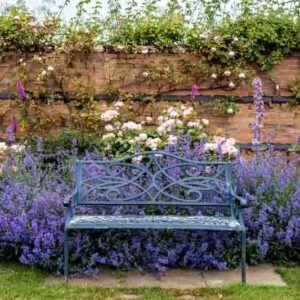
Low-growing perennials such as catmint, compact hardy geraniums, and suitable groundcovers can soften a path or lawn edge. Choose plants that maintain an attractive habit without spreading into areas where they aren’t wanted.
This is where medium-height perennials often create the greatest impact. Peonies, salvias, coneflowers, daylilies, and rudbeckias provide substantial masses of flowers and foliage.
Use plants of different heights and habits so their forms overlap naturally. Avoid placing every plant of the same height in a perfectly straight line.
Tall baptisias, veronicastrums, asters, and ornamental grasses create vertical accents. In deeper mixed borders, shrubs can provide a more permanent framework.
Let a few plants break the pattern. Tall but airy flower stems can rise near the front without hiding everything behind them. The goal is visual balance, not a rigid staircase of plant heights.
Designing an island border?
Use the same layering principles, but arrange the tallest plants closer to the center and lower-growing groups toward the outer edges. Check the view from every direction before finalizing the layout.
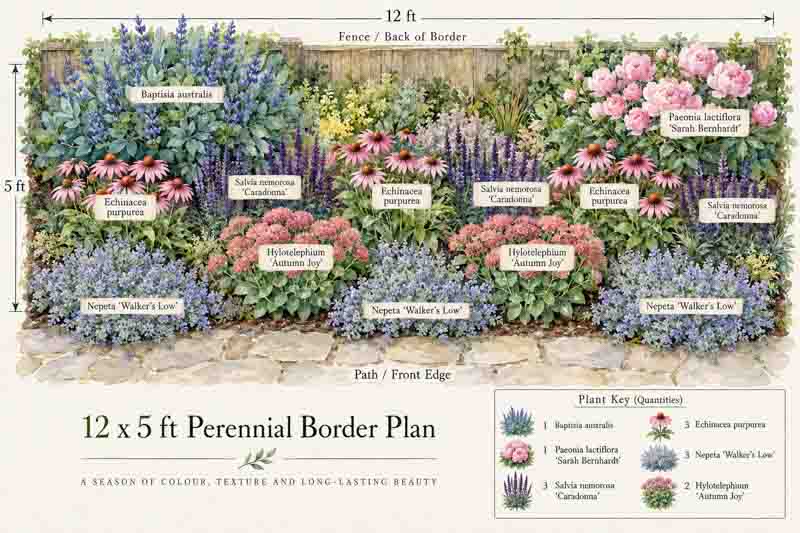
Illustrative planting plan showing the arrangement of 13 perennials in a 12 x 5 ft border. Plant positions and proportions are approximate. Adjust spacing and quantities according to mature plant sizes and local growing conditions.
Let’s put the design principles to work.
Imagine a 12 ft long by 5 ft deep (3.7 x 1.5 m) border against a sunny fence. The site receives at least six hours of sun, has reasonably fertile, well-drained soil, and can be watered during establishment and prolonged dry spells.
Rather than filling the bed with a dozen unrelated varieties, we’ll use six complementary perennials. Each has a different role in the design.
| Plant | Qty. | Approx. mature spread | Position and purpose |
|---|---|---|---|
| Baptisia australis | 1 | 3-4 ft (90-120 cm) | Back; structural anchor and spring flowers |
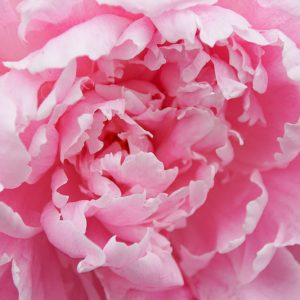
| Paeonia lactiflora ‘Sarah Bernhardt’ | 1 | 2-3 ft (60-90 cm) | Back to middle; spring focal point |
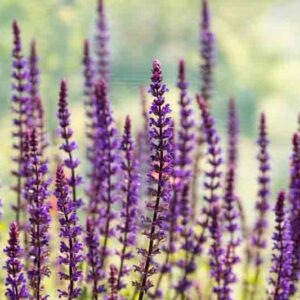
| Salvia nemorosa ‘Caradonna’ | 3 | 1-2 ft (30-60 cm) | Middle; repeated violet flower spikes |
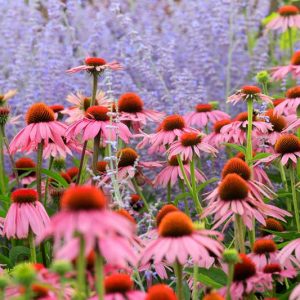
| Echinacea purpurea | 3 | 1.5-2 ft (45-60 cm) | Middle; summer flowers and seedheads |
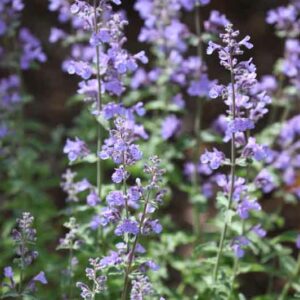
| Nepeta ‘Walker’s Low’ | 3 | 2-3 ft (60-90 cm) | Front; soft flowering mounds |
| Hylotelephium ‘Autumn Joy’ | 2 | 1.5-2 ft (45-60 cm) | Middle/front; late-season color |
| Total | 13 | Six perennial varieties in a 60 sq. ft. border | |
These quantities are an illustrative starting estimate. Exact mature widths vary by cultivar, local conditions, and age. This is a relatively full planting, and the positions should be checked carefully before purchase. Do not add plants simply to make the bed look finished in its first season.
Arrange the six perennials in loose, overlapping groups rather than rigid rows, allowing each plant enough room to reach its mature size.
Sketch your layout before planting:
Remember: The goal is a balanced, natural-looking composition with gently overlapping foliage, not three perfectly straight planting rows.
The planting will change throughout the growing season, with different flowers taking center stage.
Beyond the flowers: Baptisia’s handsome foliage, peony leaves, coneflower seedheads, and upright stonecrop stems contribute structure and interest between flowering periods.
One limitation: This compact border will have relatively few flowers in early spring or late autumn. In a larger planting, you could add early-flowering bulbs and a suitable autumn aster. In this 60 sq. ft. border, replace a plant if necessary rather than overcrowding it.
Gardenia’s Practical Design Lesson
A successful perennial border is more than a list of plants and quantities. Consider each plant’s mature size, flowering season, growing requirements, and position within the design. Use this example as inspiration, then check your own border dimensions and plant compatibility before purchasing.
The difference between a charming perennial border and a jumble of unrelated plants often comes down to repetition.
Buying one of every attractive perennial may seem exciting, but too many isolated plants can make a border feel restless. Repeating a few varieties creates rhythm, allowing the eye to travel naturally through the composition.
In smaller borders, groups of three or five medium-sized plants often work beautifully. Larger spaces may accommodate drifts of seven, nine, or more, while a mature baptisia or large peony can work as an individual focal point.
These are design conventions rather than strict rules. The number of plants should always reflect their mature dimensions and the scale of the bed.
A drift doesn’t need to be a perfect circle. Allow groups to widen, narrow, and overlap gently. Repeating a blue-flowering salvia at intervals, for example, can connect otherwise different parts of a long border.
One useful principle: Limit the number of different plants, then repeat your strongest selections with confidence. You can create a richly varied border without making every plant a different species.
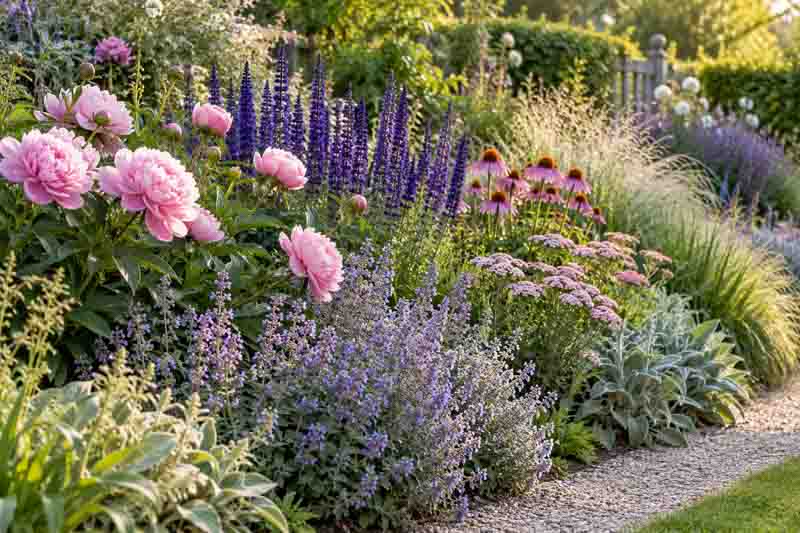
Color creates the mood of a perennial border, but texture and plant form give it depth.
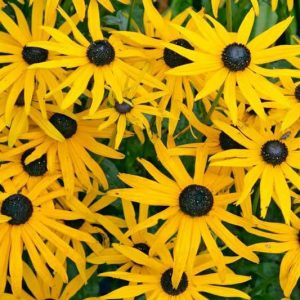
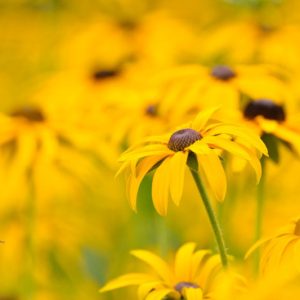
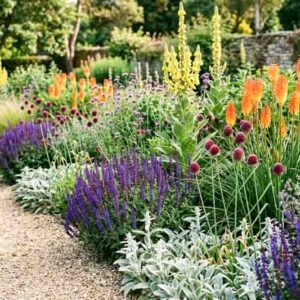
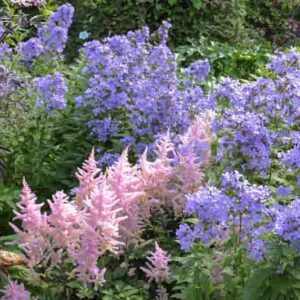
A romantic border might combine soft pink peonies, violet salvias, lavender-blue catmint, and silver-green foliage. A more energetic composition could mix golden rudbeckias, copper-red heleniums, and purple asters.
Choose a limited color palette and repeat it rather than trying to include every available shade.
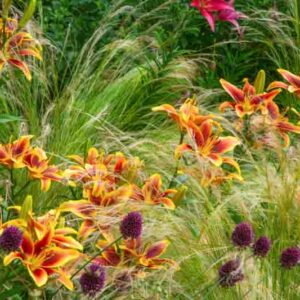
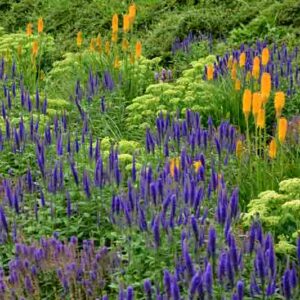
Combine rounded flowers with upright spikes, airy sprays, and flat clusters. Peonies look particularly beautiful beside vertical salvias. Coneflowers gain interest alongside grasses, while flat-topped yarrows contrast with slender flower spikes.
Even the most generous perennial has a season when it isn’t flowering. Attractive foliage makes these quieter periods much more interesting.
Try combining broad hosta leaves with delicate fern fronds in shade, or finely divided yarrow foliage with substantial peony leaves in sun. Baptisias, amsonias, and ornamental grasses offer structure well beyond their bloom period.
A simple design test: Imagine the border without flowers. If the leaves, plant shapes, and heights still create an attractive composition, you’ve built a strong foundation.
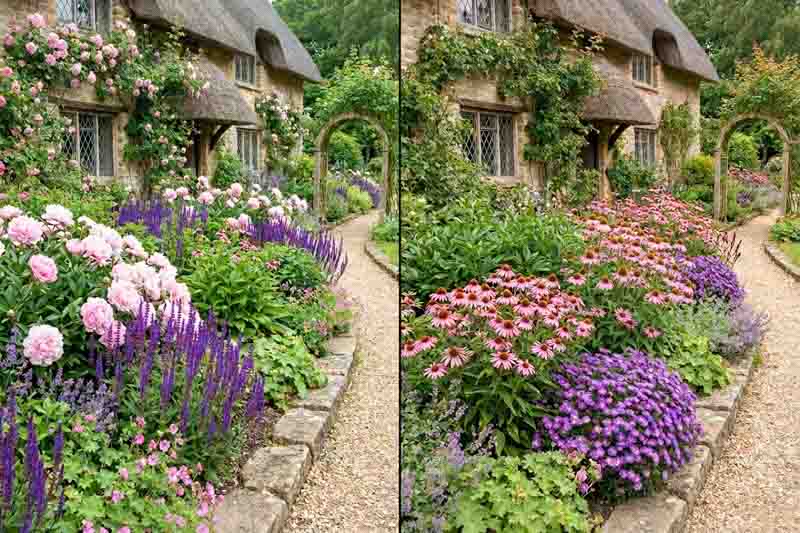
One of the pleasures of a perennial border is watching it change throughout the year. The goal isn’t to make every plant flower continuously, but to arrange successive displays so that something attractive is always happening.
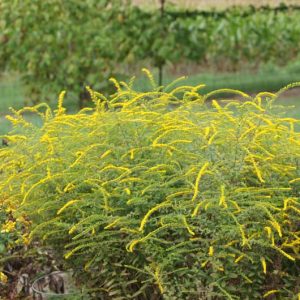
For a sunny border, peonies and baptisias may provide late-spring highlights, followed by catmint, salvias, and summer coneflowers. Rudbeckias, stonecrops, goldenrods, and asters can carry color toward autumn.
In shade, the strongest display often comes earlier, with hellebores, pulmonarias, brunneras, and foamflowers. Astilbes and other moisture-loving plants can contribute summer flowers, while Japanese anemones and toad lilies provide late-season interest in suitable positions.
Flowering dates vary significantly with climate and cultivar. Don’t rely on occasional rebloom to fill an important seasonal gap.
For a more detailed flowering timeline, use Gardenia’s perennial bloom-planning resources and review the combined seasonal interest of your saved plants in the Garden Design Tool.
Don’t forget winter.
Perennial borders can remain attractive after flowering ends. Leave selected seedheads and ornamental grasses standing where appropriate, and consider evergreen plants, bulbs, and structural shrubs to extend interest beyond the main growing season.
There is no single perfect perennial border. A romantic cottage planting, a cool woodland border, and a naturalistic prairie garden all use the same underlying principles but produce very different effects.
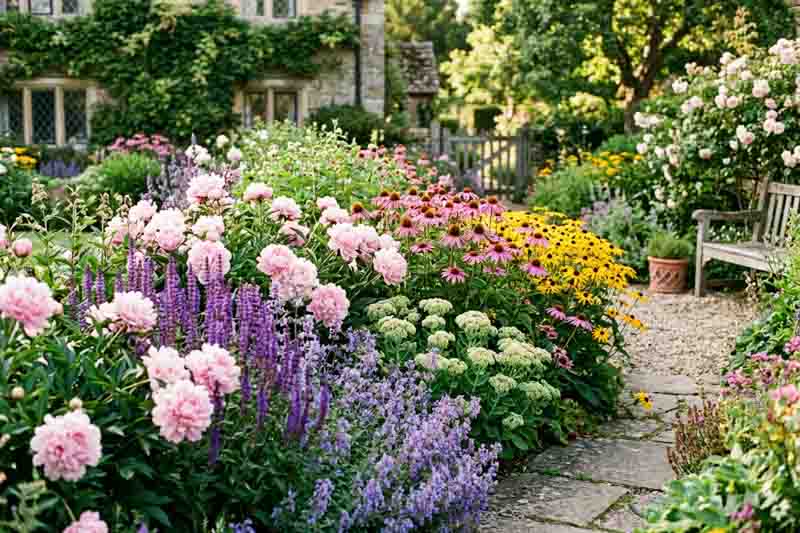
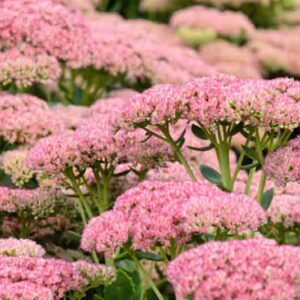
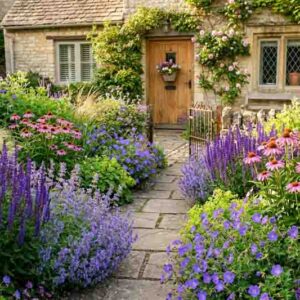
Combine the soft pink flowers of Paeonia ‘Sarah Bernhardt’ with violet Salvia ‘Caradonna’ and billowing Nepeta ‘Walker’s Low’. As spring flowers fade, Echinacea purpurea and Rudbeckia ‘Goldsturm’ create summer color, followed by Hylotelephium ‘Autumn Joy’ in late summer and autumn.
Use peonies as focal points and repeat catmint and salvia along the border. The contrast between rounded blooms, upright spikes, and soft mounds produces a romantic but balanced composition.
| Plant Type | Perennials |
|---|
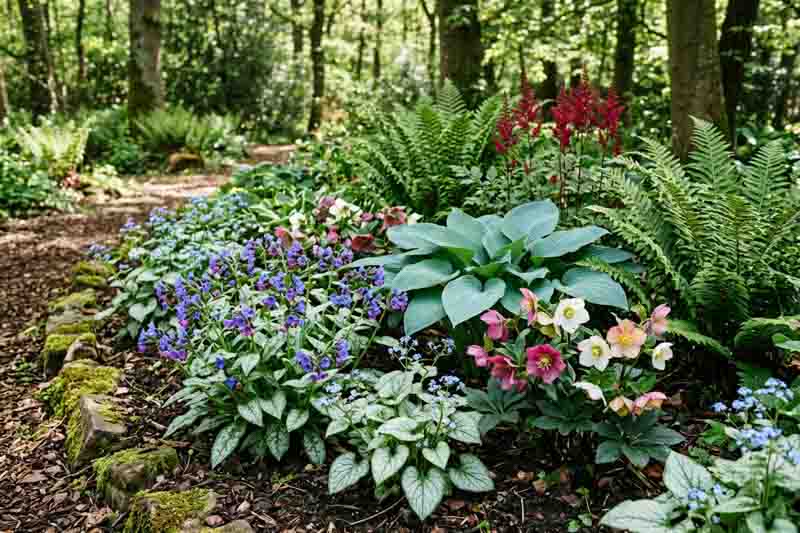
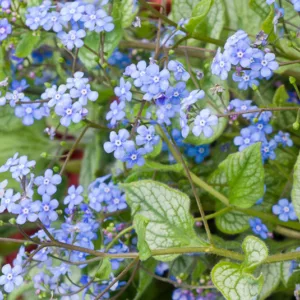
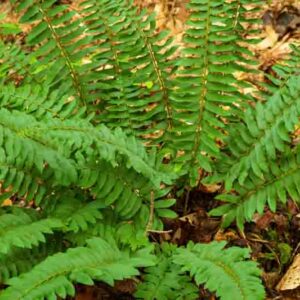
For a cool, partially shaded site, combine Helleborus x hybridus, Brunnera ‘Jack Frost’, and Pulmonaria ‘Trevi Fountain’ for spring flowers and attractive leaves. Add Hosta ‘Halcyon’ for broad blue foliage, Polystichum acrostichoides for fern texture, and Astilbe ‘Fanal’ for rich red summer flower plumes.
This border relies on foliage contrasts as much as flowers. Choose a site with suitable drainage and dependable moisture for the brunnera and astilbe, and account for local deer or slug pressure on hostas.
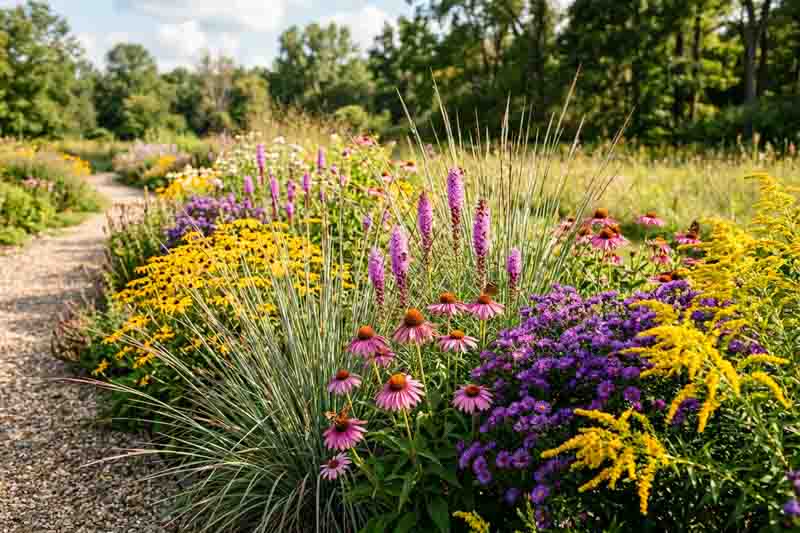
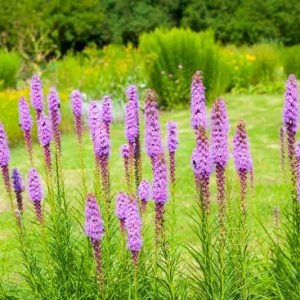
For a sunny border, combine the fine, upright foliage of Schizachyrium scoparium with Echinacea purpurea, Liatris spicata, and Rudbeckia fulgida. Finish with Symphyotrichum ‘Purple Dome’ and Solidago ‘Fireworks’ for autumn flowers.
Plant in irregular, interlocking drifts and repeat the grasses to create rhythm. This palette provides an attractive combination of flower shapes, seedheads, movement, and wildlife value. Check each selection’s drainage and moisture needs before grouping them together.
A beautiful border should remain manageable as it matures. Choosing the right plants at the design stage can prevent years of unnecessary staking, dividing, watering, and moving overcrowded specimens.
Some perennials are naturally short-lived, spread vigorously, or require regular division. Check those characteristics before including them in a low-maintenance planting.
Before buying plants, review your border against six essential design decisions. Together, they help you move from an attractive plant list to a realistic garden plan.
| Design check | Question to ask |
|---|---|
| 1. Site fit | Do the plants share suitable sun, soil, drainage, and water requirements? |
| 2. Mature size | Will every plant have enough room to develop? |
| 3. Layering | Does the planting have a balanced range of heights and forms? |
| 4. Repetition | Are key plants repeated to give the border rhythm? |
| 5. Seasonal interest | Will flowers, foliage, or seedheads keep the border attractive throughout the seasons? |
| 6. Maintenance | Can you comfortably manage the watering, staking, pruning, and division? |
Use Gardenia’s Plant Finder to choose perennials for your climate, light, soil, drainage, water needs, and mature size. Save your favorites, then open Gardenia’s Garden Design Tool to check plant compatibility, compare seasonal interest and mature dimensions, estimate planting quantities, and prepare a shopping list.
You can start with up to five plants for free and expand your collection with a Gardenia membership.
Gardenia helps with the practical decisions that influence plant success. The creative choices, including the final layout, shapes of planting drifts, and focal points, remain yours.
A border 4-6 feet (1.2-1.8 m) deep usually offers useful space for layered planting. Narrow borders of 2-3 feet can work with compact plants, while deeper beds accommodate larger drifts and taller perennials. Choose dimensions according to your site and maintenance access.
For a one-sided border, generally position low plants near the front, medium-height flowers through the middle, and taller perennials behind. Repeat key plants in informal groups rather than rigid rows. For an island bed, place taller groups nearer the center.
There is no fixed number. Smaller borders usually look more cohesive with a limited selection repeated in groups, while larger borders can accommodate greater diversity. Mature plant sizes, growing conditions, and a consistent visual structure matter more than the number of species.
Use each plant’s mature spread and growth habit as the starting point for center-to-center spacing. Adjust according to the desired planting density, neighboring plants, and mature foliage overlap. Avoid using nursery-pot size to determine the finished layout.
Combine perennials with overlapping main flowering seasons, such as spring peonies and baptisias, summer salvias and coneflowers, and autumn asters and goldenrods. Add attractive foliage, grasses, and seedheads for interest between flowering periods. Adjust selections to local climate and growing conditions.
A low-maintenance border uses compatible plants suited to its sunlight, soil, drainage, climate, and water availability. Allow space for mature growth, choose manageable varieties, limit plants requiring frequent staking or division, and ensure good maintenance access.
Updated and reviewed by Gardenia: October 2026
| Plant Type | Perennials |
|---|
Create a membership account to save your garden designs and to view them on any device.
Becoming a contributing member of Gardenia is easy and can be done in just a few minutes. If you provide us with your name, email address and the payment of a modest $25 annual membership fee, you will become a full member, enabling you to design and save up to 25 of your garden design ideas.
Join now and start creating your dream garden!