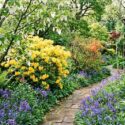
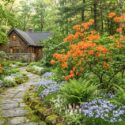
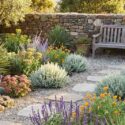
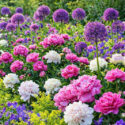
Turn a moist, partly shaded corner into a luminous garden scene with rosy Astrantia, elegant blue Siberian Irises, and flowing golden sedge. Contrasting flower shapes, heights, and foliage create a layered planting that feels lush yet natural, with its finest display arriving from late spring into early summer.
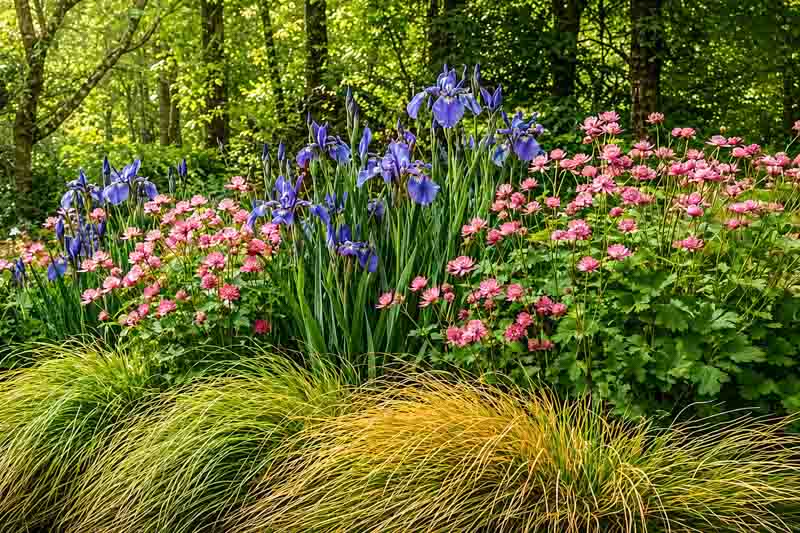


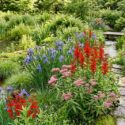
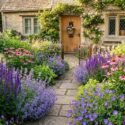
This graceful planting brings color and movement to a moist border in light shade or dappled sun. Royal-blue Iris sibirica rises above clouds of rosy-pink Astrantia major, while the arching golden foliage of Carex elata ‘Aurea’ brightens the foreground. The combination feels lush and natural, yet each plant has a distinct shape that keeps the border from becoming visually heavy.
The planting works especially well beneath deciduous trees, beside a woodland edge, or in another garden area where the soil remains reliably moist. The Siberian Irises create the strongest vertical accents, Astrantia forms a softer flowering layer around them, and the sedge spreads low across the front in luminous, flowing ribbons.
Main plants used: Astrantia major (Great Masterwort), Iris sibirica (Siberian Iris), and Carex elata ‘Aurea’ (Bowles’ Golden Sedge)
Use the irises as vertical accents rather than forming a continuous row. Let Astrantia weave around them and allow the golden sedge to spill naturally across the front of the planting.
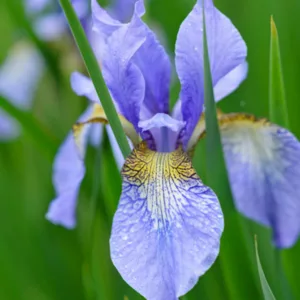
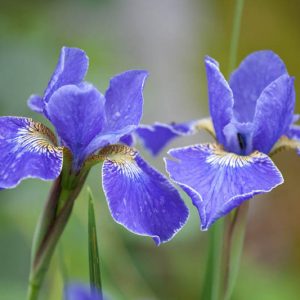
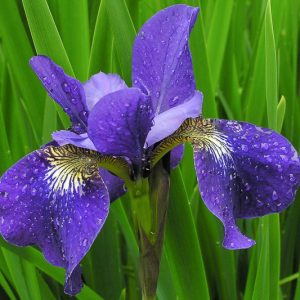
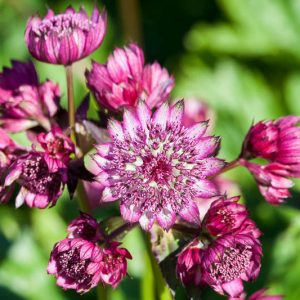
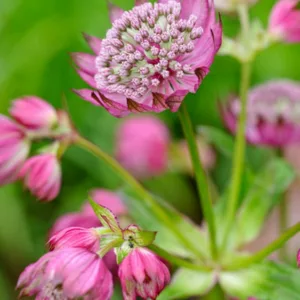
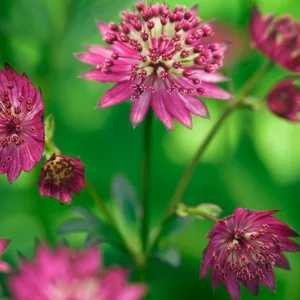
The strength of this combination comes from contrast. The blue-violet flowers of Siberian Iris stand well above the planting on slender stems, creating strong vertical lines. Around them, Astrantia produces intricate pincushion-like blooms held above leafy mounds, giving the middle layer a lighter, more detailed texture.
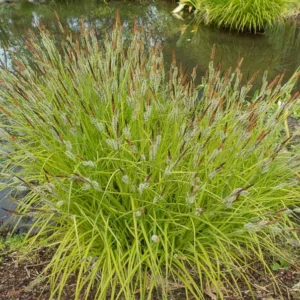
Carex elata ‘Aurea’ plays a different role. Its narrow yellow-green leaves form soft, arching tussocks that brighten the lower edge of the border and prevent the blue and pink flowers from feeling too cool. The foliage also remains attractive after the main spring flower display has finished.
The three plants have noticeably different silhouettes – upright, rounded, and flowing – so the garden retains definition even where the plants begin to intermingle. Their shared preference for moisture makes the combination particularly useful in sites where many conventional border plants struggle.
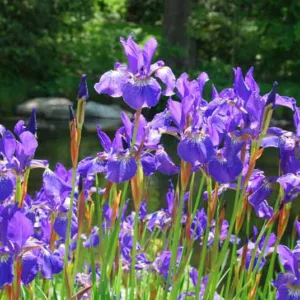
Iris sibirica provides the height and strongest flower color. Its elegant blue blooms rise above upright clumps of narrow, sword-shaped foliage. Plant the irises in small groups through the middle of the border so their flowers appear at several points rather than creating one rigid block.
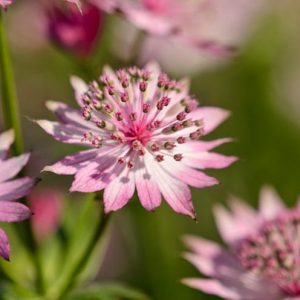
Astrantia major fills the middle layer with rosy-pink flowers and leafy mounds. Its distinctive blooms are made up of tiny flowers surrounded by papery bracts, giving them a delicate, almost starry appearance. Repeat Astrantia around and between the irises to soften their strong vertical lines.
Carex elata ‘Aurea’ forms the glowing foreground. Its slender leaves arch outward in loose fountains of yellow-green to golden foliage. Use several clumps along the front, allowing them to overlap slightly without arranging them at perfectly even intervals.
Create a luminous, natural-looking border for moist soil, using strong blue vertical accents, softer pink flowers, and flowing golden foliage.
These proportions can be adjusted according to the size of the border. Increase the sedge where stronger year-round foliage presence is wanted.
Allow enough room for the plants to develop into distinct clumps rather than packing them tightly for immediate effect.
Vary the group sizes and allow neighboring plants to overlap slightly. Avoid lining up the iris clumps or spacing the sedges at identical intervals.
Place Carex elata ‘Aurea’ toward the front, where its arching golden foliage can soften the edge of the border.
Plant Astrantia major immediately behind and between the sedges, using several irregular groups rather than one continuous mass.
Position Iris sibirica through the middle and rear, allowing its taller blue flowers to rise above the Astrantia.
Keep the arrangement loose and asymmetrical. The irises should appear to emerge naturally from the softer surrounding planting rather than forming a formal row.
In spring, the fresh yellow foliage of Carex elata ‘Aurea’ begins illuminating the border before the main flower display develops. The upright foliage of Siberian Iris soon adds height and definition.
By late spring and early summer, the planting reaches its main flowering peak. Blue Siberian Iris blooms rise above the pink Astrantia, while the golden sedge creates a bright foreground that makes both flower colors appear richer.
After flowering, the combination remains attractive because foliage provides much of its structure. The narrow iris leaves continue to contribute strong vertical texture, Astrantia forms leafy clumps, and the arching sedge maintains a luminous lower layer.
This is not a combination for very dry shade. Astrantia, Siberian Iris, and Carex elata ‘Aurea’ all perform best when adequate moisture is available, making them particularly useful for naturally damp parts of the garden.
Light levels also matter. Astrantia and the sedge tolerate partial shade beautifully, but Siberian Iris generally flowers more heavily with greater exposure to sunlight. A bright woodland edge, open dappled shade, or a border receiving several hours of sun provides an excellent compromise.
Most importantly, allow the plants to retain their individual forms. The beauty of this planting comes from tall blue irises emerging above delicate pink Astrantia, with golden sedge flowing beneath them. A relaxed arrangement emphasizes those contrasts and gives the border the character of an established garden.
| Hardiness |
5 - 8 |
|---|---|
| Heat Zones |
3 - 7 |
| Climate Zones | 2, 3, 4, 5, 6, 7, 8, 9, 14, 15, 16, 17, 18, 19, 20, 21, 22, 23 |
| Exposure | Full Sun, Partial Sun |
| Season of Interest | Spring (Late), Summer (Early) |
| Maintenance | Low |
| Water Needs | Average |
| Soil Type | Clay, Loam |
| Soil pH | Acid, Alkaline, Neutral |
| Soil Drainage | Moist but Well-Drained |
| Characteristics | Dried Arrangements, Cut Flowers, Plant of Merit, Showy |
| Tolerances | Deer, Wet Soil |
| Attracts | Butterflies, Hummingbirds |
| Landscaping Ideas | Beds And Borders, Ponds And Streams |
| Garden Styles | Informal and Cottage, Traditional Garden |


| Hardiness |
5 - 8 |
|---|---|
| Heat Zones |
3 - 7 |
| Climate Zones | 2, 3, 4, 5, 6, 7, 8, 9, 14, 15, 16, 17, 18, 19, 20, 21, 22, 23 |
| Exposure | Full Sun, Partial Sun |
| Season of Interest | Spring (Late), Summer (Early) |
| Maintenance | Low |
| Water Needs | Average |
| Soil Type | Clay, Loam |
| Soil pH | Acid, Alkaline, Neutral |
| Soil Drainage | Moist but Well-Drained |
| Characteristics | Dried Arrangements, Cut Flowers, Plant of Merit, Showy |
| Tolerances | Deer, Wet Soil |
| Attracts | Butterflies, Hummingbirds |
| Landscaping Ideas | Beds And Borders, Ponds And Streams |
| Garden Styles | Informal and Cottage, Traditional Garden |
Recreate this garden. Specify the percentages you would like to have of each plant and input the dimensions of your garden space.We'll give you a shopping list so you know how many plants you need.
| Plant | Quantity | |
|---|---|---|
| Carex elata 'Aurea' (Bowles' Golden Sedge) | N/A | Buy Plants |
| Iris sibirica 'Caesar's Brother' (Siberian Iris) | N/A | Buy Plants |
| Astrantia major 'Roma' (Great Masterwort) | N/A | Buy Plants |
Create a membership account to save your garden designs and to view them on any device.
Becoming a contributing member of Gardenia is easy and can be done in just a few minutes. If you provide us with your name, email address and the payment of a modest $25 annual membership fee, you will become a full member, enabling you to design and save up to 25 of your garden design ideas.
Join now and start creating your dream garden!
Create a membership account to save your garden designs and to view them on any device.
Becoming a contributing member of Gardenia is easy and can be done in just a few minutes. If you provide us with your name, email address and the payment of a modest $25 annual membership fee, you will become a full member, enabling you to design and save up to 25 of your garden design ideas.
Join now and start creating your dream garden!