Transform a shady corner into a beautiful California woodland retreat with violet Douglas Iris, rosy Hummingbird Sage, delicate Island Alum Root, and lush Coastal Wood Fern. These native flowering perennials and evergreen ferns bring spring to early-summer blooms, graceful foliage, and year-round texture beneath the shelter of mature trees.
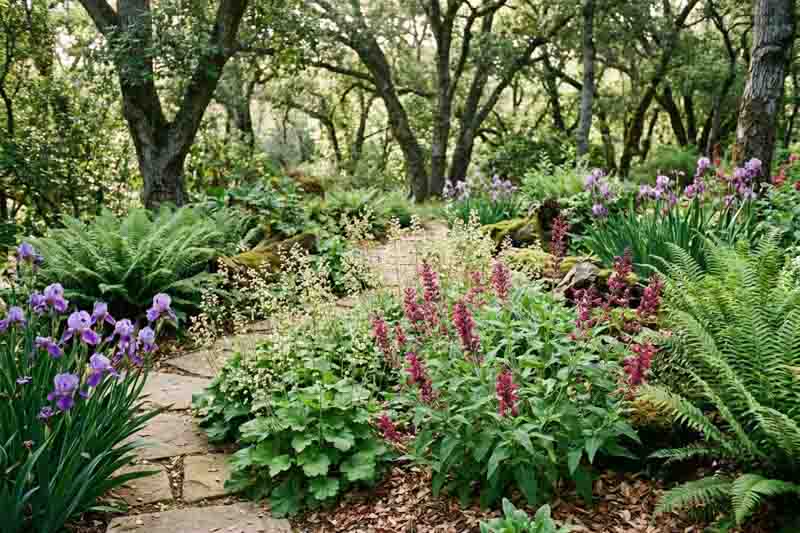


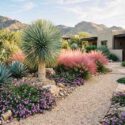
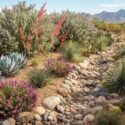
Imagine wandering along a winding stone path beneath mature trees, where violet irises bloom beside moss-covered rocks, delicate white flower sprays rise above rounded leaves, and rosy-pink hummingbird sage brightens the woodland floor. Graceful ferns frame the walkway, creating a peaceful retreat that feels perfectly at home beneath the leafy canopy.
Four California natives bring this woodland garden to life: Iris douglasiana (Douglas Iris), Heuchera maxima (Island Alum Root), Salvia spathacea (Hummingbird Sage), and Dryopteris arguta (Coastal Wood Fern). Their contrasting flowers and foliage create a naturalistic planting with spring color, attractive year-round texture, and valuable resources for pollinators and hummingbirds.
Main plants used: Iris douglasiana, Heuchera maxima, Salvia spathacea, and Dryopteris arguta.
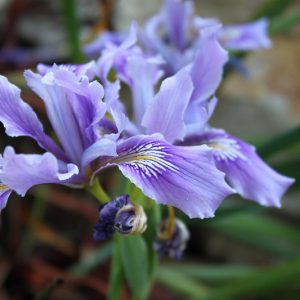
The charm of this planting lies in its contrasting flower shapes and beautifully layered foliage. Iris douglasiana produces elegant violet, lavender, or occasionally pale flowers in spring, rising above evergreen, sword-shaped leaves. Its upright foliage provides a lovely contrast to the softer plants around it.
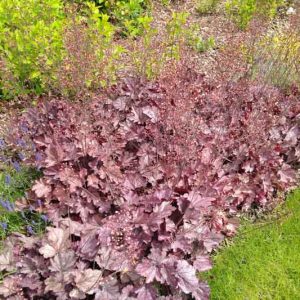
Heuchera maxima forms generous mounds of rounded, scalloped leaves topped with delicate sprays of small whitish to pinkish flowers in spring to early summer. Native to California’s northern Channel Islands, it lends an airy quality to the woodland floor.
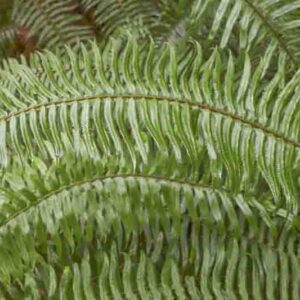
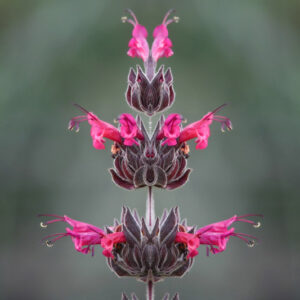
Nearby, Salvia spathacea contributes fragrant foliage and distinctive rosy-pink flower spikes that attract hummingbirds. Its spreading habit helps connect the planting, while Dryopteris arguta adds finely divided, arching fronds that soften the edges of rocks and paths. This California native fern tolerates seasonal dryness once established in suitable shaded conditions.
The winding stone path, mossy boulders, and mature trees complete the scene, inviting visitors to explore the garden gradually. Repeating the same plants in informal groups gives the composition a natural rhythm without making it feel overly designed.
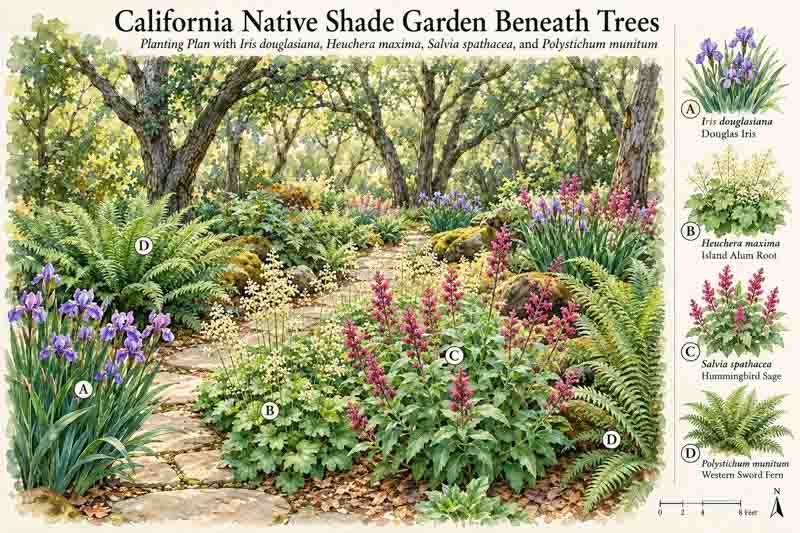
Create a peaceful California woodland garden with colorful native flowers, contrasting foliage, mossy stones, and a winding path beneath mature trees, using plants suited to dappled shade and seasonal summer dryness.
Approximate visual proportions, not exact plant quantities.
Let the winding stone path lead through the shade. Position Douglas Iris where morning sunlight filters through the canopy, then repeat Island Alum Root beside rocks and along path edges. Use Hummingbird Sage in broader drifts beneath the trees, leaving space for it to spread. Tuck Coastal Wood Fern into sheltered, well-drained pockets beside mossy boulders and along the walkway. Keep plants away from tree trunks and avoid damaging major roots.
Spring brings violet Douglas Iris flowers and rosy-pink Hummingbird Sage spikes. Island Alum Root adds delicate whitish flower sprays from spring into early summer. As flowering slows, evergreen iris leaves, rounded alum root foliage, aromatic sage leaves, and fern fronds maintain the garden’s layered character. Coastal Wood Fern may lose some older fronds during prolonged summer drought, especially in hotter inland areas.
| Hardiness |
8 - 9 |
|---|---|
| Climate Zones | 15, 16, 17, 18, 19, 20, 21, 22, 23, 24 |
| Exposure | Partial Sun |
| Season of Interest | Spring (Early, Mid, Late), Summer (Early) |
| Maintenance | Low |
| Water Needs | Low, Average |
| Soil Type | Loam, Sand |
| Soil pH | Acid, Neutral |
| Soil Drainage | Well-Drained |
| Characteristics | Showy |
| Native Plants | United States, California |
| Tolerances | Deer |
| Attracts | Bees, Butterflies, Hummingbirds |
| Landscaping Ideas | Beds And Borders |
| Garden Styles | Butterfly Garden, Coastal Garden, Informal and Cottage, Pollinator Garden |



| Hardiness |
8 - 9 |
|---|---|
| Climate Zones | 15, 16, 17, 18, 19, 20, 21, 22, 23, 24 |
| Exposure | Partial Sun |
| Season of Interest | Spring (Early, Mid, Late), Summer (Early) |
| Maintenance | Low |
| Water Needs | Low, Average |
| Soil Type | Loam, Sand |
| Soil pH | Acid, Neutral |
| Soil Drainage | Well-Drained |
| Characteristics | Showy |
| Native Plants | United States, California |
| Tolerances | Deer |
| Attracts | Bees, Butterflies, Hummingbirds |
| Landscaping Ideas | Beds And Borders |
| Garden Styles | Butterfly Garden, Coastal Garden, Informal and Cottage, Pollinator Garden |
Recreate this garden. Specify the percentages you would like to have of each plant and input the dimensions of your garden space.We'll give you a shopping list so you know how many plants you need.
| Plant | Quantity | |
|---|---|---|
| Iris douglasiana (Douglas Iris) | N/A | Buy Plants |
| Salvia spathacea (Hummingbird Sage) | N/A | Buy Plants |
| Heuchera maxima (Island Alum Root) | N/A | Buy Plants |
| Dryopteris arguta (Coastal Wood Fern) | N/A | Buy Plants |
Create a membership account to save your garden designs and to view them on any device.
Becoming a contributing member of Gardenia is easy and can be done in just a few minutes. If you provide us with your name, email address and the payment of a modest $25 annual membership fee, you will become a full member, enabling you to design and save up to 25 of your garden design ideas.
Join now and start creating your dream garden!