Island Alumroot, Island Alum Root, Island Alum, Island Coral Bells, Channel Islands Coral Bells, Jill Of The Rocks, Giant Alumroot
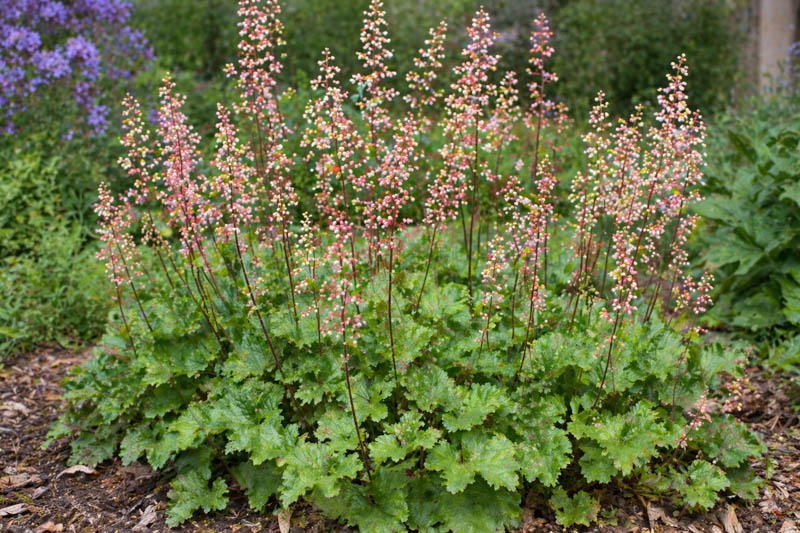


Heuchera maxima, commonly known as Island Alum Root, Island Alumroot, Channel Islands Coral Bells, or Jill of the Rocks, is a handsome California native perennial treasured for bold evergreen foliage, graceful spring flowers, and reliable performance in dry shade. Native to California’s Channel Islands, this larger-leaved alum root brings a cool, woodland look to shaded native gardens, oak-edge plantings, coastal landscapes, rock gardens, containers, and low-water borders where texture, wildlife value, and year-round structure matter.
Heuchera maxima is an evergreen, clump-forming California native perennial from the Channel Islands. Grow it in part shade, bright shade, filtered sun, morning sun, or coastal sun, in well-drained soil with low to moderate water. Inland, give it more shade and occasional summer irrigation for best appearance. It is especially useful under oaks, in dry shade gardens, pollinator plantings, containers, and native borders.
Use: Excellent for California native gardens, dry shade, oak understories, woodland edges, containers, coastal gardens, rock gardens, pollinator gardens, and low-water borders.
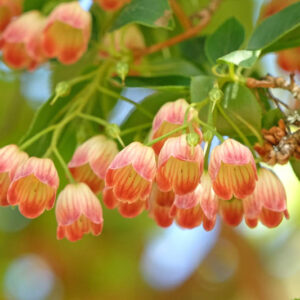
Highlight: Large rounded evergreen leaves, softly scalloped edges, and airy pinkish-white flowers from late winter to spring, usually February-April.
Design note: Use it as a refined foliage mound in shade, then let the slender bloom stems rise lightly above nearby sages, irises, sedges, and low native shrubs.
| Botanical Name | Heuchera maxima |
|---|---|
| Family | Saxifrage family (Saxifragaceae) |
| Common Names | Island Alum Root, Island Alumroot, Channel Islands Coral Bells, Jill of the Rocks |
| Native Range | California Channel Islands, especially rocky slopes, canyon cliffs, coastal sage scrub, chaparral edges, and shaded island habitats |
| Native U.S. States | California |
| Plant Type | Evergreen native perennial; rhizomatous, clump-forming, and foliage-forward |
| Hardiness | Commonly grown in USDA Zones 8-10; often listed as hardy to about 10-15°F in well-drained, protected sites |
| Height | About 1 ft. tall in foliage, sometimes taller in lush sites; flower stems commonly rise 18-24 in. above the foliage |
| Spread | About 1-3 ft. wide, depending on shade, water, age, and soil |
| Sun Exposure | Coastal sun to part shade; inland gardens usually need afternoon shade, bright shade, or filtered light |
| Soil | Well-drained soil; tolerates rocky, sandy, loamy, and some clay soils if drainage is adequate |
| Bloom Time | Late winter to spring, typically February-April; bloom may extend with mild conditions and light irrigation |
| Flower Color | Pink, pinkish white, creamy white, or white lightly flushed with rose or green |
| Foliage | Evergreen, bright to deep green, rounded, lobed, scalloped, softly hairy, and long-petioled |
| Drought Tolerant | Yes, once established, especially in shade; looks best with occasional summer water in dry inland gardens |
| Deer Resistant | Variable; may be browsed where deer pressure is high, especially young leaves and flower stems |
| Attracts | Hummingbirds, bees, butterflies, beneficial insects, and other pollinators |
| Pet and Child Safety | Grown as an ornamental and habitat perennial. Do not encourage pets or children to chew leaves, flowers, or roots. |
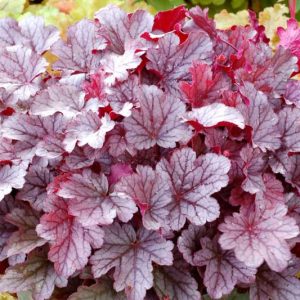
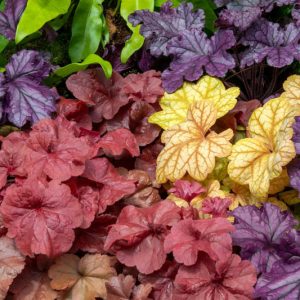
Island Alum Root is a large, bold native member of the genus Heuchera, commonly called coral bells or alumroot. While many hybrid coral bells are grown for dramatic purple, caramel, silver, or chartreuse foliage, Heuchera maxima has a quieter and more natural beauty. It offers large green leaves, an evergreen presence, and delicate flower sprays that feel perfectly at home in California native gardens.
The name maxima is well deserved. This is among the larger alum roots, forming broad hummocks of foliage that can visually anchor a shaded planting. It is lush without being thirsty, showy without being flashy, and tough enough for dry shade when planted thoughtfully.
Good to know: Island Alum Root is especially useful in the tricky garden zone between “too shady for many flowers” and “too dry for ordinary shade perennials.” Give it drainage, filtered light, and occasional water, and it can look polished for much of the year.
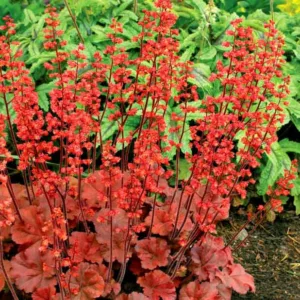
Heuchera maxima forms a rhizomatous clump of large, rounded, lobed leaves held on long petioles. The leaves are green, softly hairy, and scalloped along the edges, creating a fresh mound that reads well even when the plant is not flowering. In late winter and spring, upright flower stems rise above the foliage and carry small pink, pinkish-white, creamy white, or lightly green-flushed flowers. The bloom is airy and elegant rather than dense, making the plant easy to weave through native borders and shade gardens.
Island Alum Root is native to California and is associated with the Channel Islands, where it grows in rocky, coastal, canyon, cliff, coastal sage scrub, and chaparral-edge habitats. Its island origin explains much of its garden personality: it tolerates mild coastal sun, appreciates good drainage, handles seasonal dryness once rooted, and performs beautifully in bright shade or part shade.
Heuchera maxima typically blooms from late winter through spring, especially February, March, and April. In mild gardens with a little water, flowering may linger beyond the main bloom window, but the dependable core season is late winter to spring. That timing is valuable because the flowers provide early-season nectar before many summer perennials are active.
The foliage is the real engine of the plant. Island Alum Root creates a rounded evergreen mound that softens rocks, path edges, containers, shaded slopes, and the front of native shrub borders. The leaves may look freshest with occasional water, especially inland, but established plants can tolerate drier conditions in shade. If older leaves become tired in late winter, trim them selectively as new growth begins.
In gardens, Island Alum Root usually forms foliage mounds about 1 ft. tall and 1-3 ft. wide. Flower stems rise above the foliage, commonly around 2 ft. tall and sometimes taller in rich, lightly watered garden sites.
Heuchera maxima is best suited to mild-winter gardens and is commonly grown in USDA Zones 8-10. It is often listed as hardy to about 10-15°F where drainage is good and the crown is protected from prolonged wetness. In colder or wetter climates, use raised planting, sharp drainage, and winter airflow. In hot inland climates, choose shade over sun.
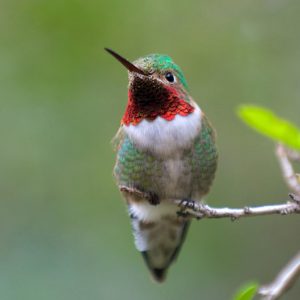
The flowers of Island Alum Root support bees, butterflies, beneficial insects, and hummingbirds. Its evergreen foliage also contributes low cover and structure in layered habitat gardens. For broader habitat planting ideas, see Wildlife-Friendly Plants: Attract Bees, Butterflies & Birds.
Deer resistance is variable. Some gardeners report little damage, while others see browsing on tender new leaves or flower stems. Young plants are most vulnerable. In deer-heavy gardens, protect new plantings until they are well rooted, and explore additional options through deer-resistant plants and rabbit-resistant plants.
Once established, Heuchera maxima is drought tolerant in shade and part shade, but it usually looks best with occasional summer water. Think deep and infrequent, not daily and shallow. In coastal gardens, it may tolerate more sun and less stress. In inland gardens, give it shade and a little supplemental moisture during dry spells. For more water-wise options, explore drought-tolerant plants.
Heuchera maxima is grown as an ornamental and habitat perennial, not as an edible plant. As with most ornamental garden plants, discourage pets and children from chewing leaves, roots, or flowers.
Island Alum Root is not considered invasive in gardens. It slowly enlarges into a clump and can be divided if it becomes crowded or woody. Its restrained habit makes it useful in mixed native plantings where aggressive spread would be a problem.
Island Alum Root does not need rich feeding. A light layer of compost, leaf mold, or natural mulch is usually enough. Heavy fertilizer can push soft growth that is more vulnerable to heat stress, browsing, and crown problems.
Mulch lightly to conserve soil moisture and moderate soil temperature. Keep mulch away from the crown. This one detail matters: a buried crown in damp soil is far more likely to rot than a crown with good airflow.
Design tip:
Plant Heuchera maxima in drifts under oaks, along shaded paths, or beside boulders. The rounded foliage gives calm structure, while the late-winter and spring flower stems add lift, movement, and pollinator value.
Remove spent flower stems after bloom to keep plants tidy. Trim old, scorched, or winter-worn leaves in late winter or after the main flowering period. Avoid cutting deeply into the crown.
Mature clumps can be divided every few years if they become woody, crowded, or open in the center. Divide in fall or early spring, replant vigorous sections into well-drained soil, and water deeply while they reestablish.
Heuchera maxima is excellent in containers for shaded patios, native plant collections, and entry gardens. Use a wide pot, provide excellent drainage, and water when the upper soil begins to dry. Containers need more attention than in-ground plantings, but the roots should never sit in water.
Care tip:
The winning formula is shade inland, drainage everywhere, light mulch, and occasional deep watering. Do not bury the crown, overfertilize, or keep the soil constantly wet.
Heuchera maxima struggles in hot inland afternoon sun, reflected heat, compacted soggy soil, and irrigation zones designed for lawns. It may also decline if mulch is piled against the crown. If leaves scorch, increase shade and check watering depth. If the plant collapses at the crown, reduce moisture and improve drainage.
| Task | Best Time |
|---|---|
| Planting | Fall through early spring in mild climates. |
| Flowering | Late winter to spring, typically February-April. |
| Pruning | After flowering, with light cleanup again in late winter if needed. |
| Division | Fall or early spring. |
| Watering | Regular during establishment; occasional after establishment, especially inland. |
Heuchera maxima can be propagated by seed or division. Division is the easiest method for gardeners because it preserves the parent plant and refreshes older clumps. For restoration, conservation, or habitat-sensitive projects, use reputable native plant nurseries and avoid collecting from wild populations.
Leaf scorch usually means too much sun, reflected heat, dry wind, or insufficient establishment water. Inland plants often need more shade than coastal plants.
Crown rot is usually caused by poor drainage, overwatering, or mulch piled against the plant. Keep the crown slightly exposed and avoid soggy soil.
Sparse growth can occur in very deep shade, very dry conditions, or older clumps that need division. Improve bright shade, water deeply during dry spells, or divide tired clumps.
Poor bloom may result from heavy shade, drought stress during bud development, immaturity, or pruning before flower stems emerge. Prune after the main bloom period, not before.
Fast diagnostic: Brown edges suggest sun or drought stress. A soft crown suggests excess moisture. Weak bloom often means too much shade, a young plant, or pruning at the wrong time.
Island Alum Root is generally low-maintenance when planted correctly. Watch for aphids on tender growth, slugs or snails in damp shade, and occasional fungal leaf spotting where airflow is poor. Root rot is the most serious avoidable problem and is usually linked to soggy soil or a buried crown.
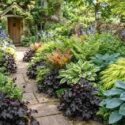
Use Heuchera maxima where you want a natural, polished, evergreen ground layer. It looks especially good beneath coast live oak, beside shaded paths, at the base of boulders, in containers, and in front of native shrubs. Its rounded leaves contrast beautifully with narrow iris foliage, fine-textured grasses, aromatic sages, and glossy shrubs.
Choose companion plants that match Heuchera maxima in hardiness, part shade to bright shade exposure, well-drained soil, and low to occasional moisture once established.
Companion plants: Catalina Currant (Ribes viburnifolium), Hummingbird Sage (Salvia spathacea), Douglas Iris (Iris douglasiana), California Fescue (Festuca californica), Foothill Sedge (Carex tumulicola), Western Sword Fern (Polystichum munitum) in moister shade, California Coffeeberry (Frangula californica), Toyon (Heteromeles arbutifolia), and Coast Live Oak (Quercus agrifolia) as an overstory tree.
Yes. Heuchera maxima is native to the United States in California, where it is associated with the Channel Islands.
Heuchera maxima usually blooms from late winter to spring, especially February through April. In mild, lightly watered gardens, some bloom may linger beyond the main season.
Island Alum Root usually forms foliage mounds about 1 to 2 feet tall and 1 to 3 feet wide. Flower stems rise above the foliage, commonly around 2 feet tall and sometimes taller in favorable garden conditions.
Yes. Island Alum Root grows well in part shade, bright shade, filtered sun, and morning sun. Coastal plants can tolerate more sun, while inland plants usually need more shade.
Yes. In mild climates, Heuchera maxima is usually evergreen, forming broad mounds of rounded green foliage. Older leaves can be trimmed when they become tired or scorched.
Yes, once established, especially in shade or part shade. It is drought tolerant but usually looks best with occasional deep watering during dry summer weather.
Yes. Heuchera maxima is a good choice for oak-edge and dry-shade plantings, provided the soil drains well and frequent summer irrigation is avoided.
Yes. The pink to pinkish-white flowers attract hummingbirds, bees, butterflies, and beneficial insects, especially during the late-winter to spring bloom season.
Updated: April 2026 • Reviewed by Gardenia Editors
| Hardiness |
8 - 10 |
|---|---|
| Plant Type | Perennials |
| Plant Family | Saxifragaceae |
| Genus | Heuchera |
| Common names | Alum Root, Coral Bells |
| Exposure | Full Sun, Partial Sun, Shade |
| Season of Interest | Spring (Early, Mid, Late), Summer (Early, Mid, Late), Fall, Winter |
| Height | 1' - 2' (30cm - 60cm) |
| Spread | 2' - 3' (60cm - 90cm) |
| Spacing | 36" (90cm) |
| Maintenance | Low |
| Water Needs | Low, Average |
| Soil Type | Loam, Sand, Chalk, Clay |
| Soil pH | Neutral, Acid |
| Soil Drainage | Moist but Well-Drained |
| Characteristics | Cut Flowers, Showy, Evergreen |
| Native Plants | United States, California |
| Tolerance | Full Shade, Drought, Dry Soil, Rocky Soil, Rabbit, Salt, Clay Soil |
| Attracts | Bees, Butterflies, Hummingbirds |
| Garden Uses | Beds And Borders, Ground Covers, Patio And Containers |
| Garden Styles | Butterfly Garden, Coastal Garden, Informal and Cottage, Pollinator Garden, Woodland Garden |


| Hardiness |
8 - 10 |
|---|---|
| Plant Type | Perennials |
| Plant Family | Saxifragaceae |
| Genus | Heuchera |
| Common names | Alum Root, Coral Bells |
| Exposure | Full Sun, Partial Sun, Shade |
| Season of Interest | Spring (Early, Mid, Late), Summer (Early, Mid, Late), Fall, Winter |
| Height | 1' - 2' (30cm - 60cm) |
| Spread | 2' - 3' (60cm - 90cm) |
| Spacing | 36" (90cm) |
| Maintenance | Low |
| Water Needs | Low, Average |
| Soil Type | Loam, Sand, Chalk, Clay |
| Soil pH | Neutral, Acid |
| Soil Drainage | Moist but Well-Drained |
| Characteristics | Cut Flowers, Showy, Evergreen |
| Native Plants | United States, California |
| Tolerance | Full Shade, Drought, Dry Soil, Rocky Soil, Rabbit, Salt, Clay Soil |
| Attracts | Bees, Butterflies, Hummingbirds |
| Garden Uses | Beds And Borders, Ground Covers, Patio And Containers |
| Garden Styles | Butterfly Garden, Coastal Garden, Informal and Cottage, Pollinator Garden, Woodland Garden |
How many Heuchera maxima (Island Alum Root) do I need for my garden?
| Plant | Quantity | |
|---|---|---|
| Heuchera maxima (Island Alum Root) | N/A | Buy Plants |
Create a membership account to save your garden designs and to view them on any device.
Becoming a contributing member of Gardenia is easy and can be done in just a few minutes. If you provide us with your name, email address and the payment of a modest $25 annual membership fee, you will become a full member, enabling you to design and save up to 25 of your garden design ideas.
Join now and start creating your dream garden!
Create a membership account to save your garden designs and to view them on any device.
Becoming a contributing member of Gardenia is easy and can be done in just a few minutes. If you provide us with your name, email address and the payment of a modest $25 annual membership fee, you will become a full member, enabling you to design and save up to 25 of your garden design ideas.
Join now and start creating your dream garden!