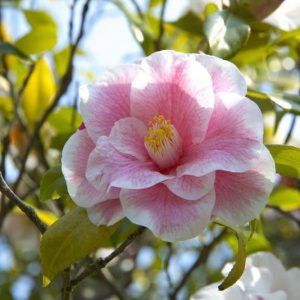
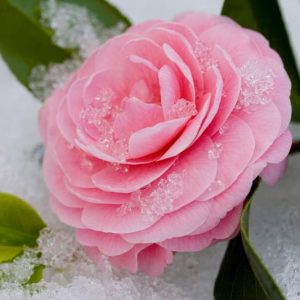
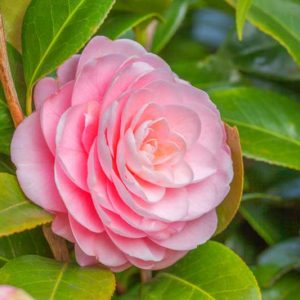
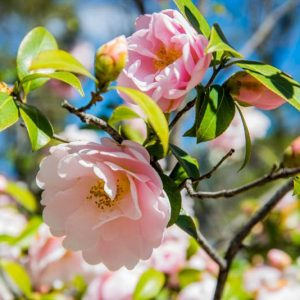
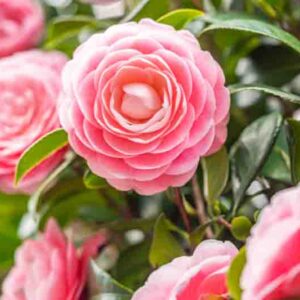
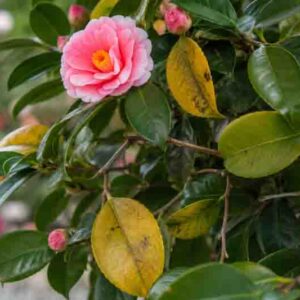
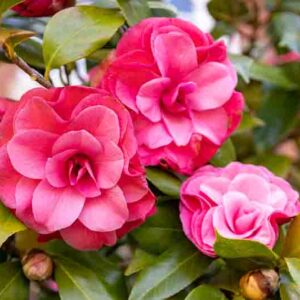
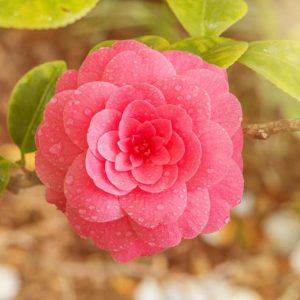
Camellias become even more beautiful when surrounded by compatible trees, shrubs, perennials, ferns, grasses, and bulbs. Discover the best companions for acidic soil and partial shade, compare their seasonal benefits, explore four planting recipes, and learn which aggressive, sun-loving, or moisture-competing plants should be kept away from camellia roots.
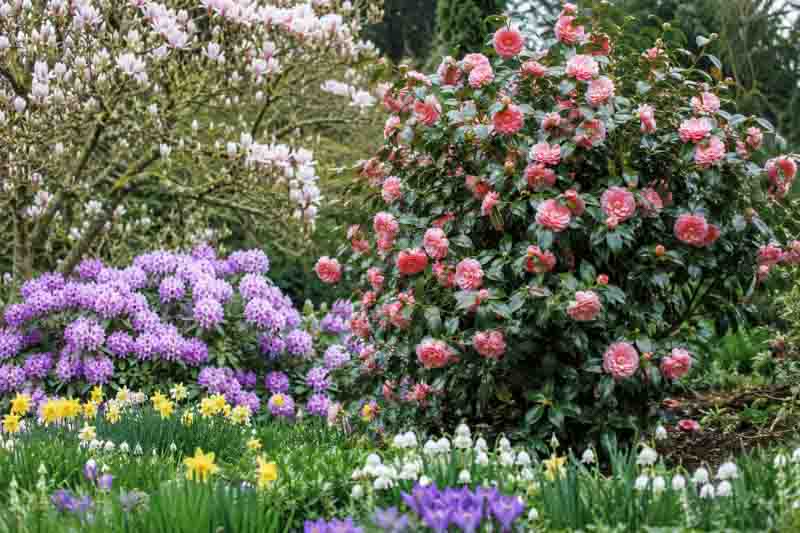


Camellias are spectacular in flower and handsome throughout the year, but the most memorable camellia gardens rarely rely on one shrub alone. Carefully chosen companion plants can frame the blooms, soften bare ground, extend seasonal color, add fragrance and movement, and turn glossy evergreen camellias into the backbone of a complete garden design.
The best camellia companions are not simply plants that look attractive nearby. They should also tolerate the same fundamental conditions: acidic to mildly acidic soil, partial or dappled shade, dependable moisture, good drainage, and protection from harsh afternoon sun or drying wind.
Successful combinations also respect the camellia’s relatively shallow root system. Avoid crowding the base with aggressive spreaders, thirsty shrubs, or large woody plants that compete heavily for water. Instead, layer compatible plants around the camellia according to height, flowering season, foliage texture, and mature spread.
This guide compares the best trees, shrubs, perennials, ferns, grasses, groundcovers, and bulbs to grow with camellias. It also includes practical planting combinations, root-aware spacing advice, and plants that may look appealing but are often poor partners in real gardens.
The best companion is compatible before it is beautiful. Match soil, light, moisture, climate, and mature size first. Then select flower colors and foliage textures that complement the camellia.
Camellias are broadleaf evergreen shrubs with dense, glossy foliage and a comparatively shallow root system. Their companions should enhance the planting without smothering the shrub, blocking airflow, or competing excessively for moisture.
Camellias perform best in acidic to mildly acidic, humus-rich soil. Acid-loving shrubs such as rhododendrons, azaleas, pieris, and mountain laurel are natural companions because they respond well to similar soil conditions.
Many woodland perennials are less dependent on strongly acidic soil but still grow successfully in the organically enriched, moisture-retentive ground that suits camellias. Hellebores are a good example: they share the right shade and moisture requirements but generally prefer mildly acidic to neutral soil rather than strongly ericaceous conditions.
Most japonicas and hybrids flower best in partial shade or bright filtered light. Suitable companions should also tolerate shade without becoming thin, floppy, or reluctant to bloom.
Fall-flowering sasanquas tolerate more sun once established, so their companion palette can include plants needing brighter conditions. Always match the companion to the actual exposure rather than treating every camellia bed alike.
The ideal planting remains evenly moist but never waterlogged. Ferns, pieris, astilbes, hostas, and many woodland plants enjoy these conditions. Hellebores also appreciate humus-rich, moist but well-drained soil where the pH is suitable.
Avoid mixing camellias with drought-loving plants that require dry soil, or with bog plants that need permanently saturated ground.
Companions should remain sufficiently well behaved that they do not invade the camellia’s crown or form a dense mat directly over its roots. Vigorous groundcovers can sometimes be used toward the outer edge of the planting, but they require monitoring.
| Companion Group | Best Choices | Seasonal Contribution | Best Position | Important Caution |
|---|---|---|---|---|
| Small trees | Japanese maple, star magnolia | Spring flowers, graceful structure, fall color | Behind or offset from the camellia | Allow generous root and canopy space |
| Acid-loving shrubs | Rhododendron, azalea, pieris, mountain laurel | Spring flowers and evergreen structure | Alongside or behind smaller camellias | Check mature width before planting |
| Summer shrubs | Hydrangea, oakleaf hydrangea | Summer flowers and fall foliage | Where soil remains moist | Do not crowd or allow severe moisture competition |
| Winter-fragrant shrubs | Sweet box, witch hazel | Winter fragrance and flowers | Near paths or entrances | Witch hazels eventually need substantial room |
| Winter and spring perennials | Epimedium, pulmonaria, brunnera, bergenia, hellebore | Flowers during and after camellia season | Foreground and path edges | Check soil pH for hellebores and keep crowns clear |
| Summer perennials | Astilbe, hosta, heuchera | Summer color and foliage | Moist, shaded foreground | Astilbe declines in dry soil |
| Ferns and grasses | Woodland ferns, Hakone grass, sedges | Texture, movement, and long foliage interest | Foreground and sweeping drifts | Choose shade-tolerant species, not sun grasses |
| Bulbs and tubers | Snowdrop, hardy cyclamen, daffodil, crocus, erythronium | Fall, winter, and early-spring flowers | Small groups between larger plants | Use species suited to woodland or partial shade |
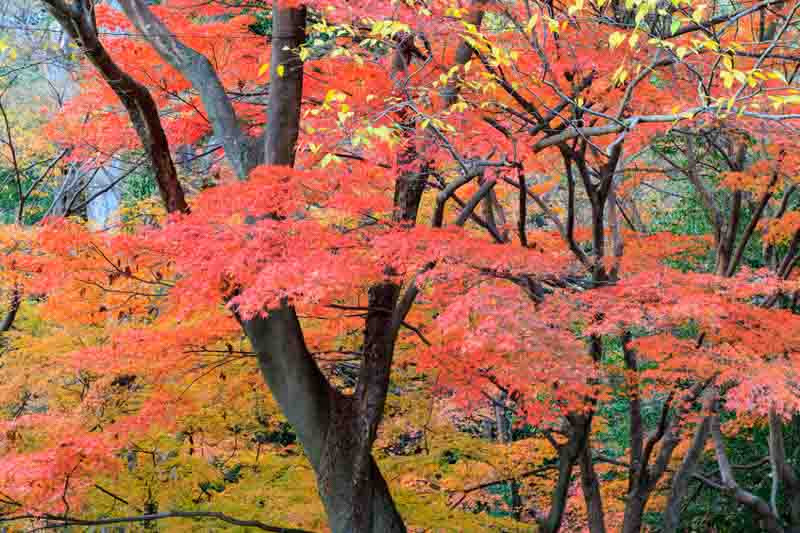
Japanese maples and other ornamental maples add delicate branching, finely divided leaves, autumn color, and sometimes ornamental bark. Their airy structure contrasts beautifully with the dense, rounded foliage of camellias.
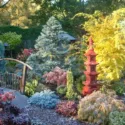
Use compact or moderate-sized maples and position them far enough away that their roots and canopy do not overwhelm the camellia. Red, gold, or copper-leaved cultivars create especially rich combinations with white or pale-pink camellia flowers.
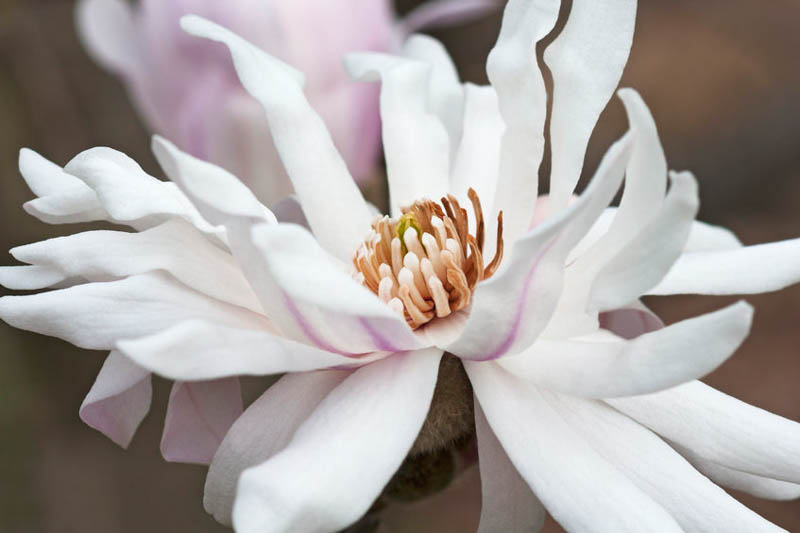
Magnolias provide dramatic spring flowers above camellias and can extend the display after early camellia blooms begin to fade. Star magnolia and other smaller deciduous selections are generally easier to combine in an average garden than large tree magnolias.
Do not plant a large magnolia immediately beside an established camellia. Both plants need adequate root space, moisture, and airflow.
Tree-placement rule: Use the tree as an overhead or background layer, not as a close neighbor planted into the camellia’s root ball. Mature canopy and root spread matter more than the tree’s size at purchase.
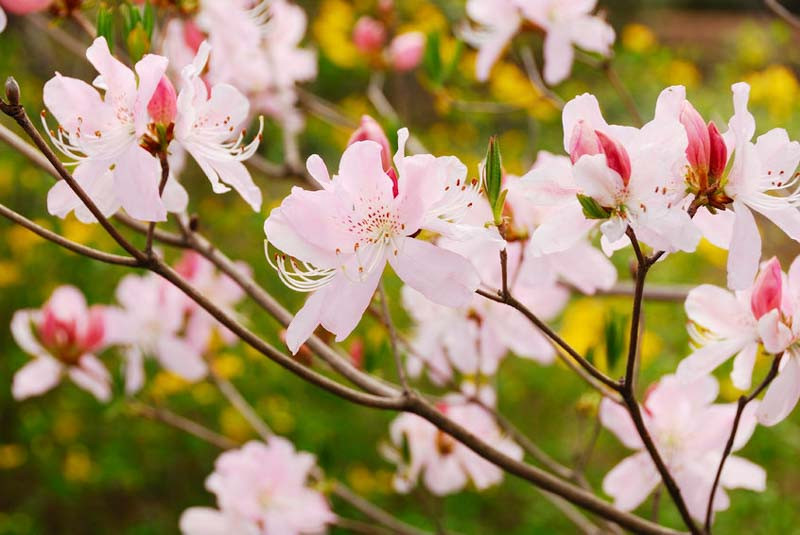
Rhododendrons and azaleas are among the most compatible camellia companions. They share a preference for acidic, humus-rich, moisture-retentive but well-drained soil and partial shade.
Evergreen rhododendrons reinforce the garden’s structure, while deciduous azaleas introduce lighter foliage, fragrance, and fall color. Their spring flowering generally follows or overlaps the later camellia season.
Choose compact cultivars for the foreground and reserve large rhododendrons for the background. Do not assume that all rhododendrons remain small.
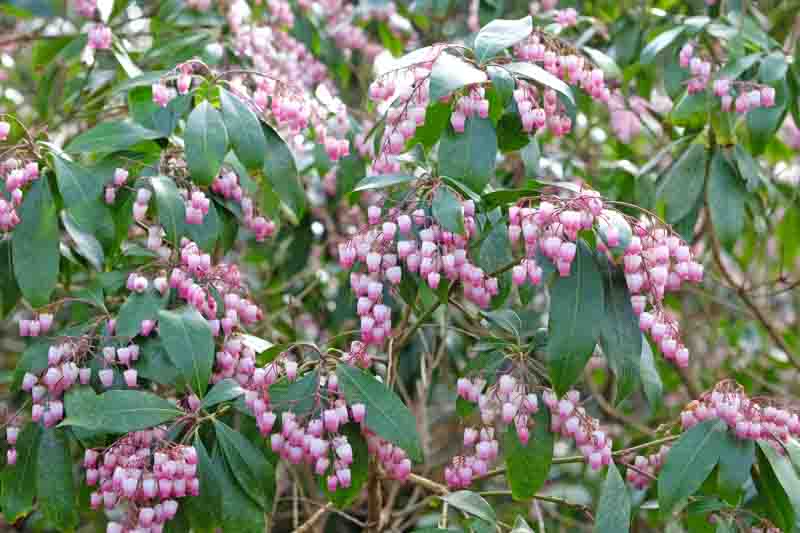
Japanese pieris is one of the strongest all-season camellia partners. It combines evergreen foliage, cascading spring flowers, and vivid red, bronze, or copper new growth.
Both plants appreciate acidic soil, filtered light, regular moisture, and protection from intense afternoon heat. Dwarf pieris cultivars are useful near smaller camellias and in container combinations.
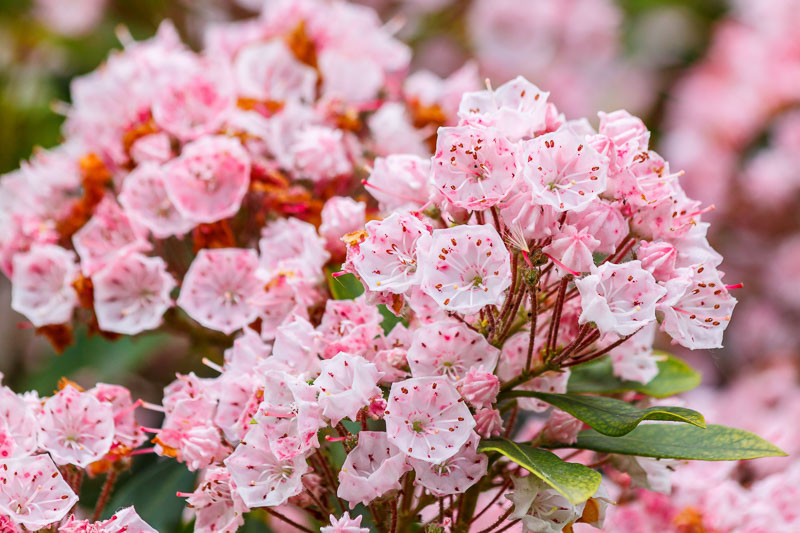
Mountain laurel provides leathery evergreen foliage and intricately patterned spring flowers. It enjoys acidic, well-drained soil and woodland conditions but dislikes wet or compacted ground.
Use a compact cultivar where available because mature mountain laurels can become substantial shrubs.
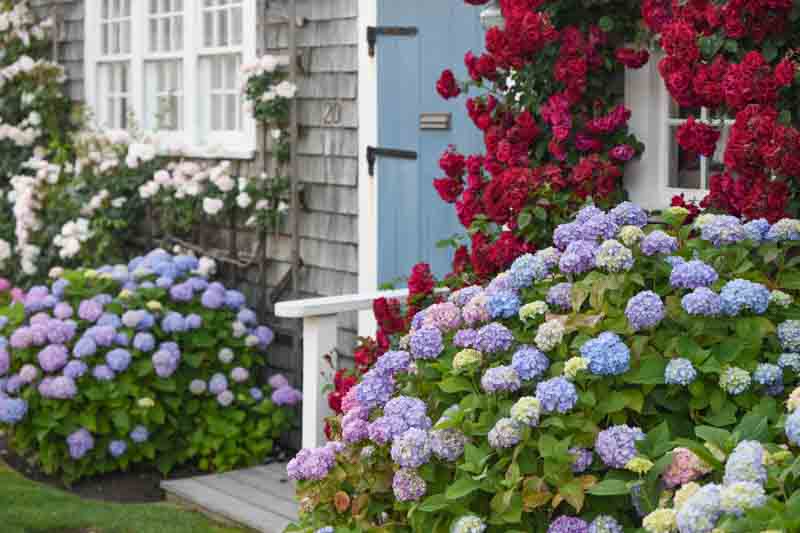
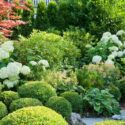
Hydrangeas extend the display into summer, when camellias are valued mainly for their foliage. Lacecap, mophead, mountain, and oakleaf hydrangeas can all work, provided the site offers enough moisture and the selected cultivar tolerates the available shade.
Oakleaf hydrangeas are especially valuable for their textured leaves, fall color, and peeling bark. Give vigorous hydrangeas enough room so they do not engulf the camellia.
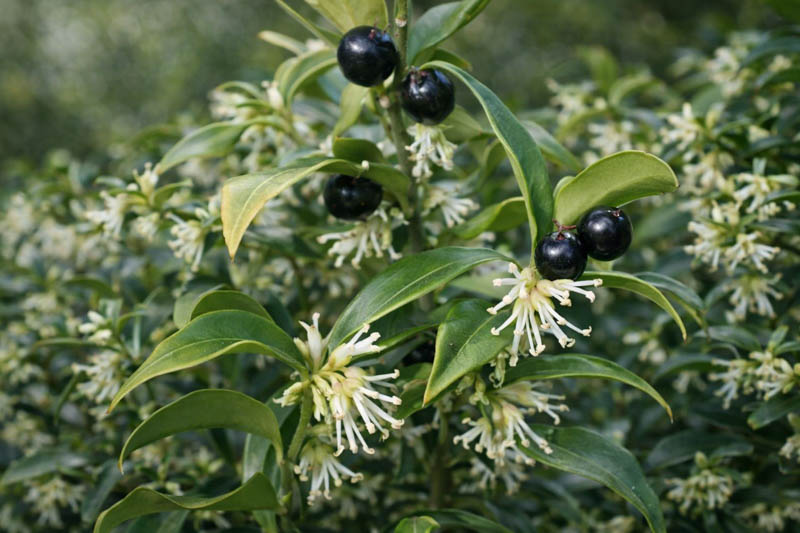
Sweet box is a compact evergreen shrub for partial to full shade. Its small winter flowers produce intense fragrance, while its glossy foliage quietly complements camellia leaves.
Plant sweet box near a path, doorway, or seating area. It works particularly well beneath tall, open camellias, but should not be packed against their trunks.
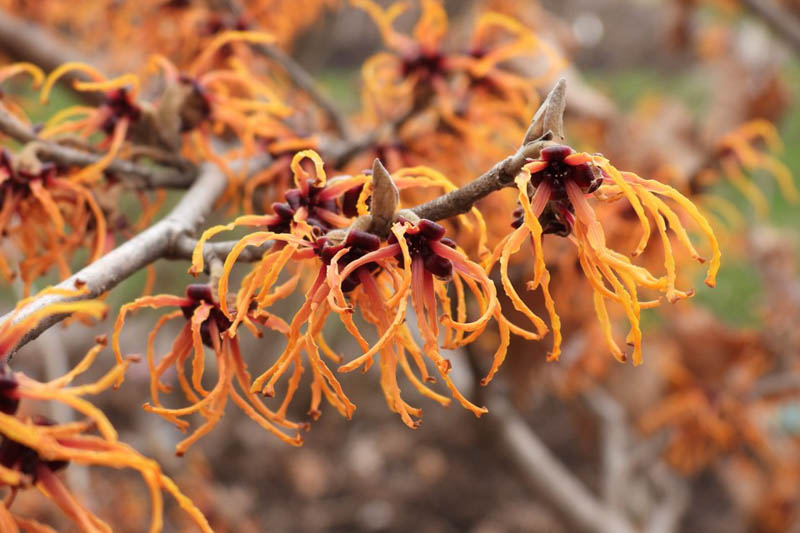
Witch hazel contributes fragrant ribbon-petaled flowers and strong fall color. Its open deciduous structure creates an effective contrast with evergreen camellias.
Most witch hazels eventually become large shrubs or small trees. Position them as a background layer rather than as close underplanting.
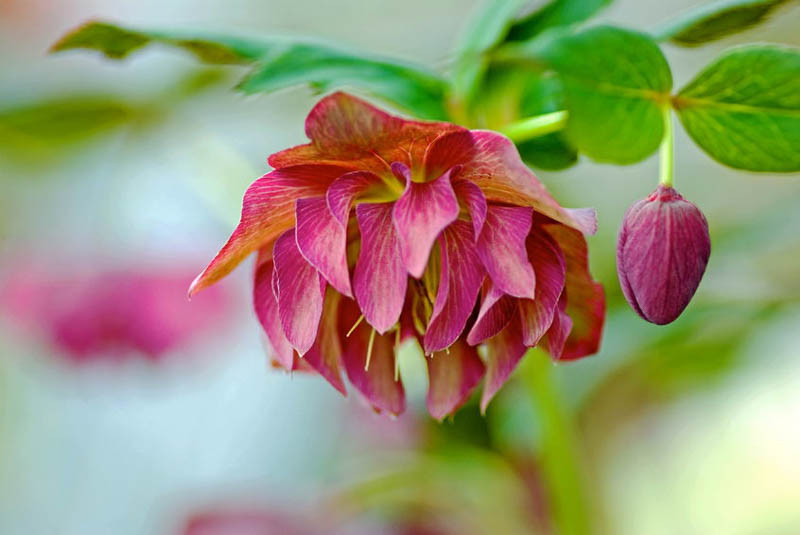
Hellebores are excellent seasonal companions because they flower during winter and early spring, often alongside japonicas and hybrids. They perform best in humus-rich, moist but well-drained soil that is mildly acidic to neutral. In strongly acidic camellia beds, check the soil pH before planting them.
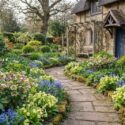
Their nodding flowers fill the foreground beneath camellias, while their divided foliage remains attractive for much of the year. White, blush, burgundy, yellow, and speckled hellebores can echo or contrast with the camellia flowers above.
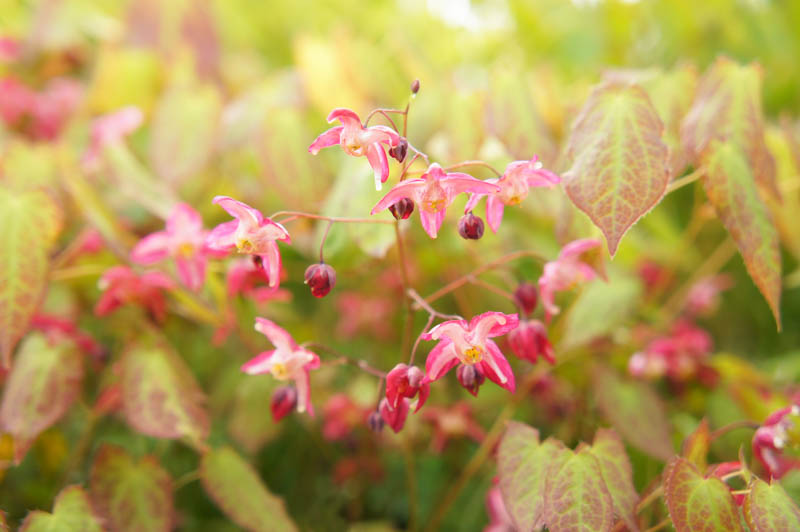
Epimedium is one of the most useful ground-level companions for woodland camellia beds. It offers delicate spring flowers, attractive foliage, and tolerance of shade.
Some species cope with drier shade once established, making them useful near the outer edge of a mature camellia’s canopy. Avoid planting directly against the trunk.
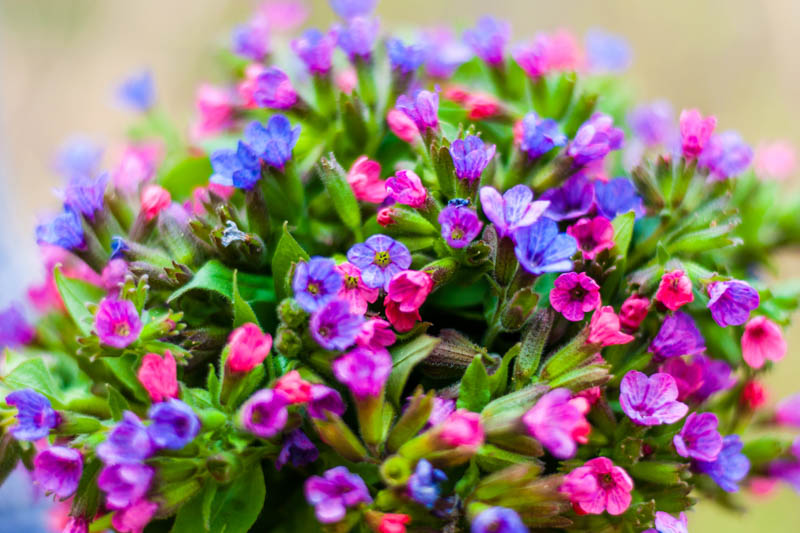
Pulmonaria and brunnera provide silver-marked leaves and blue, pink, or white spring flowers. Their cool foliage colors contrast beautifully with deep-green camellia leaves.
They grow best in organic soil with consistent moisture and protection from hot afternoon sun.
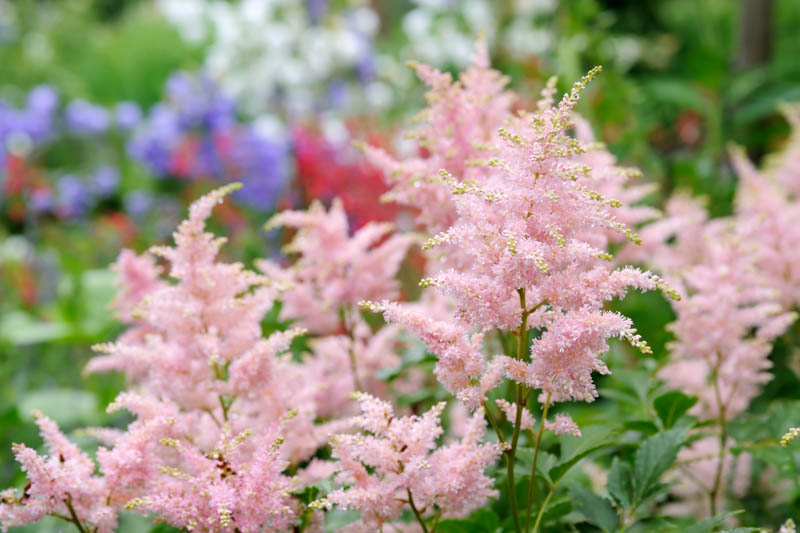
Astilbes extend the garden into late spring and summer with feathery flower plumes. They are particularly useful in cool, moist shade.
Astilbes are poor choices where the camellia bed becomes dry in summer. Use them only where irrigation or naturally retentive soil provides dependable moisture.
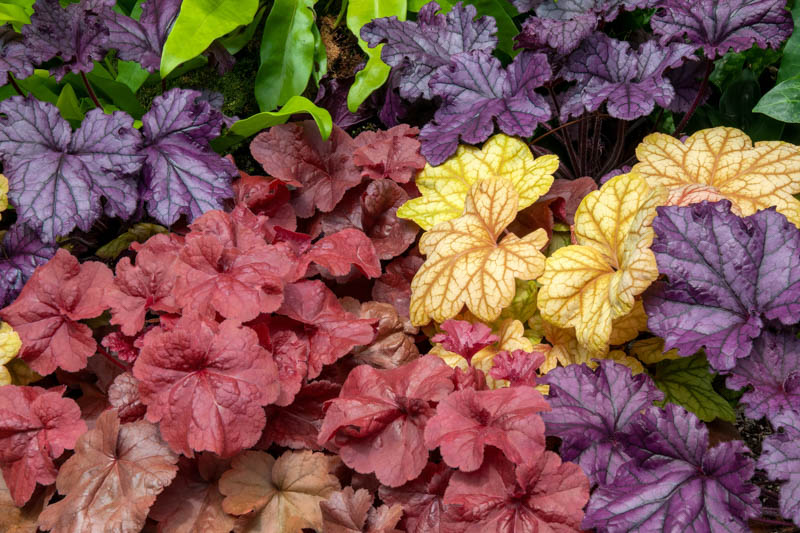
Hostas add bold foliage, while heucheras introduce mounds of purple, bronze, caramel, lime, silver, or green leaves.
These plants are especially effective around tall camellias with visible lower trunks. Select cultivars that tolerate the local heat, humidity, and light levels.
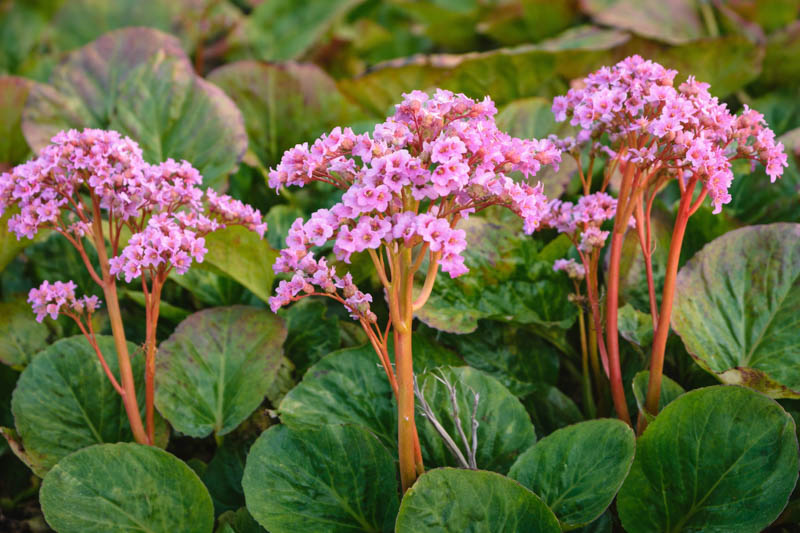
Bergenia contributes large, rounded evergreen or semi-evergreen leaves and spring flower clusters. In cool climates, its foliage may turn bronze, burgundy, or red during winter.
Its broad leaves create an attractive visual bridge between camellias and finer-textured ferns or grasses.
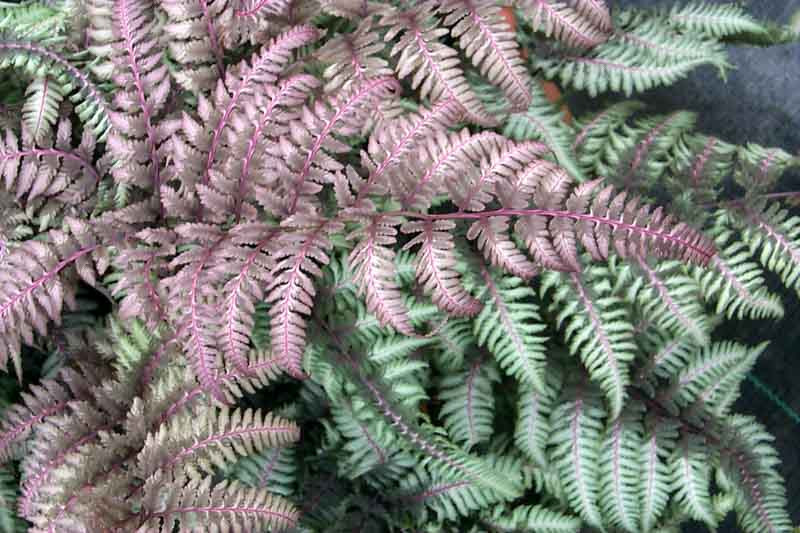
Ferns are among the most dependable foliage companions for camellias. Their arching fronds introduce softness and movement beneath the shrub’s glossy evergreen leaves.
Good choices include Japanese painted fern, autumn fern, lady fern, Christmas fern, and other species suited to the site’s climate and moisture.
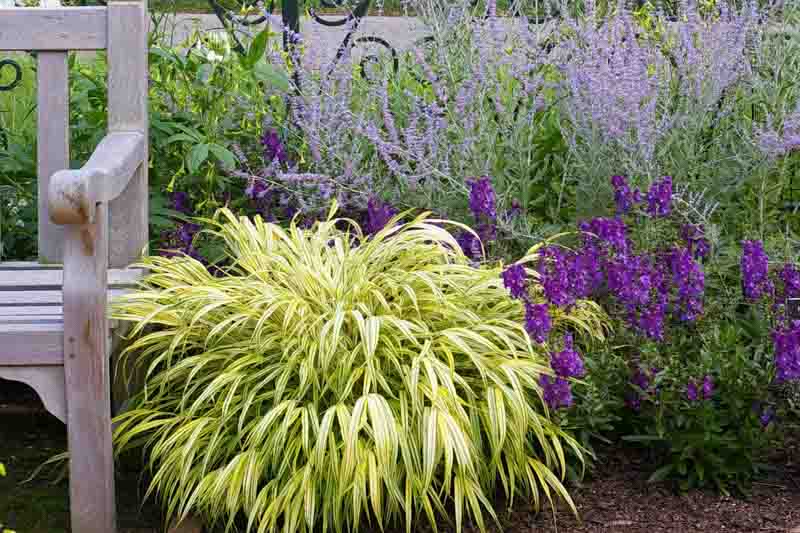
Hakonechloa macra ‘Aureola’ forms cascading mounds of golden-striped leaves that illuminate partial shade. Its flowing habit contrasts with the solid evergreen mass of a camellia.
Use it along paths, slopes, or the front of a border where the leaves can arch naturally. It prefers moist, well-drained soil and may struggle where summers are hot and dry.
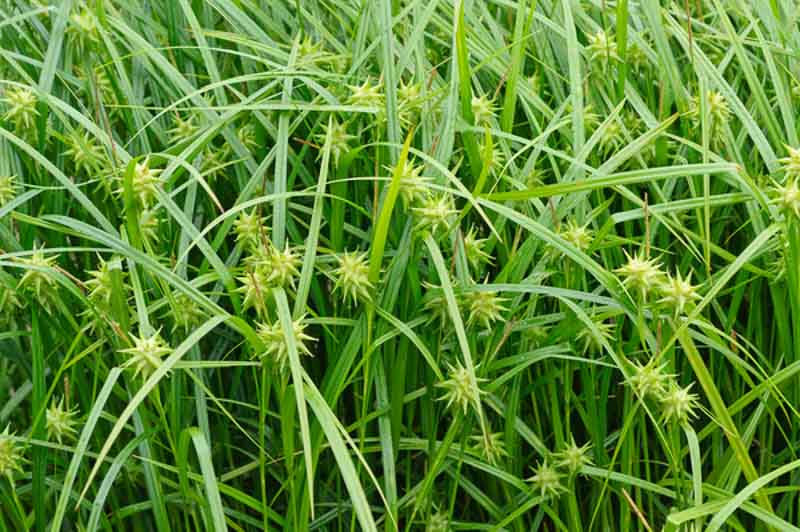
Carex species and cultivars provide grassy texture without requiring the full sun preferred by many ornamental grasses. Evergreen or variegated sedges can edge a camellia border and provide year-round continuity.
Choose non-invasive, clump-forming selections adapted to local conditions.
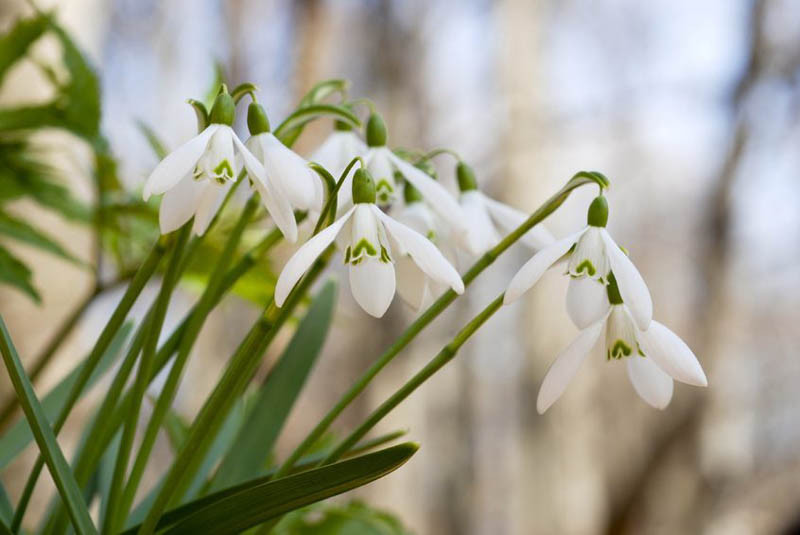
Snowdrops bloom beneath camellias in late winter and early spring. Their white flowers create an elegant echo beneath white, pink, or red camellia blooms.
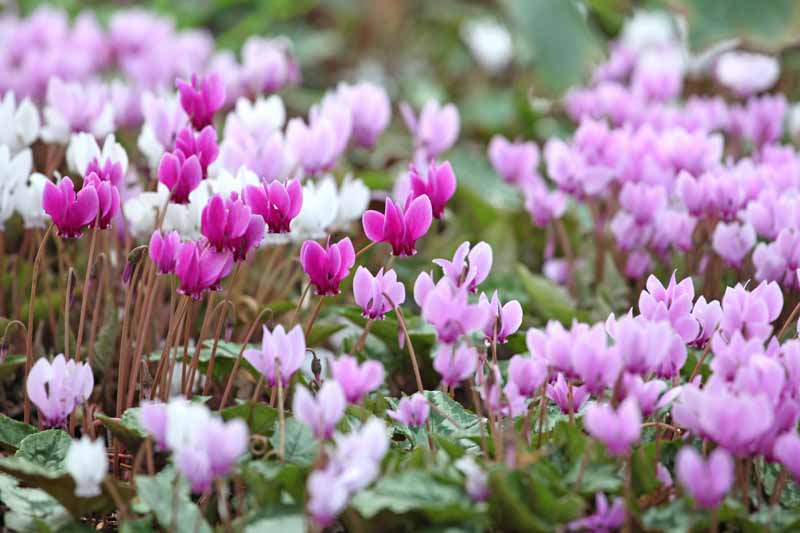
Hardy cyclamen are excellent for well-drained shade. Cyclamen hederifolium supplies fall flowers and patterned leaves, while Cyclamen coum blooms during winter and early spring.
They are especially effective beneath deciduous companions and around the outer canopy of established camellias.
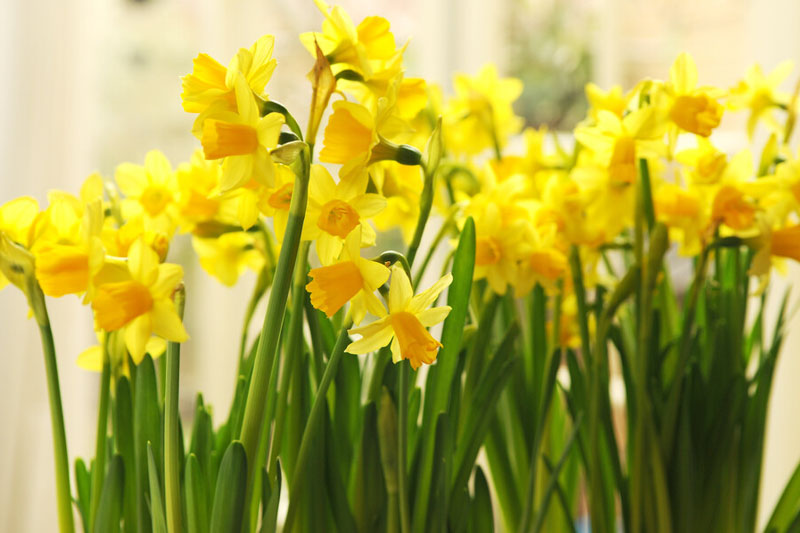
Daffodils provide dependable spring color and are generally avoided by deer and rodents. Smaller or woodland-tolerant varieties integrate more naturally beneath camellias than tall, formal bedding types.
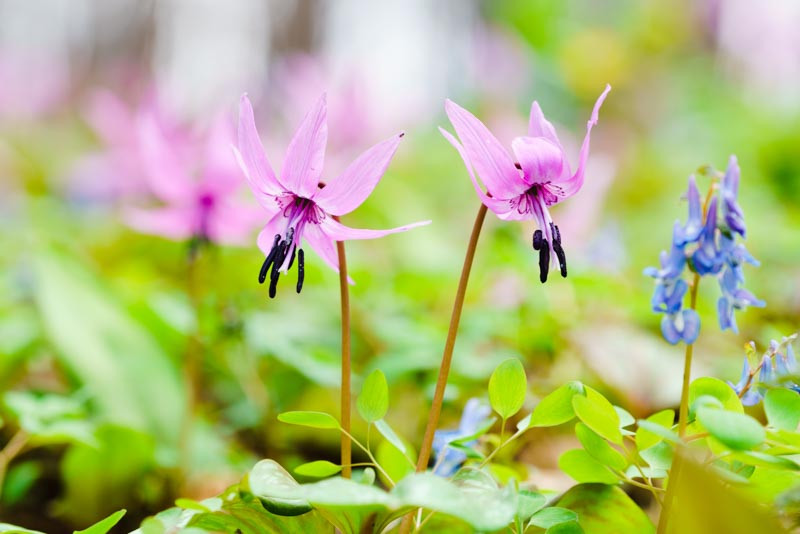
Woodland-tolerant crocuses add small bursts of early color, while woodland erythroniums produce elegant swept-back flowers and mottled leaves.
Plant bulbs in loose groups rather than isolated straight lines. Allow their foliage to mature naturally after flowering.
Camellia japonica + hellebores + snowdrops + sweet box + evergreen ferns
This combination layers camellia flowers above hellebores and snowdrops, with sweet box supplying fragrance and ferns maintaining foliage interest. Use hellebores where the soil is only mildly acidic rather than strongly ericaceous.
Camellia + Japanese maple + rhododendron + epimedium + Hakone grass
The maple provides height and fall color, rhododendrons continue the spring display, and the lower layer adds movement and ground-level texture.
Camellia + pieris + hydrangea + pulmonaria + astilbe + fern
Pieris and pulmonaria follow the camellia in spring, astilbe and hydrangea add summer flowers, and ferns connect the entire composition. This combination needs dependable summer moisture.
Compact camellia + dwarf pieris + hellebore + heuchera + hardy cyclamen
This restrained palette provides evergreen structure, winter and spring flowers, and contrasting foliage without requiring a large border. Check that the soil is not excessively acidic before adding the hellebore.
Large magnolias, witch hazels, rhododendrons, and hydrangeas may look compatible when young but can eventually shade, crowd, or compete with the camellia. Check mature dimensions rather than nursery size.
Japanese anemones provide beautiful fall flowers, but some cultivars spread rapidly through underground shoots. Use them where expansion is acceptable or select less aggressive forms.
Lily of the valley tolerates shade but can form a dense, difficult-to-control colony. It is also toxic. It is not the best default recommendation for a carefully managed camellia border.
Most sedums prefer bright sun and drier soil than camellias. Many asters also flower poorly in deep shade. Use them only on the bright, well-drained outer edge of a sasanqua planting rather than beneath a shaded japonica.
English ivy, vinca, pachysandra, running bamboo, and other vigorous spreaders may invade the camellia’s base and make watering, feeding, pruning, and disease inspection difficult.
Do not plant directly against the trunk. Leave an open, mulched area around the crown so air can circulate and the root flare remains visible.
Spacing should always reflect the mature plants, visible root structure, and amount of digging required rather than one universal measurement.
The best camellia companions contribute flowers, fragrance, foliage, texture, or movement while tolerating the same shade, moisture, drainage, and acidic to mildly acidic soil conditions.
Japanese maples, magnolias, rhododendrons, azaleas, pieris, ferns, epimedium, astilbes, Hakone grass, hardy cyclamen, and snowdrops are among the most dependable choices. Hellebores are also excellent seasonal partners where the soil is not excessively acidic.
Choose companions by mature size and site compatibility before considering color alone. Leave the camellia’s crown open, avoid aggressive spreaders, and combine plants in layers so the camellia remains the structural centerpiece rather than becoming lost in a crowded border.
Excellent camellia companions include rhododendrons, azaleas, pieris, ferns, epimedium, pulmonaria, brunnera, astilbes, hostas, heucheras, Hakone grass, sedges, snowdrops, hardy cyclamen, and selected daffodils. Hellebores also work where the soil is mildly acidic to neutral.
Rhododendrons, azaleas, Japanese pieris, mountain laurel, hydrangeas, and sweet box are strong choices because they tolerate partial shade and moist, well-drained soil. Check mature dimensions before planting.
Use shade-tolerant plants that require only small planting holes, such as epimedium, hardy cyclamen, small ferns, heucheras, snowdrops, and clump-forming sedges. Plant between visible roots, keep the trunk and crown open, and never cut major camellia roots.
Yes. Both appreciate organic, moisture-retentive but well-drained soil and protection from harsh afternoon sun. Give each shrub sufficient room and provide dependable moisture during summer.
Yes. Rhododendrons and camellias are highly compatible because both prefer acidic, humus-rich soil, partial shade, regular moisture, and good drainage. Select cultivars whose mature sizes fit the available space.
Snowdrops, hardy cyclamen, crocuses, woodland daffodils, and erythroniums are excellent choices. Plant them between visible roots using small holes, and allow their foliage to mature naturally after flowering.
Avoid aggressive groundcovers, running plants, large thirsty shrubs planted too closely, drought-loving plants needing dry soil, and sun-loving perennials that perform poorly in the camellia’s shade.
Keep the trunk and root flare open. Position small plants between visible roots and toward the outer root zone, and space perennials, shrubs, and trees according to their mature width and expected competition for light, water, and root space.
Updated: July 2026 • Reviewed by Gardenia Editors
| Hardiness |
6 - 9 |
|---|---|
| Heat Zones |
7 - 8 |
| Climate Zones | 4, 5, 6, 7, 8, 9, 12, 14, 15, 16, 17, 18, 19, 20, 21, 22, 23, 24 |
| Plant Type | Shrubs |
| Plant Family | Theaceae |
| Genus | Acer, Camellia, Hamamelis, Helleborus, Magnolia |
| Exposure | Full Sun, Partial Sun, Shade |
| Season of Interest | Spring (Early, Mid), Fall, Winter |
| Maintenance | Low |
| Water Needs | Average |
| Soil Type | Clay, Loam, Sand |
| Soil pH | Acid, Neutral |
| Soil Drainage | Moist but Well-Drained, Well-Drained |
| Characteristics | Cut Flowers, Fragrant, Plant of Merit, Showy |
| Landscaping Ideas | Beds And Borders, Hedges And Screens, Patio And Containers, Wall-Side Borders |
| Garden Styles | City and Courtyard, Informal and Cottage, Japanese Garden, Traditional Garden |
| Hardiness |
6 - 9 |
|---|---|
| Heat Zones |
7 - 8 |
| Climate Zones | 4, 5, 6, 7, 8, 9, 12, 14, 15, 16, 17, 18, 19, 20, 21, 22, 23, 24 |
| Plant Type | Shrubs |
| Plant Family | Theaceae |
| Genus | Acer, Camellia, Hamamelis, Helleborus, Magnolia |
| Exposure | Full Sun, Partial Sun, Shade |
| Season of Interest | Spring (Early, Mid), Fall, Winter |
| Maintenance | Low |
| Water Needs | Average |
| Soil Type | Clay, Loam, Sand |
| Soil pH | Acid, Neutral |
| Soil Drainage | Moist but Well-Drained, Well-Drained |
| Characteristics | Cut Flowers, Fragrant, Plant of Merit, Showy |
| Landscaping Ideas | Beds And Borders, Hedges And Screens, Patio And Containers, Wall-Side Borders |
| Garden Styles | City and Courtyard, Informal and Cottage, Japanese Garden, Traditional Garden |
Create a membership account to save your garden designs and to view them on any device.
Becoming a contributing member of Gardenia is easy and can be done in just a few minutes. If you provide us with your name, email address and the payment of a modest $25 annual membership fee, you will become a full member, enabling you to design and save up to 25 of your garden design ideas.
Join now and start creating your dream garden!
Create a membership account to save your garden designs and to view them on any device.
Becoming a contributing member of Gardenia is easy and can be done in just a few minutes. If you provide us with your name, email address and the payment of a modest $25 annual membership fee, you will become a full member, enabling you to design and save up to 25 of your garden design ideas.
Join now and start creating your dream garden!