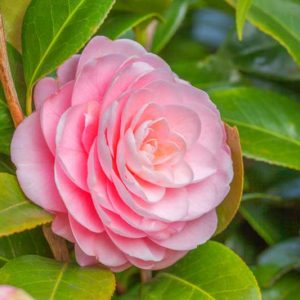
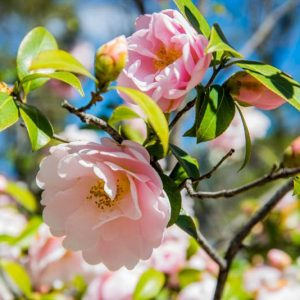
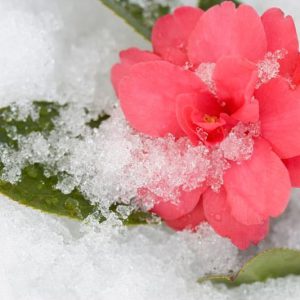
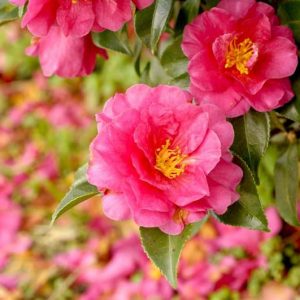
Fragrant camellias pair exquisite cool-season flowers with glossy evergreen foliage and an unexpected perfume. Compare 15 scented hybrids, japonicas, and sasanquas by fragrance, bloom time, flower form, size, and hardiness, then learn where to plant them, how to intensify their scent, and which varieties suit containers, paths, hedges, and borders.
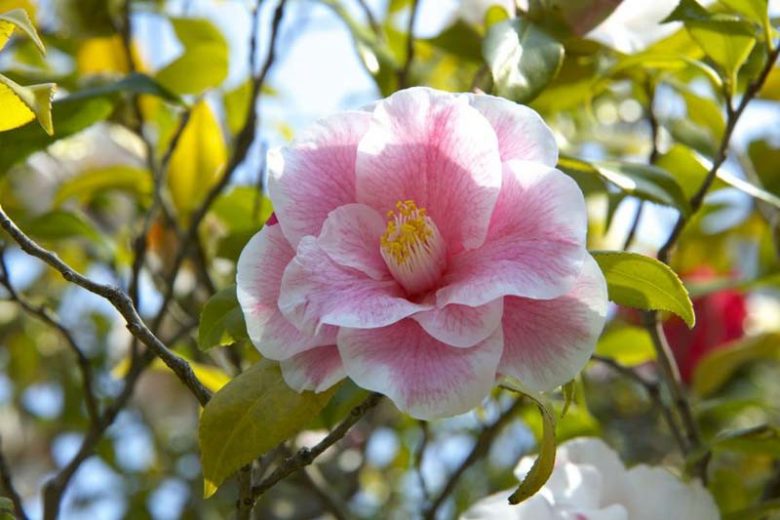


Fragrant camellias combine elegant cool-season flowers with glossy evergreen foliage and an unexpected perfume. Depending on the cultivar, the scent may be sweet, floral, spicy, cinnamon-like, musky, or reminiscent of sweet osmanthus.
Most traditional camellias have little or no noticeable fragrance. Large flowers, vivid color, formal symmetry, heavy bloom production, and strong scent rarely occurred together in early cultivars, so breeders turned to naturally fragrant species to create more garden-worthy scented camellias.
Camellia lutchuensis has been particularly important in this work. Native from southeastern China and Taiwan to Japan’s Nansei-shoto island chain, including the Ryukyu Islands, this small-flowered species contributes an appealing perfume to hybrids such as ‘Cinnamon Cindy’, ‘Fragrant Pink’, ‘Minato-No-Akebono’, ‘Scentuous’, ‘Spring Mist’, and ‘Sweet Emily Kate’.
Several Camellia japonica cultivars also offer mild or noticeable fragrance, including ‘Hermé’, ‘Kramer’s Supreme’, ‘Scentsation’, and ‘Spring Sonnet’. Their flowers are usually much larger than those of lutchuensis hybrids, although their perfume is often more restrained.
Selected Camellia sasanqua cultivars provide another route to scent. ‘Plantation Pink’, ‘Crimson King’, ‘Hugh Evans’, ‘Jean May’, and ‘Kanjiro’ combine fall flowers with a lighter growth habit, faster growth, and greater sun tolerance than most Japanese camellias.
This guide compares 15 fragrant camellias by documented scent, flower character, bloom period, mature size, hardiness, and landscape use. It also explains where to plant them so their perfume can be appreciated rather than dispersed unnoticed in the open garden.
Fragrance is subjective and weather-dependent. A flower that smells clearly fragrant during a mild, still afternoon may seem nearly scentless in cold, windy, or rainy weather. Newly opened, dry flowers usually provide the freshest and most detectable perfume.
Wild camellia species display an enormous range of characteristics. Some possess noticeable fragrance but have relatively small, simple flowers. Others produce large, intensely colored or intricately formed blooms with little or no scent.
For many generations, ornamental camellia breeding emphasized flower size, color, symmetry, petal arrangement, and abundance. Fragrance was often secondary, so most traditional Japanese camellias remained essentially unscented.
Breeders later crossed showy garden camellias with fragrant species. Camellia lutchuensis became especially valuable because it could contribute appealing perfume without sacrificing the evergreen character of the resulting hybrids.
Many lutchuensis descendants share several recognizable qualities:
Even well-documented fragrant camellias generally do not perfume an entire garden as strongly as lilac, gardenia, star jasmine, or daphne. Their scent is usually more refined and is best appreciated close to the flowers.
| Fragrance Group | What to Expect | Representative Cultivars |
|---|---|---|
| Described as clearly or sweetly fragrant | Gardenia’s cultivar descriptions use terms such as pleasing, delightfully fragrant, sweetly scented, or fragrant. Actual intensity still varies. | ‘Cinnamon Cindy’, ‘Fragrant Pink’, ‘Minato-No-Akebono’, ‘Spring Mist’, ‘Sweet Emily Kate’, ‘Plantation Pink’, ‘Crimson King’, ‘Hugh Evans’ |
| Mild or slight fragrance | Pleasant at close range but unlikely to travel far across an open garden. | ‘Scentuous’, ‘Hermé’, ‘Kramer’s Supreme’, ‘Spring Sonnet’, ‘Jean May’, ‘Kanjiro’ |
| Noticeable but variable | The perfume may be evident to some observers or under favorable weather but less detectable at other times. | ‘Scentsation’ and other cultivars whose perceived intensity changes with conditions and the observer |
The table below compares the 15 featured cultivars. Flowering periods are approximate for the Northern Hemisphere and may shift with climate, elevation, exposure, plant maturity, and seasonal weather.
| Cultivar | Flower and Fragrance | Approximate Bloom | Height | Spread | USDA |
|---|---|---|---|---|---|
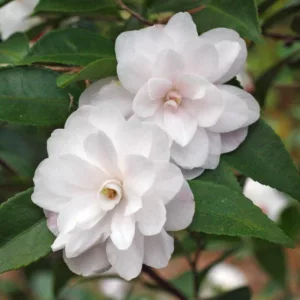
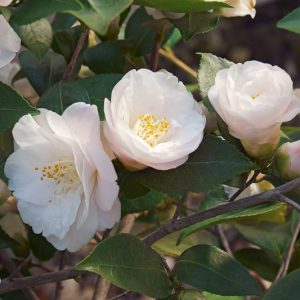
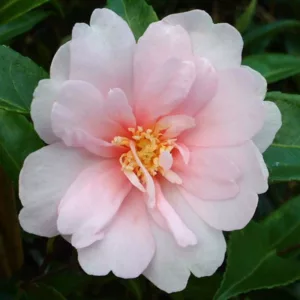
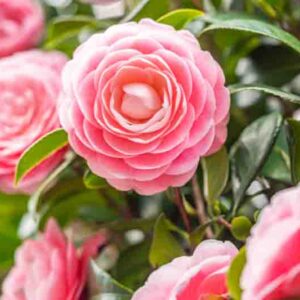
| ‘Cinnamon Cindy’ | Small white peony-form flowers tinged pink; pleasing cinnamon-like fragrance | November-April | 8-10 ft. | 3-6 ft. | 7-9 |
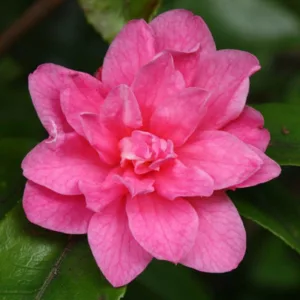
| ‘Fragrant Pink’ | Miniature cheerful-pink peony-form flowers; sweet-osmanthus-like fragrance | October-March | 6-8 ft. | 4-6 ft. | 7-9 |
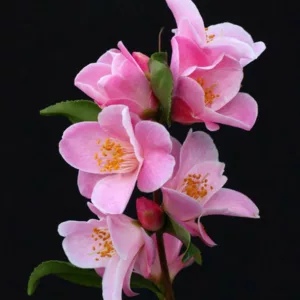
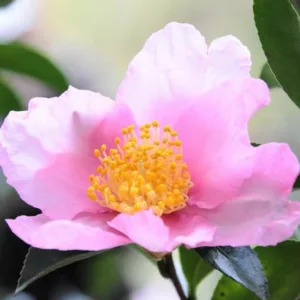
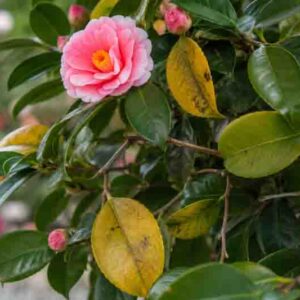
| ‘Minato-No-Akebono’ | Miniature shell-pink single flowers with golden stamens; clear, pleasing fragrance | November-April | 4-5 ft. | 3-5 ft. | 7-9 |
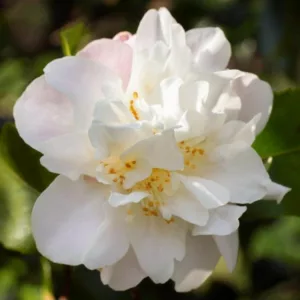
| ‘Scentuous’ | White semi-double to loose peony-form flowers flushed pink; mild fragrance | January-May | 4-6 ft. | 3-4 ft. | 7-9 |
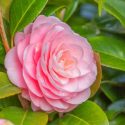
| ‘Spring Mist’ | Small blush-pink semi-double flowers fading almost white; pleasing fragrance | October-March | 4-5 ft. | 3-5 ft. | 7-9 |
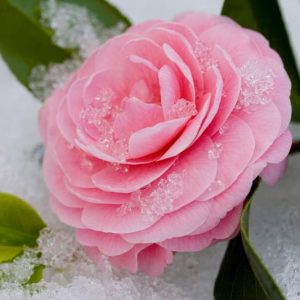
| ‘Sweet Emily Kate’ | Blush-pink peony-form flowers; sweet fragrance and graceful pendulous habit | January-May | 6-8 ft. | 6-8 ft. | 7-9 |
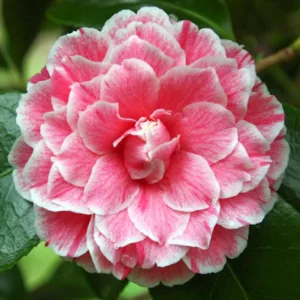
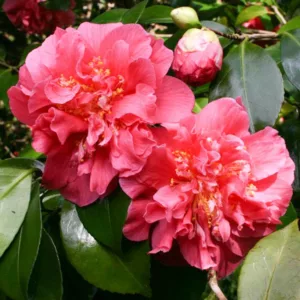
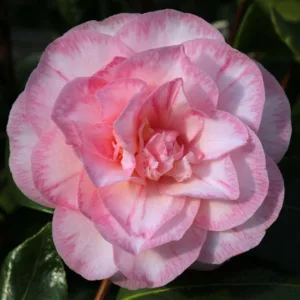
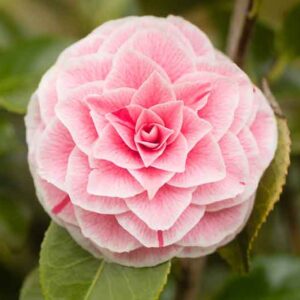
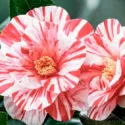
| ‘Hermé’ | Salmon-pink semi-double flowers edged white and streaked darker pink; mild fragrance | Midseason, winter-early spring | 6-8 ft. | 6-8 ft. | 7-9 |
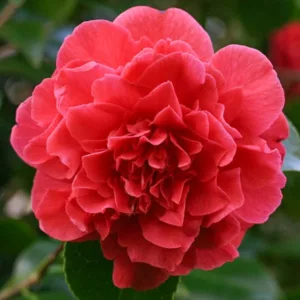
| ‘Kramer’s Supreme’ | Large brilliant-red peony-form flowers with golden stamens; mild fragrance | January-March | 8-10 ft. | 6-10 ft. | 7-9 |
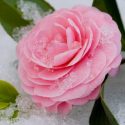
| ‘Scentsation’ | Large silvery-pink peony-form flowers; noticeable but refined fragrance | January-March | 8-12 ft. | 6-10 ft. | 7-9 |
| ‘Spring Sonnet’ | Pale-pink semi-double to loose peony-form flowers edged mauve pink; slight fragrance | January-March | 8-15 ft. | 6-10 ft. | 7-9 |
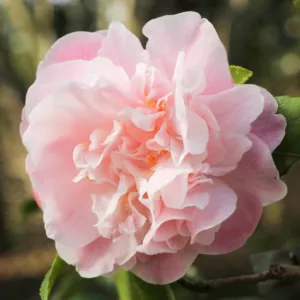
| ‘Plantation Pink’ | Large soft-pink single to semi-double flowers with golden stamens; sweetly scented | October-January | 15-20 ft. | 8-10 ft. | 7-9 |
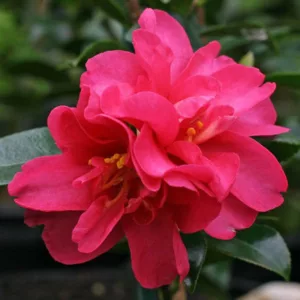
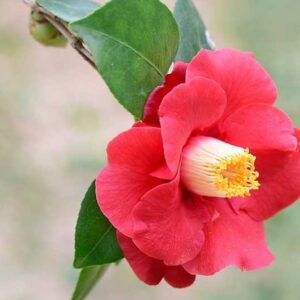
| ‘Crimson King’ | Large crimson-red single flowers with twisted petals and golden stamens; fragrant | October-January | 8-12 ft. | 10-15 ft. | 7-9 |
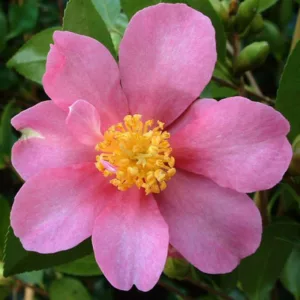
| ‘Hugh Evans’ | Small pale-pink single flowers with prominent golden stamens; fragrant | October-January | 8-12 ft. | 10-15 ft. | 7-9 |
| ‘Jean May’ | Shell-pink semi-double to double flowers deepening toward the center; fragrant | October-January | 6-10 ft. | 6-10 ft. | 7-9 |
| ‘Kanjiro’ | Rich cerise single to semi-double flowers shaded paler toward the center; slightly fragrant | October-January | 8-10 ft. | 8-10 ft. | 7-9 |
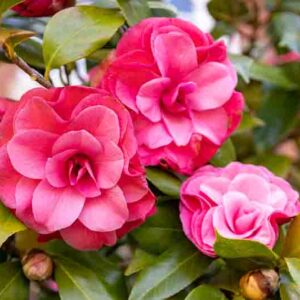
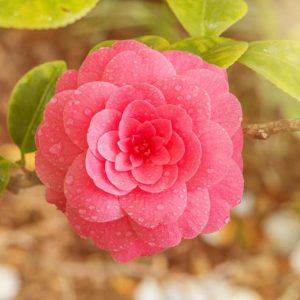
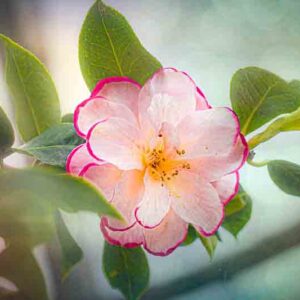
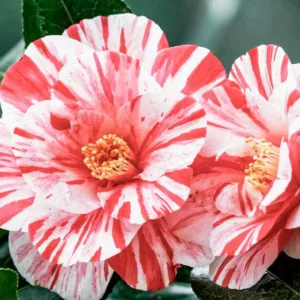
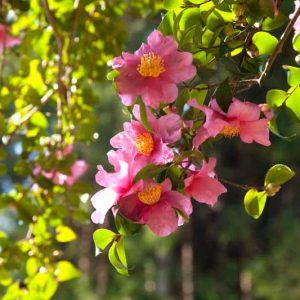
Browse the photographs below to compare flower color, form, foliage, and growth habit. Select any cultivar to open its complete Gardenia profile with detailed growing requirements, landscape uses, and additional images.
| Hardiness |
7 - 9 |
|---|---|
| Heat Zones |
7 - 8 |
| Climate Zones | 4, 5, 6, 7, 8, 9, 12, 14, 15, 16, 17, 18, 19, 20, 21, 22, 23, 24 |
| Plant Type | Shrubs |
| Plant Family | Theaceae |
| Genus | Camellia |
| Exposure | Full Sun, Partial Sun, Shade |
| Season of Interest | Spring (Early, Mid, Late), Fall, Winter |
| Maintenance | Low |
| Water Needs | Average |
| Soil Type | Clay, Loam, Sand |
| Soil pH | Acid, Neutral |
| Soil Drainage | Moist but Well-Drained, Well-Drained |
| Characteristics | Cut Flowers, Fragrant, Showy |
| Landscaping Ideas | Beds And Borders, Hedges And Screens, Patio And Containers, Wall-Side Borders |
| Garden Styles | City and Courtyard, Informal and Cottage, Japanese Garden, Traditional Garden |
‘Cinnamon Cindy’ is especially memorable for its pleasing cinnamon-like perfume and profuse clusters of small white-and-pink flowers.
‘Minato-No-Akebono’ and ‘Spring Mist’ remain approximately 4-5 feet tall. Both combine abundant flowers, graceful growth, and attractive fragrance.
‘Scentuous’ grows approximately 4-6 feet tall and only 3-4 feet wide, making it one of the easiest fragrant camellias to place near a path or entrance.
‘Kramer’s Supreme’ combines large brilliant-red peony-form flowers with mild fragrance and glossy evergreen foliage.
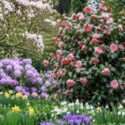
‘Crimson King’ produces large glowing crimson-red flowers in fall. Its broad mature spread makes it best for substantial borders and informal screens.
‘Plantation Pink’, ‘Jean May’, and ‘Kanjiro’ combine evergreen structure, abundant fall flowers, and fragrance. Select according to mature dimensions and flower color.
Hybrids descended from Camellia lutchuensis offer the most dependable route to fragrance. These plants often trade exceptionally large flowers for perfume, abundance, elegance, and broad flowering periods.
‘Cinnamon Cindy’, ‘Fragrant Pink’, ‘Minato-No-Akebono’, ‘Scentuous’, ‘Spring Mist’, and ‘Sweet Emily Kate’ illustrate the group’s diversity. Their flowers range from miniature singles to small peony forms, and their growth habits vary from narrow and upright to spreading or pendulous.
These hybrids are particularly effective where the plant can be approached closely. A modestly sized fragrant flower beside a doorway may provide more enjoyment than a heavily scented shrub placed at the distant edge of a large garden.
Fragrance is less common among traditional japonicas, but several cultivars provide detectable perfume alongside much larger flowers.
‘Hermé’ combines mild fragrance with salmon-pink, white-edged flowers streaked in deeper pink. ‘Kramer’s Supreme’ supplies brilliant-red peony-form blooms. ‘Scentsation’ offers large silvery-pink flowers, while ‘Spring Sonnet’ bears pale-pink flowers with irregular mauve-pink edging.
These cultivars are generally larger than compact lutchuensis hybrids. Their fragrance may be more subtle, but their substantial flowers provide stronger visual impact from a distance.
Sasanqua camellias open the season in fall and early winter. They generally have smaller leaves, lighter branching, faster growth, and greater sun tolerance than Japanese camellias.
‘Plantation Pink’ is one of the clearest sweetly scented choices. Its soft-pink flowers are borne abundantly on a vigorous shrub that can eventually reach 15-20 feet.
‘Crimson King’ produces striking crimson-red single flowers and develops a broad, spreading habit. It requires generous space but makes an impressive flowering screen or specimen.
‘Hugh Evans’ bears smaller pale-pink flowers on arching branches. Its loose growth can be trained against a wall or used in an informal hedge.
‘Jean May’ offers shell-pink semi-double to double flowers on a bushy, upright shrub. Its mature form is more manageable than those of ‘Crimson King’ and ‘Hugh Evans’ but still requires substantial space.
‘Kanjiro’ combines a dense, upright habit with masses of rich cerise flowers shaded paler toward the center. Its slight fragrance, abundant bloom, and strong structure make it particularly useful for screening.
Important: Sasanqua scent may be described as sweet, floral, musky, or spicy. Some gardeners find it delightful, while others perceive it less strongly. Smell the flowers personally before choosing a large plant primarily for fragrance.
Place a fragrant camellia where people naturally pass close to the flowers. A route to the front door, garden gate, greenhouse, patio, or seating area allows the perfume to be noticed repeatedly.
Plant compact cultivars near an entrance or a window that can be opened during mild weather. ‘Scentuous’, ‘Minato-No-Akebono’, and ‘Spring Mist’ are particularly suitable where space is limited.
Walls and fences reduce wind and may allow delicate fragrance to linger. Avoid confined sites with poor drainage or intense reflected afternoon heat.
Fragrant camellias are ideal near benches and patios used during mild fall, winter, or spring weather. Allow enough room for the cultivar’s mature width so branches do not obstruct circulation.
Container growing brings the flowers closer to nose level and allows a scented plant to be positioned near a door or seating area.
‘Minato-No-Akebono’, ‘Spring Mist’, and ‘Scentuous’ are the clearest long-term container candidates among the featured cultivars. Use a substantial pot with generous drainage holes and acidic, freely draining potting mix.
Large sasanquas may grow in containers temporarily, but cultivars such as ‘Plantation Pink’, ‘Crimson King’, and ‘Hugh Evans’ are ultimately better planted in the ground.
Most fragrant hybrids and japonicas grow best in partial shade or filtered light. Morning sun with protection from intense afternoon heat is often ideal.
Sasanquas tolerate more direct sun, particularly once established, provided their roots remain cool and consistently moist. Deep shade may reduce flowering, while harsh afternoon sun can scorch foliage and fade flowers.
Plant camellias in acidic to neutral soil that is rich in organic matter, moisture-retentive, and well-drained. Strongly alkaline soil can cause chlorosis, while prolonged saturation can damage roots.
Set the upper surface of the root ball level with or slightly above the surrounding soil. Camellias perform poorly when planted too deeply.
Maintain consistent moisture during establishment and throughout dry periods. Water is particularly important from late summer onward, when the following season’s flower buds are developing.
Water deeply at the root zone but avoid keeping the soil continuously saturated.
Apply 2-3 inches (5-7 cm) of leaf mold, shredded bark, pine bark, or another organic mulch over the root zone. Keep mulch away from direct contact with the trunk and main stems.
Healthy established camellias in fertile soil may need little fertilizer. Where growth is weak or a deficiency is confirmed, feed lightly after flowering with a product formulated for acid-loving plants.
Avoid excessive nitrogen and late feeding, which can encourage soft vegetative growth rather than reliable flower-bud development.
Fragrant camellias generally require little routine pruning. Remove dead, diseased, broken, crossing, or badly positioned branches and shorten overly long shoots only when necessary.
Prune after flowering. Late pruning can remove developing flower buds responsible for the following season’s display.
| Possible Reason | Explanation | What to Do |
|---|---|---|
| Cold weather | Low temperatures can reduce the release of volatile scent compounds. | Check the flowers again during a mild afternoon. |
| Wind | Air movement disperses delicate fragrance quickly. | Smell the flower closely or provide a more sheltered setting. |
| Old or rain-damaged flowers | Fragrance may decline as flowers age or become saturated. | Test a newly opened, dry flower. |
| Naturally mild cultivar | Some camellias are only lightly scented even though they are described as fragrant. | Choose a lutchuensis hybrid documented for a more distinctive perfume. |
| Individual plant variation | Plants sold under the same cultivar may perform somewhat differently in varying climates and conditions. | Compare several flowers and test again during favorable weather. |
| Individual sensitivity | People differ considerably in their ability to perceive particular floral scents. | Ask another observer and compare several cultivars before choosing. |
Combining cultivars with different flowering periods provides scented blooms across a much longer season.
Explore Gardenia’s related guides:
A clearly scented cultivar planted at the back of a deep border may provide less enjoyment than a mildly fragrant plant beside a doorway.
Choose the right mature size, then position the shrub where its flowers can be admired and smelled at close range. Shelter, healthy growth, abundant bloom, and convenient placement are as important as the cultivar’s documented fragrance.
Most camellias are not strongly scented, but carefully selected cultivars can add genuine perfume to the fall, winter, and spring garden.
Lutchuensis hybrids such as ‘Cinnamon Cindy’, ‘Fragrant Pink’, ‘Minato-No-Akebono’, ‘Scentuous’, ‘Spring Mist’, and ‘Sweet Emily Kate’ provide the most dependable combination of fragrance and garden performance. Fragrant japonicas offer larger flowers, while selected sasanquas add scented autumn bloom and excellent evergreen structure.
Compare mature size, fragrance description, flowering season, and garden use before selecting a plant. Position fragrant camellias near paths, windows, doors, patios, or sheltered seating areas where their delicate perfume will not go unnoticed.
Most camellias have little or no noticeable scent. Selected lutchuensis hybrids, several Japanese camellias, and some sasanquas produce mild to clearly noticeable fragrance.
Fragrance perception varies, but ‘Cinnamon Cindy’, ‘Fragrant Pink’, ‘Minato-No-Akebono’, ‘Spring Mist’, ‘Sweet Emily Kate’, ‘Plantation Pink’, ‘Crimson King’, and ‘Hugh Evans’ are clearly documented fragrant choices featured in this guide.
‘Cinnamon Cindy’ is valued for a pleasing fragrance commonly described as reminiscent of cinnamon or warm spice. Scent intensity varies with weather and flower age.
‘Minato-No-Akebono’ and ‘Spring Mist’ grow approximately 4-5 feet tall. ‘Scentuous’ is another narrow choice, reaching about 4-6 feet tall and 3-4 feet wide.
‘Minato-No-Akebono’, ‘Spring Mist’, and ‘Scentuous’ are the clearest long-term container choices among the featured cultivars. Use a substantial pot with acidic, freely draining potting mix.
Cold weather, wind, rain, flower age, mild cultivar genetics, and individual scent sensitivity can all affect perception. Smell a newly opened flower at close range during a mild, still afternoon.
‘Plantation Pink’, ‘Crimson King’, ‘Hugh Evans’, ‘Jean May’, and ‘Kanjiro’ are fragrant or slightly fragrant selections featured in this guide. Perceived scent varies by cultivar, weather, and observer.
Prune immediately after flowering. Later pruning may remove shoots carrying the following season’s flower buds.
Updated: July 2026 • Cultivar data derived from Gardenia plant records • Reviewed by Gardenia Editors
| Hardiness |
7 - 9 |
|---|---|
| Heat Zones |
7 - 8 |
| Climate Zones | 4, 5, 6, 7, 8, 9, 12, 14, 15, 16, 17, 18, 19, 20, 21, 22, 23, 24 |
| Plant Type | Shrubs |
| Plant Family | Theaceae |
| Genus | Camellia |
| Exposure | Full Sun, Partial Sun, Shade |
| Season of Interest | Spring (Early, Mid, Late), Fall, Winter |
| Maintenance | Low |
| Water Needs | Average |
| Soil Type | Clay, Loam, Sand |
| Soil pH | Acid, Neutral |
| Soil Drainage | Moist but Well-Drained, Well-Drained |
| Characteristics | Cut Flowers, Fragrant, Showy |
| Landscaping Ideas | Beds And Borders, Hedges And Screens, Patio And Containers, Wall-Side Borders |
| Garden Styles | City and Courtyard, Informal and Cottage, Japanese Garden, Traditional Garden |
Create a membership account to save your garden designs and to view them on any device.
Becoming a contributing member of Gardenia is easy and can be done in just a few minutes. If you provide us with your name, email address and the payment of a modest $25 annual membership fee, you will become a full member, enabling you to design and save up to 25 of your garden design ideas.
Join now and start creating your dream garden!
Create a membership account to save your garden designs and to view them on any device.
Becoming a contributing member of Gardenia is easy and can be done in just a few minutes. If you provide us with your name, email address and the payment of a modest $25 annual membership fee, you will become a full member, enabling you to design and save up to 25 of your garden design ideas.
Join now and start creating your dream garden!