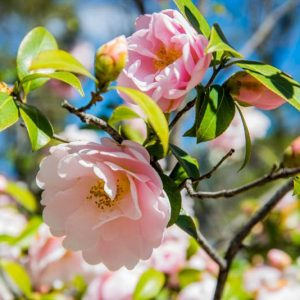
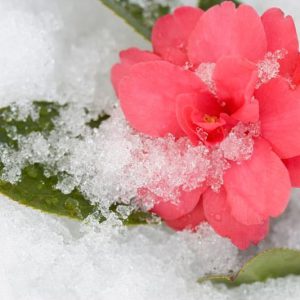
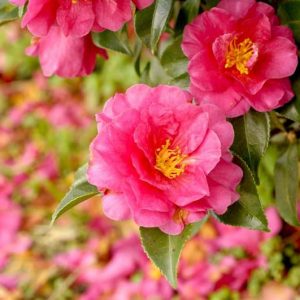
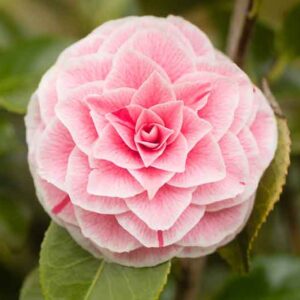
Cold-hardy camellias bring exquisite fall and spring flowers to protected Zone 6 gardens. Compare 11 outstanding Winter Series, April Series, and related cultivars by bloom season, flower form, mature size, and color, then learn how to choose a sheltered site, plant correctly, prevent winter damage, and encourage reliable flowering each year.
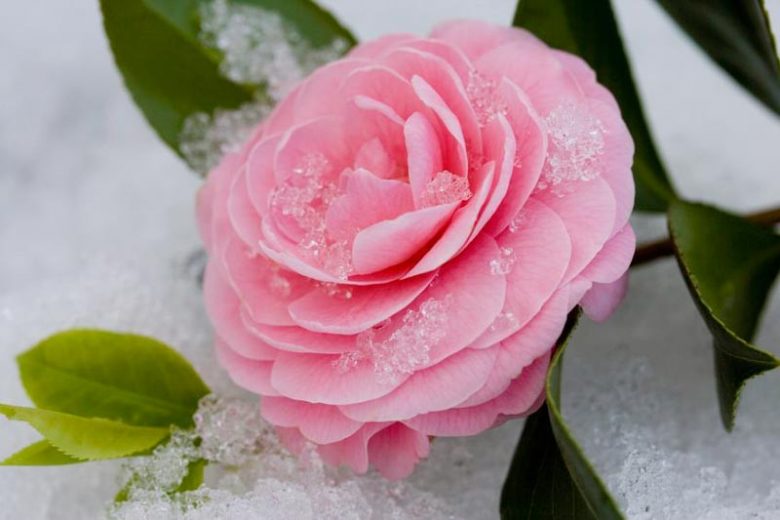


Cold-hardy camellias bring glossy evergreen foliage and spectacular cool-season flowers to gardens once considered too cold for these elegant shrubs. Selected hybrids and Japanese camellias can grow in protected Zone 6 gardens. Some Ackerman hybrids have survived temperatures near -10°F (-23°C) in sheltered trials, although many named cultivars are most conservatively recommended for Zone 6b and warmer.
Cold hardiness does not make camellias indestructible. A shrub may survive a cold winter while open flowers, swelling buds, or young growth suffer damage from freezing temperatures, drying wind, rapid thawing, or late spring frost. Site selection remains as important as the cultivar’s hardiness rating.
The cold-hardy camellias featured here fall into two practical groups. Fall-flowering selections include the famous Winter Series and related hybrids developed through the cold-hardiness breeding work of Dr. William Ackerman. Spring-flowering selections include ‘Pink Icicle’ and Japanese camellias from or associated with the April Series developed by Dr. Clifford Parks.
This guide compares 11 cold-hardy camellias by bloom season, mature size, flower character, and USDA hardiness. Use it to choose between an autumn-flowering shrub, a late-winter bridge, or a spring-flowering camellia that avoids some of the risks faced by earlier blooms.
Plant survival and flower survival are different. A Zone 6 camellia may remain healthy after severe cold even if open flowers or exposed buds are damaged. Spring-blooming cultivars often provide a more dependable display in colder gardens because fewer flowers are exposed during the coldest part of winter.
Traditional camellias were once associated mainly with the mild winters of USDA Zones 7-10. That changed after severe winters damaged large portions of the U.S. National Arboretum’s camellia collection during the 1970s.
Camellia oleifera survived with comparatively little injury. Plant breeder Dr. William Ackerman used this cold-tolerant species in crosses with Camellia sasanqua, C. hiemalis, and C. × vernalis. The resulting hybrids combined improved winter survival with attractive evergreen foliage and fall flowers.
These introductions include the familiar Winter Series and related cultivars such as ‘Polar Ice’ and ‘Snow Flurry’. Many can grow in sheltered Zone 6 gardens, although the timing of fall bloom means their flowers may still encounter early freezes.
Botanist Dr. Clifford Parks developed cold-hardy Japanese camellias that flower later. The April Series includes cultivars such as ‘April Blush’, ‘April Remembered’, and ‘April Rose’. Their winter-to-spring or spring flowering can be advantageous where severe midwinter weather damages early blooms.
| Group | Main Flowering Period | Advantages | Main Risk |
|---|---|---|---|
| Fall-blooming Ackerman hybrids | Mid fall to early winter | Flowers when few shrubs are blooming; attractive, often compact evergreen plants | Early freezes may damage open flowers |
| Spring-blooming hardy camellias | Late winter through late spring | Flowers avoid part of the coldest winter period; often larger japonica-style blooms | Late freezes may still injure open flowers and swelling buds |
The comparison below follows Gardenia’s cultivar records for mature size and hardiness. Bloom descriptions preserve the seasonal distinctions used across Gardenia’s camellia data and profiles. Flowering may shift several weeks earlier or later depending on climate and exposure.
| Cultivar | Flower Character | Bloom Period | Height | Spread | USDA Zones |
|---|---|---|---|---|---|
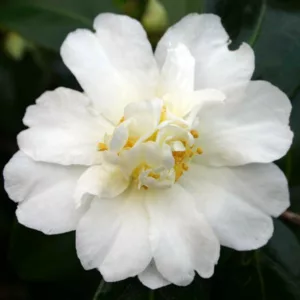
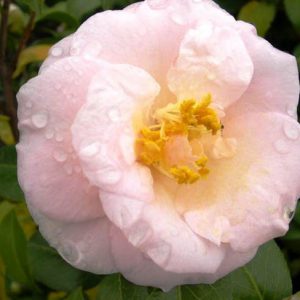
| ‘Polar Ice’ | White anemone-form flowers surrounding golden stamens | Mid fall-late fall | 5-6 ft. | 5-6 ft. | 6-9 |
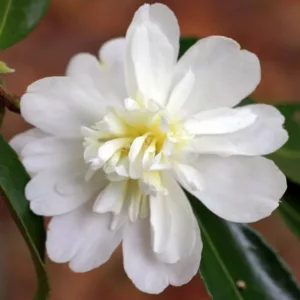
| ‘Snow Flurry’ | Pure white, peony-form flowers produced generously | Late fall-early winter | 5-7 ft. | 3-5 ft. | 6-9 |
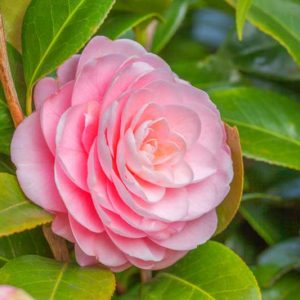
| ‘Winter’s Charm’ | Lavender-pink to rosy-pink, peony-form flowers | Late fall-early winter | 4-7 ft. | 4-5 ft. | 6-9 |
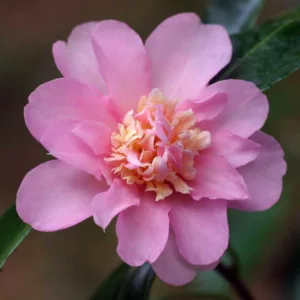
| ‘Winter’s Interlude’ | Clear pink, anemone-form flowers with a full central cluster | Late fall-early winter | 5-8 ft. | 4-5 ft. | 6-9 |
| ‘Winter’s Rose’ | Shell-pink rose-form double flowers on a miniature shrub | Mid fall-late fall | 2-3 ft. | 2-3 ft. | 6-9 |
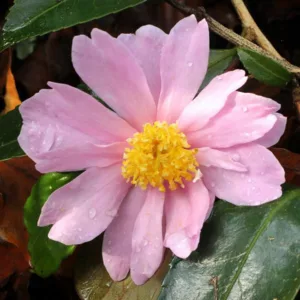
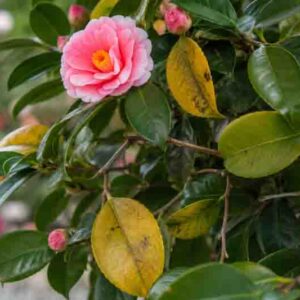
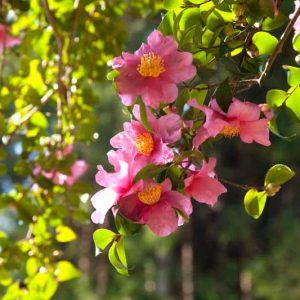
| ‘Winter’s Star’ | Single violet-pink flowers with conspicuous golden stamens | Mid fall-late fall | 4-6 ft. | 5-7 ft. | 6-9 |
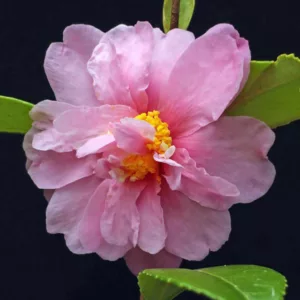
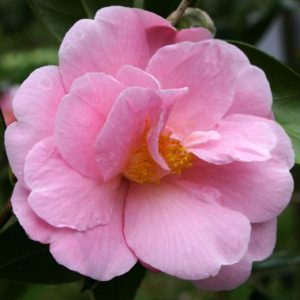
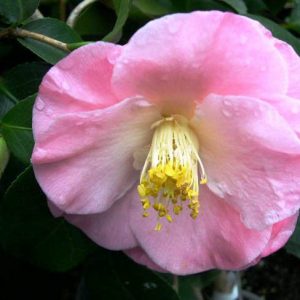
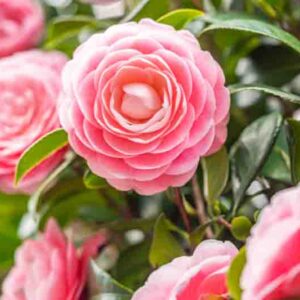
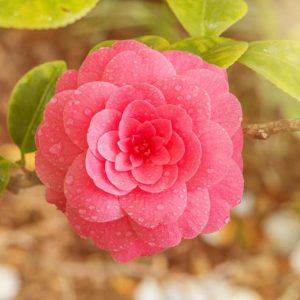
| ‘Pink Icicle’ | Very large shell-pink peony-form flowers, approximately 4.5 in. across | Midseason, from late winter into spring | 6-10 ft. | 4-6 ft. | 6-9 |
| ‘April Blush’ | Large rose- to shell-pink semi-double flowers with yellow anthers | Mid- to late season, winter into mid spring | 4-10 ft. | 4-6 ft. | 6-9 |
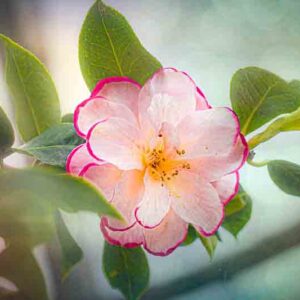
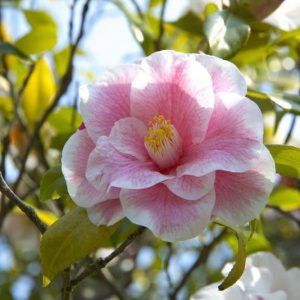
| ‘April Remembered’ | Large creamy-pink semi-double flowers edged deeper pink | Broad early-to-late seasonal range | 8-10 ft. | 6-8 ft. | 6-10 |
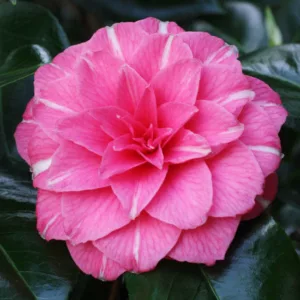
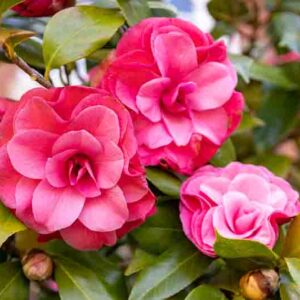
| ‘April Rose’ | Deep rose-red rose-form double flowers with mild fragrance | Early spring-late spring | 5-8 ft. | 3-5 ft. | 6-9 |
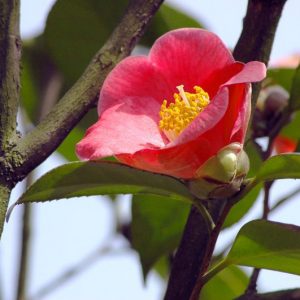
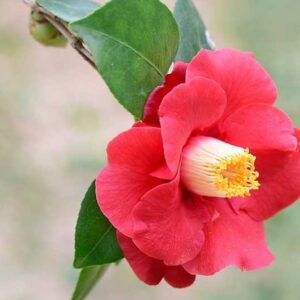
| ‘Korean Fire’ | Single deep-red flowers with prominent golden-yellow stamens | Early spring-late spring | 10-15 ft. | 5-8 ft. | 6-9 |
The featured cultivars are divided into two visual galleries. Browse the photographs to compare flower color, form, foliage, and growth habit, then select a plant to open its complete Gardenia profile.
| Hardiness |
6 - 9 |
|---|---|
| Heat Zones |
7 - 8 |
| Climate Zones | 4, 5, 6, 7, 8, 9, 12, 14, 15, 16, 17, 18, 19, 20, 21, 22, 23, 24 |
| Plant Type | Shrubs |
| Genus | Camellia |
| Exposure | Partial Sun |
| Season of Interest | Spring (Early, Mid, Late), Fall, Winter |
| Maintenance | Low |
| Water Needs | Average |
| Soil Type | Clay, Loam, Sand |
| Soil pH | Acid, Neutral |
| Soil Drainage | Moist but Well-Drained, Well-Drained |
| Characteristics | Cut Flowers, Showy |
| Landscaping Ideas | Beds And Borders, Hedges And Screens, Patio And Containers, Wall-Side Borders |
| Garden Styles | City and Courtyard, Informal and Cottage, Japanese Garden, Traditional Garden |
‘Winter’s Rose’ is the smallest featured cultivar at approximately 2-3 feet tall and wide. Its miniature habit suits containers, low borders, courtyards, and foundation plantings.
‘Polar Ice’ and ‘Snow Flurry’ provide luminous white autumn flowers. ‘Snow Flurry’ has a relatively narrow habit, while ‘Polar Ice’ develops a fuller rounded shrub.
‘Pink Icicle’ produces very large shell-pink peony-form blooms and grows into an upright shrub approximately 6-10 feet tall.
‘April Rose’ offers deep rose-red double flowers on a relatively narrow shrub. ‘Korean Fire’ produces simple deep-red flowers on a much larger plant.
‘Polar Ice’, ‘Winter’s Rose’, and ‘Winter’s Star’ are recorded from mid fall through late fall, making them good choices for a concentrated autumn show.
‘April Rose’ and ‘Korean Fire’ begin in spring, reducing the amount of open bloom exposed during the coldest winter weather.
A hardiness rating describes expected plant survival, not perfect flowers after every freeze. The featured plants may grow in Zone 6, but performance depends on several interacting factors:
Zone 6 gardeners should treat cold-hardy camellias as plants for protected locations rather than shrubs for an exposed, windswept corner.
A north-, northwest-, or protected woodland-edge position can reduce abrupt temperature changes and shield evergreen foliage from winter wind. A site near a wall or evergreen screen may also provide useful protection.
Avoid exposed hilltops, open western exposures, low frost pockets, and areas where strong morning sun strikes frozen foliage and flowers.
Partial shade or bright filtered light suits most cold-hardy camellias. Morning light with protection from intense afternoon heat is often effective, provided the site does not expose frozen flowers to sudden early warming.
Deep shade may reduce flowering, while intense summer sun can scorch leaves and dry the shallow root system.
Cold tolerance declines when roots remain saturated. Plant in organically rich soil that retains moisture but drains freely after rain or snowmelt.
On heavy clay, plant slightly high, improve the surrounding planting area with organic matter, and direct surface water away from the root zone. Do not place a camellia in a permanently wet depression.
Set the upper surface of the root ball level with or slightly above the surrounding soil. Deep planting restricts oxygen around the roots and can contribute to decline, especially in cold, wet winter soil.
Spring is usually the safest planting season in Zone 6. It gives roots an entire growing season to establish before the first severe winter.
Fall planting may succeed in mild Zone 7-9 climates, but it provides less establishment time before winter in colder regions.
Camellias prefer acidic to neutral soil, ideally around pH 5.5-6.5. Soil should be rich in organic matter, consistently moist, and well-drained.
Strongly alkaline soil can cause iron chlorosis, recognized by yellow leaves with greener veins. Where native soil is highly alkaline, a large container filled with ericaceous potting mix may be more practical than repeated attempts to alter the ground.
Water regularly during establishment and during dry weather. Consistent moisture from late summer through fall is particularly important while flower buds develop and the shrub prepares for winter.
Water deeply at the root zone rather than applying frequent shallow irrigation. Avoid saturating the soil.
Use leaf mold, shredded bark, pine bark, or another organic mulch. Mulch helps conserve moisture, moderate root-zone temperature, suppress weeds, and add organic matter as it decomposes.
Healthy established camellias in fertile soil may need little fertilizer. Where growth is weak or soil testing indicates a need, feed lightly after flowering with a product formulated for acid-loving plants.
Avoid excessive nitrogen and late feeding, which encourage soft growth that may not harden before winter.
Cold-hardy camellias need little routine pruning. Remove dead, diseased, broken, crossing, and badly positioned branches, and shorten disproportionately long shoots when necessary.
Prune after flowering. Late pruning may remove developing flower buds and stimulate tender growth too close to winter.
| Symptom | Likely Cause | What to Do |
|---|---|---|
| Brown leaf edges | Winter wind, frozen soil, drought, or salt exposure | Improve shelter, water before freezes, and keep deicing salt away. |
| Open flowers turn brown overnight | Freezing temperatures | Remove damaged flowers if desired and wait for unopened buds to resume the display. |
| Flower buds drop | Drought, root stress, severe cold, rapid temperature swings, or natural thinning | Maintain even moisture, improve drainage, and protect the plant from exposure. |
| Branch tips die back | Cold injury, drying wind, or incompletely hardened growth | Wait until spring growth begins, then prune back to living tissue. |
| Plant declines after winter | Poor drainage, deep planting, root damage, or repeated freeze-thaw stress | Inspect the root zone, correct drainage, and verify that the trunk flare is not buried. |
Cold-hardy does not mean equally hardy in a container. Roots above ground experience colder temperatures than roots protected by garden soil.
‘Winter’s Rose’ is the most manageable featured choice for long-term container culture. ‘April Rose’, ‘Snow Flurry’, and other moderate-sized cultivars may also grow in substantial pots, but eventual dimensions must be considered.
Use a frost-resistant container with generous drainage holes and acidic, freely draining potting mix. In winter, move the pot beside a sheltered wall, group it with other containers, or insulate the outside without blocking drainage.
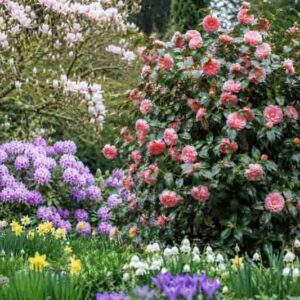
Combining fall- and spring-blooming cold-hardy camellias gives Zone 6 gardeners a better chance of enjoying flowers across more than one season.
Explore Gardenia’s related guides:
Do not choose a cold-hardy cultivar and then plant it in the coldest, wettest, or most exposed part of the garden. Hardiness begins with genetics, but successful Zone 6 performance depends heavily on the planting site.
Choose a sheltered microclimate, provide excellent drainage, maintain moisture before winter, protect young plants from wind, and allow several growing seasons for the root system to establish.
Cold-hardy camellias make fall and spring flowers possible in protected Zone 6 gardens. Ackerman’s fall-flowering hybrids combine improved winter survival with autumn bloom, while the April Series and other hardy spring cultivars delay much of their display until winter begins to release its grip.
‘Winter’s Rose’ is the smallest featured cultivar, ‘Polar Ice’ and ‘Snow Flurry’ provide white fall flowers, ‘Pink Icicle’ offers very large shell-pink blooms, and ‘April Rose’ and ‘Korean Fire’ finish the season with rich red spring color.
Use the comparison table to match bloom season, mature size, and flower character to your garden. Then browse the fall and spring galleries to compare each plant visually before choosing a protected planting position.
Yes. Selected cold-hardy camellias can grow in protected Zone 6 sites. They require excellent drainage, shelter from drying wind, consistent moisture, and time to establish. Open flowers may still be damaged by frost.
The Winter Series, related Ackerman hybrids, Pink Icicle, and selected April Series japonicas are among the best-known cold-hardy camellias. The featured cultivars are listed for USDA Zone 6.
Winter Series camellias are primarily cold-hardy fall-flowering hybrids associated with Dr. William Ackerman. April Series camellias are cold-hardy Japanese camellias developed by Dr. Clifford Parks and generally flower later, from winter into spring.
‘Winter’s Rose’ is the smallest featured cultivar at approximately 2-3 feet tall and wide. It produces shell-pink rose-form double flowers in fall and is suitable for small gardens and substantial containers
Polar Ice, Snow Flurry, Winter’s Charm, Winter’s Interlude, Winter’s Rose, and Winter’s Star are the featured fall-flowering cold-hardy camellias.
Pink Icicle, April Blush, April Remembered, April Rose, and Korean Fire provide winter-to-spring or spring flowering in the featured collection.
Plant it in a sheltered, well-drained site; mulch the root zone; water before the ground freezes; block drying wind around young plants; and avoid locations exposed to rapid morning thawing.
Prune immediately after flowering. Late pruning can remove developing flower buds and encourage tender growth that may be vulnerable to winter cold.
Updated: July 2026 • Cultivar data derived from Gardenia plant records • Reviewed by Gardenia Editors
Picture courtesy of / 123RF Stock Photo
| Hardiness |
6 - 9 |
|---|---|
| Heat Zones |
7 - 8 |
| Climate Zones | 4, 5, 6, 7, 8, 9, 12, 14, 15, 16, 17, 18, 19, 20, 21, 22, 23, 24 |
| Plant Type | Shrubs |
| Genus | Camellia |
| Exposure | Partial Sun |
| Season of Interest | Spring (Early, Mid, Late), Fall, Winter |
| Maintenance | Low |
| Water Needs | Average |
| Soil Type | Clay, Loam, Sand |
| Soil pH | Acid, Neutral |
| Soil Drainage | Moist but Well-Drained, Well-Drained |
| Characteristics | Cut Flowers, Showy |
| Landscaping Ideas | Beds And Borders, Hedges And Screens, Patio And Containers, Wall-Side Borders |
| Garden Styles | City and Courtyard, Informal and Cottage, Japanese Garden, Traditional Garden |
Create a membership account to save your garden designs and to view them on any device.
Becoming a contributing member of Gardenia is easy and can be done in just a few minutes. If you provide us with your name, email address and the payment of a modest $25 annual membership fee, you will become a full member, enabling you to design and save up to 25 of your garden design ideas.
Join now and start creating your dream garden!
Create a membership account to save your garden designs and to view them on any device.
Becoming a contributing member of Gardenia is easy and can be done in just a few minutes. If you provide us with your name, email address and the payment of a modest $25 annual membership fee, you will become a full member, enabling you to design and save up to 25 of your garden design ideas.
Join now and start creating your dream garden!