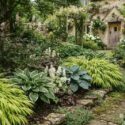
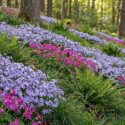
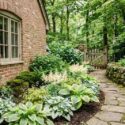
Transform difficult dry shade with 24 beautiful shrubs that thrive beneath trees, along shaded borders, and on woodland slopes. Discover resilient evergreens, fragrant flowers, colorful berries, and native favorites. Compare shade tolerance, drought resistance, and root competition to choose plants that bring lasting beauty to challenging garden spaces with confidence.


Every gardener seems to have one: a stubborn patch beneath a mature tree where the soil is dusty, roots crowd every planting hole, and even shade-loving plants struggle. Perhaps yours is a north-facing side yard where little rain reaches the ground, or a shaded slope that never stays moist.
Fortunately, dry shade doesn’t have to mean bare soil. Some remarkably resilient shrubs can bring evergreen foliage, fragrant flowers, colorful berries, and attractive structure to these difficult spaces.
But the best shrubs for dry shade must tolerate more than limited sunlight. They also need to cope with seasonal drought and sometimes fierce competition from established tree roots. A plant that survives dry soil in partial shade may struggle beneath a dense evergreen canopy.
Discover 24 beautiful shrubs for dry shade, from tough evergreens and cold-hardy natives to flowering shrubs and woodland groundcovers. Learn which withstand difficult conditions, which appreciate occasional watering, and how to choose plants that actually suit your garden.
Before planting: Drought tolerance generally applies to established shrubs. Young plants need regular watering, and even mature drought-tolerant shrubs may struggle where dense roots leave almost no soil or moisture available.
Dry shade isn’t one growing condition. The difference between deep shade beneath mature spruce and bright shade beneath a deciduous tree can determine whether a shrub thrives or merely survives.
| Dry Shade Type | Typical Conditions | Best Approach |
|---|---|---|
| Severe dry shade | Dense roots, little rainfall, very low light | Use the toughest shrubs or leave heavily rooted ground mulched |
| Moderate dry shade | Filtered light and seasonal dryness | Choose resilient shrubs and mulch to conserve moisture |
| Bright seasonal dry shade | Morning sun or open canopy, dry summers | Grow a wider range of shrubs, watering occasionally when necessary |
Tree species matter. California native oaks, maples, beeches, and spruce create different conditions beneath their canopies. Some mature oaks are sensitive to frequent summer irrigation, while shallow-rooted trees compete especially strongly for moisture.
When conditions are particularly challenging, dependable foliage often matters more than flowers. These evergreens bring lasting structure to sheltered, shaded gardens.
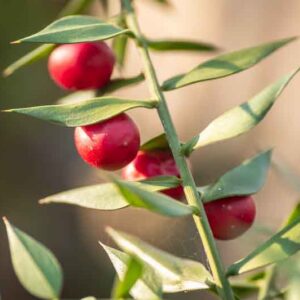
Butcher’s broom is one of the toughest evergreens for dry shade. Its rigid, glossy, spine-tipped, leaflike structures provide architectural interest throughout the year. Pollinated female plants may carry red berries. Generally hardy in USDA Zones 7-9, it tolerates deep shade and established drought remarkably well. Keep it away from narrow pathways.
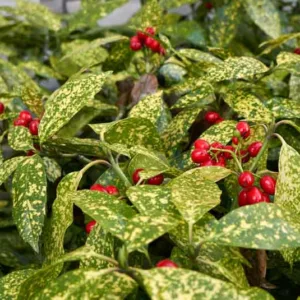
Japanese aucuba brightens dark corners with large, glossy evergreen leaves. Golden-variegated selections are particularly attractive beside shaded walls and beneath trees. Hardy approximately in Zones 6-10, it tolerates deep shade and moderate drought once established. Occasional deep watering during prolonged dry weather helps prevent leaf scorch.
Taxus baccata ‘Standishii’ is a handsome, slow-growing evergreen with a narrow, upright habit and golden-yellow needles that brighten shaded borders. Generally hardy in USDA Zones 7-8, it tolerates shade and periods of dry soil once established, although its foliage becomes greener in deeper shade. Ideal for adding vertical structure to small gardens, it prefers well-drained soil. Most parts are highly poisonous if ingested.
| Plant Type | Shrubs |
|---|---|
| Exposure | Partial Sun, Shade |


In northern gardens, deciduous shrubs are often dependable choices beneath established trees. These three tolerate cold winters, variable soils, and seasonal dryness.
Alpine currant is an adaptable deciduous shrub with neat green foliage that turns yellow in autumn. Hardy in Zones 2-7, it tolerates shade, dry soil, and regular pruning. Particularly useful for informal hedges and difficult northern borders, it is grown primarily for foliage rather than its inconspicuous flowers.
Common snowberry produces small summer flowers followed by distinctive white berries that brighten autumn and winter. This North American native tolerates shade, poor soil, and drought once established. Hardy in Zones 3-7, it spreads by suckers, making it well suited to naturalistic woodland edges rather than formal borders. The berries should not be eaten.
Coralberry is valued for clusters of coral-pink to purplish berries that persist after its leaves fall. Hardy approximately in Zones 2-7, this eastern North American native accepts considerable shade and dry soil. Its arching branches spread into informal colonies, providing useful wildlife cover and erosion control.


These native shrubs are especially valuable where the garden resembles their natural habitat. Choose species appropriate to your region and local rainfall patterns.
Catalina currant is an outstanding California native for dry shade beneath oaks. Its spreading evergreen branches carry aromatic, glossy leaves on reddish stems, accompanied by small wine-colored spring flowers. Best suited to Zones 8-10, it performs beautifully in filtered shade with little summer irrigation once established.
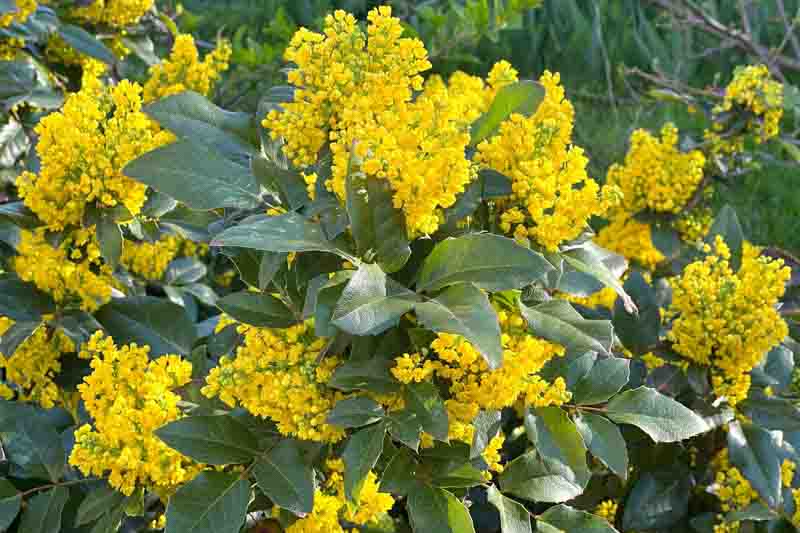
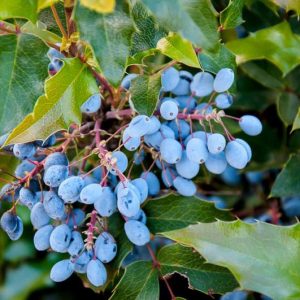
Creeping Oregon grape forms low evergreen cover with leathery, holly-like leaves, yellow spring flowers, and blue-purple berries. Hardy generally in Zones 5-8, this western North American native tolerates dry soil once established, particularly in open or dappled shade. Its foliage may turn reddish-bronze in winter.
Northern bush honeysuckle brings yellow summer flowers and attractive coppery-to-red fall foliage to informal woodland edges. Hardy in Zones 3-7, this North American native tolerates poor soils, partial shade, and established drought. It spreads gradually by suckers and flowers most generously with some filtered sunlight.
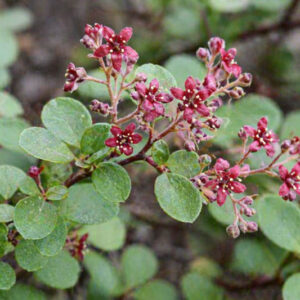



Planting beneath California oaks? Catalina currant is especially useful in suitable dry oak understories. Protect major roots, avoid raising soil levels around trunks, and keep summer irrigation compatible with the health of established oaks.
These three bring more than foliage to partly shaded, seasonally dry gardens. They are particularly valuable for birds, pollinators, and naturalistic planting.
Mapleleaf viburnum produces delicate white flower clusters, dark berries, and brilliant reddish-purple autumn foliage. Native to eastern North American woodlands, it tolerates shade and dry to moderately moist soils. Generally hardy in Zones 4-8, it performs best in acidic, well-drained woodland soil and appreciates moisture during prolonged drought.
Salal forms dense evergreen growth with glossy leaves, pinkish-white spring flowers, and dark edible berries enjoyed by wildlife. Native to western North America, it thrives in acidic woodland soils and tolerates shade and seasonal dryness once established. Generally hardy in Zones 6-8, it may spread to form broad colonies.
Gray dogwood produces creamy spring flowers, white berries on striking red stalks, and rich reddish-purple fall foliage. Hardy in Zones 4-8, this eastern North American native tolerates dry soil and partial shade, including some heavier shade. It spreads into thickets, making it better for naturalized woodland edges than small formal gardens.


These attractive evergreens suit sheltered borders where the soil becomes dry between rainfalls but does not remain severely parched.
Oregon grape offers glossy, holly-like evergreen foliage, bright yellow spring flowers, and blue-purple berries. Its leaves often turn bronze-red in winter. Generally hardy in Zones 5-8, it accepts partial shade and moderate drought once established, although occasional watering benefits plants in hot climates.
Holly osmanthus combines glossy evergreen leaves with tiny, wonderfully fragrant autumn flowers. Generally hardy in Zones 7-9, it tolerates partial shade and periods of established drought, making it attractive for sheltered hedges and foundation plantings. It performs better in reasonably fertile, well-drained soil than in intensely root-filled shade.
Warty barberry provides lustrous evergreen leaves, golden spring flowers, and dark berries. Generally hardy in Zones 6-9, it tolerates partial shade and dry soil once established. Its thorny branches suit informal barriers and woodland margins but should be kept away from narrow paths. Check local barberry restrictions before planting.
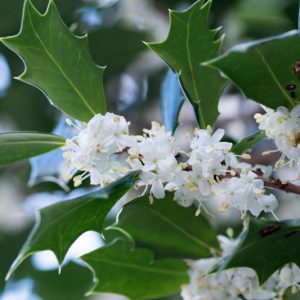

These selections offer flowers or colorful foliage where sunlight is filtered rather than completely blocked. They are not substitutes for the toughest shrubs in severe dry shade.
Kerria japonica ‘Pleniflora’ brightens spring gardens with masses of cheerful, double golden-yellow flowers resembling miniature pompons. Its slender green stems provide winter interest, while its arching habit creates a relaxed woodland look. Hardy generally in USDA Zones 4-9, it tolerates partial shade and occasional dryness once established, although flowering is best with filtered sunlight and some moisture. It spreads by suckers, making it suitable for informal borders where there is room to grow. Check regional invasive-plant guidance before planting.
Laurustinus is a handsome Mediterranean evergreen with pink buds opening into white winter-to-spring flowers. Glossy foliage and metallic-blue berries extend its appeal. Generally hardy in Zones 8-10, it tolerates partial shade and seasonal drought once established. Flowering is reduced in very deep shade.
Aaron’s Beard forms spreading, low shrubby growth with golden summer flowers and prominent stamens. Hardy in Zones 5-9, this subshrub tolerates partial shade and established drought. Useful for slopes and informal groundcover, it flowers less heavily in deep shade and can spread aggressively by underground stems.


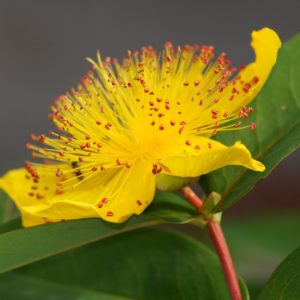
For moderately dry, sheltered gardens, these evergreens provide fragrance and dependable foliage, particularly where occasional watering is possible.
Sarcococca hookeriana offers glossy evergreen foliage and tiny winter flowers with extraordinary fragrance. Its gently spreading habit suits shaded entrances and woodland paths. Hardy approximately in Zones 5-8, depending on form, it tolerates shade and moderate dryness but appreciates mulch and occasional deep watering.
Sarcococca confusa forms dense evergreen foliage with intensely scented winter flowers followed by dark berries. Generally hardy in Zones 6-9, it is ideal near shaded doorways and sheltered courtyards. It tolerates some dryness once established but prefers humus-rich soil and occasional moisture during prolonged drought.
Buxus sempervirens ‘Suffruticosa’ is a compact, slow-growing evergreen with dense green foliage that lends year-round structure to shaded gardens. Hardy in USDA Zones 5-8, it tolerates partial shade and occasional dryness once established, making it useful for low hedges and formal borders. However, it needs some moisture during prolonged drought and is particularly susceptible to boxwood blight. Avoid planting it where this disease is prevalent.
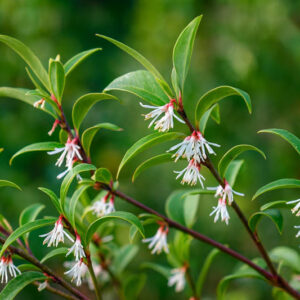
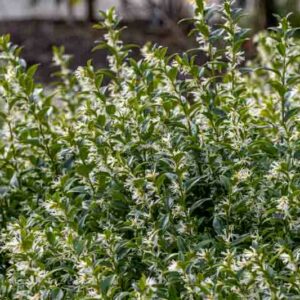

These final three suit brighter woodland conditions, where morning sun or filtered light reaches the soil. They should not be planted in the most severely dry, deeply shaded positions.
Baldhip rose is a delicate native woodland shrub with single pale pink spring flowers and attractive red hips. Generally hardy in Zones 5-9, it tolerates substantial shade and a range of woodland soils, including seasonal dryness. Particularly valuable in western North American wildlife gardens, it benefits from adequate moisture where summers are exceptionally hot or dry.
Fragrant sumac is a tough, spreading North American native with aromatic three-part leaves that turn brilliant orange, red, and purple in autumn. Hardy in Zones 2-8, it tolerates drought, poor soil, and partial shade. Best suited to bright woodland edges and sunny-to-partly-shaded banks, it is not a dependable choice for deep shade.
Japanese holly has small, glossy evergreen leaves that resemble boxwood, creating a neat appearance for clipped hedges and foundation plantings. Generally hardy in Zones 5-7, it tolerates partial shade and some established drought but prefers moist, well-drained, slightly acidic soil. Choose it for moderate shade with occasional watering, not severe drought.

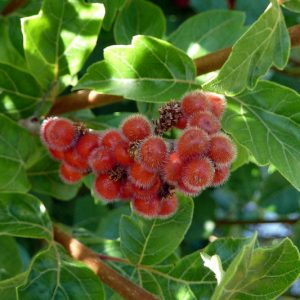
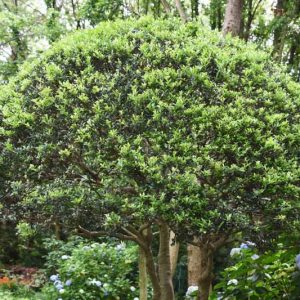
Which shrubs can handle demanding tree-root competition, and which need occasional watering? Gardenia’s comparison distinguishes tough dry-shade performers, shrubs for moderate dry shade, and plants suited to brighter or more sheltered positions.
These are practical editorial assessments based on known plant requirements, not controlled root-competition trials. Local climate and soil conditions affect results.
| Shrub | USDA Zones | Shade | Dry-Shade Suitability |
|---|---|---|---|
| Butcher’s Broom | 7-9 | Partial-full | Excellent; tough sites |
| Japanese Aucuba | 6-10 | Partial-full | Very good; water in prolonged drought |
| Golden English Yew ‘Standishii’ | 7-8 | Partial-full | Good once established; golden foliage becomes greener in deep shade |
| Alpine Currant | 2-7 | Partial-full | Very good |
| Common Snowberry | 3-7 | Partial-full | Very good; spreading |
| Coralberry | 2-7 | Partial-full | Very good; spreading |
| Catalina Currant | 8-10 | Partial shade | Excellent in suitable oak understories |
| Creeping Oregon Grape | 5-8 | Partial-dappled | Good once established |
| Northern Bush Honeysuckle | 3-7 | Partial | Very good in open shade |
| Mapleleaf Viburnum | 4-8 | Partial-full | Good; moderate summer drought |
| Salal | 6-8 | Partial-full | Good in suitable woodland soils |
| Gray Dogwood | 4-8 | Partial-full | Good; naturalized areas |
| Oregon Grape | 5-8 | Partial | Moderate; occasional moisture |
| Holly Osmanthus | 7-9 | Partial | Good once established |
| Warty Barberry | 6-9 | Partial | Good; check local restrictions |
| Japanese Kerria ‘Pleniflora’ | 4-9 | Partial | Moderate; occasional watering |
| Laurustinus | 8-10 | Partial | Good in mild climates |
| Hypericum calycinum | 5-9 | Partial | Good; may spread aggressively |
| Sarcococca hookeriana | 5-8 | Partial-full | Moderate; mulch and water |
| Sarcococca confusa | 6-9 | Partial-full | Moderate; sheltered sites |
| Dwarf English Boxwood ‘Suffruticosa’ | 5-8 | Partial-full | Moderate; occasional watering |
| Baldhip Rose | 5-9 | Partial-full | Moderate; woodland moisture |
| Fragrant Sumac | 2-8 | Bright partial | Very good; not deep shade |
| Japanese Holly | 5-7 | Partial | Moderate; occasional watering |
Hardiness ranges and performance vary by climate, cultivar, and establishment. Drought tolerance does not guarantee survival under severe root competition.
Gardenia’s quick choices: Butcher’s broom excels in difficult evergreen shade. Alpine currant, snowberry, and coralberry suit colder gardens. Catalina currant is excellent in suitable California oak habitats. For winter fragrance, choose sweet box where occasional watering is possible. For brightly shaded banks, consider fragrant sumac or Northern bush honeysuckle.
Protect tree roots. Avoid cutting major roots or adding deep layers of soil. Use smaller nursery plants that fit between existing roots. Leave densely rooted areas mulched when planting would damage established trees.
Water during establishment. Even drought-tolerant shrubs need dependable moisture while young. Check soil below tree canopies, where leaves and branches can intercept rainfall.
Mulch carefully. A modest layer of organic mulch helps conserve moisture and gradually improves surface soil. Keep mulch away from trunks and shrub stems.
Match plants to your light. Deep shade is different from morning sun or filtered woodland light. Flowering shrubs generally produce fewer blossoms where sunlight is very limited.
Consider local conditions. Native oak understories, cold-climate woodlands, and sheltered urban courtyards require different planting approaches. Use regionally appropriate species whenever possible.
Combine: Japanese aucuba, Sarcococca hookeriana, and butcher’s broom.
Golden-variegated foliage brightens the background, sweet box provides winter fragrance, and butcher’s broom adds glossy architectural structure. Best for sheltered, moderately dry shade where occasional watering is available.
Combine: Catalina currant, creeping Oregon grape where regionally appropriate, and native woodland sedges.
Aromatic evergreen foliage and naturally spreading groundcovers create a relaxed woodland planting. Select species suited to your local oak woodland, avoid disturbing established tree roots, and be cautious with summer irrigation around mature native oaks.
Combine: Alpine currant, common snowberry, and Northern bush honeysuckle.
Dense green foliage provides structure, white berries bring autumn interest, and bush honeysuckle adds yellow flowers and colorful fall foliage. Ideal for informal woodland borders with enough room for natural spreading.
Will These Shrubs Work in Your Dry Shade?
Save your favorites in Gardenia’s Garden Design Tool to compare recorded sunlight, soil, drainage, and water requirements. Check growing-condition compatibility, plan planting quantities, and create a shopping list.
Start free with up to five plants. The tool cannot measure root competition beneath individual trees.
Butcher’s broom is among the toughest evergreens. Alpine currant and snowberry suit colder climates, while Catalina currant performs well in suitable California oak habitats. All need moisture during establishment.
Butcher’s broom, aucuba, English yew, and Catalina currant tolerate dry shade in appropriate climates. Sweet box and holly osmanthus are useful in moderately dry shade.
Native choices include Catalina currant, creeping Oregon grape, snowberry, coralberry, Northern bush honeysuckle, and mapleleaf viburnum. Select species native to your region.
Choose plants adapted to shade and dry soil, protect major roots, and water during establishment. Butcher’s broom, snowberry, and regionally suitable native shrubs are useful options.
Alpine currant, common snowberry, coralberry, Northern bush honeysuckle, and mapleleaf viburnum are useful cold-hardy choices in appropriate sites.
Yes, although flowering often decreases in deep shade. Oregon grape, Northern bush honeysuckle, Japanese kerria, and mapleleaf viburnum tolerate some dry shade.
Yes, especially when newly planted. Established drought-tolerant shrubs may also benefit from occasional deep watering during prolonged dry weather.
Catalina currant, creeping Oregon grape, Northern bush honeysuckle, and spreading snowberries can help cover suitable shaded slopes. Choose according to climate and soil conditions.
Hydrangeas generally need more consistent moisture. They can tolerate partial shade but usually struggle beneath thirsty mature trees without supplemental watering.
Protect major roots, use smaller nursery plants, water during establishment, and apply modest organic mulch. Avoid heavy digging or burying tree trunks.
A successful dry-shade garden starts with understanding what the site can support. Choose the toughest shrubs for severe root competition, save more demanding evergreens for places where occasional watering is possible, and give every new plant time to establish.
With attractive foliage, fragrant flowers, colorful berries, and thoughtful planting combinations, even a difficult shaded corner can become one of the most rewarding parts of your garden.
For complementary plants, explore Gardenia’s Best Plants for Dry Shade Under Trees, including groundcovers, sedges, and woodland perennials.
Design Your Dry Shade Garden
Compare shrubs in Gardenia’s Garden Design Tool, check growing-condition compatibility, plan planting quantities, and create your shopping list. Start free with up to five plants.
| Plant Type | Shrubs |
|---|---|
| Exposure | Partial Sun, Shade |
Create a membership account to save your garden designs and to view them on any device.
Becoming a contributing member of Gardenia is easy and can be done in just a few minutes. If you provide us with your name, email address and the payment of a modest $25 annual membership fee, you will become a full member, enabling you to design and save up to 25 of your garden design ideas.
Join now and start creating your dream garden!