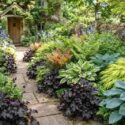
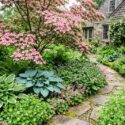
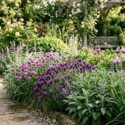
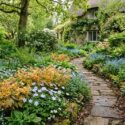
Transform a shady woodland slope with lavender-blue Phlox 'Blue Moon', magenta Geranium 'Bevan's Variety', delicate Red Barrenwort, evergreen Christmas Fern, and Pennsylvania Sedge. These flowering perennials, ferns, and native groundcovers create a romantic display from mid-spring into early summer, with attractive foliage maintaining woodland beauty throughout the seasons.
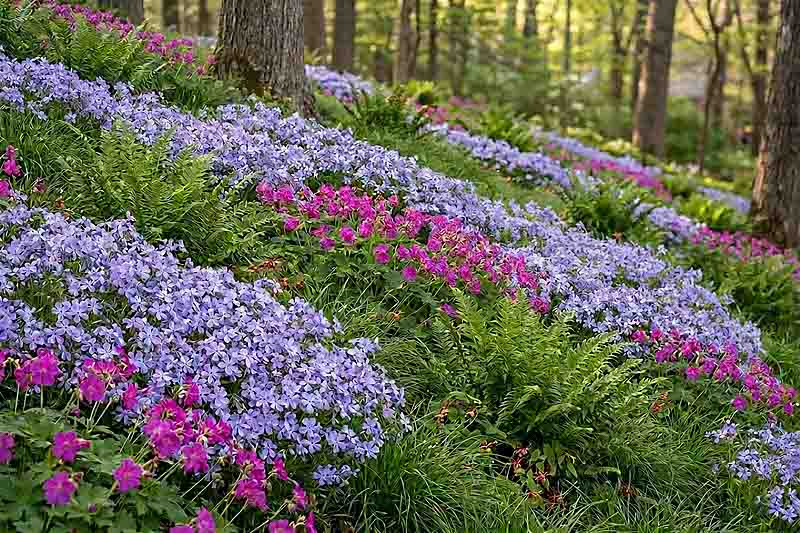


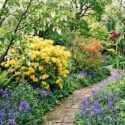
Imagine a shaded woodland hillside carpeted with lavender-blue Phlox and vivid magenta Geraniums. Delicate spring flowers weave between evergreen ferns, while soft native sedges flow around tree roots and mossy stones. Natural, romantic, and wonderfully peaceful, this beautiful planting transforms a difficult shady slope into a colorful spring retreat.
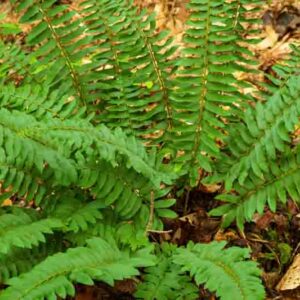
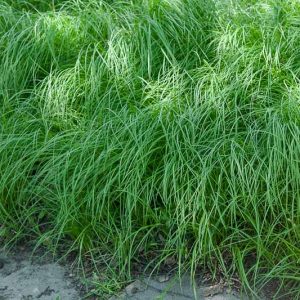
Five plants create the display: Geranium macrorrhizum ‘Bevan’s Variety’ (Bigroot Geranium), Epimedium × rubrum (Red Barrenwort), Polystichum acrostichoides (Christmas Fern), Phlox divaricata ‘Blue Moon’ (Woodland Phlox), and Carex pensylvanica (Pennsylvania Sedge). Together, they combine spring flowers, attractive groundcovers, and year-round foliage interest.
Main plants used: Geranium macrorrhizum ‘Bevan’s Variety’, Epimedium × rubrum, Polystichum acrostichoides, Phlox divaricata ‘Blue Moon’, and Carex pensylvanica.
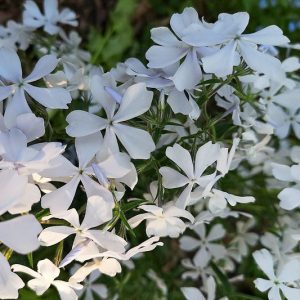
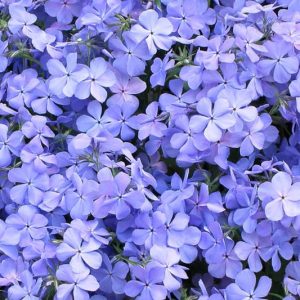
Phlox divaricata ‘Blue Moon’ creates enchanting spring drifts of fragrant, lavender-blue flowers. This North American woodland perennial spreads gradually into loose colonies, bringing beautiful color beneath deciduous trees.
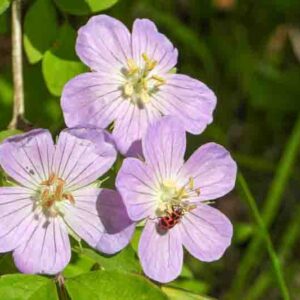
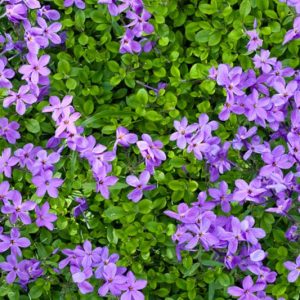
Geranium macrorrhizum ‘Bevan’s Variety’ provides a striking contrast with deep magenta-pink flowers above aromatic, semi-evergreen foliage. Its spreading rhizomes help cover bare soil, and established plants tolerate relatively dry shade.
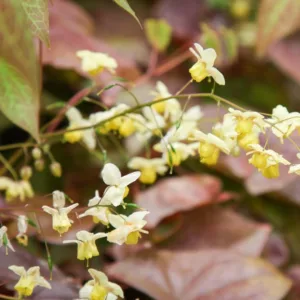
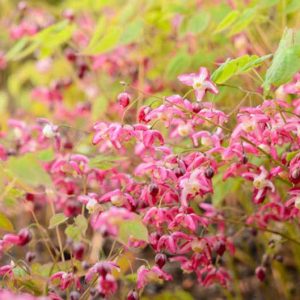
Epimedium × rubrum introduces delicate crimson-and-cream flowers in spring, followed by attractive heart-shaped leaves with reddish-bronze tints. Its restrained growth complements the more exuberant Phlox and Geranium.
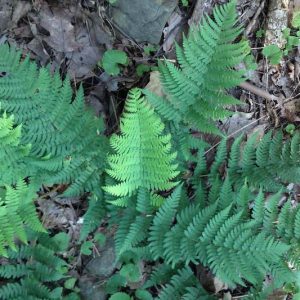
Polystichum acrostichoides adds elegant, evergreen fronds throughout the year. Its clumping habit brings structure without spreading aggressively, while Carex pensylvanica forms fine-textured, grass-like colonies that soften the edges of the planting.
The combination succeeds through contrasting flower colors and foliage textures. Spring blooms provide the romance, while ferns, sedges, and groundcovers maintain the woodland character after flowering.
Inspired by this planting? Add the plants below to your Garden Collection, then open the Garden Design Tool to explore their seasonal-interest calendar and calculate planting quantities for your own garden.
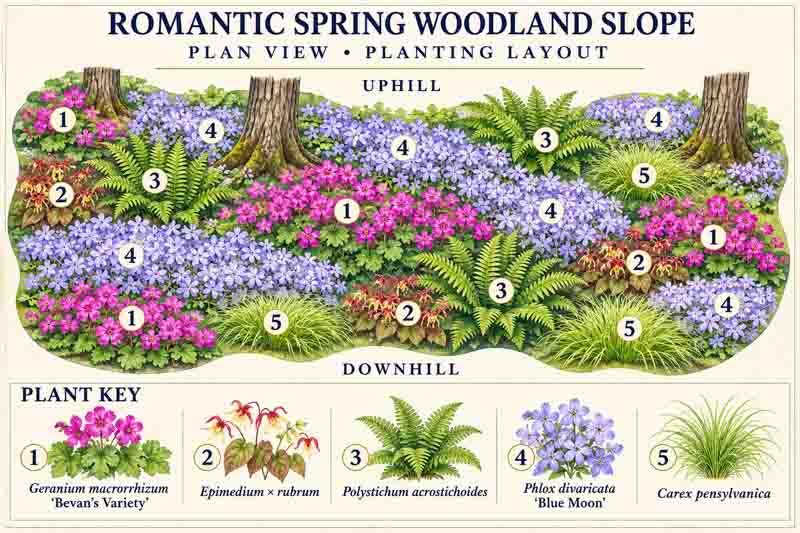
Create a romantic spring woodland slope with blue and magenta flowers, evergreen ferns, and flowing sedges beneath mature trees.
Approximate visual proportions, not plant quantities.
Repeat Woodland Phlox in broad drifts across cooler portions of the slope. Add Bigroot Geranium in irregular magenta-flowering patches. Position Epimedium beneath tree canopies, then weave Christmas Fern and Pennsylvania Sedge throughout for year-round texture. Allow each plant room to spread naturally.
Spring begins with delicate Epimedium flowers, followed by lavender-blue Phlox and magenta Geraniums. As flowering fades, aromatic Geranium leaves, evergreen Christmas Ferns, and fine Pennsylvania Sedge maintain the hillside’s appeal. Epimedium foliage may develop attractive reddish tones in autumn.
| Hardiness |
4 - 8 |
|---|---|
| Exposure | Partial Sun, Shade |
| Season of Interest | Spring (Mid, Late), Summer (Early) |
| Maintenance | Low |
| Water Needs | Average |
| Soil Type | Loam, Sand |
| Soil pH | Acid, Neutral |
| Soil Drainage | Moist but Well-Drained |
| Characteristics | Showy |
| Tolerances | Drought, Deer, Dry Soil |
| Attracts | Bees, Butterflies |
| Landscaping Ideas | Banks And Slopes, Beds And Borders |
| Garden Styles | Butterfly Garden, Informal and Cottage, Pollinator Garden, Woodland Garden |


| Hardiness |
4 - 8 |
|---|---|
| Exposure | Partial Sun, Shade |
| Season of Interest | Spring (Mid, Late), Summer (Early) |
| Maintenance | Low |
| Water Needs | Average |
| Soil Type | Loam, Sand |
| Soil pH | Acid, Neutral |
| Soil Drainage | Moist but Well-Drained |
| Characteristics | Showy |
| Tolerances | Drought, Deer, Dry Soil |
| Attracts | Bees, Butterflies |
| Landscaping Ideas | Banks And Slopes, Beds And Borders |
| Garden Styles | Butterfly Garden, Informal and Cottage, Pollinator Garden, Woodland Garden |
Recreate this garden. Specify the percentages you would like to have of each plant and input the dimensions of your garden space.We'll give you a shopping list so you know how many plants you need.
| Plant | Quantity | |
|---|---|---|
| Phlox divaricata 'Blue Moon' (Woodland Phlox) | N/A | Buy Plants |
| Geranium macrorrhizum 'Bevan's Variety' (Cranesbill) | N/A | Buy Plants |
| Epimedium × rubrum (Red Barrenwort) | N/A | Buy Plants |
| Polystichum acrostichoides (Christmas Fern) | N/A | Buy Plants |
| Carex pensylvanica (Pennsylvania Sedge) | N/A | Buy Plants |
Create a membership account to save your garden designs and to view them on any device.
Becoming a contributing member of Gardenia is easy and can be done in just a few minutes. If you provide us with your name, email address and the payment of a modest $25 annual membership fee, you will become a full member, enabling you to design and save up to 25 of your garden design ideas.
Join now and start creating your dream garden!