Catalina Currant, Santa Catalina Island Currant, Island Gooseberry, Evergreen Currant, Catalina Perfume, Viburnumleaf Currant, Ribes viburnumifia
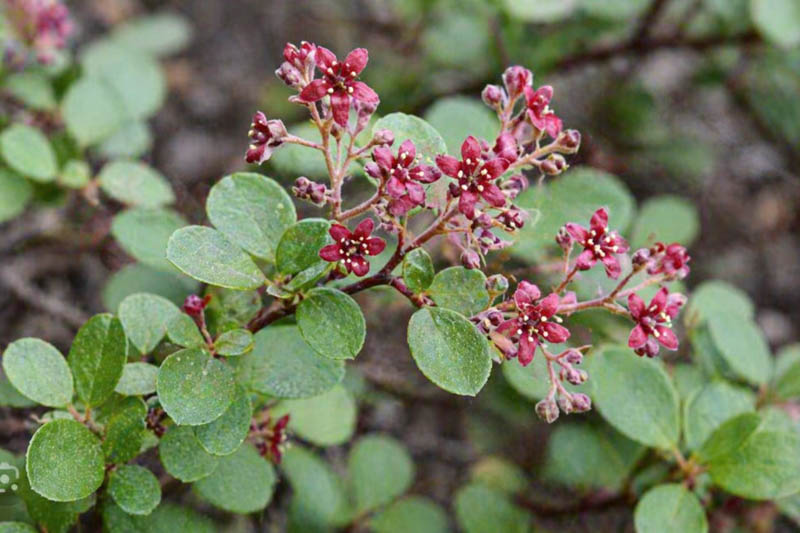


Ribes viburnifolium, commonly known as Catalina Currant, Catalina Perfume, Evergreen Currant, or Santa Catalina Island Currant, is a refined California native shrub treasured for glossy aromatic foliage, burgundy-red stems, soft rose to wine-colored flowers, and exceptional performance in dry shade. Compact, spreading, evergreen, and quietly elegant, this island native is one of the best native shrubs for oak understories, shaded slopes, woodland edges, wildlife gardens, erosion-control plantings, and low-water landscapes where a lush look is desired without heavy irrigation.
Ribes viburnifolium is an evergreen, aromatic, spreading currant native to California’s Santa Catalina Island and Baja California. Grow it in part shade, bright shade, filtered sun, or morning sun, in well-drained soil with low to occasional water once established. It is especially valuable as a dry shade groundcover shrub beneath native oaks, on slopes, along shaded banks, and in California native gardens where glossy foliage, fragrance, habitat value, and year-round structure matter.
Use: Excellent for California native gardens, dry shade, oak-edge plantings, shaded slopes, erosion control, wildlife gardens, low-water borders, informal groundcover, and woodland-style plantings.
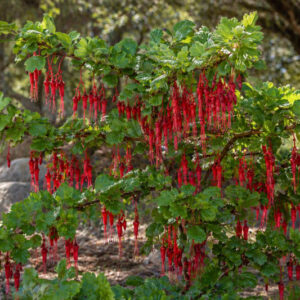
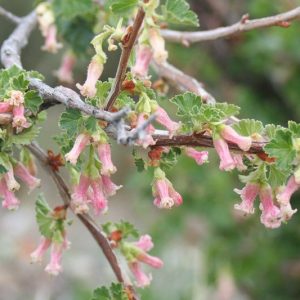
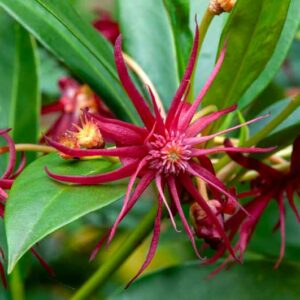
Highlight: Aromatic, glossy, dark green evergreen leaves on wine-red stems, with small rose, pink, burgundy, or red flowers in late winter to spring.
Design note: Use it where people can brush past lightly and enjoy the spicy, fruity fragrance of the foliage, but allow enough room for its graceful, spreading habit.
| Botanical Name | Ribes viburnifolium |
|---|---|
| Family | Gooseberry family (Grossulariaceae) |
| Common Names | Catalina Currant, Catalina Perfume, Evergreen Currant, Island Gooseberry, Santa Catalina Island Currant |
| Native Range | Santa Catalina Island off southern California and Baja California, Mexico; associated with shaded canyons, island chaparral, woodland edges, and dry slopes |
| Native U.S. States | California – especially Santa Catalina Island; not broadly native throughout the state. |
| Plant Type | Evergreen native shrub; spreading, arching, and often used as a high groundcover |
| Hardiness | Best in mild-winter climates, commonly grown in USDA Zones 8-10; cold tolerance is often listed around 10–15°F in protected, well-drained sites |
| Height | About 2-3 ft. tall, occasionally taller in favorable sites |
| Spread | About 4-8 ft. wide, depending on water, pruning, shade, and soil |
| Sun Exposure | Part shade, bright shade, filtered sun, or morning sun; afternoon shade is best inland |
| Soil | Well-drained soil; tolerates many native garden soils and can handle heavier soils if drainage is adequate |
| Bloom Time | Late winter to spring, commonly February-April |
| Flower Color | Rose-pink, burgundy, crimson, wine-red, or reddish-pink |
| Foliage | Evergreen, glossy, dark green, aromatic leaves with a spicy, fruity, resinous scent when brushed or wet |
| Drought Tolerant | Yes, once established; best with winter rain and little to occasional summer water |
| Deer Resistant | Often considered moderately deer resistant, but young plants may need protection |
| Attracts | Hummingbirds, butterflies, bees, beneficial insects, birds, and small wildlife |
| Pet and Child Safety | Primarily grown as an ornamental. Do not treat berries as edible unless verified by a reliable local or ethnobotanical source. |
Catalina Currant is a handsome evergreen currant in the genus Ribes, the group that includes currants and gooseberries. Unlike the thornier gooseberries, Ribes viburnifolium is prized less for dramatic flowers and more for its year-round foliage, fragrance, and shade-garden usefulness. Its leaves are dark, leathery, glossy, and aromatic, creating a polished texture that looks fresh beneath oaks, along shaded walls, and on dry banks.
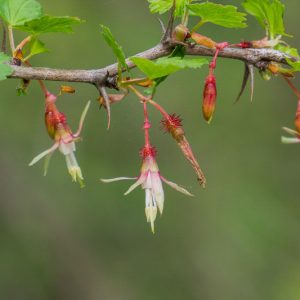
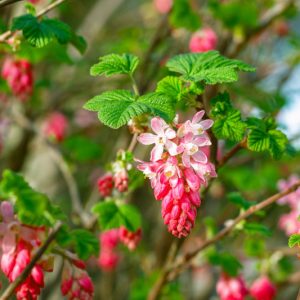
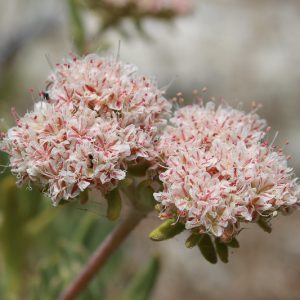
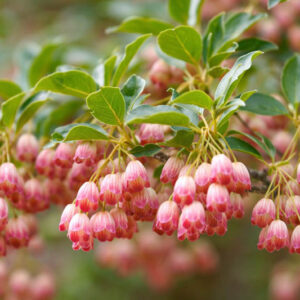
Ribes viburnifolium forms a low, arching, spreading shrub with reddish to burgundy stems and glossy evergreen leaves. In late winter and spring, it produces small clusters of rose, burgundy, crimson, or reddish-pink flowers. The blooms are not as bold as those of Ribes speciosum, but they are charming up close and valuable to early-season pollinators. Small berries may follow, though fruiting is not always conspicuous in garden settings.
Catalina Currant is native to Santa Catalina Island off the coast of southern California and to Baja California, Mexico. Its natural island heritage explains much of its garden personality: it appreciates mild winters, dry summers, good drainage, filtered light, and protection from extreme inland heat. In cultivated landscapes, it is widely used beyond its narrow wild range as a dependable California native shrub for dry shade and low-water gardens.
This evergreen currant typically flowers from late winter into spring, often February through April. The flowers are small but richly colored, appearing along the stems like quiet jewels. In a shade garden, that timing is extremely useful because the plant adds subtle bloom, fragrance, and wildlife activity before many perennials and summer natives wake up.
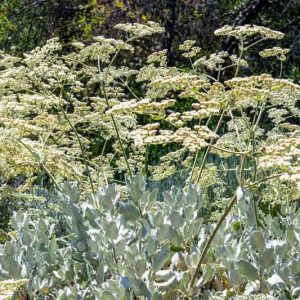
The foliage is the star. Each leaf is glossy, deep green, aromatic, and durable, giving the plant a refined look through the year. In shaded native gardens, Ribes viburnifolium can act almost like a living mulch, covering bare ground under shrubs and trees while reducing visual dryness. Its dark leaves contrast beautifully with silver foliage, pale flowers, oak leaves, sandstone, decomposed granite, and natural boulders.
In many gardens, Catalina Currant grows about 2-3 ft. tall and 4-8 ft. wide. With occasional water and good soil, it can spread generously, making it effective for erosion control and slope coverage. With careful tip pruning, it can be kept denser and more compact. Think of it as a broad, fragrant, evergreen groundcover shrub rather than a vertical specimen.
Ribes viburnifolium is best suited to mild-winter Mediterranean climates and is commonly grown in USDA Zones 8-10. Established plants may tolerate brief cold snaps in protected sites, especially where soil drains well. In colder gardens, plant it near a wall, beneath light tree cover, or in a sheltered microclimate. In hot inland gardens, afternoon shade is more important than maximum sun.
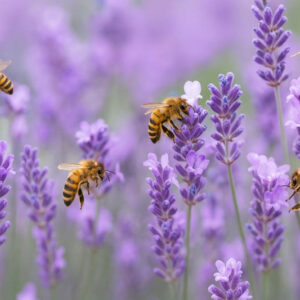
The flowers support bees, butterflies, beneficial insects, and hummingbirds, while the evergreen structure offers cover for small wildlife. Although the flowers are modest, they arrive during an important seasonal window. For wildlife-focused planting ideas, see Wildlife-Friendly Plants: Attract Bees, Butterflies & Birds.
Catalina Currant is often considered moderately resistant to browsing, partly because of its aromatic foliage, but no plant is completely deer-proof or rabbit-proof. Young plants are most vulnerable. Protect new shrubs until they are rooted and woody, especially in neighborhoods with heavy browsing pressure. For more options, explore deer-resistant plants and rabbit-resistant plants.
Once established, Ribes viburnifolium is drought tolerant in shade and part shade. During the first year, water deeply and infrequently to encourage a strong root system. After establishment, reduce irrigation. In hotter inland gardens, occasional summer water may keep the plant fuller, but constant wet soil should be avoided. For more water-wise choices, explore drought-tolerant plants.
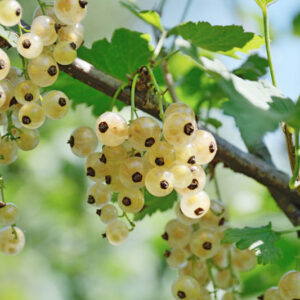
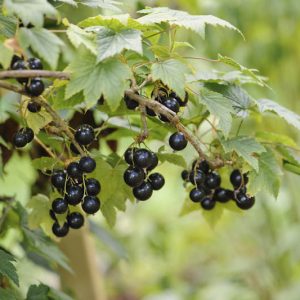
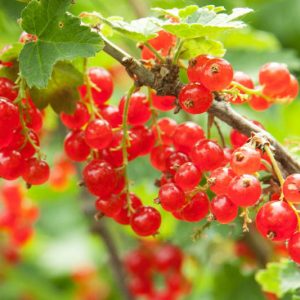
Catalina Currant is grown primarily as an ornamental and habitat shrub, not as a fruit crop. While some Ribes species have edible berries, gardeners should not encourage people or pets to eat the berries unless edibility has been verified through reliable local guidance. The practical value of this plant is its foliage, fragrance, shade tolerance, erosion control, and wildlife role.
Ribes viburnifolium is not generally considered invasive in gardens. It can spread wider than expected when happy, but that is a manageable landscape habit, not an aggressive invasive behavior. Give it space, prune lightly, and use its natural spread to your advantage on banks, under trees, and in broad native borders.
Catalina Currant rarely needs fertilizer. Heavy feeding can push soft growth and reduce the plant’s natural resilience. A light layer of compost, native leaf litter, or shredded bark is usually enough. In oak plantings, natural leaf litter is often the best mulch and fertilizer combined.
Apply a light mulch to conserve moisture, moderate soil temperature, and suppress weeds. Keep mulch a few inches away from the crown. In dry shade, mulch is especially useful while young plants are establishing, but it should never create a wet, airless collar around the stems.
Design tip:
Plant Ribes viburnifolium where its fragrance can be discovered. A shaded path, oak-edge seating area, or garden stairway turns this quiet shrub into a sensory experience.
Prune lightly after flowering to guide shape, increase density, or keep stems from wandering into paths. Tip-pruning encourages fuller growth. Avoid hard shearing, which ruins the natural arching habit and can expose bare interior stems. Remove dead, crossing, or awkward growth as needed.
Catalina Currant can grow in a large container if drainage is excellent and the pot is placed in bright shade or morning sun. Use a well-drained native-plant mix and avoid letting the container sit in water. Potted plants dry faster than in-ground shrubs, so monitor moisture during warm weather.
Care tip:
The secret is shade plus restraint. Give Catalina Currant filtered light, good drainage, occasional establishment water, and room to spread. Do not pamper it like a thirsty bedding plant.
Ribes viburnifolium struggles in hot inland afternoon sun, reflected heat, compacted wet soil, over-irrigated lawn edges, and very deep dry shade with no seasonal moisture. It can also become sparse if never tip-pruned. In the right place, however, it is one of the most graceful and practical evergreen native shrubs for shade.
| Task | Best Time |
|---|---|
| Planting | Fall to early winter, so roots establish with seasonal rain. |
| Flowering | Late winter to spring, commonly February-April. |
| Pruning | After flowering, especially for tip-pruning and shaping. |
| Mulching | Fall or winter, before the dry season. |
| Watering | Deeply but infrequently during establishment; little to occasional water after establishment. |
Ribes viburnifolium can be propagated by seed or cuttings. Semi-hardwood cuttings are often practical for gardeners and native plant growers. For restoration, island plantings, and habitat-sensitive work, use regionally appropriate stock from reputable native plant nurseries.
Leggy growth usually means too much deep shade, too little tip-pruning, or competition from nearby shrubs. Move young plants to brighter shade or prune lightly after flowering to encourage branching.
Brown or scorched leaves usually indicate too much sun, hot reflected heat, dry wind, or poor establishment. Provide afternoon shade inland, mulch lightly, and water deeply during the first dry season.
Yellowing may point to poor drainage, overwatering, or root stress. Reduce irrigation, check soil moisture before watering, and avoid planting in soggy basins.
Flowering is naturally subtle, but very weak bloom can result from deep shade, immaturity, or excessive pruning before buds open. Prune after flowering, not before.
Catalina Currant is generally low-maintenance when planted correctly. Watch for aphids on tender growth, occasional scale insects, and fungal issues where airflow is poor. Root rot is the most avoidable serious problem and is usually linked to soggy soil or excessive irrigation.
Use Ribes viburnifolium as a subtle, polished foreground plant in native shade gardens. Its glossy dark leaves, wine-red stems, and low arching habit bring depth and permanence to quiet spaces beneath trees, along shaded walls, around boulders, and beside garden steps. Place it where its aromatic foliage can be brushed lightly after rain or along a path, but give it enough room to spread naturally.
Choose companion plants that share Catalina Currant’s preference for part shade, bright shade, filtered sun, well-drained soil, and low to occasional water. Ideal companions should tolerate dry shade or oak-edge conditions and should not require soggy summer soil.
Best companion plants for dry shade: hummingbird sage (Salvia spathacea), coral bells (Heuchera spp., including island alum root, Heuchera maxima), Douglas iris (Iris douglasiana), California coffeeberry (Frangula californica), toyon (Heteromeles arbutifolia), hollyleaf cherry (Prunus ilicifolia), and coast live oak (Quercus agrifolia) as an overstory tree.
Yes. In the United States, Ribes viburnifolium is native to California, specifically Santa Catalina Island. Its broader native range also includes Baja California, Mexico.
It is called Catalina Perfume because its glossy evergreen leaves are aromatic. When brushed, watered, or wet from rain, the foliage can release a spicy, fruity fragrance.
Yes. Catalina Currant is one of the best California native shrubs for dry shade, part shade, filtered sun, and oak-edge plantings. It performs best with afternoon shade in hot inland gardens.
Yes. Ribes viburnifolium is an evergreen currant with glossy, aromatic, dark green leaves. It is especially valued for year-round foliage in shaded low-water gardens.
Catalina Currant commonly grows about 2 to 4 feet tall and 4 to 8 feet wide. It has a spreading, arching habit and is often used as a high groundcover shrub.
Yes, once established. It needs deep, infrequent watering during establishment, then little to occasional supplemental water, especially when grown in shade or part shade.
Yes. Ribes viburnifolium is an excellent choice for oak-edge and dry-shade plantings, provided drainage is good and frequent summer irrigation is avoided.
Yes. The small rose, burgundy, or reddish flowers can attract hummingbirds and pollinators, while the evergreen branching provides useful wildlife cover.
Updated: April 2026 • Reviewed by Gardenia Editors
| Hardiness |
8 - 10 |
|---|---|
| Climate Zones | 5, 7, 8, 9, 14, 15, 16, 17, 19, 20, 21, 22, 23, 24 |
| Plant Type | Shrubs |
| Plant Family | Grossulariaceae |
| Genus | Ribes |
| Common names | Currant, Gooseberry |
| Exposure | Partial Sun |
| Season of Interest | Spring (Early, Mid), Winter |
| Height | 2' - 3' (60cm - 90cm) |
| Spread | 4' - 8' (120cm - 240cm) |
| Spacing | 48" - 96" (120cm - 240cm) |
| Maintenance | Low |
| Water Needs | Low |
| Soil Type | Clay, Loam, Sand |
| Soil pH | Acid, Alkaline, Neutral |
| Soil Drainage | Well-Drained |
| Characteristics | Evergreen |
| Native Plants | United States, California |
| Tolerance | Deer, Drought, Dry Soil, Rabbit, Clay Soil, Rocky Soil |
| Attracts | Bees, Hummingbirds, Birds |
| Garden Uses | Banks And Slopes, Ground Covers |
| Garden Styles | Informal and Cottage |


| Hardiness |
8 - 10 |
|---|---|
| Climate Zones | 5, 7, 8, 9, 14, 15, 16, 17, 19, 20, 21, 22, 23, 24 |
| Plant Type | Shrubs |
| Plant Family | Grossulariaceae |
| Genus | Ribes |
| Common names | Currant, Gooseberry |
| Exposure | Partial Sun |
| Season of Interest | Spring (Early, Mid), Winter |
| Height | 2' - 3' (60cm - 90cm) |
| Spread | 4' - 8' (120cm - 240cm) |
| Spacing | 48" - 96" (120cm - 240cm) |
| Maintenance | Low |
| Water Needs | Low |
| Soil Type | Clay, Loam, Sand |
| Soil pH | Acid, Alkaline, Neutral |
| Soil Drainage | Well-Drained |
| Characteristics | Evergreen |
| Native Plants | United States, California |
| Tolerance | Deer, Drought, Dry Soil, Rabbit, Clay Soil, Rocky Soil |
| Attracts | Bees, Hummingbirds, Birds |
| Garden Uses | Banks And Slopes, Ground Covers |
| Garden Styles | Informal and Cottage |
How many Ribes viburnifolium (Catalina Currant) do I need for my garden?
| Plant | Quantity | |
|---|---|---|
| Ribes viburnifolium (Catalina Currant) | N/A | Buy Plants |
Create a membership account to save your garden designs and to view them on any device.
Becoming a contributing member of Gardenia is easy and can be done in just a few minutes. If you provide us with your name, email address and the payment of a modest $25 annual membership fee, you will become a full member, enabling you to design and save up to 25 of your garden design ideas.
Join now and start creating your dream garden!
Create a membership account to save your garden designs and to view them on any device.
Becoming a contributing member of Gardenia is easy and can be done in just a few minutes. If you provide us with your name, email address and the payment of a modest $25 annual membership fee, you will become a full member, enabling you to design and save up to 25 of your garden design ideas.
Join now and start creating your dream garden!