Can cats eat grapes, or are they dangerous? Many pet owners assume fruit is harmless, but grapes may pose serious risks to pets. This vet-informed guide explains the real dangers, symptoms to watch for, and what to do if your cat eats grapes - plus safer treat alternatives.
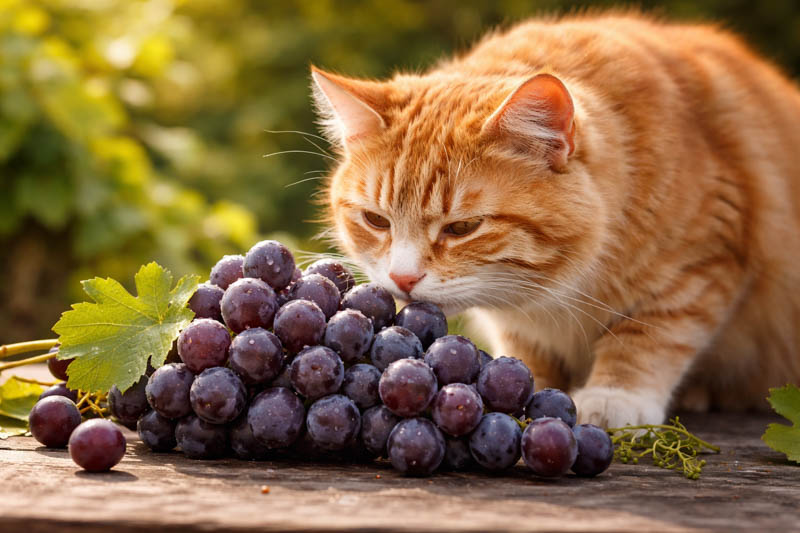


If you are asking, “Can cats eat grapes?” the safest answer is simple – no. Grapes are not considered safe for cats. While grapes are well known to be toxic to dogs, veterinarians also recommend keeping grapes and raisins away from cats because reactions may occur and the fruit provides no nutritional benefit.
The biggest challenge with grapes is uncertainty. Researchers still do not fully understand the compound responsible for grape toxicity in pets. Because the reaction can vary widely between animals, veterinary experts advise treating grapes as an unsafe food for all household pets, including cats.
Below is a clear, veterinarian-informed guide explaining why grapes are risky for cats, what symptoms to watch for, what to do if your cat eats grapes, and which treats are safer alternatives.
Hard no for cats
Can cats eat grapes? No. Grapes and raisins are not safe for cats.
Why are they dangerous? Grapes can cause digestive upset and may trigger harmful reactions in pets.
Is one grape okay? Do not assume so. There is no known safe amount for cats, and grapes offer no nutritional benefit.
What should you do right now? Remove any remaining grapes and contact your veterinarian if your cat may have eaten any.
Fast takeaway: Grapes are a human snack, not a feline treat.
Grapes may look harmless, but they are considered unsafe for pets. Veterinary toxicologists know that grapes and raisins can cause acute kidney injury in dogs. Although toxicity in cats is less well documented, experts still recommend preventing cats from eating grapes because the exact toxic compound has not been fully identified.
Some research suggests that tartaric acid may contribute to grape toxicity. Because cats have unique metabolisms and sensitive digestive systems, even small exposures could cause adverse reactions.
There are several reasons veterinarians advise avoiding grapes completely.
Important: Cats are obligate carnivores. Their bodies are designed to thrive on animal protein. Grapes provide no meaningful nutritional value for cats.
If a cat eats grapes, the most common early reaction is digestive upset. A cat may vomit, drool, appear nauseous, or lose interest in food. Some cats may also become lethargic or withdrawn.
Because cats often hide signs of illness, symptoms may be subtle at first. Even mild behavior changes can signal that your cat is uncomfortable.
While severe kidney damage from grapes is best documented in dogs, veterinarians still recommend caution with cats. If symptoms appear after grape exposure, contacting a veterinarian is the safest step.
If your cat may have eaten grapes or raisins, watch for these possible signs.
Many accidental exposures happen through foods that contain grapes or raisins. These foods should never be shared with pets.
Because raisins are simply dried grapes, they are even more concentrated and potentially more dangerous.
Safety tip: Cats rarely seek fruit, but they may lick or chew unfamiliar foods. Keeping grapes and raisin products stored securely helps prevent accidental exposure.
If you suspect your cat ate grapes or raisins, taking action quickly can help prevent complications.
Pet Poison Helplines
ASPCA Animal Poison Control Center: (888) 426-4435
Pet Poison Helpline: (855) 764-7661
These services can provide guidance if your veterinarian is unavailable.
If you want to share a snack with your cat, choose foods that match their carnivorous diet.
These options align with your cat’s nutritional needs and are far safer than fruit.
The safest rule is easy to remember – grapes and raisins should never be given to cats. They offer no health benefit and may expose your pet to unnecessary risk.
If your cat accidentally eats grapes, contacting your veterinarian promptly ensures your pet receives the right guidance.
No. Grapes are not considered safe for cats. Veterinarians recommend preventing cats from eating grapes because reactions may occur and the fruit provides no nutritional benefit.
Yes. Raisins are dried grapes, which means the fruit is concentrated. Even small amounts should be avoided.
Remove any remaining grapes and contact your veterinarian. Watch for symptoms like vomiting, lethargy, or appetite loss.
Cats are obligate carnivores and obtain essential nutrients from animal protein rather than fruit.
Updated: April 2026 • Reviewed by Gardenia Editors
| Hardiness |
3 - 10 |
|---|---|
| Plant Type | Climbers, Fruits |
| Plant Family | Vitaceae |
| Genus | Vitis |
| Exposure | Full Sun |
| Maintenance | High |
| Water Needs | Average |
| Soil Type | Chalk, Loam, Sand |
| Soil pH | Alkaline, Neutral |
| Soil Drainage | Well-Drained, Moist but Well-Drained |
| Attracts | Bees, Birds |
| Hardiness |
3 - 10 |
|---|---|
| Plant Type | Climbers, Fruits |
| Plant Family | Vitaceae |
| Genus | Vitis |
| Exposure | Full Sun |
| Maintenance | High |
| Water Needs | Average |
| Soil Type | Chalk, Loam, Sand |
| Soil pH | Alkaline, Neutral |
| Soil Drainage | Well-Drained, Moist but Well-Drained |
| Attracts | Bees, Birds |
Create a membership account to save your garden designs and to view them on any device.
Becoming a contributing member of Gardenia is easy and can be done in just a few minutes. If you provide us with your name, email address and the payment of a modest $25 annual membership fee, you will become a full member, enabling you to design and save up to 25 of your garden design ideas.
Join now and start creating your dream garden!
Create a membership account to save your garden designs and to view them on any device.
Becoming a contributing member of Gardenia is easy and can be done in just a few minutes. If you provide us with your name, email address and the payment of a modest $25 annual membership fee, you will become a full member, enabling you to design and save up to 25 of your garden design ideas.
Join now and start creating your dream garden!