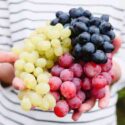
Growing grapes in a dry climate can be incredibly rewarding, if you choose the right varieties. This expert guide reveals drought-tolerant grapes that thrive in heat, conserve water, and still produce exceptional fruit for fresh eating, wine, and beyond.
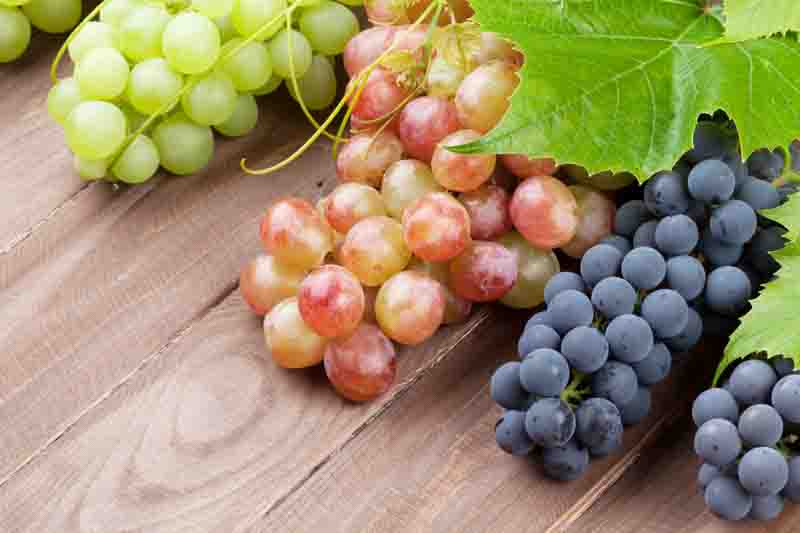


Growing grapes in a dry climate can be one of the most rewarding fruit-growing projects you can take on, but it is not as simple as planting “a drought-tolerant vine” and expecting excellent fruit. Dry climates usually reduce the fungal disease pressure that shapes grape growing in wetter regions, yet they replace it with a different set of challenges: intense sunlight, hot winds, alkaline soils, water limitations, berry sunburn, shrivel, and the risk of vines slowing down when heat and water stress arrive together.
The best grapes for dry climates are therefore not just vines that survive drought. They are cultivars that ripen properly in heat, use water efficiently, fit your elevation, and still deliver fruit quality worth harvesting. That is the difference between a vine that merely lives and a vine that becomes a reliable part of the garden.
That distinction matters because “dry climate” is not one thing. A low-desert backyard in Arizona is not the same as a warm inland valley in California, and neither is the same as a high-desert site where low humidity coexists with colder winters and spring frost risk. University of Arizona guidance makes this split unusually clear: European grapes are generally the better fit below about 4,500 feet, while American grapes and French hybrids become more suitable above that elevation because of greater cold hardiness. That single rule explains why some grapes thrive in one dry region and disappoint badly in another.
Methodology: This guide prioritizes grape cultivars for dry-climate gardens based on five filters: heat adaptation, water efficiency, ripening window, elevation fit, and end use. The goal is not to list the most famous grapes. It is to recommend the grapes that make the most practical sense in real dry-climate growing conditions.
The fastest way to choose the right grape is to begin with your actual goal. A backyard fresh-eating grape should not be judged by the same standards as a raisin grape, a juice grape, or a wine grape. In dry climates, the right match between cultivar and purpose often matters more than the difference between “good” and “great” fruit quality in the abstract.
This goal-first approach matters because the best grape for a hot low-desert arbor is not automatically the best grape for a high-desert homestead, and neither is necessarily the best grape for a serious warm-climate wine planting.
This guide starts with a hard truth: dry climates reduce some problems, but they do not remove the need for precision. Compared with humid regions, dry sites usually face less pressure from black rot and downy mildew. But that advantage is replaced by a different challenge set: heat spikes, berry shrivel, sunburn, caliche or alkaline soils, water restrictions, and the need to protect clusters without creating a dense, unmanageable canopy.
So the first screen is heat behavior. A grape that survives a hot climate is not automatically a good recommendation. The best grapes for dry climates continue to ripen and maintain fruit quality under heat rather than merely endure it.
The second screen is water realism. Dry-climate grape growing works best when vines respond well to efficient irrigation and reasonable controlled stress. UC drought guidance emphasizes irrigation efficiency, drought-tolerant rootstocks, and canopy management rather than the fantasy that quality grapes need no water at all.
The third screen is ripening window. Earlier grapes often have a real advantage in very hot climates because they reduce late exposure to the most punishing part of summer. That is one reason Arizona’s low-desert fruit guidance is so useful: it repeatedly favors early-maturing fruit in hot regions.
The fourth screen is elevation fit. This is non-negotiable. Lower desert, inland valley, and high desert each favor different grape types.
The fifth screen is purpose. A table grape should be judged by fresh-eating quality, berry texture, and household usability. A raisin grape should be judged differently. A wine grape belongs in the list only if it is a credible warm-dry choice and clearly framed as such.
For the broadest cultivar pool and the Gardenia cultivar URLs worth preserving when relevant, begin here: Grapevine comparison database.
Low desert: This is the world of intense sun, very hot summers, low humidity, and limited winter chill. European grapes make the most sense here, especially below about 4,500 feet. This is the zone where low-desert performers such as Thompson Seedless, Perlette, Ruby Seedless, Flame Seedless, Beauty Seedless, Black Monukka, Golden Muscat, Muscat Hamburg, and Muscat of Alexandria become especially relevant. Arizona’s low-desert publication specifically identifies Perlette, Ruby Seedless, Thompson Seedless, and Flame Seedless as varieties that have been evaluated and performed well in the low desert.
Warm inland valleys and foothills: These are often the best all-around dry-climate grape regions. Summers are hot and dry, but the heat pattern is usually less punishing than the true low desert. This is where classic seedless table grapes, raisin grapes, and several warm-climate wine grapes become realistic. It is also where site quality, canopy balance, and irrigation discipline have the greatest payoff.
High desert and higher dry elevations: These sites are dry, but they are not low desert. Colder winters, shorter seasons, and greater frost risk change the recommendation set completely. This is where Concord, Niagara, Himrod, and Reliance earn their place. In these regions, cold hardiness matters as much as dryness. Arizona explicitly recommends Concord, Niagara, Himrod Seedless, and Reliance above 4,500 feet.
Heat tolerance comes first because many grape failures in dry climates are really heat-quality failures. The vine may survive, but the berries can sunburn, dehydrate, or lose balance. A good dry-climate grape has to ripen through heat, not just exist in it.
Water efficiency matters because grapes can handle controlled deficit irrigation better than many fruit crops, but only up to a point. The best grapes for dry climates are the ones that can convert disciplined irrigation into stable fruit quality. UC drought guidance supports this emphasis on irrigation efficiency and rootstock selection.
Ripening window matters more than many gardeners realize. Earlier grapes often avoid the harshest late-summer conditions in very hot regions. That is a major reason Perlette deserves more attention in hot dry-climate articles than it usually gets.
Cluster and canopy behavior matter too. In dry climates, the risk is often overexposure rather than trapped moisture. Gardeners sometimes remove too many leaves because they assume more sun always means sweeter fruit. In reality, enough canopy to shade fruit during the harshest conditions is often the better strategy. UC drought guidance specifically warns that excessive leaf removal can expose fruit to damaging sunlight.
Soil and elevation fit round out the picture. A grape that is right for the wrong soil or wrong elevation is still the wrong grape.
One of the biggest differences between a merely decent dry-climate article and a trustworthy one is whether it talks about soils. Arizona guidance notes that grapes do best in loamy soils with good drainage, that soils should ideally be at least two feet deep, and that shallow caliche layers are a problem. It also warns against highly alkaline soil and water when possible. A separate Arizona guide for central-elevation grape growing adds that grapes tolerate moderate alkalinity but not excessive amounts. Many dry-climate failures are really soil-and-water failures that get blamed on the variety.
Rootstocks matter as well, especially in more serious plantings. In difficult dry climates, deep-rooted, drought-tolerant rootstocks can make a meaningful difference in long-term resilience. Backyard growers do not need to become rootstock specialists, but they should understand that the root system is part of the climate-fit conversation whenever drought, salts, or alkalinity are part of the site. UC drought guidance explicitly recommends selecting drought-tolerant rootstocks and improving irrigation efficiency.
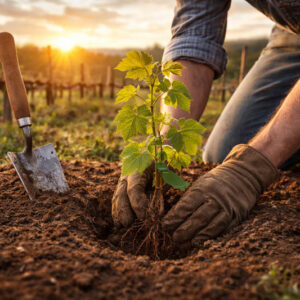
Dry-climate grape success starts at planting. Arizona’s grape establishment guidance recommends keeping roots moist before planting, digging a hole wider and deeper than the root system, and mulching with compost, well-rotted manure, straw, hay, or leaves to conserve soil moisture. First-year care is critical: newly planted grapes should be irrigated often enough to keep soil moist but not waterlogged. That is the opposite of neglect. Even dry-climate grapes need attentive establishment care.
For long-term performance, the larger principle is simple: deep roots are your ally. Frequent shallow watering encourages a weaker root profile and makes vines more vulnerable to surface heat and rapid drying. Efficient dry-climate grape growing usually means deeper, less wasteful irrigation once vines are established.
Good grape growing is not just about the right cultivar. It is also about structure. Spacing, support, and pruning directly affect fruit quality in dry climates because they influence light, water demand, and fruit protection.
Spacing: Arizona’s grape guide notes that European vines are generally spaced closer than American grapes and French hybrids because the latter can be more vigorous. Give vines enough room to develop a manageable canopy without becoming crowded.
Support systems: Grapes need a strong trellis, arbor, fence, or wire system from the beginning. Dry climates do not remove that requirement. In fact, good support becomes even more important where canopy balance determines whether clusters are protected or sunburned.
Training: Choose one clear training system and stick with it. The goal is a framework that supports both production and fruit protection. In dry climates, an open but not overexposed canopy is usually the sweet spot.
Pruning: Most grapes require regular dormant pruning to stay productive. Without it, vines become tangled, overly vegetative, and less useful. Arizona’s guidance emphasizes proper pruning and the patience required before first harvest and full production.
Classic seedless table grapes: Moderate water expectations. They are excellent dry-climate grapes, but not neglect-proof grapes. Thompson Seedless, Flame Seedless, Perlette, Ruby Seedless, and Beauty Seedless all benefit from smart irrigation and, in some cases, thinning for best cluster and berry quality.
Raisin grapes: Moderate to efficient water use when properly managed. Their value in dry climates comes from historical and practical adaptation to hot summer ripening and drying systems, not from a complete lack of water need.
Warm-climate wine grapes: Often good dry-climate candidates in the right regions, but they still require active water management. Their reputation should not be confused with immunity to drought stress.
High-desert American and hybrid grapes: Good fit where winter cold matters more than low-desert heat. These grapes are not necessarily the best for the hottest sites, but they can be far better choices where dry air combines with colder winters.
| Cultivar | Hardiness Zones | Type | Best Use | Region Fit | Why It Stands Out |
|---|---|---|---|---|---|
| Thompson Seedless | 7, 8, 9, 10 | European seedless table grape | Fresh eating, raisins | Low desert, inland valley | The benchmark warm-dry seedless grape: sweet, productive, self-fruitful, and one of the clearest low-desert recommendations. |
| Flame Seedless | 7, 8, 9, 10 | European seedless table grape | Fresh eating | Low desert, inland valley | A strong red seedless choice for hot climates, with the caveat that cool nights improve full color development. |
| Perlette | 7, 8, 9, 10 | European seedless table grape | Fresh eating | Low desert | Especially valuable because it ripens ahead of Thompson Seedless and helps beat the harshest heat. |
| Ruby Seedless | 7, 8, 9, 10 | European seedless table grape | Fresh eating, raisins | Low desert | Sweet, crisp, and useful for extending the low-desert seedless season after Thompson. |
| Beauty Seedless | 7, 8, 9, 10 | European seedless table grape | Fresh eating | Low desert, inland valley | An early, heavy-producing dark seedless grape that broadens the fresh-eating range. |
| Black Monukka | 7, 8, 9 | European table grape | Fresh eating, drying | Low desert, inland valley | An adapted warm-site grape that gives dry-climate growers more than just grocery-store standards. |
| Golden Muscat | 7, 8, 9 | European table/wine grape | Fresh eating, juice | Low desert, inland valley | An aromatic expansion choice specifically named by Arizona as adapted to lower elevations. |
| Muscat Hamburg | 7, 8, 9 | European table/wine grape | Fresh eating, juice | Low desert, inland valley | A warm-site aromatic grape worth considering where flavor matters more than pure convenience. |
| Muscat of Alexandria | 7, 8, 9 | European table/raisin/wine grape | Fresh eating, raisins, drying | Low desert, inland valley | One of the classic hot-climate drying grapes, especially useful where dual-purpose fruit matters. |
| Black Corinth | 7, 8, 9, 10 | European currant grape | Drying, currants | Hot dry climates | A niche but historically relevant grape where drying use is the point, not fresh eating. |
| Concord | 5, 6, 7, 8 | American bunch grape | Fresh, juice, jelly, wine | High desert, higher elevations | A hardy, classic American grape that still makes sense where winter cold matters more than desert heat. |
| Niagara | 5, 6, 7, 8 | American bunch grape | Fresh, juice, processing | High desert, higher elevations | Sweet, juicy, vigorous, and specifically noted by Arizona as excellent for home gardens and processing. |
| Himrod | 5, 6, 7, 8 | Hybrid seedless grape | Fresh eating | High desert, higher elevations | Earlier than Concord, seedless, and especially valuable where cooler dry sites need a better fresh grape option. |
| Reliance | 4, 5, 6, 7, 8 | Hybrid seedless grape | Fresh eating | High desert, colder dry sites | Very hardy, productive, seedless, and useful where dry air combines with real winter cold. |
| Syrah | 7, 8, 9 | Wine grape | Red wine | Warm inland valley, foothill, Mediterranean dry climates | The most strongly supported warm-climate wine grape in this list, with clear UC Davis relevance in warmer California districts. |
| Grenache | 7, 8, 9 | Wine grape | Red wine, rosé | Warm inland valley, Mediterranean dry climates | A credible Mediterranean-style wine grape for dry climates, best treated as a wine-focused planting rather than a casual backyard grape. |
| Mourvèdre | 7, 8, 9 | Wine grape | Red wine | Warm inland valley, Mediterranean dry climates | Another warm-climate, Mediterranean-style wine grape best suited to growers with a true wine goal. |
| Zinfandel | 7, 8, 9 | Wine grape | Red wine | Warm inland valley, foothill | A long-established California warm-region wine grape with broad regional relevance, especially in inland and foothill settings. |
| Cabernet Sauvignon | 7, 8, 9, 10 | Wine grape | Red wine | Warm inland valley, Mediterranean dry climates | A warmer-region wine grape that can perform very well, but better framed as a managed vineyard choice than a casual home-fruit recommendation. |
Seedless grapes are often the category home gardeners want first, and in dry climates that makes sense. Warm, low-humidity regions can produce excellent table fruit. But not all seedless grapes deserve equal confidence.
Thompson Seedless belongs at the top because it is one of the most established warm-dry seedless grapes in the world. It is the anchor recommendation because it bridges reliability, sweetness, raisin value, and true low-desert fit. Arizona’s low-desert guide even calls it the most popular grape and describes it as green, seedless, very sweet, self-fruitful, and suitable for fresh use or raisins.
Perlette deserves more respect than it usually gets because its earlier ripening is a strategic advantage in hot dry regions. Arizona describes it as a white seedless grape with mild Muscat flavor that ripens in June, roughly two to three weeks before Thompson Seedless. If your climate pushes grapes hard by midsummer, earlier harvest is not a luxury. It is part of risk management.
Flame Seedless remains important because it gives growers a red seedless grape with good low-desert adaptation and strong fresh-eating value, but its color performance should be treated realistically in very warm nights. Arizona notes that cool nights are required for full color development. Ruby Seedless and Beauty Seedless also matter because they broaden the seedless season and make the article more useful than a one-variety answer.
For colder dry sites, the smarter seedless pivot is Himrod or Reliance. Those are much better fits than trying to force low-desert vinifera into a colder elevation simply because they sound more glamorous. Arizona explicitly places Himrod and Reliance in the higher-elevation group.
Backyard growers usually want something more specific than “adapted.” They want a grape that tastes good enough to justify the trellis.
Thompson Seedless is still the anchor because it combines familiarity, sweetness, heat fit, self-fruitfulness, and raisin value. But it should not be the only recommendation.
Flame Seedless adds a red fresh-eating option. Black Monukka gives growers a darker grape with more character than the default seedless grocery set. Golden Muscat and Muscat Hamburg matter because Arizona specifically identifies them as adapted lower-elevation varieties and because aromatic grapes have a real place in warm, dry home gardens.
Dry climates have a natural advantage for drying grapes, and this is one of the places where historical grape culture still tells us something useful.
Thompson Seedless remains the central drying grape because it bridges fresh eating and raisins better than almost anything else. Muscat of Alexandria brings more aromatic character, while Black Corinth keeps its relevance where currants or drying are the real goal instead of fresh-cluster quality. Arizona’s drying-grape material identifies Thompson Seedless, Muscat of Alexandria, and Black Corinth as classic raisin or drying grapes.
This section matters because dry-climate gardeners often think only in terms of fresh fruit. But if you actually have the heat and aridity to dry grapes effectively, you have a built-in advantage that growers in wetter regions do not.
The most common mistake in dry-climate grape advice is treating every dry place like a desert-floor vineyard. High-desert sites are different. They may be dry, but they are also colder, more frost-prone, and less forgiving to tender vinifera.
Concord remains useful in these regions because it is hardy, versatile, and productive. Arizona specifically describes it as excellent for eating, juice, jellies, and wine in higher-elevation conditions. Niagara also earns its place because it offers a white American grape option that still works for home gardens and processing. Arizona describes it as vigorous, sweet, juicy, and excellent for home gardens and processing.
Himrod and Reliance make this category much stronger because they solve a real problem: how to get better fresh-eating seedless fruit in cooler dry sites without pretending every dry climate is hot enough for vinifera dessert grapes. Arizona notes that Himrod ripens about a month earlier than Concord and that Reliance is very hardy, productive, and seedless.
Wine grapes deserve a narrower and more careful treatment than most broad grape articles give them. Warm inland valleys and Mediterranean-style dry regions support a more credible wine-grape palette than true low deserts or colder high-desert sites, but those recommendations should still be treated as conditional rather than universal.
Syrah is the strongest direct recommendation in this section because it is the clearest warm-region match in the source base. The UC Davis Rhône material discusses Syrah’s major role in California and its strong association with warmer regions.
Grenache and Mourvèdre are also sensible warm-climate wine grapes, but they should be treated as wine-focused plantings for growers with a true viticultural goal, not as casual backyard fruit recommendations. They are more climate- and site-dependent than the core table-grape recommendations.
Zinfandel and Cabernet Sauvignon remain relevant for warmer California-style regions, but they belong here with more caution than Syrah. These are more site-dependent, managed vineyard-style choices.
Merlot can also succeed in some dry-climate regions, particularly in slightly cooler inland-valley sites with better nighttime cooling, but it is more sensitive to heat and water stress than Syrah or Grenache. It makes more sense as a site-specific option than as a leading recommendation.
Sometimes, yes. But this is where romantic language often outruns reality.
Dry farming can work in the right soils and sites, especially where deep soils and water-holding capacity support it. But it is not the automatic or most realistic answer for every dry-climate gardener. For most home growers, the smarter goal is efficient irrigation rather than total dry farming: deep watering, mulch where appropriate, sensible canopy retention, and extra care ahead of severe heat events. UC drought guidance strongly supports this practical approach.
Best seedless grapes for hot, dry low elevations: Thompson Seedless, Flame Seedless, Perlette, Ruby Seedless, Beauty Seedless.
Best fresh-eating grapes for warm dry backyards: Thompson Seedless, Flame Seedless, Black Monukka, Golden Muscat, Muscat Hamburg.
Best grapes for raisins and drying: Thompson Seedless, Muscat of Alexandria, Black Corinth.
Best grapes for higher-elevation dry climates: Concord, Niagara, Himrod, Reliance.
Best warm-dry climate wine grapes: Syrah, Grenache, Mourvèdre, Zinfandel, Cabernet Sauvignon, site-dependent Merlot.
Best multipurpose backyard grapes: Thompson Seedless, Concord, Niagara.
A truly authoritative guide does not just tell you what to plant. It also tells you what to avoid.
Cool-climate grapes in brutal low-desert heat: These may survive but often do not justify the space once fruit quality, sunburn, and timing problems are considered.
Late grapes in sites with severe heat spikes and weak irrigation: These are more vulnerable to shrivel and uneven ripening.
Tender vinifera table grapes in colder high-desert locations: Dryness does not cancel winter injury.
Any grape chosen only for grocery-store familiarity: Popularity is not site fit.
If you garden in a hot, low-elevation dry climate, start with warm-site European grapes such as Thompson Seedless, Flame Seedless, Perlette, Ruby Seedless, and other low-desert-adapted types. If drying matters, add Muscat of Alexandria or Black Corinth. If your climate is dry but colder, shift decisively toward Concord, Niagara, Himrod, and Reliance. And if you are planting for wine in a warm dry region, move into Syrah, Grenache, Mourvèdre, Zinfandel, Cabernet Sauvignon, or carefully sited Merlot only because your site and goals truly justify it.
The best dry-climate planting plan is usually not a random assortment of vines. It is a purposeful mix: one reliable seedless fresh grape, one earlier or specialty partner, one drying or processing grape if that matters to you, and wine grapes only if you genuinely want to make wine. Done that way, dry-climate grape growing becomes more strategic, more efficient, and much more rewarding.
The best grapes for dry climates depend on elevation and purpose. In hot low-desert and inland valley sites, strong choices include Thompson Seedless, Flame Seedless, Perlette, Ruby Seedless, Beauty Seedless, Black Monukka, and Muscat of Alexandria. In higher, colder dry climates, Concord, Niagara, Himrod, and Reliance are often better fits. For warm dry wine regions, Syrah, Grenache, Mourvedre, Zinfandel, Cabernet Sauvignon, and site-dependent Merlot are among the more credible choices.
Yes. Grapes can grow very well in desert climates when the cultivar matches the elevation and heat level. Lower-elevation European grapes such as Thompson Seedless, Perlette, Ruby Seedless, and Flame Seedless are among the strongest choices for warmer sites, while higher and colder dry sites are better suited to hardier American grapes and hybrids.
Yes. Even drought-adapted grapes need irrigation in most dry-climate gardens and vineyards. The real goal is efficient watering and controlled vine stress, not neglect. Deep watering, mulch, and sensible canopy management are usually more realistic than true dry farming for home growers.
Thompson Seedless is one of the strongest all-around seedless grapes for hot dry climates because it is widely adapted to warmer, drier regions and is also valuable for fresh eating and raisins. Perlette and Flame Seedless are also important hot-climate seedless choices, especially in lower-elevation desert gardens.
In high-desert dry climates, hardier grapes are usually the smarter choice. Concord, Niagara, Himrod, and Reliance are especially relevant where low humidity combines with colder winters and shorter seasons.
Sometimes, but only in the right soils and sites. Dry farming is not the default answer for every dry climate. For most home growers, efficient irrigation, drought-tolerant root systems, and careful canopy management are the more practical strategy.
This article is based on horticultural and viticultural guidance from university extension programs and grape research resources focused on dry, warm, and semi-arid climates.
University of Arizona Cooperative Extension – Growing Grapes in the Home Garden
https://extension.arizona.edu/sites/default/files/2024-08/az1657-2015.pdf
Explains which grape types fit lower elevations versus sites above 4,500 feet, identifies adapted lower-elevation and higher-elevation cultivars, and includes practical soil guidance.
University of Arizona Cooperative Extension – Deciduous Fruit and Nuts for the Low Desert
https://extension.arizona.edu/sites/default/files/2025-05/az1269_Deciduous-Fruit-and-Nuts-for-the-Low-Desert.pdf
Identifies low-desert grape varieties that have been evaluated and performed well, including Perlette, Ruby Seedless, Thompson Seedless, and Flame Seedless.
University of Arizona Cooperative Extension – Grapes for Central Arizona (5000-7000 Foot Elevations)
https://extension.arizona.edu/sites/default/files/attachment/grapesforcentralarizona_0.pdf
Helpful for high-desert site selection, drainage, and alkalinity context.
University of California Agriculture and Natural Resources – Strategies for Farming Grapes in California’s Drought
https://ucanr.edu/sites/default/files/2022-02/363556.pdf
Useful for drought-related management principles, including irrigation efficiency, rootstock selection, and canopy management.
UC Davis Foundation Plant Services – Grapes of Southern France
https://fps.ucdavis.edu/grapebook/Rhone.pdf
Provides context for Rhône and warm-climate wine grapes, including Syrah, Grenache, and Mourvèdre in California and warm districts.
Gardenia – How to Grow Seedless Grapes Successfully at Home
https://www.gardenia.net/guide/how-to-grow-seedless-grapes-successfully-at-home
Useful for additional cultivar-fit context for seedless grapes in home gardens.
Updated: April 2026 • Reviewed against university extension guidance and relevant Gardenia cultivar pages
| Hardiness |
3 - 10 |
|---|---|
| Plant Type | Climbers, Fruits |
| Plant Family | Vitaceae |
| Genus | Vitis |
| Exposure | Full Sun |
| Maintenance | High |
| Water Needs | Average |
| Soil Type | Chalk, Loam, Sand |
| Soil pH | Alkaline, Neutral |
| Soil Drainage | Well-Drained, Moist but Well-Drained |
| Attracts | Bees, Birds |
| Hardiness |
3 - 10 |
|---|---|
| Plant Type | Climbers, Fruits |
| Plant Family | Vitaceae |
| Genus | Vitis |
| Exposure | Full Sun |
| Maintenance | High |
| Water Needs | Average |
| Soil Type | Chalk, Loam, Sand |
| Soil pH | Alkaline, Neutral |
| Soil Drainage | Well-Drained, Moist but Well-Drained |
| Attracts | Bees, Birds |
Create a membership account to save your garden designs and to view them on any device.
Becoming a contributing member of Gardenia is easy and can be done in just a few minutes. If you provide us with your name, email address and the payment of a modest $25 annual membership fee, you will become a full member, enabling you to design and save up to 25 of your garden design ideas.
Join now and start creating your dream garden!
Create a membership account to save your garden designs and to view them on any device.
Becoming a contributing member of Gardenia is easy and can be done in just a few minutes. If you provide us with your name, email address and the payment of a modest $25 annual membership fee, you will become a full member, enabling you to design and save up to 25 of your garden design ideas.
Join now and start creating your dream garden!