Growing grapes in Zone 4 is absolutely achievable with the right varieties. Discover cold-hardy grapes that ripen early, survive harsh winters, and still taste amazing. From reliable classics to standout flavors, this guide helps you build a productive, resilient vineyard in even the coldest climates.


Growing grapes in USDA Zone 4 is absolutely possible, but it rewards precision. In cold-climate gardens, grape success depends less on wishful thinking and more on choosing cultivars with the right combination of winter hardiness, ripening speed, disease tolerance, and intended use. A grape that performs beautifully in a warmer region can still disappoint badly in Zone 4 if it ripens too late, suffers winter injury, or struggles under humid summer disease pressure.
That is why the best grapes for Zone 4 are not simply the sweetest grapes or the most famous grapes. They are the cultivars that can survive real winter cold, crop reliably in shorter seasons, and still deliver useful fruit for fresh eating, juice, jelly, or wine. In practice, the strongest Zone 4 planting is rarely built around one “perfect” grape. It is usually a smart mix of varieties chosen for different strengths.
That approach closely matches how northern grape guidance is framed by university extension programs and cold-climate breeding programs, which consistently emphasize winter survival, ripening window, site fit, and intended use rather than chasing a single universally “best” cultivar.
This guide is built around cultivars that are genuinely relevant to Zone 4, then narrowed by practical gardening value: reliability, ripening season, fruit quality, disease resilience, and end use. In other words, this is not a list of every grape that might survive somewhere in Zone 4 under ideal conditions. It is a working shortlist of the grapes most worth considering if you want dependable results.
For the broadest cultivar pool, start with your comparison database here: Grapevine comparison database.
This selection logic also aligns with northern extension recommendations, which generally treat cold-hardy grape choice as a decision about tradeoffs: earlier ripening versus later quality potential, ruggedness versus refinement, and fresh-eating value versus processing or wine value.
Zone 4 grape growing is shaped by four realities: winter cold, shorter seasons, spring frost risk, and summer disease pressure. A grape worth planting in this climate has to handle all four reasonably well. That is why cold-hardy grapes often come from American or hybrid breeding backgrounds rather than classic warm-climate vinifera lines.
Winter hardiness is the first filter. If a cultivar cannot come through repeated winters with limited injury, it is not a serious Zone 4 recommendation.
Ripening season is the second filter. Early and very early grapes are often the safest choices because they finish before autumn weather becomes a problem.
Disease performance is the third. Even in northern gardens, black rot and downy mildew can still be major concerns. Powdery mildew and poor airflow can also reduce fruit quality and vine vigor, especially in dense backyard plantings.
Intended use matters. A great table grape is judged differently from a great juice grape or a serious wine grape. That distinction is important because some of the best Zone 4 grapes are delightful for fresh eating, while others are much more valuable for jelly, juice, or winemaking than for snacking straight off the vine.
University breeding and extension programs repeatedly make this same point in practice: northern gardeners succeed fastest when they match cultivar choice to climate limits and fruit purpose rather than assuming every hardy grape is equally good for fresh eating, processing, and wine.
One of the biggest mistakes in grape advice is treating all of Zone 4 as if it were identical. It is not. A sheltered Zone 4b garden with decent snow cover and good air drainage can support a broader range of grapes than an exposed Zone 4a site with winter wind and fluctuating spring temperatures.
That is why some cultivars in this guide should be read as strong general Zone 4 choices, while others are especially valuable for colder or more exposed settings. If your site runs windy, open, or distinctly colder than nearby gardens, lean harder toward the toughest and earliest grapes rather than the most refined ones.
This is one of the most important real-world distinctions in cold-climate grape growing. Extension recommendations for northern regions consistently stress that site exposure, air drainage, and winter injury risk can matter almost as much as the formal USDA zone itself.
| Cultivar | Hardiness Zones | Seeded or Seedless | Best Use | Season | Why It Stands Out |
|---|---|---|---|---|---|
| Reliance | 4, 5, 6, 7, 8 | Seedless | Fresh eating | Early | One of the key seedless grapes for cold-climate home gardens |
| Brianna | 4, 5, 6, 7, 8 | Seeded | White wine, fresh use | Early-mid | Cold-hardy aromatic grape with value for northern growers |
| King of the North | 4, 5, 6, 7, 8 | Seeded | Juice, fresh use | Early fall | Very hardy and productive backyard grape |
| Itasca | 4, 5, 6, 7, 8 | Seeded | White wine | Early fall | Modern cold-climate white with lower acidity |
| Marquette | 4, 5, 6, 7, 8 | Seeded | Red wine | Late September | Leading modern red wine grape for cold climates |
| Frontenac | 3, 4, 5, 6, 7, 8 | Seeded | Red wine | Mid-late | Foundational cold-climate red wine grape |
| La Crescent | 4, 5, 6, 7, 8 | Seeded | White wine | Mid-late | Benchmark aromatic white for northern vineyards |
| Frontenac Gris | 4, 5, 6, 7, 8 | Seeded | White and rosé wine | Mid-late | Hardy and productive white wine option |
| Marechal Foch | 4, 5, 6, 7, 8 | Seeded | Red wine | Very early | Very early wine grape for short-season sites |
| Petite Pearl | 4, 5, 6, 7, 8 | Seeded | Red wine | Late September | Disease-resistant red wine grape with northern value |
| St. Croix | 4, 5, 6, 7, 8 | Seeded | Red wine, juice, fresh use | Late August-early September | Useful multipurpose grape for northern growers |
| Valiant | 3, 4, 5, 6, 7, 8 | Seeded | Fresh use, juice, jelly, home wine | Very early | Extremely hardy and early ripening |
| Edelweiss | 4, 5, 6, 7, 8 | Seeded | Fresh use, juice, sweet wine | Early | Aromatic and versatile cold-climate grape |
| Prairie Star | 3, 4, 5, 6, 7 | Seeded | White wine | Early-mid | Reliable early white for shorter seasons |
| Somerset Seedless | 4, 5, 6, 7, 8 | Seedless | Fresh eating | Very early | Very hardy seedless grape for cold climates |
| Bluebell | 3, 4, 5, 6, 7 | Seeded | Fresh use, juice | Mid | Very hardy grape with good backyard value |
| Beta | 3, 4, 5, 6, 7, 8, 9 | Seeded | Juice, jelly | Early-mid | Exceptionally cold-hardy processing grape |
Best Zone 4 grapes by goal
Best seedless table grapes: Reliance, Somerset Seedless.
Best for very cold exposed sites: Beta, Valiant, Frontenac.
Best for juice and jelly: Beta, Valiant, King of the North, Bluebell.
Best multipurpose grapes: Edelweiss, St. Croix, Valiant.
Best white wine grapes: La Crescent, Frontenac Gris, Prairie Star, Itasca, Brianna.
Best red wine grapes: Frontenac, Marquette, Petite Pearl, Marechal Foch, St. Croix.
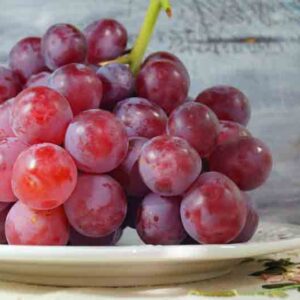
Reliance remains one of the most important grapes in the Zone 4 conversation because it makes seedless grape growing realistic for northern gardeners. Its pink-red fruit is sweet, tender, and easy to enjoy fresh, and it combines that eating quality with reliable cold hardiness. If your goal is a family-friendly table grape that feels rewarding to eat out of hand, Reliance is often the first vine to consider.
Somerset Seedless is one of the most valuable seedless grapes for cold climates. It ripens very early and handles winter conditions better than most seedless cultivars, making it one of the safest choices for shorter seasons and exposed sites. Compared with Reliance, Somerset Seedless usually wins on ruggedness and earliness, while Reliance often feels softer and more dessert-like in the mouth.
This kind of split mirrors the way cold-climate fruit recommendations are often made in extension literature: one cultivar may win on fruit quality, while another is preferred because it reduces risk in shorter or harsher seasons.
If you prioritize reliability, strong flavor, and winter hardiness over seedlessness, these grapes form the backbone of successful Zone 4 plantings.
Beta is one of the toughest grapes available, valued for exceptional winter hardiness and consistent performance in very cold climates. It is especially useful for juice and jelly production. It is not the first choice for refined fresh eating, but it is one of the smartest choices when survival and processing value come first.
Valiant combines extreme hardiness with very early ripening, making it one of the most dependable grapes for northern gardens. Its versatility adds to its value. For many home growers, Valiant is the better all-around backyard grape because it can cover juice, jelly, and casual fresh use while still maturing early.
Bluebell offers strong flavor and dependable performance, making it a practical choice for fresh use and juice in cold climates. It fills the middle ground between rugged processing grapes and more specialized fresh-eating options.
King of the North is a productive, cold-hardy grape that performs well in backyard plantings and is especially useful for juice and fresh use. If your goal is a generous crop from a hardy vine, it deserves serious consideration.
In practical northern growing terms, this is where explicit tradeoffs matter most: choose Beta when maximum hardiness and processing value come first, but choose Valiant when you want a similarly rugged grape with more all-around backyard flexibility.
Edelweiss is a versatile early grape suitable for fresh eating, juice, and sweet wine. Its adaptability makes it a valuable addition to small plantings where each vine needs to earn its space.
St. Croix is a flexible cultivar used for wine, juice, and fresh consumption. It performs well in cold climates and offers especially good utility for gardeners who want a grape that leans toward wine but still remains broadly useful.
For smaller gardens, multipurpose grapes often make more sense than chasing perfect specialization. That is a pattern extension-style recommendations often reinforce for home growers, because limited space tends to reward versatility over narrow excellence.
Cold-climate vineyards now have several serious white wine options. The best choice depends on whether you value aromatic character, earlier ripening, or a somewhat lower-acid profile.
La Crescent remains one of the benchmark aromatic white grapes for northern vineyards. It is often the variety growers reach for when they want expressive fruit and a true wine focus.
Frontenac Gris is hardy, productive, and useful for white and rosé wine styles. It is often chosen when consistency and crop reliability matter as much as aromatic appeal.
Prairie Star is especially valuable for shorter seasons because it is a reliable earlier white. If your site feels cold, windy, or marginal, Prairie Star can be a smarter choice than a later-ripening alternative.
Itasca stands out as a modern cold-climate white with lower acidity than many traditional northern cultivars. For growers pursuing a cleaner, more contemporary white wine profile, Itasca is one of the most compelling options in the Zone 4 conversation.
Brianna adds another aromatic option with both wine and fresh-use value, which can make it attractive in mixed home plantings.
This is another area where direct comparisons improve real-world decision-making. Choose Prairie Star over La Crescent when shorter seasons or harsher sites make earliness the priority, but choose La Crescent when aromatic wine character matters more than maximum site insurance.
Likewise, Itasca is especially appealing when growers want a lower-acid modern profile, while Frontenac Gris often appeals more on reliability and productivity.
Red wine grapes for Zone 4 need real cold tolerance, but they also need enough season to develop useful fruit quality. The most successful cultivars combine both.
Frontenac is one of the foundational cold-climate red wine grapes. It remains important because it is hardy, proven, and broadly adapted. For many growers, it is the practical starting point for red wine production in Zone 4.
Marquette is often chosen when growers want a more modern red wine candidate with strong quality potential. Compared with Frontenac, Marquette is frequently favored when wine refinement matters more than simply choosing the most rugged old standby.
Petite Pearl offers strong promise as a disease-resistant red wine grape with northern value. It is a useful option for growers who want to balance quality with more manageable disease pressure.
Marechal Foch remains relevant because it ripens very early. In short-season or more difficult sites, that earliness can be the deciding factor.
St. Croix belongs in the red wine discussion as well, especially for growers who want a flexible vine that can support more than one end use.
For a practical comparison, choose Frontenac when hardiness, track record, and broad northern adaptation matter most, but choose Marquette when your priority is a more refined red wine candidate. Choose Marechal Foch when a shorter season makes earliness more important than breadth of options.
That pattern also reflects the way cold-climate breeding programs are often discussed: not as a single ladder from worst to best, but as a range of cultivars that solve different northern vineyard problems.

If you prioritize fresh eating, start with Reliance or Somerset Seedless. For juice and jelly, Beta, Valiant, Bluebell, and King of the North are dependable choices.
For wine production, build around La Crescent, Frontenac Gris, Prairie Star, Itasca, Frontenac, Marquette, Petite Pearl, St. Croix, or Marechal Foch.
If you only have room for three vines, a strong practical mix is one seedless table grape, one ultra-hardy processing grape, and one wine or multipurpose grape. That approach reflects one of the most consistent themes in home-fruit guidance: resilience usually comes from diversification, not from betting everything on a single cultivar.
Choosing the right cultivar matters most, but management still affects results.
Give vines full sun and good air movement. A warm site with decent airflow improves ripening and reduces disease pressure.
Use a proper trellis. Good training and pruning improve light penetration, simplify harvest, and help keep diseases more manageable. Discover the best trellis systems for backyard grapes and choose the structure that makes pruning easier and harvests bigger.
Do not assume “cold-hardy” means carefree. Even hardy grapes may need help through difficult winters or humid summers, especially when young.
Keep expectations realistic. A cultivar that thrives in a protected Zone 4b site may be much less impressive in an exposed Zone 4a garden.
That practical layer matters because extension recommendations do not treat cultivar choice as a substitute for site preparation, pruning, or canopy management. In northern gardens, good cultural practices and the right variety work together.
How to Grow Grapes in the Home Garden
Common Grapevine Problems and How to Fix Them
For seedless fresh eating, Reliance and Somerset Seedless are the strongest choices. For maximum cold hardiness and reliability, Beta and Valiant stand out. For white wine, La Crescent, Frontenac Gris, Prairie Star, Itasca, and Brianna form a strong northern white lineup. For red wine, Frontenac, Marquette, Petite Pearl, Marechal Foch, and St. Croix form one of the strongest cold-climate lineups available.
The best overall strategy for most gardeners is not to chase one “best” grape. It is to build a balanced planting with varieties that complement each other – one for fresh eating, one for processing, and one for wine or all-purpose use.
The best seedless grapes for Zone 4 are Reliance, Somerset Seedless, and Canadice, with Einset Seedless, Vanessa, and Concord Seedless as additional options for favorable sites. Reliance is one of the most dependable all-around choices, while Somerset Seedless is especially valuable for hardiness and very early ripening.
Yes. Concord is a classic cold-hardy grape for northern gardens and remains one of the best choices for juice, jelly, jam, and general home processing in Zone 4.
For especially cold or exposed Zone 4 sites, Beta, Valiant, Frontenac, and Somerset Seedless are among the safest options. They combine stronger hardiness with practical northern performance.
For Zone 4 wine growing, strong options include La Crescent, Frontenac Gris, Prairie Star, Itasca, Frontenac, Marquette, Petite Pearl, St. Croix, and Marechal Foch. These cultivars matter because they were selected or widely adopted for cold-climate vineyard performance.
Sometimes, but not always. In humid climates, even cold-hardy grapes can still face black rot, downy mildew, and other disease pressure. Lower-spray success depends on resistant cultivars, good pruning, and open canopies with strong airflow.
For most home gardens, planting at least three different grape varieties is a smart approach. One seedless table grape, one hardy processing grape, and one multipurpose or wine grape usually creates a more resilient and useful planting than a single-variety setup.
University of Minnesota Extension – Growing Grapes in the Home Garden
Practical guidance on cold-climate grape selection, planting, pruning, and care.
University of Minnesota Cold-Hardy Grape Breeding Program
Source of key cultivars such as Frontenac, Marquette, and La Crescent, with breeding background and performance insights.
Cornell University Fruit Resources – Grapes
Research-based information on grape varieties, diseases, and vineyard management.
Detailed guidance on grape production, pest management, and cultivar selection.
UMass Extension – Grape Production Guide
Covers training systems, pruning, and disease control in cool-climate vineyards.
Cornell Cooperative Extension – Cold-Hardy Grape Varieties
Overview of hybrid grapes suitable for northern climates, including ripening and hardiness traits.
Purdue Extension – Growing Grapes in Indiana
Foundational guide to grape biology, pruning, and vineyard setup that remains useful across many cooler regions.
Michigan State University Extension – Grapes for Cold Climates
Focus on cultivar performance, winter injury, and site selection in northern regions.
Updated: April 2026 • Reviewed by Gardenia Editors
| Hardiness |
3 - 10 |
|---|---|
| Plant Type | Climbers, Fruits |
| Plant Family | Vitaceae |
| Genus | Vitis |
| Exposure | Full Sun |
| Maintenance | High |
| Water Needs | Average |
| Soil Type | Chalk, Loam, Sand |
| Soil pH | Alkaline, Neutral |
| Soil Drainage | Well-Drained, Moist but Well-Drained |
| Attracts | Bees, Birds |
| Hardiness |
3 - 10 |
|---|---|
| Plant Type | Climbers, Fruits |
| Plant Family | Vitaceae |
| Genus | Vitis |
| Exposure | Full Sun |
| Maintenance | High |
| Water Needs | Average |
| Soil Type | Chalk, Loam, Sand |
| Soil pH | Alkaline, Neutral |
| Soil Drainage | Well-Drained, Moist but Well-Drained |
| Attracts | Bees, Birds |
Create a membership account to save your garden designs and to view them on any device.
Becoming a contributing member of Gardenia is easy and can be done in just a few minutes. If you provide us with your name, email address and the payment of a modest $25 annual membership fee, you will become a full member, enabling you to design and save up to 25 of your garden design ideas.
Join now and start creating your dream garden!
Create a membership account to save your garden designs and to view them on any device.
Becoming a contributing member of Gardenia is easy and can be done in just a few minutes. If you provide us with your name, email address and the payment of a modest $25 annual membership fee, you will become a full member, enabling you to design and save up to 25 of your garden design ideas.
Join now and start creating your dream garden!