Do deer eat Astilbe? Usually not much. Astilbe has a strong deer-resistance record, but dry soil and summer heat often cause more trouble than browsing. Learn how to tell deer damage from moisture stress, when protection is worthwhile, and which Astilbe best fits your shade, height, and bloom-season needs.
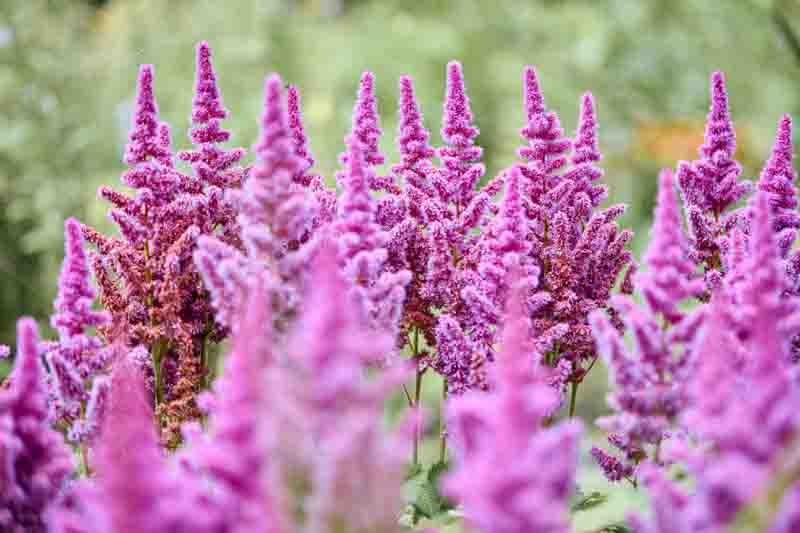


Deer can eat Astilbe, but they usually leave it alone. Rutgers rates Astilbe B – Seldom Severely Damaged, making it a good choice for many deer-prone gardens. But if an established Astilbe turns brown, crispy, or tired-looking in summer, deer may not be the problem at all. Dry soil and excessive heat often cause more trouble than browsing.
Astilbe has a reassuring record in landscapes where deer are a problem.
Rutgers Cooperative Extension places Astilbe in category B – Seldom Severely Damaged. Rutgers considers plants in its A and B categories among the better choices for deer-prone landscapes, while emphasizing that no plant is completely deer-proof and that local deer populations and weather can change browsing behavior.
NC State Extension independently lists Astilbe × arendsii, the familiar group of garden hybrids, as resistant to both deer and rabbits. It also gives the native Appalachian false goat’s-beard, Astilbe biternata, a deer-resistant designation.
Missouri Botanical Garden likewise records deer tolerance for Astilbe cultivars such as Astilbe chinensis ‘Vision in Red’.
That does not mean deer will never take a bite. It means serious, repeated browsing is relatively uncommon compared with plants deer strongly prefer.
For gardeners, that distinction matters. A plant can be genuinely deer resistant without being untouched in every garden, every season, and under every level of browsing pressure.
Even a normally resistant plant can be sampled when deer become less selective.
Browsing risk may rise when local deer pressure is unusually high, severe weather or drought reduces available forage, or preferred foods become scarce.
Newly planted Astilbes are worth watching more closely than established clumps. A mature plant can lose an occasional stem without much consequence, while a small transplant has far less growth to spare.
The most useful thing to watch is the pattern.
One missing plume or shoot may be nothing more than sampling. If fresh growth disappears repeatedly, particularly on a young plant, browsing has become significant enough to justify protection.
Do not judge Astilbe’s deer resistance from one bite. Repeated loss of new shoots or flower stems is much more meaningful than an isolated damaged plume.
This is one of the most useful questions to ask when an Astilbe suddenly looks unhappy.
Astilbe performs best in organically rich soil that stays evenly moist. Missouri Botanical Garden specifically warns that Astilbe does not tolerate dry shade well and that plants receiving too much sun may develop brown foliage.
So before assuming deer are responsible, look closely at what actually happened to the tissue.
| What You See | More Likely Explanation |
|---|---|
| Whole shoots, flower plumes, or substantial foliage suddenly missing | Browsing. Deer remove plant tissue rather than simply discoloring it. |
| Brown, crispy leaf margins or tips while leaves remain attached | Dry soil or moisture stress. |
| Scorched, bleached, curled, or browned foliage in an exposed site | Excessive sun combined with heat or insufficient moisture. |
| Plant wilts badly during hot weather and soil is dry | Heat and moisture stress. |
| Irregular holes chewed through leaves | Slugs, snails, or another chewing pest are more likely than deer. |
The quickest clue is often simple: deer browsing removes growth; moisture and heat stress usually leave the leaf in place while it browns, wilts, or scorches.
Gardenia’s Astilbe Diagnostic Rule: brown Astilbe does not automatically mean browsed Astilbe. If the foliage is still present but turning crispy around the edges, check soil moisture and heat exposure before blaming deer.
Because Astilbe already has a relatively good deer-resistance record, routine protection is usually unnecessary.
Match the response to the amount and frequency of damage.
An established clump that loses one stem and continues growing normally rarely needs aggressive intervention. Repeated removal of fresh growth is the threshold that matters more.
Once deer risk is acceptable, there is little value in trying to rank popular Astilbe cultivars as though one were proven more deer resistant than another.
The more useful differences are height, habit, bloom season, flower color, and where each cultivar fits in the garden.
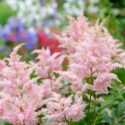
| Astilbe | Why Choose It? | Best Garden Role | Bloom Timing |
|---|---|---|---|
| ‘Fanal’ | Deep crimson-red plumes over dark foliage with bronze tones. | Front or middle of shaded borders. | Early to midsummer |
| ‘Bridal Veil’ | Luminous white pyramidal plumes that brighten dark plantings. | Woodland gardens and shaded beds. | Early to midsummer |
| ‘Deutschland’ | Compact habit and clean white flowers. | Moist borders and woodland planting. | Early to midsummer |
| ‘Visions’ | Compact size and dense raspberry-pink flower plumes. | Smaller gardens and edging. | Midsummer |
| ‘Vision in Red’ | Rich purplish-red plumes on a compact plant. | Front of borders and containers. | Midsummer |
| ‘Vision in White’ | Compact growth, white plumes, and bronze-green foliage. | Edging, containers, small shaded beds. | Midsummer |
| ‘Sprite’ | Dwarf habit and graceful shell-pink flowers. | Front of borders and containers. | Mid to late summer |
| ‘Ostrich Plume’ | Tall, arching coral-pink flower sprays and a loose, graceful habit. | Back of borders, ponds, streams, informal woodland planting. | Midsummer |
| ‘Maggie Daley’ | Lavender-purple flowers and a later flowering season. | Extending the Astilbe season after earlier cultivars fade. | Late summer |
Think beyond flower color. A dwarf ‘Sprite’, compact ‘Fanal’, later-blooming ‘Maggie Daley’, and tall ‘Ostrich Plume’ may all have low browsing risk, but they perform very different jobs in a planting.
Those differences are much more useful for choosing the right Astilbe than trying to create an unsupported cultivar-by-cultivar deer-resistance ranking.
Astilbe is often described simply as a shade perennial, but shade alone does not make a site suitable.
Moisture availability and summer heat can have a much greater effect on plant performance.
For moist part shade: Astilbe is at its best. Rich soil that stays evenly moist supports lush foliage and good flowering.
For sunnier sites: climate matters. Astilbes can tolerate more sun where summers are cooler and moisture remains dependable. In hot climates, afternoon shade and consistent moisture become much more important.
For dry shade: Astilbe is usually a poor choice. Being deer resistant does not make it drought tolerant.
For small spaces: compact selections such as ‘Sprite’, ‘Fanal’, ‘Visions’, and ‘Vision in Red’ are easier to place than taller forms.
For stronger vertical presence: taller selections such as ‘Ostrich Plume’ can rise above lower woodland plants and add movement without creating a rigid effect.
For a longer flowering season: combine cultivars with different bloom times rather than planting one selection throughout the garden. Early, midseason, and late-flowering Astilbes can extend the display considerably.
Gardenia’s Astilbe Fit Check: once deer resistance is acceptable, check moisture first, then summer heat and sun exposure, mature height, and flowering season. A deer-resistant Astilbe is still the wrong plant if its roots cannot stay cool and evenly moist.
Knowing that deer usually leave Astilbe alone solves only the first part of the planting decision.
The plant still has to match your shade level, soil moisture, summer climate, available space, and desired flowering season. Its companions need to match those conditions too.
This is especially important in deer-prone shade gardens. A plant may appear on a deer-resistant list yet still be a poor companion for Astilbe if it prefers substantially drier soil.
Start with deer resistance, then design for the site.
Explore the Gardenia Astilbe collection to compare cultivars by mature height, flowering season, color, exposure, and growing conditions.
Then use the Gardenia Plant Finder to find other lower-browse plants that also match your shade, soil, drainage, moisture, hardiness, mature size, garden style, wildlife goals, and other tolerances.
Browse Deer-Resistant Garden Ideas for inspiration, then use the Garden Design Tool to check whether Astilbe and the plants you want to grow beside it actually share compatible conditions before planting.
Deer can eat Astilbe, but serious browsing is usually uncommon. Rutgers rates Astilbe B – Seldom Severely Damaged, and NC State Extension also lists garden Astilbe hybrids as deer resistant.
Astilbe has a good documented deer-resistance record. Rutgers places it in category B – Seldom Severely Damaged, meaning severe browsing is uncommon but still possible where deer pressure is high.
They can. Deer become less selective when preferred forage is scarce or browsing pressure is unusually high. No Astilbe is completely deer-proof.
Deer browsing removes healthy plant tissue, so shoots, leaves, or flower plumes may suddenly be missing. Brown or crispy foliage that remains attached is more consistent with dry soil, excessive sun, or heat stress.
Astilbe as a genus has a good deer-resistance record, and multiple species and hybrids are documented as deer resistant or seldom severely damaged. Actual browsing can still vary with local deer pressure and food availability.
Astilbe can be an excellent flowering choice where Hostas are repeatedly browsed, provided the soil remains consistently moist. It is not a direct substitute for Hosta in dry shade because Astilbe is much less tolerant of drying soil.
Dry soil is a common cause of brown or crispy Astilbe foliage. Excessive sun and summer heat can also scorch leaves, especially when soil moisture is inconsistent.
There is little value in ranking popular cultivars by deer resistance without supporting evidence. Instead, choose among deer-resistant Astilbes by moisture needs, heat tolerance, mature height, habit, flower color, and bloom season.
Updated: September 2026 – Reviewed by Gardenia Editors
| Hardiness |
3 - 9 |
|---|---|
| Heat Zones |
2 - 8 |
| Climate Zones | 1, 2, 3, 4, 5, 6, 7, 8, 9, 14, 15, 16, 17, 18, 19, 20, 21, 22, 23, 24, A2, A3 |
| Plant Type | Perennials |
| Genus | Astilbe |
| Exposure | Full Sun, Partial Sun, Shade |
| Season of Interest | Spring (Late), Summer (Early, Mid, Late), Fall |
| Height | 6" - 5' (15cm - 150cm) |
| Spread | 1' - 2' (30cm - 60cm) |
| Maintenance | Low |
| Water Needs | Average |
| Soil Type | Loam, Clay |
| Soil pH | Acid, Alkaline, Neutral |
| Soil Drainage | Moist but Well-Drained, Moisture Retentive |
| Characteristics | Dried Arrangements, Cut Flowers, Showy |
| Tolerances | Deer |
| Attracts | Butterflies, Bees |
| Landscaping Ideas | Beds And Borders, Patio And Containers, Ponds And Streams |
| Garden Styles | Informal and Cottage |
Create a membership account to save your garden designs and to view them on any device.
Becoming a contributing member of Gardenia is easy and can be done in just a few minutes. If you provide us with your name, email address and the payment of a modest $25 annual membership fee, you will become a full member, enabling you to design and save up to 25 of your garden design ideas.
Join now and start creating your dream garden!