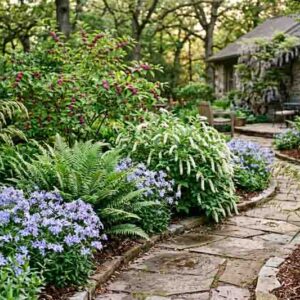
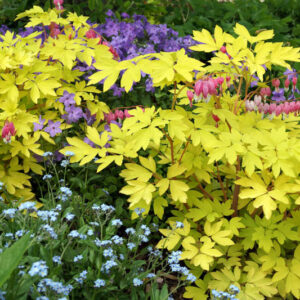
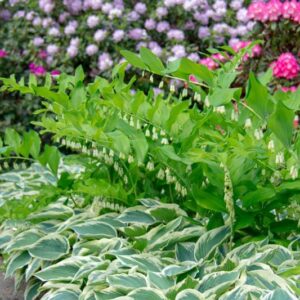
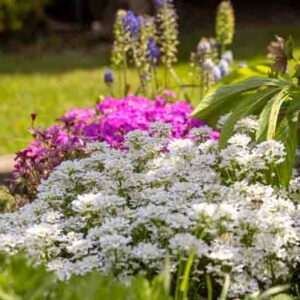
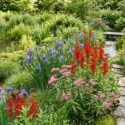
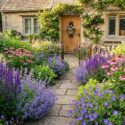
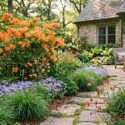
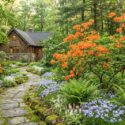
Turn a partially shaded garden into a colorful retreat from spring to fall. Discover 18 beautiful flowering perennials, from delicate woodland blossoms to summer favorites and autumn stars. Learn which varieties flourish in morning sun, filtered light, or brighter shade, and how to combine them for months of flowers.


Who says a garden needs full sunshine to be filled with flowers? Some of the loveliest perennials thrive where morning light filters through trees, afternoon shade offers relief from summer heat, or a woodland border receives gentle, dappled sunshine.
The secret is understanding what partial shade really means. A bed receiving four hours of morning sun can support a very different range of flowers from one beneath a leafy canopy. Choose carefully, and you can enjoy hellebores and lungwort in spring, colorful geraniums and coral bells in summer, and Japanese anemones and woodland asters well into fall.
These 18 flowering perennials for partial shade offer a wonderful variety of colors, heights, and bloom times. Use them to create a garden that changes beautifully with the seasons, rather than relying on a single burst of spring flowers.
Quick answer: What are the best flowering perennials for partial shade?
For spring color, try Helleborus ‘Penny’s Pink’, Pulmonaria ‘Raspberry Splash’, and Woodland Phlox. Summer favorites include Geranium ‘Rozanne’, Heuchera ‘Paris’, and Astilbe ‘Vision in Red’. For autumn flowers, choose Japanese Anemone, Toad Lily, or White Wood Aster. Match each plant to your sunlight and soil moisture.
Partial shade generally describes a site receiving approximately three to six hours of direct sunlight, although horticultural definitions vary. For flowering perennials, the timing and intensity of that light are especially important.
Soil moisture matters just as much. Astilbes, turtleheads, and Japanese anemones generally require more moisture than columbines or woodland asters. Plants that appreciate afternoon shade do not necessarily tolerate dry soil beneath thirsty tree roots.
Which flowering perennials will thrive in your garden? Find plants for your USDA zone, sunlight, soil, and water needs, then compare bloom seasons, mature sizes, and planting quantities.
These woodland perennials bring welcome color before summer flowers begin, often taking advantage of the extra light beneath deciduous trees.
USDA Zones 4-9 | 18-24 in. tall | Late winter to mid-spring
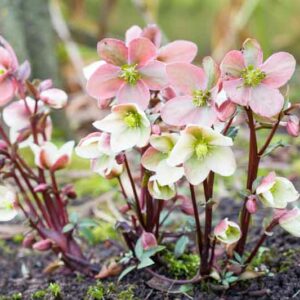
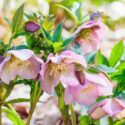
Large, outward-facing mauve-pink flowers open above handsome, marbled evergreen foliage, bringing color when most perennials are still dormant. ‘Penny’s Pink’ looks wonderful near paths where its flowers can be appreciated up close. Give it fertile, well-drained soil and partial shade, with protection from harsh afternoon sun. All hellebores are poisonous if eaten.
USDA Zones 3-9 | 10-12 in. tall | Spring
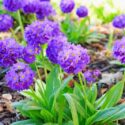
Clusters of raspberry-pink and purple flowers brighten a mound of silver-spotted, deep-green leaves. Once flowering finishes, the patterned foliage continues to enliven shady borders. Lungwort thrives in cool, moisture-retentive, well-drained soil. Avoid dry, exposed sites, particularly where hot summers can cause the leaves to deteriorate.
USDA Zones 3-8 | About 12 in. tall | Mid to late spring
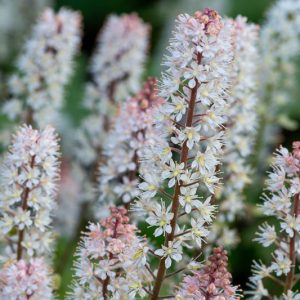
Airy white flower spikes rise above fresh green, heart-shaped foliage, giving woodland plantings a soft, natural appearance. Native to eastern North America, foamflower is especially lovely beneath deciduous trees and along shaded paths. It prefers humus-rich soil with consistent moisture and gradually spreads to create attractive ground cover.
| Plant Type | Perennials |
|---|---|
| Genus | Actaea, Anemone, Aquilegia, Astilbe, Astrantia, Chelone, Corydalis, Cyclamen, Dicentra, Geranium, Helleborus, Heuchera, Lobelia, Phlox, Pulmonaria, Tiarella, Tricyrtis |
| Exposure | Partial Sun |
As the canopy fills with leaves, these perennials bring color, movement, and a relaxed woodland character.
USDA Zones 3-8 | 2-3 ft. tall | Late spring to early summer
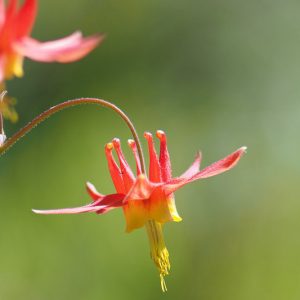
Graceful red-and-yellow flowers dangle from slender stems above fern-like blue-green foliage. This North American native thrives in light woodland shade and attracts hummingbirds visiting its nectar-rich blooms. Individual plants are relatively short-lived but often self-seed in suitable conditions, creating natural-looking colonies.
USDA Zones 3-8 | 9-12 in. tall | Mid to late spring
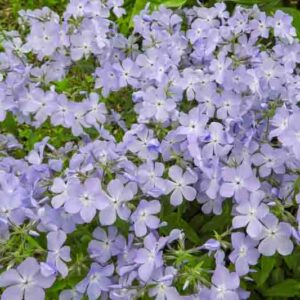
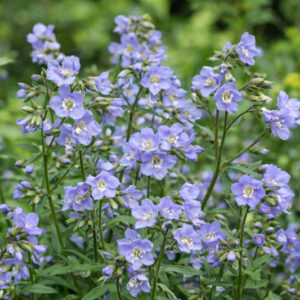
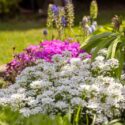
Soft lavender-blue, lilac, or pale pink flowers form fragrant clusters above spreading green foliage. Woodland phlox brings a romantic touch to shaded borders and native gardens, especially beneath deciduous trees. It prefers fertile, moist but well-drained soil and tolerates occasional dryness once established.
USDA Zones 3-9 | 2-3 ft. tall | Late spring to early summer
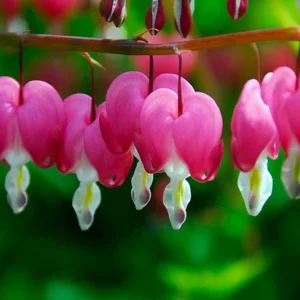
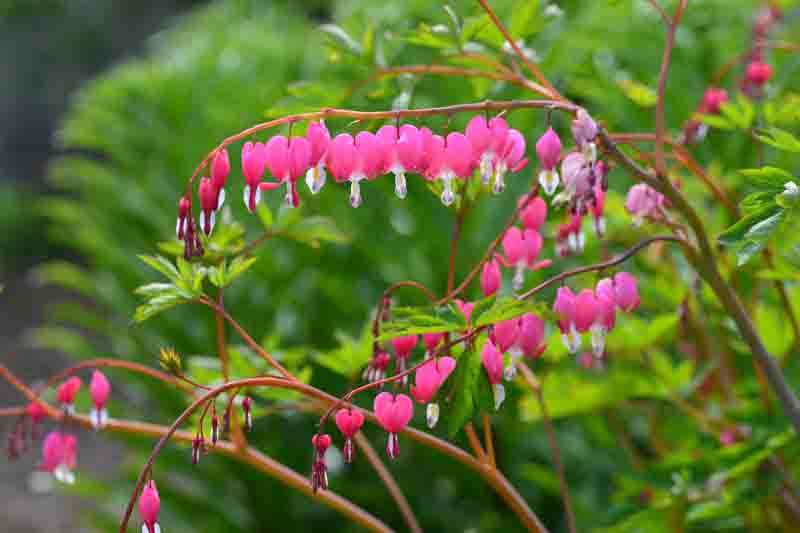
Arching stems carry rows of delicate, heart-shaped pink flowers tipped with white, creating one of spring’s most recognizable displays. Bleeding heart loves cool, sheltered partial shade and moisture-retentive soil. Its foliage may disappear during summer dormancy, so surround it with later-emerging perennials to fill the space.
These plants bridge the gap between spring woodland flowers and the fuller displays of midsummer.
USDA Zones 4-9 | 20-25 in. tall | Early to late summer
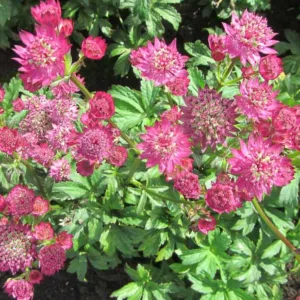
Intricate, pincushion-like flowers combine white bracts with magenta-purple tips, creating a surprisingly rich display above finely divided leaves. Astrantia thrives in cool partial shade with fertile, consistently moist soil. Its unusual blooms are excellent for cutting, and removing faded flowers may encourage additional flowering.
USDA Zones 4-9 | About 14 in. tall in flower | Late spring to early fall
Slender stems carry deep-rose bells for an exceptionally long period above silver-patterned foliage with dark green veins. Unlike many coral bells grown primarily for leaves, ‘Paris’ is a valuable flowering performer. Give it morning sun or filtered light, well-drained soil, and occasional watering during dry spells.
USDA Zones 5-8 | 12-18 in. tall | Late spring to early fall
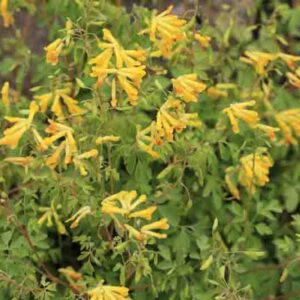
Bright yellow, tubular flowers appear for months above finely divided, fern-like foliage. This cheerful perennial softens stone edges, shaded steps, and informal cottage borders. It prefers well-drained soil and cooler summers, and readily self-seeds where happy. Check its spreading behavior before using it near sensitive natural habitats.
Summer flowers usually benefit from brighter conditions. Morning sun followed by afternoon shade is particularly useful in regions with hot summers.
USDA Zones 4-9 | 15-18 in. tall | Midsummer
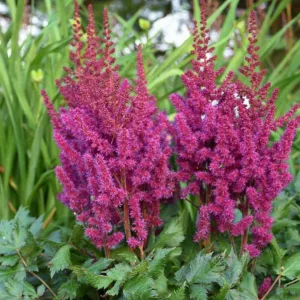
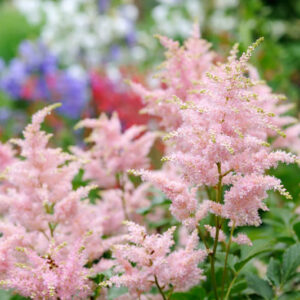
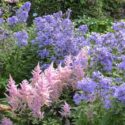
Dense purple-red plumes rise above attractive bronze-green, fern-like foliage, providing rich color and striking texture. This compact astilbe brings elegance to shaded borders, especially beside broader-leaved plants. Although Chinese astilbes tolerate somewhat drier conditions than certain other types, they still need reliably moist soil for healthy growth and flowering.
USDA Zones 5-8 | 12-18 in. tall | Late spring to fall
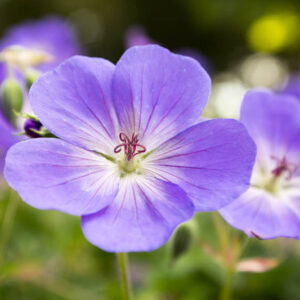
Large violet-blue flowers with pale centers appear continuously or in successive flushes for months, spilling across borders and between neighboring plants. ‘Rozanne’ is especially rewarding in bright partial shade with several hours of morning sunshine. Flowering becomes less generous in deep shade. Trim tired stems in midsummer to encourage fresh growth.
USDA Zones 3-9 | 2-4 ft. tall | Midsummer to early fall
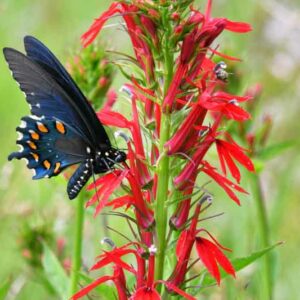
Brilliant scarlet flower spikes bring dramatic vertical color to moist, partially shaded gardens. This North American native is particularly attractive to hummingbirds. Cardinal flower thrives beside streams, in rain gardens, and in moisture-retentive borders. It is not suitable for dry shade and may persist through self-seeding where conditions are favorable.
Don’t confuse partial shade with dry shade. Astilbe and cardinal flower appreciate protection from strong afternoon sun, but both need adequate soil moisture. For dry conditions, consider better-adapted alternatives and use Gardenia’s Plant Finder to compare water requirements.
As many early perennials finish blooming, these plants keep the border colorful and inviting.
USDA Zones 4-8 | 3-4 ft. tall | Late summer to fall
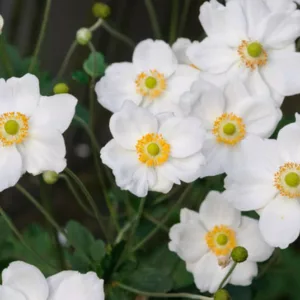
Elegant pure-white flowers with golden centers dance on slender stems above dark green foliage. ‘Honorine Jobert’ creates a wonderfully airy display in bright partial shade, particularly where the soil remains evenly moist. Allow room for its spreading rhizomes and avoid dry, exposed positions.
USDA Zones 4-8 | 2-3 ft. tall | Late summer to fall
Exquisite, orchid-like white flowers heavily spotted with purple appear along gracefully arching stems. Their intricate patterns reward close inspection, making this unusual perennial perfect beside shaded paths. Give it fertile, humus-rich soil, filtered light, and protection from drying winds.
USDA Zones 3-8 | 2-3 ft. tall | Late summer to fall
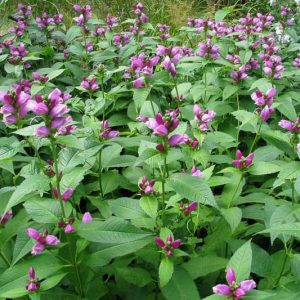
Upright spikes of deep pink, hooded flowers rise above handsome green foliage, attracting pollinators late in the season. Native to the eastern United States, turtlehead is particularly effective in moist woodland borders and rain gardens. It tolerates partial shade but needs consistent soil moisture.
These late bloomers extend the season as summer color begins to fade, bringing flowers to woodland edges and sheltered borders.
USDA Zones 3-8 | 1-3 ft. tall | Late summer to fall
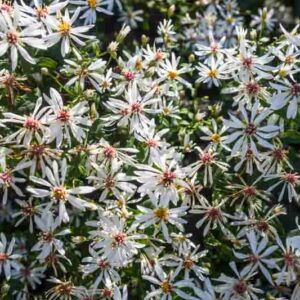
Hundreds of small white daisies with golden centers brighten dark, wiry stems, creating a cloud-like display. This North American native is unusually adaptable, tolerating dryish soil and more shade than many asters. It is an excellent choice for woodland edges and informal plantings that support late-season pollinators.
USDA Zones 4-8 | 3-4 ft. tall | Late summer to fall
Deep purple-black foliage provides dramatic contrast throughout summer, followed by tall, fragrant white flower spikes carried on dark stems. ‘Brunette’ is magnificent against pale flowers and green foliage. It requires humus-rich, consistently moist soil and sheltered partial shade. All parts should be treated as poisonous.
USDA Zones 5-9 | 4-6 in. tall | Late summer to fall
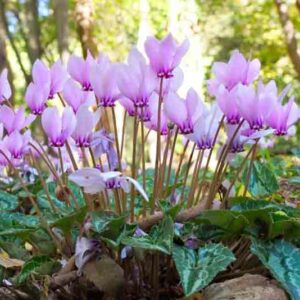
Delicate pink or white flowers emerge from bare ground before intricately marbled leaves unfold. This Mediterranean perennial is especially useful beneath deciduous trees where summers are dry and winters bring moisture. It becomes dormant during hot weather, returning with the first cooler days. Plant in well-drained soil and avoid waterlogging.
To create color from spring to fall, select plants with overlapping flowering seasons and compatible light and water requirements. Gardenia’s seasonal comparison provides a starting point:
| Season | Featured flowers | Best growing conditions |
|---|---|---|
| Late winter to early spring | Helleborus ‘Penny’s Pink’ | Cool woodland shade, good drainage |
| Spring | Pulmonaria, Tiarella, Woodland Phlox | Dappled shade, moisture-retentive soil |
| Late spring to early summer | Columbine, Bleeding Heart, Astrantia, Corydalis | Morning sun or bright shade |
| Midsummer | Astilbe, Heuchera, Geranium ‘Rozanne’, Cardinal Flower | Bright partial shade; moisture varies by plant |
| Late summer to fall | Japanese Anemone, Toad Lily, Turtlehead, White Wood Aster, Bugbane, Cyclamen | Filtered light; match each plant to soil moisture |
Bloom times vary with climate, altitude, and weather. Partial-shade plants generally flower most generously when they receive enough indirect or morning light.
Need more flowering options? Explore Gardenia’s Plant Finder to discover additional perennials for your USDA zone, light exposure, soil, and water needs.
The most successful shaded borders combine compatible plants and a little thoughtful seasonal care.
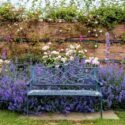
Gardenia’s design tip: Repeat groups of three or five compatible plants rather than scattering individual varieties throughout the border. Use low flowering perennials at the front, colorful midsize plants through the center, and taller Japanese anemones, turtleheads, or bugbanes toward the back.
Hellebores, lungwort, woodland phlox, coral bells, hardy geraniums, Japanese anemones, and white wood asters are good choices. The best selection depends on how much morning or filtered sunlight the garden receives, as well as soil moisture and climate.
Geranium ‘Rozanne’, Heuchera ‘Paris’, and Corydalis lutea can flower for extended periods in suitable partial shade. Flowering is usually more abundant in bright shade or morning sun than in deep shade.
Japanese anemones, toad lilies, white wood asters, bugbane, and ivy-leaved cyclamen provide late-season flowers. Soil moisture varies greatly among these plants, so choose varieties suited to your growing conditions.
Yes. Many perennials thrive with three to five hours of morning sun, particularly in warm climates. Hardy geraniums, coral bells, astrantias, and Japanese anemones can perform well, provided their soil and water requirements are met.
Insufficient light is a common cause, especially for summer-flowering perennials. Other possibilities include excessive nitrogen fertilizer, drought, immature plants, or pruning at the wrong time. Check each plant’s light, moisture, and bloom requirements.
Updated and reviewed by Gardenia: October 2026
| Plant Type | Perennials |
|---|---|
| Genus | Actaea, Anemone, Aquilegia, Astilbe, Astrantia, Chelone, Corydalis, Cyclamen, Dicentra, Geranium, Helleborus, Heuchera, Lobelia, Phlox, Pulmonaria, Tiarella, Tricyrtis |
| Exposure | Partial Sun |
Create a membership account to save your garden designs and to view them on any device.
Becoming a contributing member of Gardenia is easy and can be done in just a few minutes. If you provide us with your name, email address and the payment of a modest $25 annual membership fee, you will become a full member, enabling you to design and save up to 25 of your garden design ideas.
Join now and start creating your dream garden!