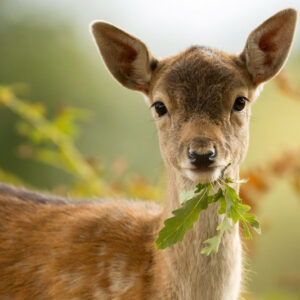
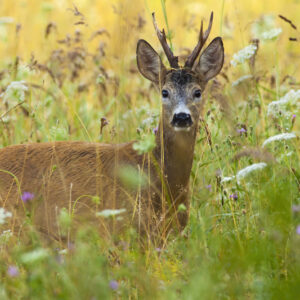
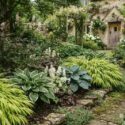
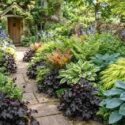
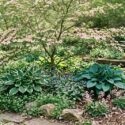
Create a lush shade garden without making it an easy meal for deer. Discover dependable deer-resistant perennials, ferns, groundcovers, sedges, and evergreen shrubs for dry shade, moist woodland beds, and difficult low-light spaces - plus the plants deer commonly browse and a smarter way to choose what will thrive.
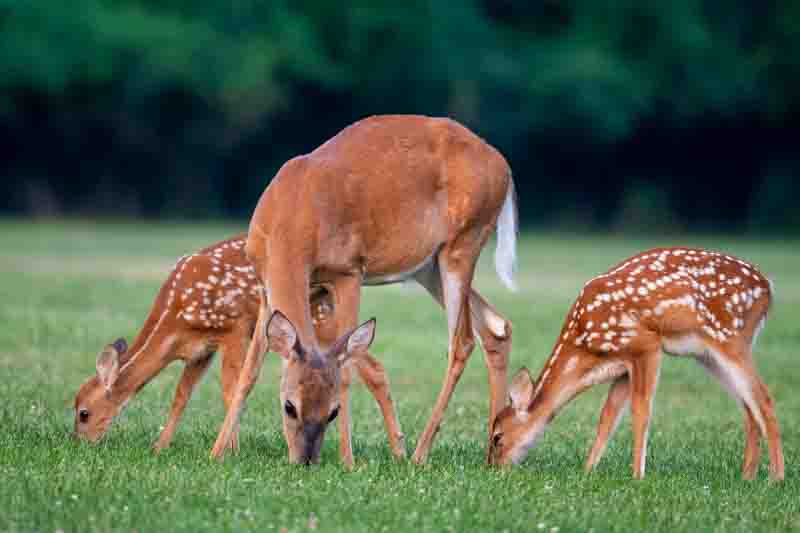


Shade gardening is challenging enough without waking up to chewed stems, missing flower buds, and plants cropped almost to the ground. Hostas may love the shade, but unfortunately, deer often love hostas. Hydrangeas can flourish beneath a high canopy, yet tender shoots and flower buds can disappear overnight. Even plants that perform beautifully in low light are not necessarily good choices where deer browse regularly.
The good news is that a shaded garden does not have to become a deer buffet. From leathery hellebores and delicate-looking but surprisingly tough epimediums to ferns, astilbes, lungworts, sweet box, pieris, and Oregon grape, there are many deer-resistant shade plants capable of creating a lush, layered garden.
The key is to stop treating “shade” as a single condition. Dry soil beneath mature trees is very different from the cool, moist ground beside a woodland stream. Deep shade beside a building is different again from bright, dappled shade beneath deciduous branches.
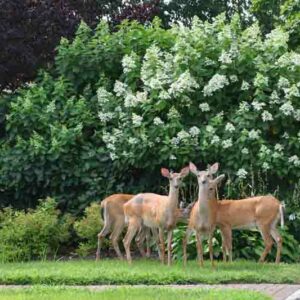
Deer-resistant shade plants are plants adapted to partial or full shade that deer tend to browse less readily than more palatable alternatives. No plant is completely deer-proof. Browsing varies with deer populations, season, drought, food availability, and local herd preferences.
| Garden Situation | Strong Starting Points |
|---|---|
| Dry shade beneath trees | Epimedium, bigroot geranium, hellebores, sweet box |
| Moist shade | Astilbe, lungwort, bugbane, wood ferns |
| Evergreen structure | Pieris, Oregon grape, sweet box |
| Low-growing layer | Pennsylvania sedge, epimedium, Allegheny spurge, wild ginger |
| Flower color | Hellebores, astilbe, lungwort, bergenia, bugbane |
Before choosing plants, look at the site itself. “Shade” can describe several very different environments.
A plant can be excellent in one of these situations and miserable in another. Astilbe may flourish in moist woodland soil but struggle under a thirsty maple. Epimedium can cope remarkably well with dry shade once established but does not need constantly wet ground.
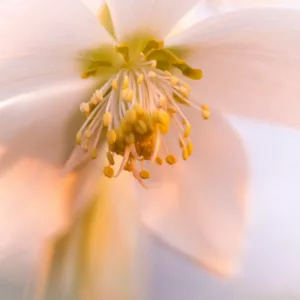
Hellebores are among the most valuable deer-resistant perennials for shade. Their leathery foliage is generally unattractive to browsing deer, and their nodding flowers appear in late winter or early spring, often before much else is blooming.
Most perform best in partial shade and humus-rich, well-drained soil. Once established, many cope with periods of dry shade beneath deciduous trees. Because hellebores are toxic if ingested and their sap can irritate skin, wear gloves when handling them.
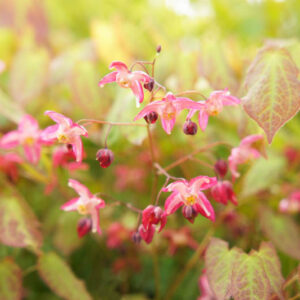
Epimedium is one of the plants I would reach for first beneath established trees. It tolerates root competition and, depending on species and cultivar, can handle surprisingly dry conditions after establishment.
Its delicate spring flowers look fragile, but the plants themselves are durable. Rhizomes gradually form attractive colonies of heart-shaped foliage without usually becoming difficult to control.
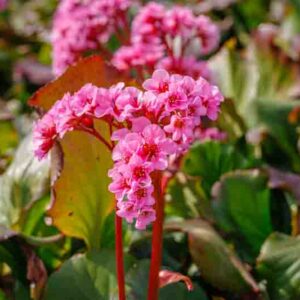
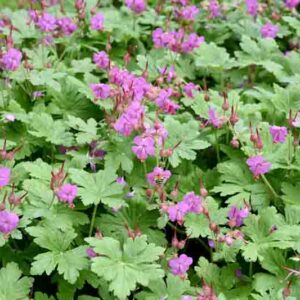
Bergenia provides a completely different texture. Its large, thick, leathery leaves form substantial clumps, while spring flowers rise above the foliage in shades of pink, rose, or white.
Many bergenias tolerate partial shade and some dry shade once established. In cooler weather, the foliage may develop handsome bronze, purple, or red tones.
Astilbe is one of the best flowering perennials for a moist shade garden. Feathery plumes rise above finely divided foliage in white, pink, red, lavender, and purple, bringing lightness and movement to darker borders.
The important qualification is moisture: astilbes are not plants for baking dry shade. Give them moisture-retentive, humus-rich soil and do not allow the roots to dry repeatedly during hot weather.
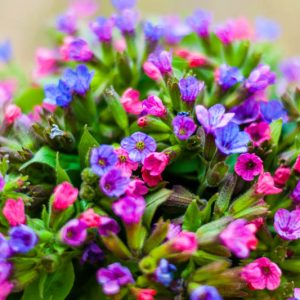
Lungwort earns its place for both foliage and early flowers. Silver-spotted or almost silver leaves illuminate shaded ground long after the pink, blue, or violet spring blooms have faded.
Pulmonarias generally prefer cool, moist, well-drained soil and dislike prolonged drought. Modern selections can also offer improved resistance to powdery mildew.
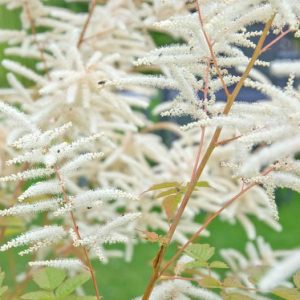
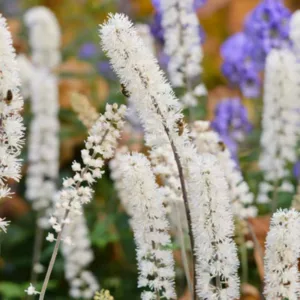
Actaea simplex brings height to the shade garden. Fragrant white flower wands rise above finely divided foliage in late summer and fall, extending the season well beyond the spring-heavy woodland display.
It prefers moist, fertile ground and is particularly effective toward the back of a shaded border. The plant contains toxic compounds, which contributes to its low appeal to browsing deer.
| Genus | Actaea, Asarum, Astilbe, Bergenia, Carex, Dryopteris, Epimedium, Helleborus, Mahonia, Pachysandra, Pieris, Pulmonaria, Sarcococca |
|---|---|
| Exposure | Partial Sun, Shade |
| Tolerance | Deer |
Flowers are only part of a successful shade garden. Foliage carries the planting for much of the year, and many ferns, sedges, and woodland ground-layer plants are naturally useful where deer pressure is high.
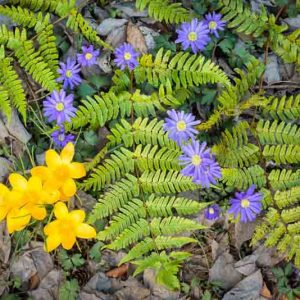
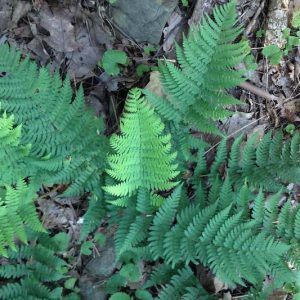
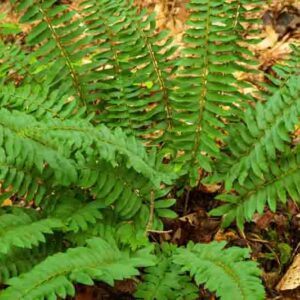
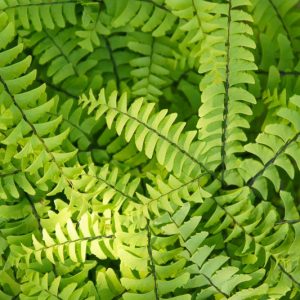
Dryopteris ferns bring graceful, arching fronds and strong woodland character to shaded beds. Dryopteris erythrosora, the autumn fern, is particularly ornamental because new fronds emerge in coppery and bronze tones before turning green.
For an eastern North American native, Dryopteris marginalis, or marginal wood fern, is an excellent choice. Its leathery blue-green fronds are evergreen, it stays neatly clump-forming, and it tolerates drier woodland conditions better than many ferns once established.
Christmas fern is another dependable native fern for shade. Its glossy evergreen fronds provide winter structure, and established plants tolerate dry shade and rocky woodland soils surprisingly well. It forms tidy clumps rather than spreading aggressively.
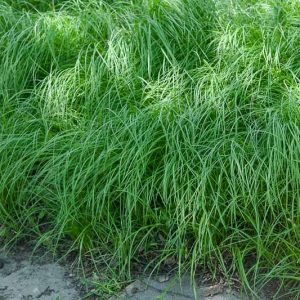
Pennsylvania sedge creates a soft, grassy-looking layer beneath trees. Native across much of eastern North America, it is particularly useful in naturalistic woodland plantings and can tolerate relatively dry shade once established.
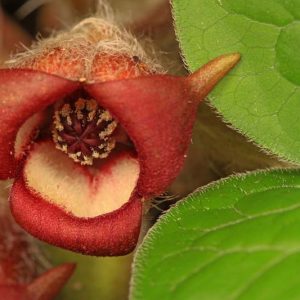
Wild ginger spreads slowly into colonies of broad, heart-shaped foliage in moist to average woodland soil. It is native across much of eastern North America and is generally unappealing to deer.
Despite its common name, this is not culinary ginger and should not be used as a substitute for it.
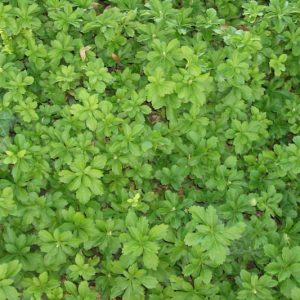
Allegheny spurge is a North American native groundcover with mottled leaves and fragrant spring flowers. It spreads more slowly than Japanese pachysandra and makes an elegant woodland carpet in parts of its native southeastern range.
A good shade garden needs structure as well as perennials. Evergreen and woody plants create height, winter presence, and a framework around which smaller plants can be repeated.
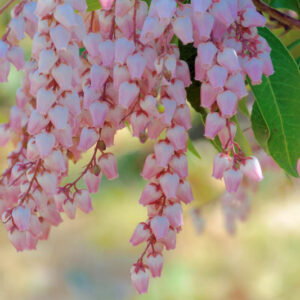
Pieris japonica is an evergreen shrub for partial shade with clusters of bell-shaped spring flowers and colorful new foliage that may emerge red, bronze, or pink.
It prefers acidic, humus-rich, moist but well-drained soil. Its tough foliage is generally low on the deer menu, although no shrub should be considered immune under severe browsing pressure.
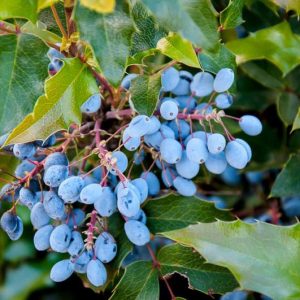
Oregon grape combines evergreen, holly-like foliage with yellow spring flowers and blue-purple fruits. It tolerates shade and can gradually form colonies by suckering.
Native to the Pacific Northwest, it is particularly useful where an evergreen woodland shrub is wanted within its appropriate regional context.
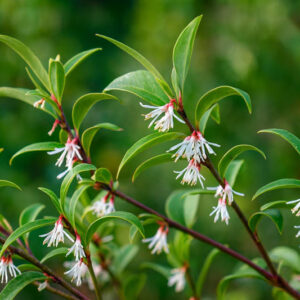
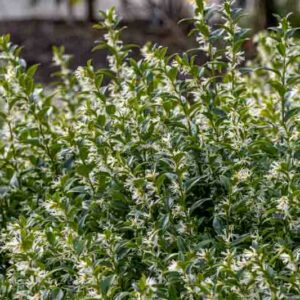
Sweet box is one of the most useful evergreen shrubs for deep shade. Its glossy foliage looks polished throughout the year, while tiny winter flowers release a surprisingly powerful fragrance.
Once established, it can tolerate dry shade better than many evergreen shrubs. Its leathery foliage is generally unattractive to deer, although very young plants may still need temporary protection where browsing pressure is intense.
Dry shade is often created by mature trees whose roots compete aggressively for moisture. Building eaves and dense evergreen canopies can produce the same problem by preventing rainfall from reaching the soil.
Strong starting points include epimedium, bigroot geranium, hellebores, Sarcococca hookeriana, Sarcococca confusa, and, where appropriate, Oregon grape. The sweet boxes are especially useful for evergreen structure and winter fragrance and can cope with dry shade once established.
“Dry-shade tolerant” does not mean a new plant should be left without water. Establishment is the critical period. Water deeply when needed while roots develop, then reduce supplemental irrigation according to the species, climate, and soil.
Where shade stays cool and the soil retains moisture without remaining waterlogged, the plant palette changes considerably.
Astilbe becomes an obvious choice for summer flowers. Pulmonaria provides early spring bloom and silvery foliage. Actaea brings height and late-season flowers, while Dryopteris ferns supply the foliage framework.
Bergenia can occupy the lower layer, particularly where you want bolder leaves and some winter foliage.
Moist shade should not be confused with waterlogged soil. Many woodland plants want consistent moisture plus oxygen around their roots. If water remains standing after rain, choose plants specifically adapted to saturated soil rather than assuming every shade plant will tolerate it.
Native status and deer resistance are separate characteristics. A native plant may be highly attractive to deer, while a deer-resistant plant may come from another continent. If both goals matter, apply both filters.
Depending on your region, useful North American native shade choices include:
Do not treat “North American native” as a local designation. A species native to Oregon may have no ecological relationship with a garden in Georgia, and vice versa. Check the native range for your state or region before making native status part of the reason for choosing it.
A shaded site does not automatically make a plant deer resistant, and this is where many shade-plant lists become misleading.
Hostas are the obvious example. They are outstanding shade perennials, but in many deer-heavy gardens their tender foliage is highly palatable. If deer visit regularly, hostas generally require protection rather than being a reliable low-browse choice.
Heuchera can be considerably more variable. Some gardens experience very little browsing; in others, deer take flowers or foliage. The same caution applies to foamflower (Tiarella), which can be useful in native woodland plantings but should not be treated as universally deer resistant.
Hydrangeas and many rhododendrons or azaleas should not be substituted for genuinely deer-resistant shrubs simply because they grow in shade. Browsing susceptibility varies among species and circumstances, but tender shoots and buds can be damaged.
Finally, some traditional shade groundcovers may resist deer but create another problem. Japanese pachysandra, periwinkle, English ivy, and other vigorous groundcovers are invasive or problematic in parts of North America. Always check regional invasive-plant guidance before planting them.
The most convincing shade gardens are layered rather than built from a collection of isolated plants.
Begin with woody structure – perhaps pieris, sweet box, or Oregon grape where conditions suit them. Add substantial perennials such as hellebores, astilbes, bergenias, or actaea. Then connect the larger plants with epimedium, sedges, ferns, wild ginger, or other low-growing woodland plants.
Think about contrasts as much as flowers:
Do not rely on “barrier planting” with deer-resistant species to protect plants deer enjoy eating. A row of hellebores or epimedium does not make a hosta behind it invisible. If you include highly palatable plants, consider fencing, cages, or repellents according to local deer pressure.
A deer-resistant shade plant is only a good choice if it also suits the kind of shade and soil you actually have. Gardenia’s Deer-Smart Shade Match looks at deer resistance, shade level, soil moisture, mature role, and garden goals together.
The key question: “Will deer usually leave it alone, and will it actually thrive in this particular shade garden?”
Use the Gardenia Plant Finder to find deer-resistant shade plants suited to your light, soil, drainage, moisture, climate, and available space. Browse Deer-Resistant Garden Ideas for inspiration, then use the Garden Design Tool to see how your choices work together in a complete shade planting.
| Garden Problem | Good Starting Points | Watch For |
|---|---|---|
| Dry shade under trees | Epimedium, bigroot geranium, hellebores | Root competition and establishment water |
| Cool, moist border | Astilbe, pulmonaria, actaea, ferns | Do not allow moisture-loving plants to dry repeatedly |
| Evergreen shade structure | Pieris, sweet box, Oregon grape | Soil pH, drainage, and mature size |
| Naturalistic woodland floor | Pennsylvania sedge, wild ginger, Allegheny spurge | Native range and local moisture conditions |
| Winter and early-spring color | Hellebores, pieris, bergenia | Species and cultivar differences in evergreen foliage |
Strong choices include hellebores, epimedium, bergenia, astilbe, pulmonaria, actaea, many ferns, Pennsylvania sedge, pieris, Oregon grape, and sweet box. The best choice depends on whether the shade is dry, moist, bright, or deep.
Epimedium, bigroot geranium, hellebores, sweet box, and some mahonias are useful starting points for dry shade once established. Newly planted specimens still need regular water while their root systems develop.
No. Hostas are among the shade plants most frequently browsed by deer. In gardens with regular deer pressure, they usually require protection with fencing, cages, or repellents.
Hellebores are generally considered strongly deer resistant because their foliage is leathery and the plants contain toxic compounds. Hungry deer may still sample almost any plant, so they are resistant rather than deer-proof.
Many commonly grown garden ferns are rarely browsed by deer and are useful foliage plants for shaded gardens. Resistance varies by species and local deer pressure, so no fern should be considered completely deer-proof.
Astilbe, pulmonaria, actaea, bergenia, and many Dryopteris ferns are useful choices for cool, moisture-retentive shade. Moist soil should still drain rather than remain constantly waterlogged unless the plant is adapted to saturated conditions.
Yes. Depending on your region, examples include Pennsylvania sedge, wild ginger, Allegheny spurge, and Oregon grape. Always check the species’ native range because a plant native somewhere in North America is not necessarily native where you garden.
No. Deer-resistant shade plants are less likely to be browsed, but deer may sample almost anything when food is scarce, deer populations are high, or tender new growth is available.
Updated: September 2026
| Genus | Actaea, Asarum, Astilbe, Bergenia, Carex, Dryopteris, Epimedium, Helleborus, Mahonia, Pachysandra, Pieris, Pulmonaria, Sarcococca |
|---|---|
| Exposure | Partial Sun, Shade |
| Tolerance | Deer |
Create a membership account to save your garden designs and to view them on any device.
Becoming a contributing member of Gardenia is easy and can be done in just a few minutes. If you provide us with your name, email address and the payment of a modest $25 annual membership fee, you will become a full member, enabling you to design and save up to 25 of your garden design ideas.
Join now and start creating your dream garden!
Create a membership account to save your garden designs and to view them on any device.
Becoming a contributing member of Gardenia is easy and can be done in just a few minutes. If you provide us with your name, email address and the payment of a modest $25 annual membership fee, you will become a full member, enabling you to design and save up to 25 of your garden design ideas.
Join now and start creating your dream garden!