Bring beautiful purple flowers into the shadiest corners of your garden. Discover hardy perennials, colorful annuals, and flowering ground covers in shades of violet, lavender, and deep purple. Learn which plants thrive in full or partial shade, when they bloom, and how to combine them for lasting color.


A shady garden doesn’t have to be short on color. Deep-purple hardy geraniums, violet-flowered creeping phlox, delicate barrenworts, and cheerful summer annuals can brighten spaces beneath trees, along north-facing borders, and around sheltered patios.
The secret is choosing plants that will actually bloom in the light your garden receives. Some thrive in cool, moist woodland soil; others tolerate seasonally dry shade or flower for months in containers.
Discover 18 beautiful purple, violet, and lavender-flowering plants for shade, including hardy perennials, colorful annuals, and flowering ground covers.
What purple flowers grow best in shade?
For perennials, try Geranium phaeum, Tradescantia ‘Concord Grape’, purple columbines, and astilbes. For summer-long color, choose Torenia, Browallia, or purple Impatiens. Epimedium ‘Lilafee’, Phlox stolonifera, violets, and Lamium ‘Purple Dragon’ offer beautiful low-growing options.
Most bloom best in partial or dappled shade. Bright full shade offers fewer choices, while deep shade rarely supports abundant flowers.
Before choosing plants, observe how sunlight reaches your garden. A border beneath deciduous trees may enjoy spring sunshine but become heavily shaded in summer.
A plant may survive in full shade yet produce few flowers. For the best display, distinguish shade tolerance from the light needed for reliable blooming.
Perennials bring color back year after year, from delicate spring woodland flowers to striking summer and fall blooms. These nine selections offer different heights, flowering seasons, and growing habits.
Deep-purple, nodding flowers rise above handsome foliage in late spring. One of the best hardy geraniums for shade, it tolerates some seasonal dryness once established. Particularly effective in informal woodland borders.
Rich grape-purple flowers with contrasting golden stamens appear from late spring into summer. This compact, clump-forming perennial adds vibrant color to partially shaded borders. It flowers best with some morning sun or bright filtered light and appreciates moderately moist, well-drained soil.
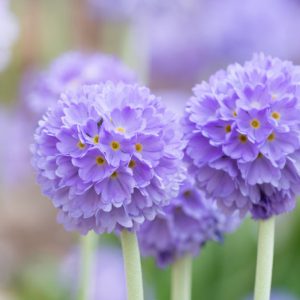
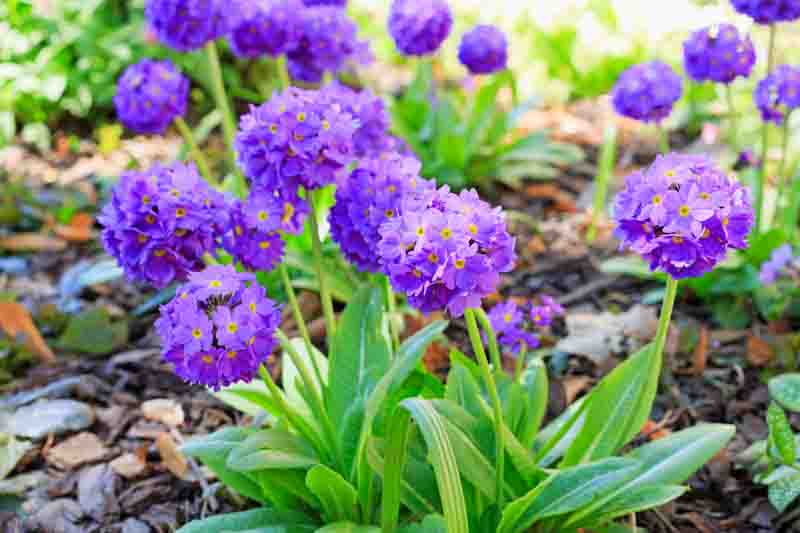
Rounded clusters of purple or lilac flowers rise above rosettes of textured leaves in spring. Choose a purple-flowered selection and provide cool, moist, well-drained soil and partial shade. Especially charming along woodland paths.
| Genus | Aquilegia, Astilbe, Cyclamen, Geranium, Impatiens, Lamium, Liriope, Phlox, Primula, Tradescantia, Tricyrtis, Viola |
|---|---|
| Exposure | Partial Sun, Shade |
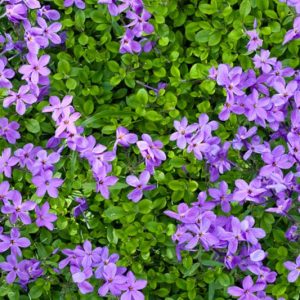
Clusters of fragrant violet-purple flowers brighten woodland gardens in spring. This low-growing North American native spreads by creeping stems, creating a colorful carpet beneath shrubs and along shaded paths. Choose a purple-flowered selection and provide dappled shade with humus-rich, well-drained soil.
Clusters of rich crimson-purple flowers brighten partial shade from late spring to early summer. This hardy perennial forms a spreading carpet of aromatic foliage and tolerates relatively dry soil once established, making it especially useful beneath trees and shrubs.
Graceful, spurred flowers bring height and movement to woodland edges in late spring. Choose a purple-flowered cultivar for bright partial shade. Plants may self-seed, although their offspring do not always retain the same flower color.
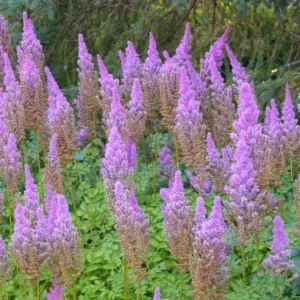
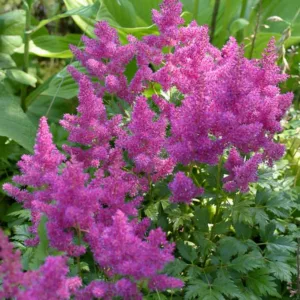
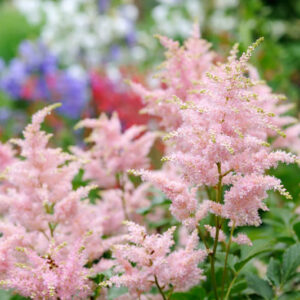
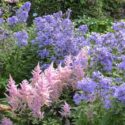
Bold violet-purple flower plumes rise above finely divided foliage in summer. This striking perennial looks especially beautiful planted in groups. Give it fertile, consistently moist soil and partial shade for the best flowering display.
Intricately spotted purple-and-white flowers bring unexpected beauty to late-summer and fall gardens. Plant this woodland perennial beside a path where its unusual, orchid-like flowers can be admired up close. It prefers moist, well-drained soil and sheltered shade.
Slender lavender-purple flower plumes provide late-summer color and elegant vertical texture. An attractive companion for hostas and ferns in moist partial shade, but unsuitable for persistently dry soil.
Choose by moisture, not just color. Astilbes and primroses need reliable moisture, while established Geranium macrorrhizum and Geranium phaeum tolerate some seasonal dryness. Even plants that thrive in shade may not make good companions if their water requirements differ.
For months of summer color, annuals are hard to beat. These three are especially attractive in containers, window boxes, and sheltered borders.
Cheerful lavender and blue-purple flowers appear from summer until frost. Torenia performs well in partial or bright full shade and is especially effective in hanging baskets and containers with consistent moisture.
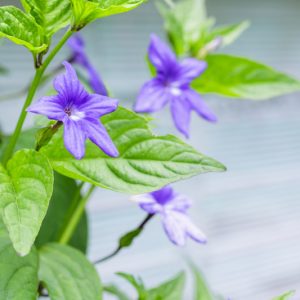
Star-shaped violet-blue flowers brighten shady patios and borders throughout summer. Browallia prefers fertile, well-drained soil, regular watering, and protection from harsh afternoon sun.
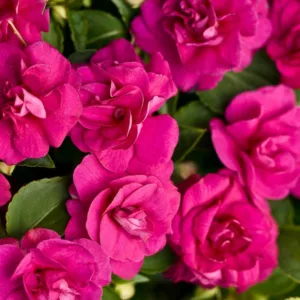
Rich-purple double flowers resemble miniature roses and bloom for months in sheltered shade. Excellent for containers and summer bedding, although susceptible selections of Impatiens walleriana can develop downy mildew.
Low-growing plants soften shaded pathways, fill spaces beneath shrubs, and brighten woodland borders. Some spread into flowering carpets, while others form more restrained clumps.
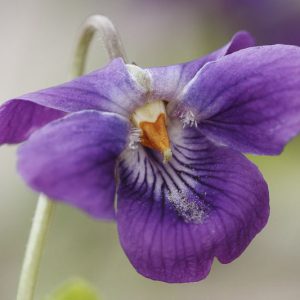
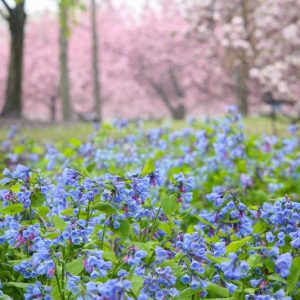
Violet-purple flowers brighten woodland gardens in spring. This North American native has attractive heart-shaped leaves and supports wildlife, including fritillary butterfly caterpillars. It spreads readily by seed and rhizomes.
Small, fragrant violet-purple flowers appear in late winter or spring. Sweet violet is especially lovely beside shaded paths, where its perfume can be appreciated. It may spread vigorously in favorable conditions.
Rich magenta-purple flowers brighten shady gardens from late spring into summer, contrasting beautifully with silver foliage edged in green. This vigorous, low-growing perennial thrives in partial to full shade and makes colorful ground cover where its spreading habit can be managed.
Clumps of evergreen, grass-like foliage produce rich-purple flower spikes in late summer. Useful for edging shaded paths and borders, although flowering is usually more abundant in brighter shade.
Low, spreading foliage is crowned by lavender-purple flower plumes in late summer. Particularly attractive in groups along moist woodland borders. Unlike
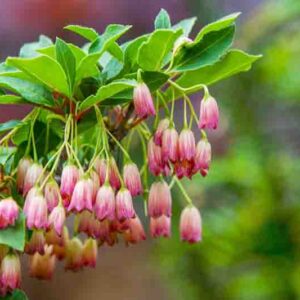
Delicate amethyst-purple flowers with pale spurs appear above bronze-tinted spring foliage. This low-growing perennial thrives in partial to full shade and tolerates some summer dryness once established. An elegant choice beneath shrubs and along woodland paths.
Ground-cover caution: Sweet violet, Lamium, and other spreading plants may extend beyond their intended planting areas. Check local invasive-plant recommendations, especially near natural woodlands. Epimedium ‘Lilafee’ is a more restrained choice, although it can gradually expand into a small colony.
The best purple flowers for shade depend on available light, soil moisture, and climate. Gardenia’s practical plant-selection guide helps you narrow the choices:
These are starting points, not interchangeable combinations. Check your USDA hardiness zone, soil drainage, and each plant’s mature size before planting.
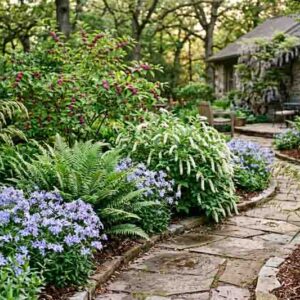
Combine Phlox stolonifera, Epimedium ‘Lilafee’, and Viola sororia with Christmas ferns. Violet-purple flowers weave through contrasting foliage for a natural woodland display. Best in cool, dappled shade with well-drained soil and adequate spring moisture.
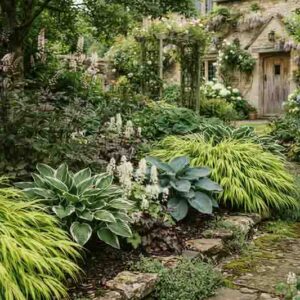
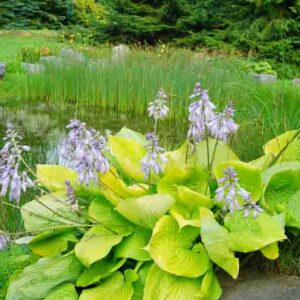
Plant Astilbe ‘Purple Candles’, Astilbe ‘Purpurlanz’, and Hosta ‘Halcyon’. Tall purple flower plumes contrast beautifully with blue-green hosta foliage. Provide bright partial shade and consistent moisture.
Arrange containers of Torenia, Browallia, and purple Impatiens. Their varied flower shapes and violet tones provide a cheerful summer display in bright shade. Keep the potting mix evenly moist and ensure good drainage.
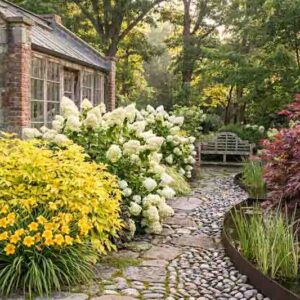
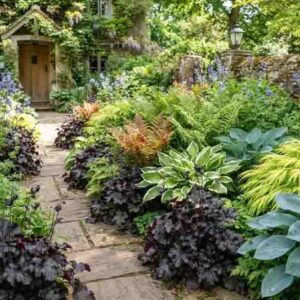
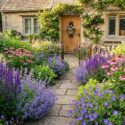
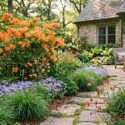
Design tip: Deep-purple flowers can disappear against dark foliage. Pair them with silver-leaved plants, blue-green hostas, lime-green ferns, or pale paving to make their color stand out. Repeating a few purple-flowering plants creates a more harmonious effect than scattering too many varieties throughout the garden.
Torenia, Browallia, and purple Impatiens can flower in bright full shade. Most perennials bloom more reliably with some filtered sunlight. Deep shade rarely supports abundant flowers.
Geranium phaeum, Epimedium ‘Lilafee’, purple Astilbe cultivars, Tradescantia ‘Concord Grape’, and Primula denticulata are good choices. Most bloom best in partial or dappled shade, and their moisture needs vary.
Torenia fournieri, Browallia speciosa, and purple Impatiens offer prolonged summer color in bright shade. Tradescantia ‘Concord Grape’ also flowers in summer but performs best with some sunlight.
Epimedium ‘Lilafee’, Phlox stolonifera, Viola sororia, and Lamium ‘Purple Dragon’ can grow beneath trees where their light and soil requirements are met. Check spreading habits and local invasive-plant guidance.
Lavender generally needs full sun and well-drained soil to flower abundantly. For violet-purple flowers in partial shade, consider Phlox stolonifera, Epimedium ‘Lilafee’, or Torenia instead.
Updated and reviewed by Gardenia: October 2026
| Genus | Aquilegia, Astilbe, Cyclamen, Geranium, Impatiens, Lamium, Liriope, Phlox, Primula, Tradescantia, Tricyrtis, Viola |
|---|---|
| Exposure | Partial Sun, Shade |
Create a membership account to save your garden designs and to view them on any device.
Becoming a contributing member of Gardenia is easy and can be done in just a few minutes. If you provide us with your name, email address and the payment of a modest $25 annual membership fee, you will become a full member, enabling you to design and save up to 25 of your garden design ideas.
Join now and start creating your dream garden!