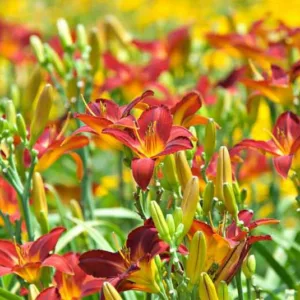
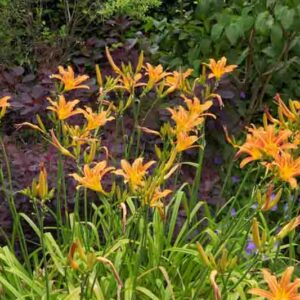
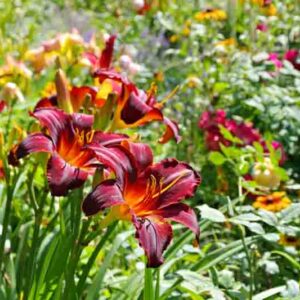
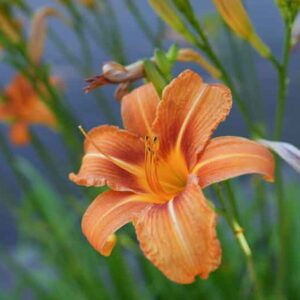
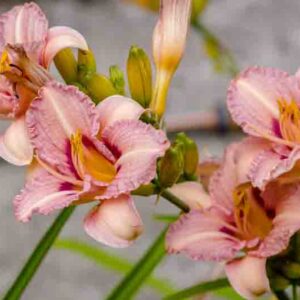
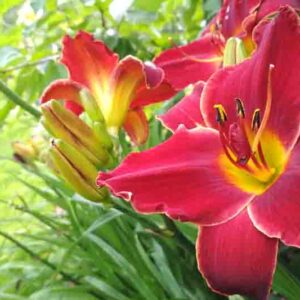
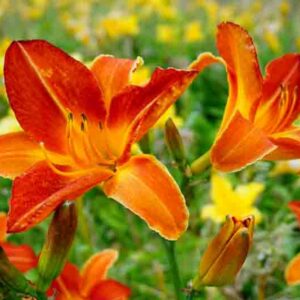
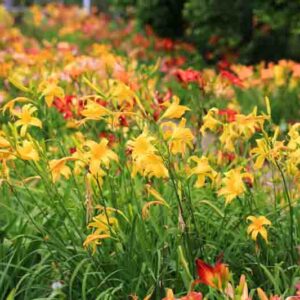
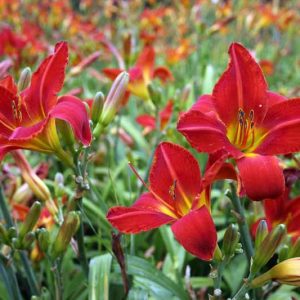
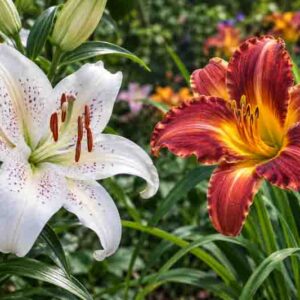
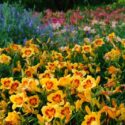
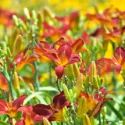
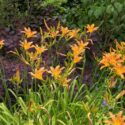
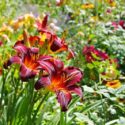
Which daylilies truly deserve a place in your garden? Discover 25 outstanding cultivars chosen with particular weight given to American Daylily Society and RHS awards, then compared for bloom season, rebloom, fragrance, color, flower form, size, and garden role. Find proven classics and exceptional varieties worth growing.
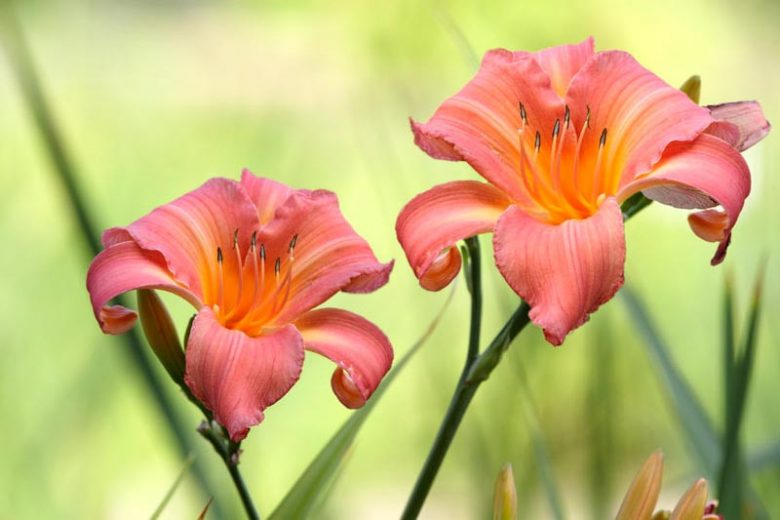


With thousands of registered daylily cultivars to choose from, finding the “best” can feel almost impossible. Some produce tiny jewel-like flowers, others enormous spiders or unusual forms. Colors range from clear yellow and gold to orange, pink, red, burgundy, lavender, deep purple, and near-white. Some rebloom. Some are fragrant. Some have been proving themselves in gardens for more than half a century.
But a spectacular flower photograph does not necessarily make an exceptional garden plant.
A great daylily (Hemerocallis) also has to work as a complete plant. Vigor matters. So do foliage quality, scape strength, branching, bud production, flower substance, bloom season, proportion, and the ability to contribute something useful to the garden.
That is why Gardenia gives particular weight to recognition from the American Daylily Society (ADS) and the Royal Horticultural Society (RHS). Both have long traditions of looking beyond a single beautiful flower.
Then Gardenia adds another question: What does this cultivar actually contribute to your garden?
An award-winning red daylily may be outstanding, but it is not automatically the best choice if your border already contains several excellent reds. A compact miniature might be far more useful beside a path. A later bloomer can fill a seasonal gap. A pale flower can separate stronger colors. A spider or unusual form can break up a planting dominated by rounded blooms.
Award Evidence → Garden Role → Bloom Season → Scale → Personal Preference
Awards help identify proven quality. Gardenia then asks what each cultivar adds to a real planting – perhaps earlier or later flowers, repeat bloom, fragrance, compact size, unusual form, exceptional color, or a different visual role.
The American Daylily Society does much more than register cultivars. Its Garden Judges evaluate daylilies as complete garden plants rather than judging only one perfect bloom.
Vigor, foliage, scape height and strength, branching, bud placement, flower substance, form, and overall distinction can all matter.
The highest ADS cultivar honor is the Stout Silver Medal. It sits at the top of the society’s award system, and a cultivar must already have earned an Award of Merit before it becomes eligible for consideration.
That makes a Stout Medal especially useful when searching for daylilies with an exceptional record. Several plants in this guide have earned it, including ‘Stella de Oro’, ‘Mary Todd’, ‘Bess Ross’, ‘Bertie Ferris’, ‘Fairy Tale Pink’, ‘Siloam Double Classic’, ‘Always Afternoon’, ‘Strawberry Candy’, ‘Primal Scream’, ‘Moonlit Masquerade’, and ‘All American Chief’.
The Award of Merit is also meaningful. ADS voting rules are designed to identify cultivars that gain support beyond a single local area rather than plants favored only in one region.
Specialist awards add another layer. The Donn Fischer Memorial Cup recognizes miniature-flowered daylilies. The Ida Munson Award recognizes outstanding doubles. The Harris Olson Spider Award honors spider cultivars, while the Lambert/Webster Award recognizes unusual-form daylilies.
Those distinctions are useful because they tell gardeners what kind of excellence a cultivar demonstrated.
The Royal Horticultural Society takes a similarly practical view of garden performance. Its recent Hemerocallis trial considered the complete plant, including vigor, healthy foliage, hardiness, pest and disease resistance, scape strength, branching, bud count, flower substance, weather resistance, color, distinctiveness, scent, season of bloom, and rebloom.
The RHS Award of Garden Merit (AGM) is therefore particularly valuable when it is current. It is intended to help gardeners identify plants that are reliable and worthwhile under appropriate growing conditions.
Award status can change, however. The RHS periodically reassesses older AGMs as cultivars age and horticultural standards evolve. An older AGM remains an important part of a cultivar’s history, but it should not automatically be presented as a current RHS recommendation. Two different kinds of current RHS recognition appear in this guide: ‘Corky’ received a new AGM in 2024, while ‘Pink Damask’ had its longstanding AGM reconfirmed in the recent trial.
Award status is not frozen in time. Gardenia distinguishes between historical recognition and current recognition so gardeners can see both a cultivar’s legacy and the evidence supporting it today.
A particularly interesting example is Hemerocallis ‘Corky’. This classic miniature received a new RHS AGM in 2024 after the recent trial, decades after earning important ADS recognition.
| Recognition | What It Helps Tell You |
|---|---|
| ADS Stout Silver Medal | The highest ADS cultivar recognition, reached only after earlier award stages. |
| Current RHS AGM | Strong evidence of present-day garden merit under RHS evaluation. |
| ADS Award of Merit | Major recognition requiring geographically distributed support from Garden Judges. |
| Lenington All-American Award | Useful evidence of performance across different regions. |
| ADS Specialist Awards | Recognition for excellence in traits such as miniature flowers, doubles, spiders, unusual forms, or eyezones. |
| Honorable Mention | An earlier but meaningful stage of ADS recognition, especially useful when tracing the history of classic cultivars. |
Gardenia’s rule: Use awards to identify quality. Use your garden to identify need.
| If You Want… | Gardenia Picks |
|---|---|
| Exceptional overall pedigree | Stella de Oro, Siloam Double Classic, Primal Scream, Moonlit Masquerade |
| Rebloom | Stella de Oro, Moonlit Masquerade, Strawberry Candy, Indian Giver, Free Wheelin’ |
| Compact plants | Little Grapette, Stella de Oro, Pardon Me, Corky |
| Red and red-orange flowers | All American Chief, Charles Johnston, Pardon Me, Bess Ross |
| Purple and plum tones | Bela Lugosi, Always Afternoon, Indian Giver |
| Pink flowers | Pink Damask, Fairy Tale Pink, Strawberry Candy |
| Yellow and gold | Mary Todd, Stella de Oro, Golden Chimes, Corky |
| Near-white flowers | Joan Senior, Gentle Shepherd, Ice Carnival |
| Spider and unusual forms | Free Wheelin’, Ruby Spider, Primal Scream |
| Double flowers | Siloam Double Classic |
| Miniature flowers | Little Grapette, Bertie Ferris, Stella de Oro, Corky, Pardon Me |
| Later-season color | Frans Hals, Primal Scream, Pink Damask |
These daylilies are deliberately not ranked from first to twenty-fifth. A compact miniature and a giant unusual-form cultivar perform completely different jobs, so declaring one universally “better” would not be very useful.
For each selection, Recognition summarizes important award history. Gardenia Best For is our editorial judgment about where that cultivar is particularly useful.
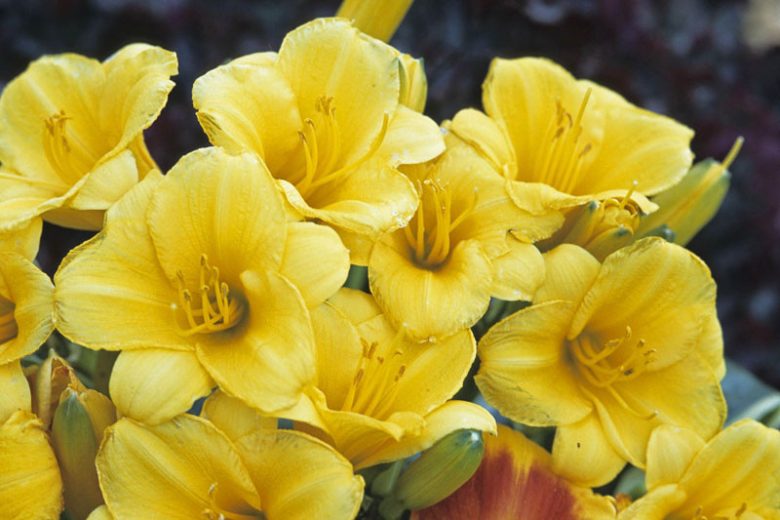 Hemerocallis ‘Stella de Oro’
Recognition: ADS Stout Silver Medal 1985 · Award of Merit 1982 · Donn Fischer Memorial Cup 1979.
Gardenia Best For: Rebloom · Miniature flowers · Small gardens · Containers
Why we picked it: Familiarity can make it easy to overlook how accomplished ‘Stella de Oro’ really is. Compact size, fragrance, extended flowers, rebloom, and a Stout Medal explain why this golden miniature became one of the most widely grown daylilies.
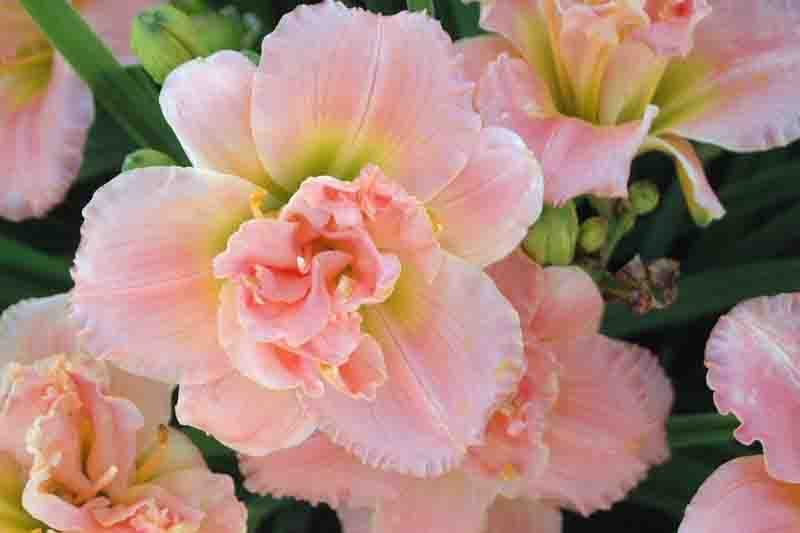 Hemerocallis ‘Siloam Double Classic’
Recognition: ADS Stout Silver Medal 1993 · Award of Merit 1991 · Honorable Mention 1988 · Ida Munson Award 1988, with additional historical recognition recorded by Gardenia.
Gardenia Best For: Double flowers · Soft pink · Compact borders
Why we picked it: A benchmark among double daylilies, ‘Siloam Double Classic’ combines full salmon-pink flowers with a manageable plant size. Its Ida Munson Award is especially meaningful because it recognizes excellence specifically among double-flowered daylilies.
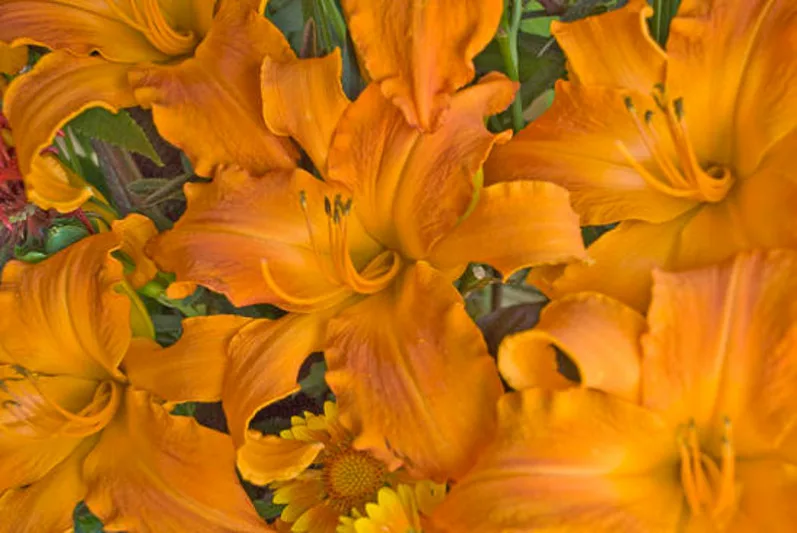 Hemerocallis ‘Primal Scream’
Recognition: ADS Stout Silver Medal 2003 · Award of Merit 2000 · Lambert/Webster Award 2001.
Gardenia Best For: Unusual form · Orange color · Focal planting
Why we picked it: Few daylilies change the silhouette of a border as dramatically. Large tangerine-orange flowers with long, twisting and recurving tepals introduce movement and energy instead of another conventional rounded bloom.
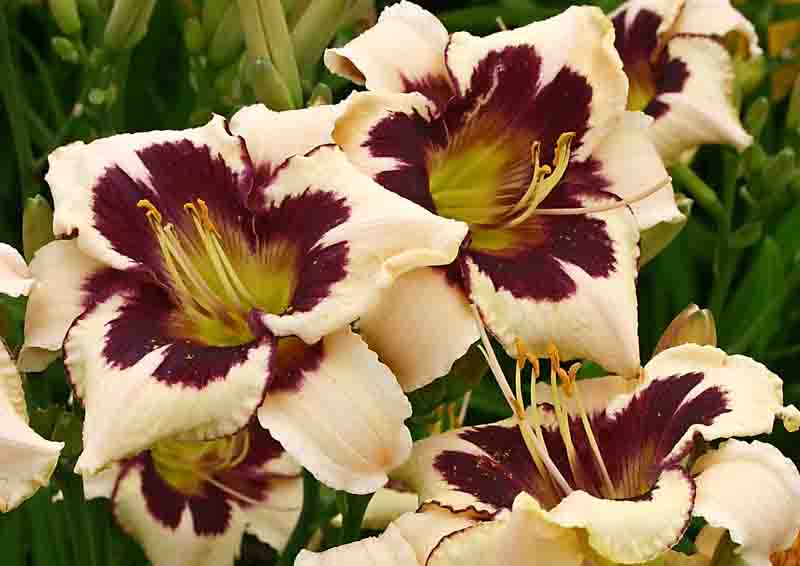 Hemerocallis ‘Moonlit Masquerade’
Recognition: ADS Stout Silver Medal 2004 · Award of Merit 2002 · Honorable Mention 1999.
Gardenia Best For: Eyezones · Rebloom · High-contrast flowers
Why we picked it: Creamy petals surrounding a dark purple eye create enough contrast to be visible from across the border. Registered rebloom gives this memorable flower practical garden value as well.
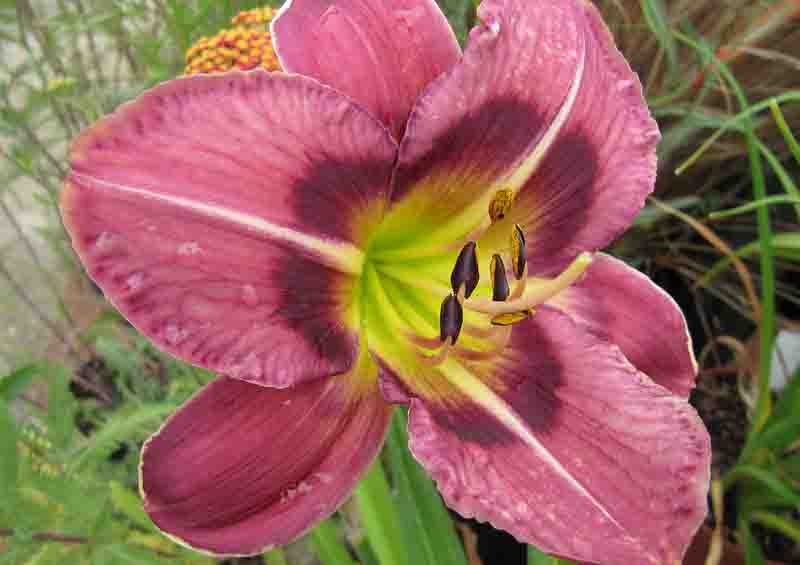 Hemerocallis ‘Always Afternoon’
Recognition: ADS Stout Silver Medal 1997 · Award of Merit 1995 · Honorable Mention 1992 · Don C. Stevens Award 1993.
Gardenia Best For: Mauve-purple flowers · Eyezones · Rebloom
Why we picked it: Raspberry-mauve coloring and a plum eye offer a cooler alternative to traditional yellow, orange, and red daylilies. Extended flowers and registered rebloom add to its usefulness.
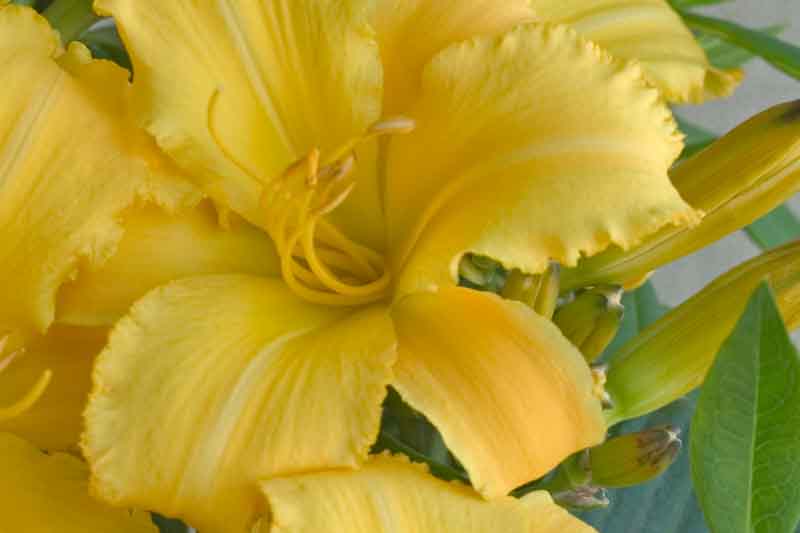 Hemerocallis ‘Mary Todd’
Recognition: ADS Stout Silver Medal 1978 · Award of Merit 1973 · President’s Cup 1972.
Gardenia Best For: Yellow flowers · Early-season color · Classic borders
Why we picked it: ‘Mary Todd’ proves that great daylilies do not need complicated markings. Its large, softly ruffled yellow flowers provide luminous early-season color with one of the strongest award pedigrees among classic yellows.
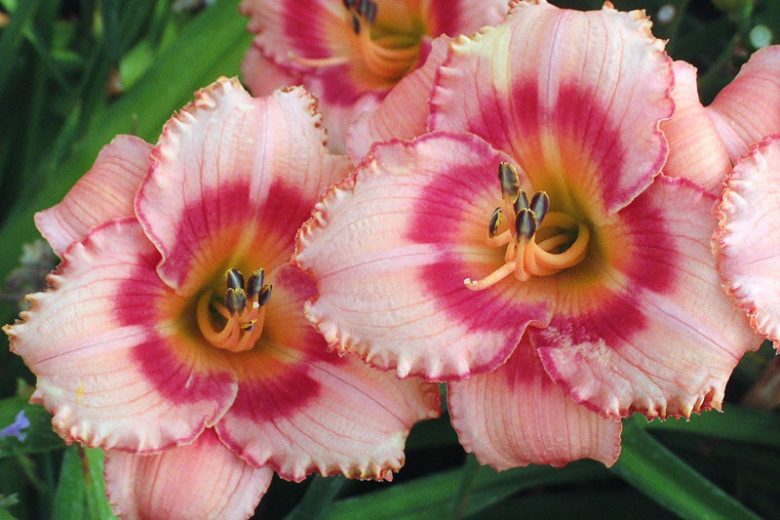 Hemerocallis ‘Strawberry Candy’
Recognition: ADS Stout Silver Medal 1998 · Award of Merit 1996, with additional ADS specialist recognition.
Gardenia Best For: Pink flowers · Eyezones · Rebloom
Why we picked it: Coral-pink petals, a strawberry-red eye, and contrasting margins give ‘Strawberry Candy’ far more definition than a simple pink self. Extended flowers and repeat bloom make it useful beyond its coloring.
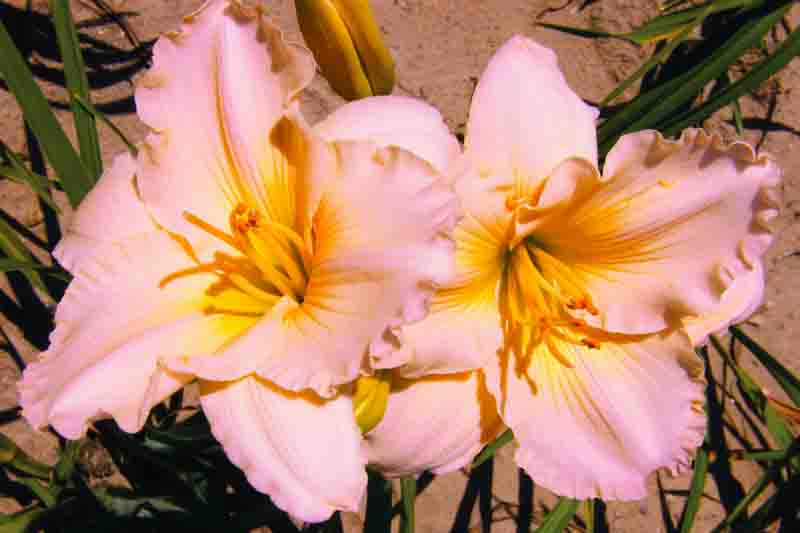 Hemerocallis ‘Fairy Tale Pink’
Recognition: ADS Stout Silver Medal 1990 · President’s Cup 1986.
Gardenia Best For: Pink flowers · Rebloom · Romantic borders
Why we picked it: Orchid-pink flowers create a softer mood than fiery reds and oranges. Its Stout Medal record gives this refined cultivar substantially more behind it than pastel charm alone.
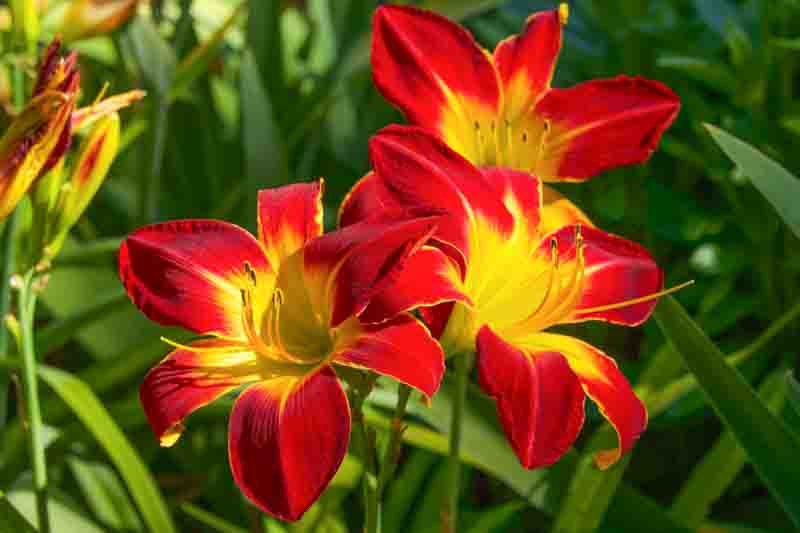 Hemerocallis ‘All American Chief’
Recognition: ADS Stout Silver Medal 2008 · Award of Merit 2004 · Honorable Mention 1999 · RHS Award of Garden Merit, reconfirmed.
Gardenia Best For: Large red flowers · Strong focal color
Why we picked it: Huge scarlet-red blooms with bright yellow throats make this an unapologetically bold daylily. Its progression through major ADS awards confirms that its appeal extends beyond sheer flower size.
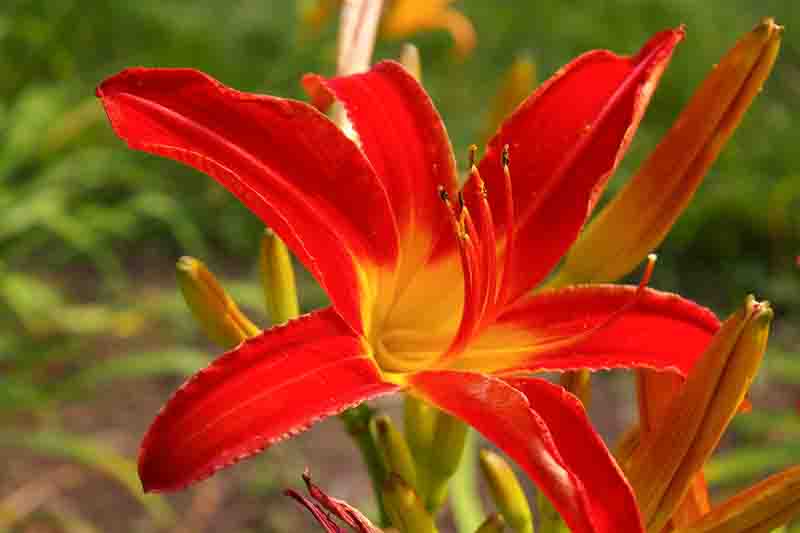 Hemerocallis ‘Bess Ross’
Recognition: ADS Stout Silver Medal 1962.
Gardenia Best For: Historic excellence · Orange-red flowers · Classic borders
Why we picked it: Introduced in the early 1950s, ‘Bess Ross’ still deserves a place in a guide to outstanding daylilies. Its bright orange-red, starry flowers and 1962 Stout Medal make it an important part of modern daylily history.
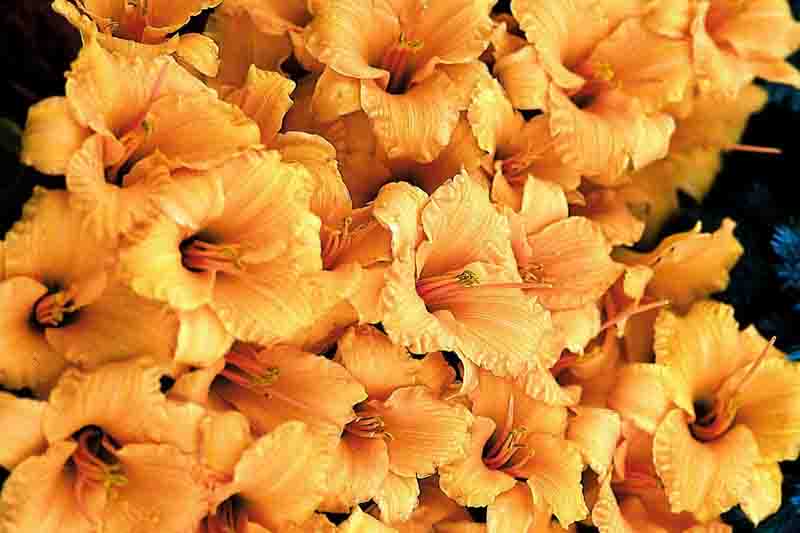 Hemerocallis ‘Bertie Ferris’
Recognition: ADS Stout Silver Medal 1980 · Award of Merit 1975 · Donn Fischer Memorial Cup 1973 · Honorable Mention 1972.
Gardenia Best For: Miniature flowers · Warm color · Early bloom
Why we picked it: Persimmon-orange miniature flowers pack considerable pedigree. Winning both the miniature-focused Donn Fischer Cup and, later, the Stout Medal makes ‘Bertie Ferris’ unusually accomplished for such a small-flowered cultivar.
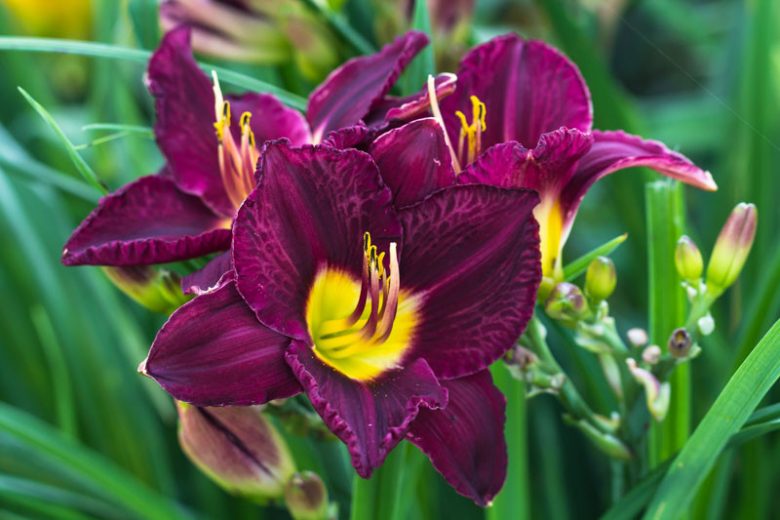 Hemerocallis ‘Bela Lugosi’
Recognition: ADS Lenington All-American Award 2007.
Gardenia Best For: Deep purple · Large flowers · Rich color
Why we picked it: Convincing dark purple is difficult to achieve in daylilies. ‘Bela Lugosi’ combines velvety saturated color with a contrasting lime-green throat and broad-performance recognition.
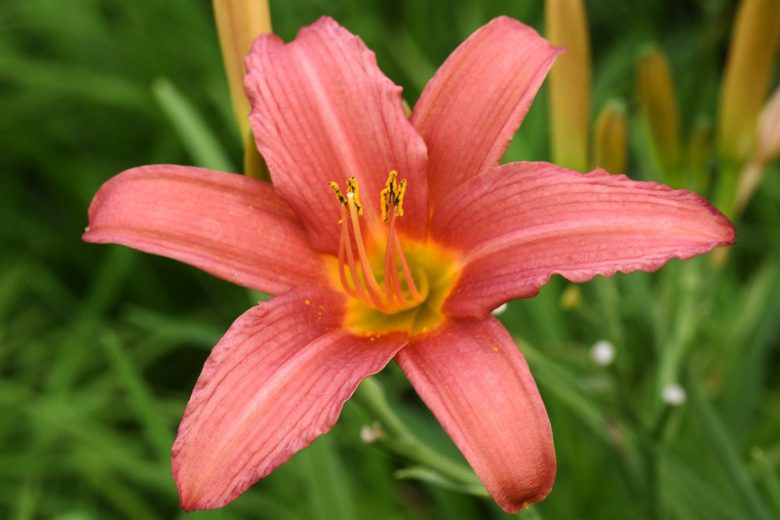 Hemerocallis ‘Pink Damask’
Recognition: RHS Award of Garden Merit, reconfirmed · ADS Award of Merit 1957 · Honorable Mention 1954.
Gardenia Best For: Proven pink · Rebloom · Historic garden performance
Why we picked it: Rosy pink starry flowers, vigorous growth, rebloom, and decades of garden history give ‘Pink Damask’ unusual staying power. Its ADS recognition and reconfirmed RHS AGM make it one of the strongest evidence-backed classic pink daylilies in this selection.
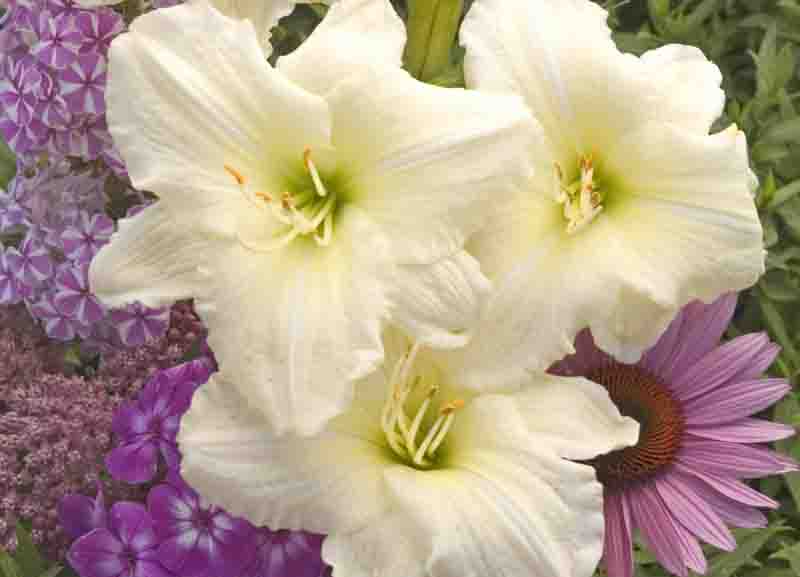 Hemerocallis ‘Joan Senior’
Recognition: ADS Lenington All-American Award 1990 · Award of Merit 1984 · Honorable Mention 1981.
Gardenia Best For: Near-white flowers · Rebloom · Elegant color schemes
Why we picked it: Creamy near-white petals and a lime-green throat bring light to a mixed border without introducing another yellow. Its broad-performance recognition and repeat flowering strengthen the choice.
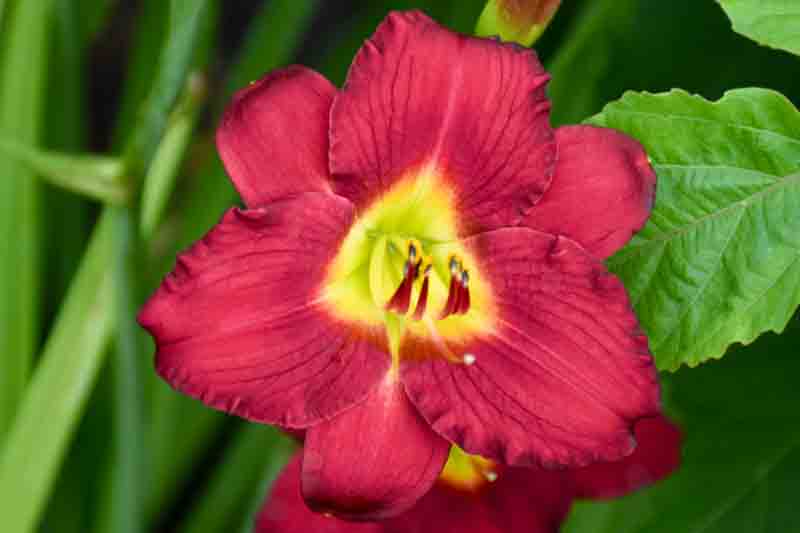 Hemerocallis ‘Pardon Me’
Recognition: ADS Award of Merit 1987 · Donn Fischer Memorial Cup 1985, with earlier Honorable Mention in its historical award record.
Gardenia Best For: Compact red · Fragrance · Rebloom · Evening gardens
Why we picked it: ‘Pardon Me’ is compact but surprisingly versatile. Rich red flowers, fragrance, nocturnal opening, and repeat bloom make it particularly appealing near patios and areas enjoyed later in the day.
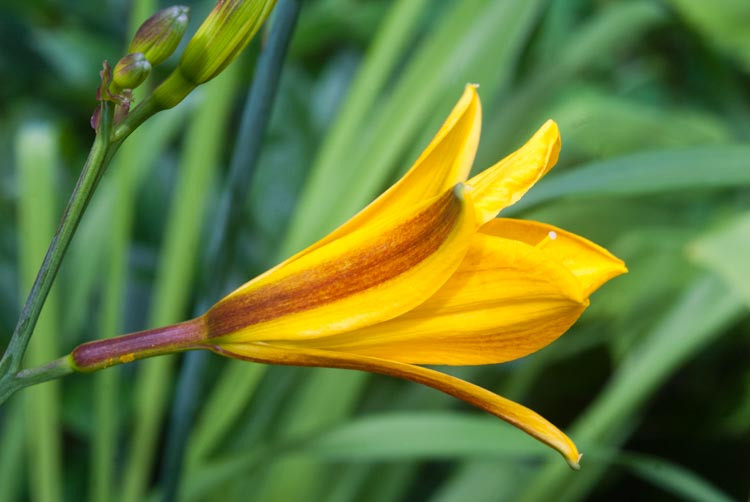 Hemerocallis ‘Golden Chimes’
Recognition: ADS Award of Merit · Donn Fischer miniature-flower recognition.
Gardenia Best For: Small golden flowers · Dark stems · Elegant mixed borders
Why we picked it: Golden flowers with reddish-brown reverses are held on darker stems, giving ‘Golden Chimes’ a refinement many plain yellow daylilies lack. Its smaller flowers fit beautifully into layered perennial plantings.
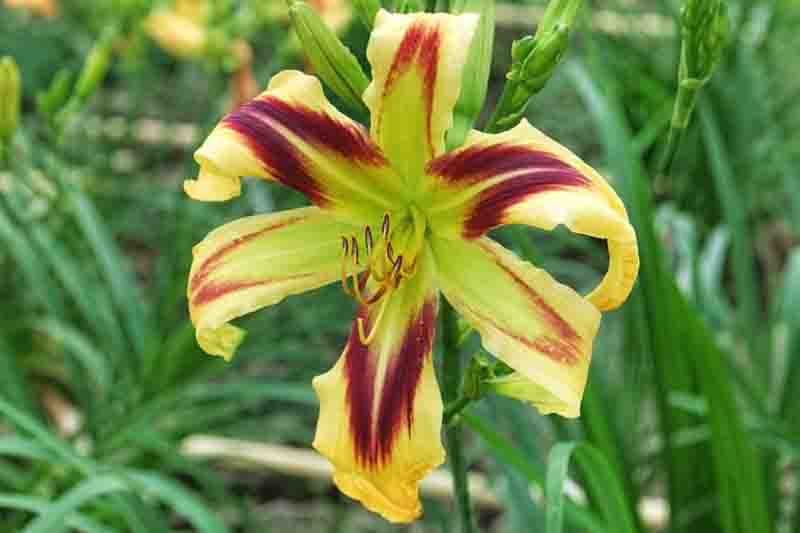 Hemerocallis ‘Free Wheelin”
Recognition: ADS Award of Merit 2013 · Harris Olson Spider Award 2011 · Early Season Bloom Award 2013.
Gardenia Best For: Spider flowers · Early bloom · Rebloom · Dramatic form
Why we picked it: This is more than an eye-catching spider. Cream-yellow flowers with wine-red eyes arrive relatively early, and registered rebloom gives the distinctive flower form a longer opportunity to contribute.
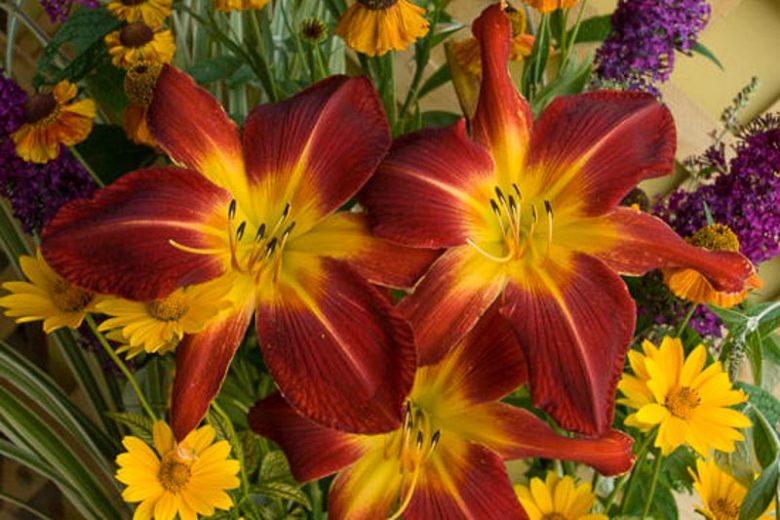 Hemerocallis ‘Ruby Spider’
Recognition: ADS Lambert/Webster Award 2002 · President’s Cup 2004 · Lenington All-American Award 2011.
Gardenia Best For: Huge flowers · Unusual form · Red-and-gold drama
Why we picked it: Enormous ruby-red flowers open around glowing golden throats, producing one of the most theatrical displays in the group. Despite its name, ADS registers ‘Ruby Spider’ as an Unusual Form rather than a Spider.
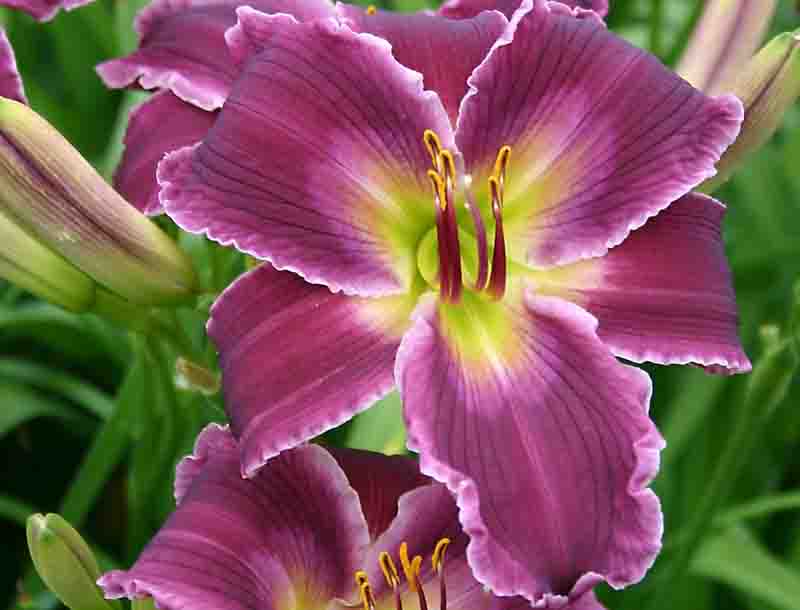 Hemerocallis ‘Indian Giver’
Recognition: ADS Award of Merit 2000 · Honorable Mention 1997, preserved in Gardenia’s historical award record.
Gardenia Best For: Purple flowers · Pale edging · Rebloom
Why we picked it: Rich purple petals, pale margins, and a silvery watermark give ‘Indian Giver’ unusually refined coloring. Repeat flowering makes it useful as well as striking.
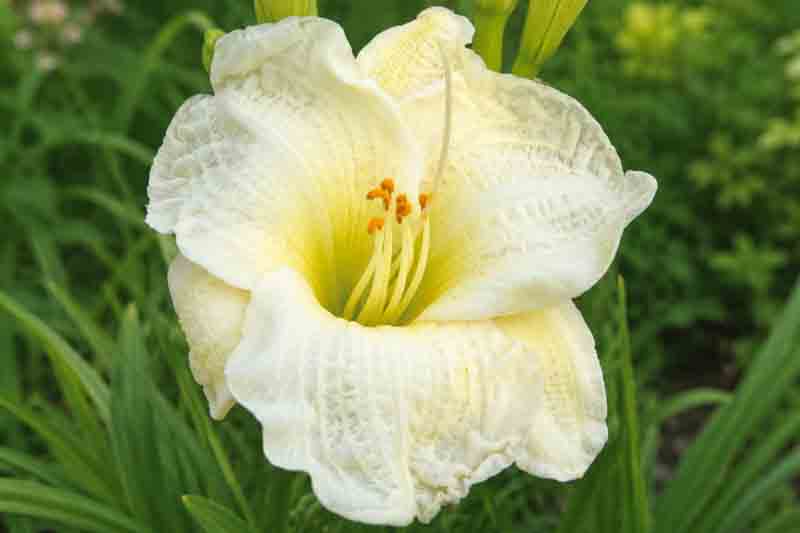 Hemerocallis ‘Gentle Shepherd’
Recognition: ADS Award of Merit 1987 · Honorable Mention 1984, as recorded in Gardenia’s historical award data.
Gardenia Best For: Ivory flowers · White gardens · Quiet palettes
Why we picked it: Pure white remains elusive in daylilies, but ‘Gentle Shepherd’ performs much the same design role. Its ivory flowers can separate intense colors or bring calm to a pastel planting.
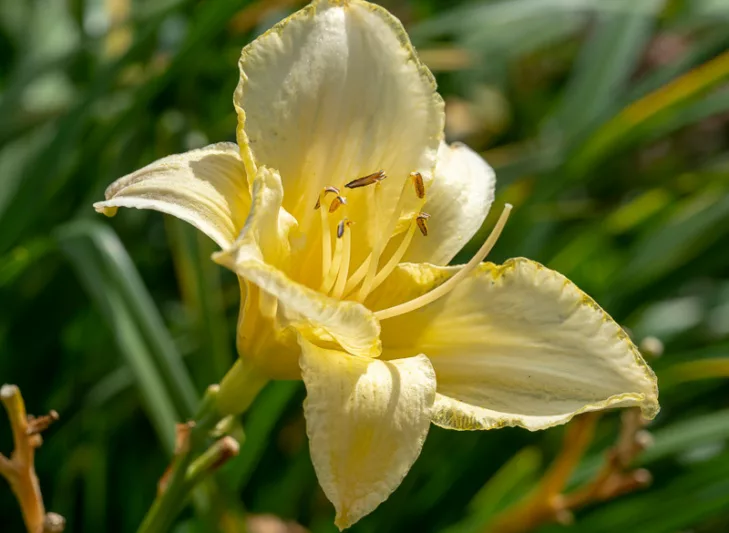 Hemerocallis ‘Ice Carnival’
Recognition: ADS Award of Merit 1974 · Honorable Mention 1970.
Gardenia Best For: Near-white flowers · Strong fragrance · Rebloom
Why we picked it: Large ivory-white flowers, notable fragrance, and repeat flowering make ‘Ice Carnival’ one of the more versatile choices when a border needs light rather than another saturated color.
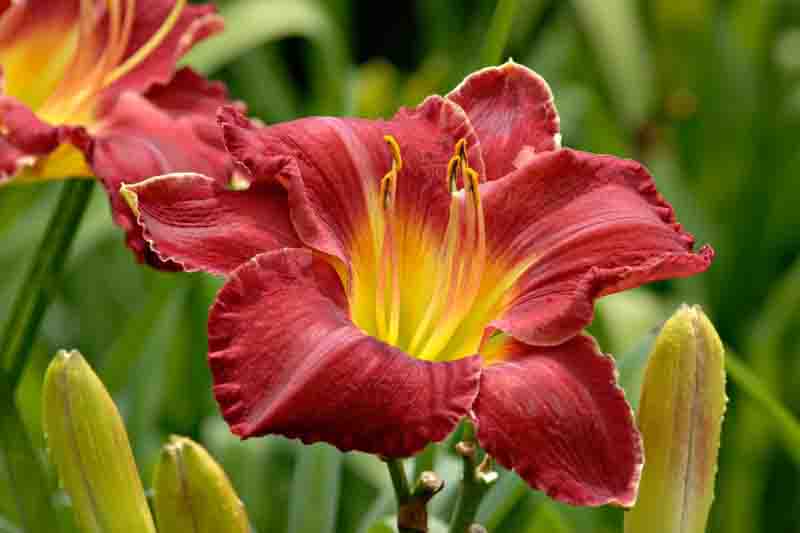 Hemerocallis ‘Charles Johnston’
Recognition: ADS Award of Merit 1988 · Honorable Mention 1985, with additional historical recognition recorded by Gardenia.
Gardenia Best For: Fragrant red · Rebloom · Manageable scale
Why we picked it: Cherry-red flowers surrounding bright yellow throats deliver saturated color without the massive scale of some modern reds. Fragrance and repeat bloom help it earn its space in a mixed border.
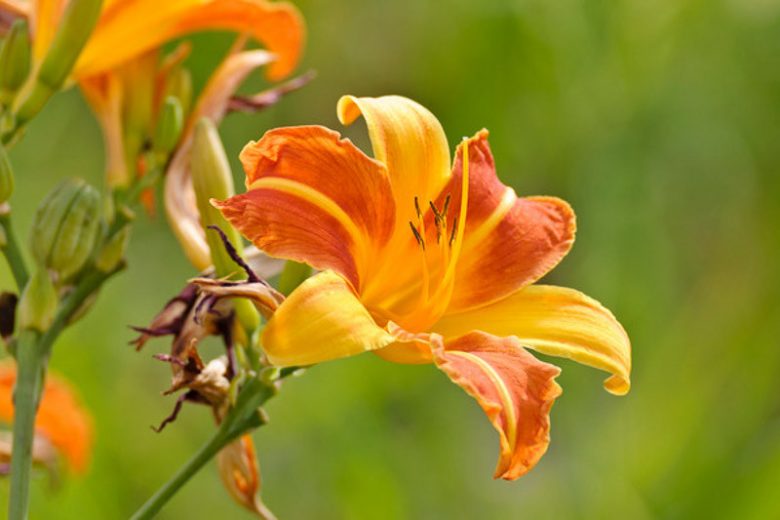 Hemerocallis ‘Frans Hals’
Recognition: ADS Honorable Mention 1961.
Gardenia Best For: Bicolor flowers · Later color · Historic character
Why we picked it: Few old cultivars remain this instantly recognizable. Yellow outer tepals alternate with reddish-orange inner petals, creating a crisp bicolor effect, while its later primary bloom helps carry the daylily season forward.
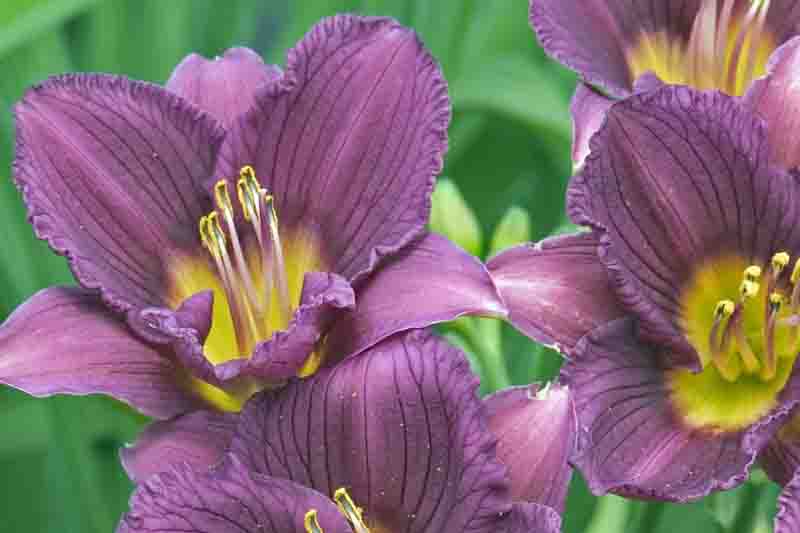 Hemerocallis ‘Little Grapette’
Recognition: ADS Donn Fischer Memorial Cup 1975 · Florida Sunshine Cup, with earlier Honorable Mention and Award of Merit recorded historically by Gardenia.
Gardenia Best For: Miniature purple flowers · Small gardens · Containers
Why we picked it: ‘Little Grapette’ proves that small plants need not be timid. Grape-purple miniature flowers and a green throat create considerable visual presence without demanding much garden space.
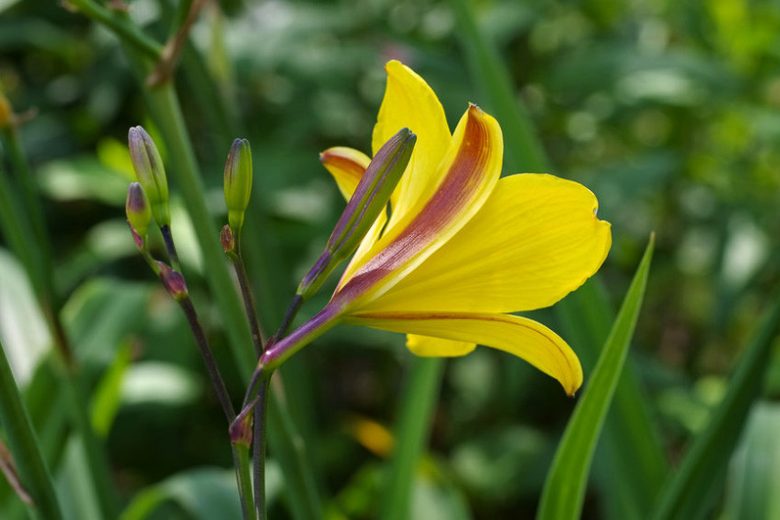 Hemerocallis ‘Corky’
Recognition: RHS Award of Garden Merit 2024 · ADS Donn Fischer Memorial Cup 1967 · Honorable Mention 1963.
Gardenia Best For: Current RHS performance · Miniature flowers · Dark scapes · Compact plantings
Why we picked it: ‘Corky’ is a wonderful example of an old cultivar proving its relevance again. Dainty golden flowers rise on distinctive dark scapes, and the RHS awarded it a new AGM in 2024 after its recent Hemerocallis trial.
Gardenia’s key question:
Which exceptional daylily adds something your garden does not already have?
A collection of excellent cultivars can still make an ordinary garden if every plant performs the same role.
Five outstanding Midseason daylilies may produce an unforgettable peak and then leave the border surprisingly quiet. Five deep reds may be individually beautiful but compete with one another. Five enormous rounded flowers can create plenty of color without much variation in form.
A stronger collection uses exceptional cultivars to build complementary layers.
Combine early-blooming daylilies, midseason daylilies, and late-blooming daylilies so the primary flowering season moves through the garden rather than arriving all at once.
Repeat-flowering cultivars can extend color, but rebloom is affected by cultivar, climate, growing-season length, and plant condition. Build a reliable primary succession first, then add reblooming daylilies for another possible flowering flush.
Mix conventional singles with doubles, miniatures, spiders, and unusual forms. ‘Siloam Double Classic’ brings fullness. ‘Little Grapette’ introduces miniature scale. ‘Free Wheelin” adds true spider form. ‘Primal Scream’ and ‘Ruby Spider’ create dramatic unusual-form silhouettes.
Flower photographs can be deceptive. A compact daylily may disappear behind taller perennials, while a large cultivar can overwhelm a narrow bed. Always compare mature height and spread as well as bloom diameter.
For tighter spaces, explore Gardenia’s dwarf and compact daylilies.
A coherent palette usually makes a stronger garden than one example of every possible shade. Use pale cultivars to separate stronger colors, repeat one or two dominant hues, and introduce contrast deliberately rather than randomly.
Use awards to identify quality. Use your garden to identify need. The best next daylily is not necessarily the cultivar with the biggest medal collection. It is the excellent cultivar that adds the season, scale, fragrance, flower form, or color your planting is missing.
A list of 25 inevitably leaves out worthwhile plants. These cultivars deserve consideration when they fill a particular role better than one of the main selections.
| Cultivar | Why It Is Worth Knowing |
|---|---|
| ‘Crimson Pirate’ | Historic red selection with ADS Honorable Mention recognition and a distinctive narrow-petalled silhouette. |
| ‘Happy Returns’ | Compact, fragrant, very early yellow with extended flowers and useful long-season value. |
| ‘Red Volunteer’ | A substantial red cultivar with Lenington All-American recognition. |
| ‘Catherine Woodbury’ | A fragrant classic valued for its soft lavender-pink coloring. |
| ‘Bright Sunset’ | Large fragrant copper-orange flowers that bring warmth earlier in the season. |
These 25 cultivars are starting points, not a shopping list. A better goal is to choose a smaller number that complement one another and the plants already growing in your garden.
Use Gardenia’s Garden Design Tool to combine your favorite daylilies with other perennials, compare plant size and seasonal interest, and create planting combinations suited to your garden conditions.
You can also browse Gardenia’s garden ideas with daylilies to see how Hemerocallis works with grasses, salvias, geraniums, coneflowers, alliums, and other perennial companions.
There is no single best daylily for every garden. Cultivars such as ‘Stella de Oro’, ‘Siloam Double Classic’, ‘Primal Scream’, ‘Moonlit Masquerade’, and ‘Mary Todd’ have exceptional award histories, but the best choice also depends on bloom season, size, color, flower form, climate, and the role you need the plant to perform.
The Stout Silver Medal is the highest cultivar award presented by the American Daylily Society. A cultivar must first have earned an Award of Merit before becoming eligible for consideration.
The Award of Merit recognizes outstanding registered cultivars. Its voting requirements are designed to require meaningful support beyond one local area, helping identify daylilies that have demonstrated broader excellence.
The RHS Award of Garden Merit identifies plants considered particularly suitable for gardens. Recent Hemerocallis trials evaluated whole-plant characteristics including vigor, foliage, scapes, branching, bud count, flower substance, weather resistance, distinctiveness, scent, and rebloom.
Yes. RHS awards are reviewed periodically, and an older AGM may be rescinded if a later assessment finds that the cultivar no longer meets current standards. Historical AGM recognition should therefore be distinguished from current award status.
Strong repeat-blooming choices in this guide include ‘Stella de Oro’, ‘Moonlit Masquerade’, ‘Strawberry Candy’, ‘Indian Giver’, ‘Free Wheelin”, and ‘Pardon Me’. Actual rebloom varies with cultivar, climate, season length, and growing conditions.
‘Little Grapette’, ‘Stella de Oro’, ‘Pardon Me’, and ‘Corky’ are useful smaller-scale choices. Check mature spread as well as height before planting, particularly in narrow borders and containers.
‘Bela Lugosi’ offers deep saturated purple, ‘Always Afternoon’ provides softer mauve-purple coloring with a strong eyezone, and ‘Indian Giver’ combines rich purple petals with contrasting pale margins.
‘Pink Damask’ is an important historic pink with ADS Award of Merit and Honorable Mention recognition. ‘Fairy Tale Pink’ and ‘Strawberry Candy’ are Stout Silver Medal winners with very different pink flower effects.
Most daylilies described as white are actually ivory, cream, or very pale yellow. ‘Joan Senior’, ‘Gentle Shepherd’, and ‘Ice Carnival’ are useful near-white selections.
In ADS classification, miniature refers to flower diameter rather than overall plant height. Miniature daylily flowers are less than 3 inches across. ‘Stella de Oro’, ‘Bertie Ferris’, ‘Little Grapette’, ‘Corky’, and ‘Pardon Me’ are examples.
Spider daylilies have exceptionally long, narrow tepals that meet the ADS ratio required for the spider classification. ‘Free Wheelin” is a true registered spider and a Harris Olson Spider Award winner. ‘Ruby Spider’, despite its name, is registered as an unusual form.
No. Awards provide useful evidence of quality, but they cannot determine what your particular garden needs. A less-decorated cultivar may be the better choice because of its bloom time, compact size, fragrance, color, or flower form.
Start by spreading the primary bloom season from early through late. Then vary height, flower form, and color, and add reblooming cultivars as a bonus. The strongest collection is usually one in which each cultivar contributes something the others do not.
The best daylilies have more behind them than a spectacular flower photograph.
ADS and RHS recognition can provide meaningful evidence that a cultivar has distinguished itself for qualities that matter in gardens. But awards are evidence, not instructions.
Gardenia uses that evidence as a starting point, then asks the practical question: What does this daylily add to your planting?
For one garden, the answer may be the compact repeat flowering of ‘Stella de Oro’. Another may need the dark coloring of ‘Bela Lugosi’, the near-white flowers of ‘Joan Senior’, the huge unusual form of ‘Ruby Spider’, the dramatic spider flowers of ‘Free Wheelin”, or the renewed garden recognition of ‘Corky’.
There is no universal winner because gardeners do not all need the same plant.
Use awards to identify quality. Use your garden to identify need.
Then ask: Which exceptional daylily adds something my garden does not already have?
Updated: August 2026 • Reviewed by Gardenia Editors
| Hardiness |
3 - 9 |
|---|---|
| Heat Zones |
2 - 11 |
| Climate Zones | 2, 3, 4, 5, 6, 7, 8, 9, 10, 11, 12, 13, 14, 15, 16, 17, 18, 19, 20, 21, 22, 23, 24, H1, H2 |
| Plant Type | Perennials |
| Genus | Hemerocallis |
| Exposure | Full Sun, Partial Sun |
| Season of Interest | Summer (Early, Mid, Late), Fall |
| Maintenance | Low |
| Water Needs | Average |
| Soil Type | Chalk, Clay, Loam |
| Soil pH | Acid, Alkaline, Neutral |
| Soil Drainage | Moist but Well-Drained, Well-Drained |
| Characteristics | Fragrant, Plant of Merit, Showy |
| Tolerance | Drought, Rabbit |
| Attracts | Birds, Butterflies, Hummingbirds |
| Landscaping Ideas | Beds And Borders, Edging, Patio And Containers |
| Garden Styles | City and Courtyard, Informal and Cottage, Prairie and Meadow, Traditional Garden |
| Hardiness |
3 - 9 |
|---|---|
| Heat Zones |
2 - 11 |
| Climate Zones | 2, 3, 4, 5, 6, 7, 8, 9, 10, 11, 12, 13, 14, 15, 16, 17, 18, 19, 20, 21, 22, 23, 24, H1, H2 |
| Plant Type | Perennials |
| Genus | Hemerocallis |
| Exposure | Full Sun, Partial Sun |
| Season of Interest | Summer (Early, Mid, Late), Fall |
| Maintenance | Low |
| Water Needs | Average |
| Soil Type | Chalk, Clay, Loam |
| Soil pH | Acid, Alkaline, Neutral |
| Soil Drainage | Moist but Well-Drained, Well-Drained |
| Characteristics | Fragrant, Plant of Merit, Showy |
| Tolerance | Drought, Rabbit |
| Attracts | Birds, Butterflies, Hummingbirds |
| Landscaping Ideas | Beds And Borders, Edging, Patio And Containers |
| Garden Styles | City and Courtyard, Informal and Cottage, Prairie and Meadow, Traditional Garden |
Create a membership account to save your garden designs and to view them on any device.
Becoming a contributing member of Gardenia is easy and can be done in just a few minutes. If you provide us with your name, email address and the payment of a modest $25 annual membership fee, you will become a full member, enabling you to design and save up to 25 of your garden design ideas.
Join now and start creating your dream garden!
Create a membership account to save your garden designs and to view them on any device.
Becoming a contributing member of Gardenia is easy and can be done in just a few minutes. If you provide us with your name, email address and the payment of a modest $25 annual membership fee, you will become a full member, enabling you to design and save up to 25 of your garden design ideas.
Join now and start creating your dream garden!