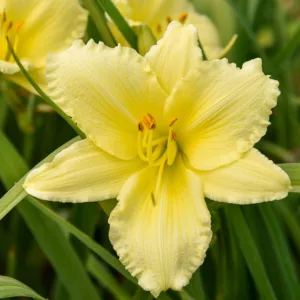
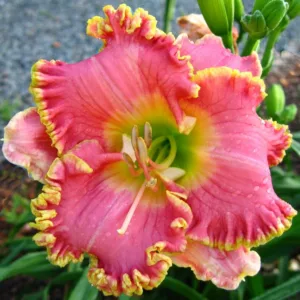
The best daylily companions do much more than look pretty. Discover 25 combinations that hide tired foliage, extend color into fall, add spring interest, create stronger texture and height, attract pollinators, and solve common border-design problems. Build a daylily garden that looks beautiful long before and after peak bloom.
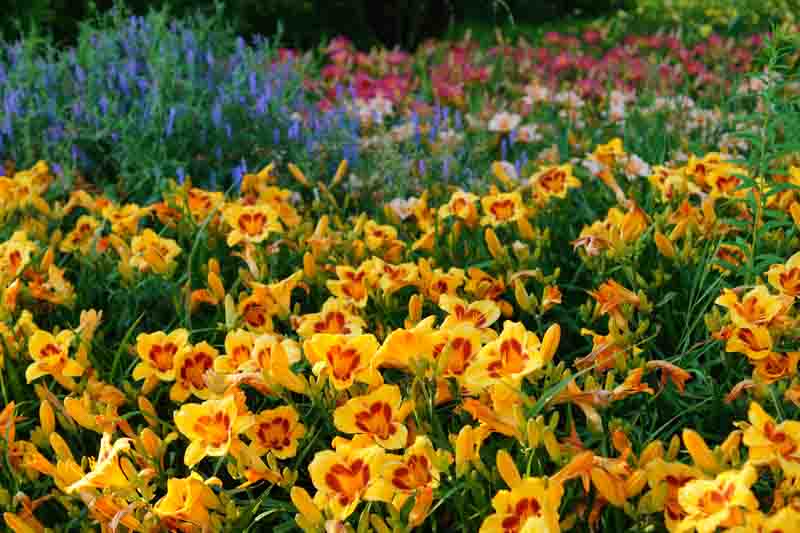


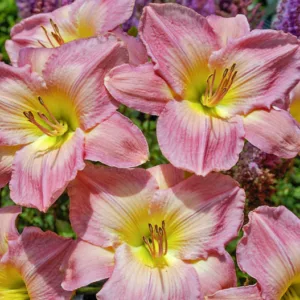
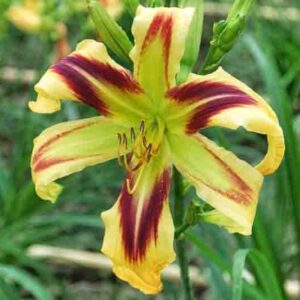
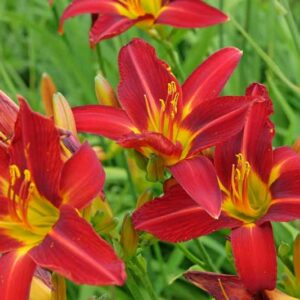
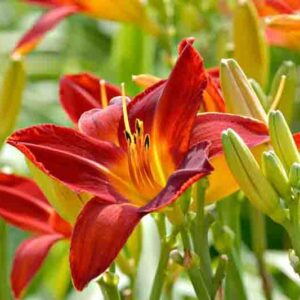
Daylilies are easy to admire when they are in full flower. Their arching leaves form handsome clumps, their tall scapes lift colorful blooms above the border, and by combining cultivars with different bloom seasons, gardeners can enjoy daylily flowers for weeks.
But a successful daylily border has to work for much longer than peak bloom.
What fills the garden in spring before the first scapes appear? What softens older foliage when leaves begin to yellow or brown later in summer? What keeps the border colorful after the main daylily display is over? And how do you stop a planting full of similar arching leaves from looking repetitive?
Those are the questions companion plants should answer.
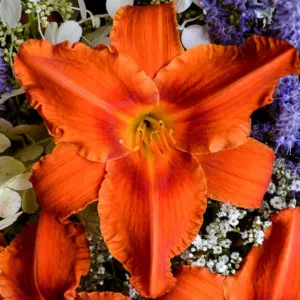
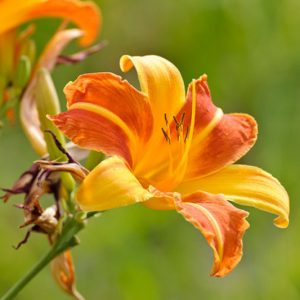
The best plants to grow with daylilies (Hemerocallis) are not simply flowers that happen to look attractive beside them. A useful companion earns its place by doing a job: extending the season, covering a visual gap, changing the texture, adding height, supporting pollinators, or improving the structure of the border.
Match the Site → Solve the Season → Contrast the Form → Check the Scale
| Step | What to Ask | Why It Matters |
|---|---|---|
| Match the Site | Do both plants suit similar sunlight, drainage, and moisture? | A beautiful pairing will not last if one plant constantly struggles in the other’s growing conditions. |
| Solve the Season | Does the border need interest before, during, or after the daylilies flower? | A useful companion fills a seasonal gap instead of simply repeating peak bloom. |
| Contrast the Form | Would spikes, daisies, globes, airy foliage, or broad leaves strengthen the planting? | Contrasting shapes keep a daylily border from becoming visually monotonous. |
| Check the Scale | Should the companion sit in front, mingle between clumps, or rise behind them? | The right plant in the wrong position may hide flowers, crowd crowns, or overwhelm smaller cultivars. |
Gardenia’s guiding principle: Choose a daylily companion by the job you need it to perform, not simply by flower color.
How to use these combinations: The Gardenia plant cards below show specific plants that illustrate each design idea. They are examples, not the only possible pairings. Use the same principles to choose cultivars that match your climate, growing conditions, available space, and preferred color palette.
See the plants together before you choose. Each combination includes Gardenia plant cards so you can compare the recommended plants by appearance, hardiness, height, and bloom season, then open the individual profiles for complete growing information.
Want to create your own daylily combinations? Use Gardenia’s Garden Design Tool to combine plants, compare their seasons and sizes, and build a planting palette for your own garden. You can also browse Gardenia’s daylily garden ideas for more planting inspiration.
Daylily foliage does not remain immaculate all summer. Older outer leaves may yellow or brown as the season progresses, particularly after flowering or during hot, dry weather.
That does not mean healthy green foliage should automatically be cut down. A better design strategy is to place lower, spreading plants around the front and sides of the clumps so aging leaves become background rather than the main focus.
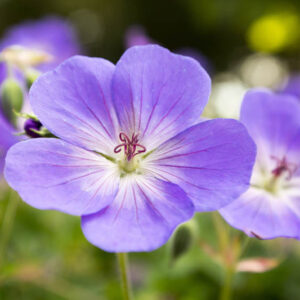
Geranium ‘Rozanne’ is one of the most useful companions for softening the base of daylilies. Its loose stems form broad mounds of divided foliage covered with violet-blue flowers over a long season.
The relaxed habit contrasts with upright daylily leaves and can weave around established clumps without visually smothering them. Use it toward the front or between widely spaced groups rather than directly over the crowns.
| Hardiness |
3 - 9 |
|---|---|
| Heat Zones |
2 - 11 |
| Climate Zones | 2, 3, 4, 5, 6, 7, 8, 9, 10, 11, 12, 13, 14, 15, 16, 17, 18, 19, 20, 21, 22, 23, 24, H1, H2 |
| Plant Type | Perennials |
| Genus | Hemerocallis |
| Exposure | Full Sun, Partial Sun |
| Season of Interest | Summer (Early, Mid) |
| Maintenance | Low |
| Water Needs | Average |
| Soil Type | Chalk, Clay, Loam |
| Soil pH | Acid, Alkaline, Neutral |
| Soil Drainage | Moist but Well-Drained, Well-Drained |
| Characteristics | Fragrant, Plant of Merit, Showy |
| Tolerance | Drought, Rabbit |
| Attracts | Birds, Butterflies, Hummingbirds |
| Landscaping Ideas | Beds And Borders, Edging, Patio And Containers |
| Garden Styles | City and Courtyard, Informal and Cottage, Prairie and Meadow, Traditional Garden |
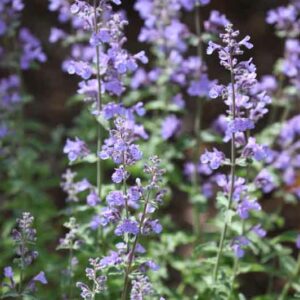
Nepeta ‘Walker’s Low’ forms soft mounds of aromatic gray-green foliage topped with lavender-blue flowers. Its cool coloring is especially effective beside yellow, orange, apricot, and peach daylilies.
It also helps blur the lower edge of the planting as older daylily leaves become less attractive. This pairing is best suited to sunny, well-drained borders.
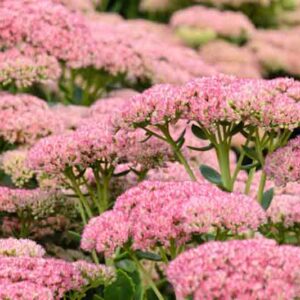
Sedum ‘Autumn Joy’ solves the problem differently. It does not conceal daylily foliage, but its sturdy succulent clumps and developing flower heads become increasingly prominent just as many daylilies begin to lose visual importance.
Instead of trying to hide every fading leaf, the sedum gives the eye something fresher to look at.
Design fix: Do not try to hide an entire daylily clump. Soften the lower third of the planting and give the border a new focal point as summer advances.
If the whole border seems to finish when the daylilies finish, the daylilies are not the problem. The planting simply needs another seasonal layer.
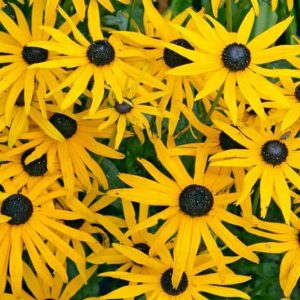
Rudbeckia ‘Goldsturm’ produces masses of golden daisies with dark centers from midsummer into early fall. It can overlap with later daylilies and then continue after much of the main display has finished.
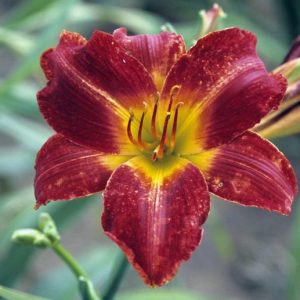
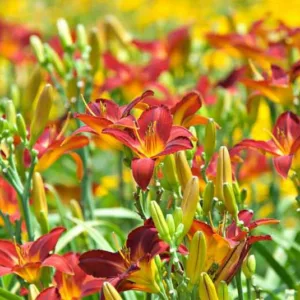
It works especially well with burgundy, red, orange, yellow, and purple cultivars.
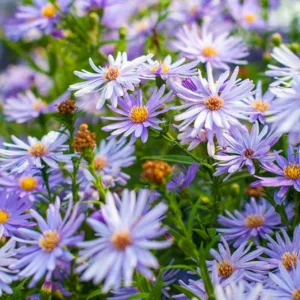
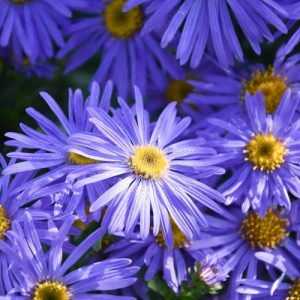
Aster ‘Little Carlow’ brings airy clouds of lavender-blue flowers to the late-summer and fall border.
Its timing is its greatest strength. Rather than competing with daylilies at peak bloom, it becomes important just as many daylily clumps are receding into the background.
This three-part sequence creates an excellent seasonal handoff. Daylilies supply bold summer flowers, sedum develops increasingly prominent flower heads as summer progresses, and asters carry the planting into fall.
Think beyond simultaneous bloom. A strong companion planting is often a relay rather than a duet. One plant becomes important precisely when another is stepping out of the spotlight.
Daylilies already provide arching leaves and flowers floating above the foliage on mostly leafless scapes. Repeat too many similarly shaped plants around them and the border can begin to look flat.
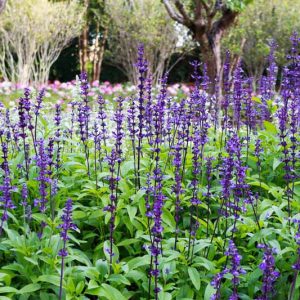
Upright flower spikes provide an immediate counterpoint.
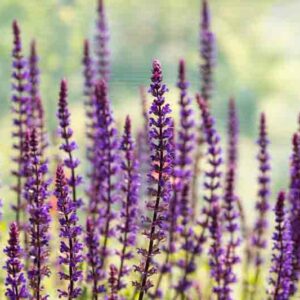
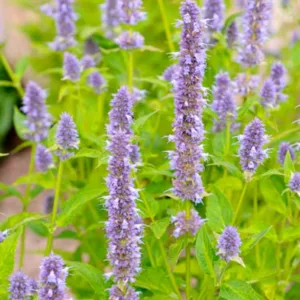
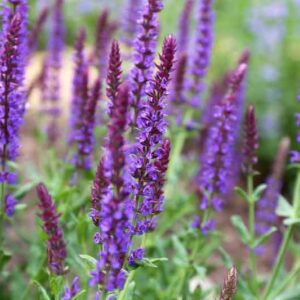
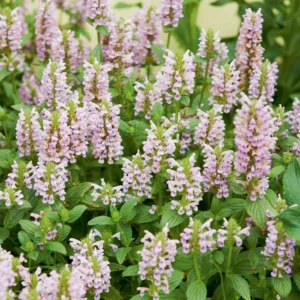
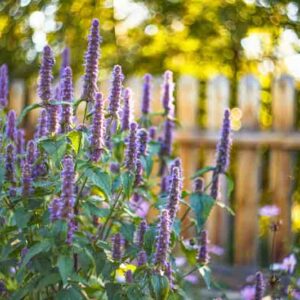
Agastache produces taller, airier flower spikes than many compact salvias. Purple and blue-flowered selections bring movement and pollinator activity to the summer border without repeating the shape of the daylily flowers.
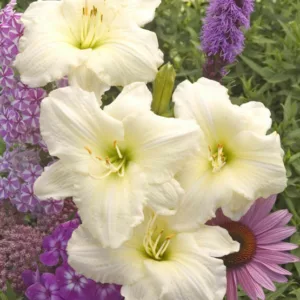
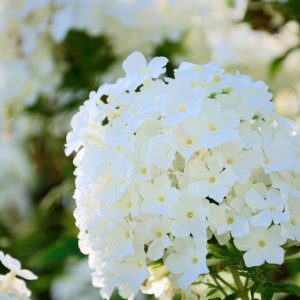
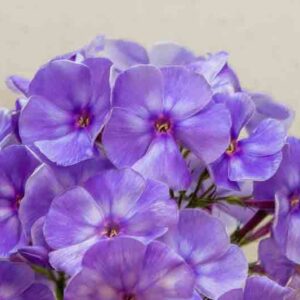
Phlox paniculata ‘David’ rises above many daylily clumps with upright stems and generous clusters of white flowers.
White is particularly valuable around intense colors. It can break up a border dominated by red, purple, orange, or burgundy and give the eye somewhere to rest.
Several daylily clumps together create a great deal of the same arching, strap-like leaf texture. Fine foliage can make the planting feel lighter and more layered.
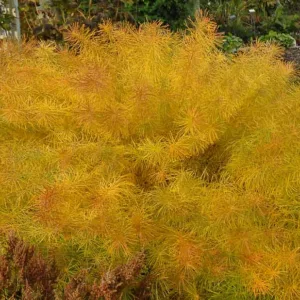
Narrowleaf Bluestar (Amsonia hubrichtii) is an unusually hardworking companion. Pale blue flowers appear in spring, finely textured foliage remains attractive through summer, and the plant turns luminous gold in fall.
The foliage alone makes it valuable beside daylilies because its airy texture is so different from their broader leaves.
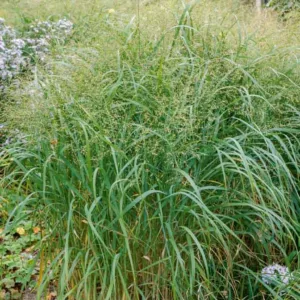
Switchgrass (Panicum virgatum) adds narrow leaves, movement, upright structure, and airy flower panicles. Its tolerance of a fairly broad range of soil moisture makes it adaptable in mixed perennial borders.
Use taller selections behind daylilies or between substantial groups where the grass can rise through the planting without hiding the flowers. Full sun generally produces the strongest, most upright growth.
Prairie Dropseed (Sporobolus heterolepis) creates graceful mounds of extremely fine foliage that contrast beautifully with broader daylily leaves. It is especially effective in prairie-inspired and naturalistic plantings where a softer, less formal texture is wanted.
This pairing is best in full sun and well-drained soil where the daylilies receive adequate moisture without being kept constantly wet. Prairie dropseed is particularly well suited to the drier side of the daylily’s comfort range.
A border designed mainly around summer daylilies can feel remarkably empty in spring. Early companions give the bed a reason to exist before the first scapes appear.
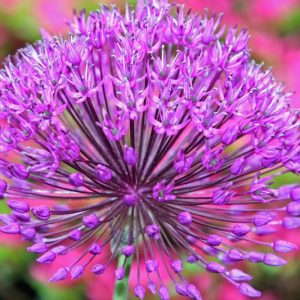
Allium ‘Purple Sensation’ produces violet flower globes in late spring to early summer.
The pairing is especially clever because expanding daylily foliage can help disguise aging allium leaves after flowering. Each plant helps cover a weaker point in the other’s season.
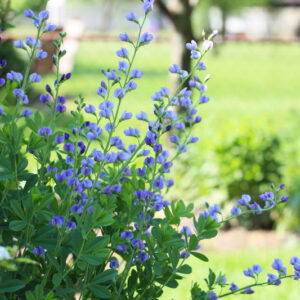
False Indigo (Baptisia australis) flowers in late spring to early summer, then develops into a substantial mound of attractive blue-green foliage.
Because mature Baptisia becomes large, treat it as a structural anchor rather than a filler. Give it room behind or between groups of daylilies.
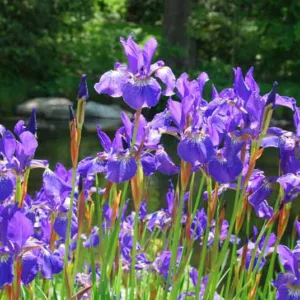
Siberian Iris (Iris sibirica) offers an elegant handoff into the daylily season. Its flowers generally appear earlier, while the narrow foliage continues to provide structure afterward.
The leaves echo the linear quality of daylily foliage, but the plants differ enough in habit and flowering to remain distinct.
Daffodils (Narcissus) provide spring color while daylily clumps are still developing. As daffodil foliage ripens after flowering, the expanding daylily leaves can help make it less conspicuous.
Allow the daffodil foliage to yellow naturally before removing it.
Seasonal handoff: The best early companion does more than bloom before the daylily. Its decline should coincide with the daylily becoming large enough to take over visually.
Daylilies can receive flower visitors, but a pollinator planting becomes more useful when different flower forms and bloom periods are layered around them.
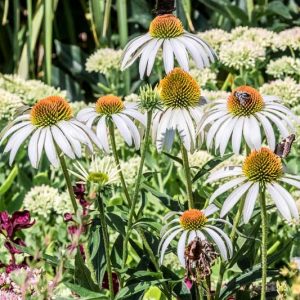
Coneflowers (Echinacea) contribute broad daisy-like flowers with prominent central cones. Their shape contrasts strongly with daylily trumpets, while their summer bloom adds another floral resource for bees and other insects.
This combination creates three distinct layers: broad daylily flowers, upright Salvia spikes, and low clouds of catmint. The staggered heights and flower forms make the planting more interesting to people while broadening the range of flowers available to visiting insects.
Agastache contributes tall flower spikes, Rudbeckia supplies open daisies, and daylilies provide bold midsummer color.
The combination suits informal and naturalistic borders where seasonal succession and pollinator value matter as much as matching flower colors.
Established daylilies tolerate periods of drought, but they are not true xeric plants. They generally flower best when adequate moisture is available, particularly while scapes and buds are developing.
For a relatively dry border, choose companions that enjoy full sun and good drainage but can still grow happily with occasional deep watering.
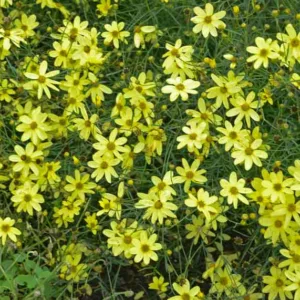
Coreopsis verticillata ‘Moonbeam’ forms airy mounds of threadlike foliage covered with soft yellow flowers through much of summer.
The fine foliage provides excellent textural contrast with daylily leaves, while the pale yellow flowers pair particularly well with burgundy, red, purple, peach, and orange cultivars.
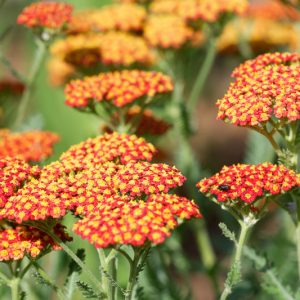
Yarrow (Achillea) contributes flat flower heads and finely divided foliage, two forms that daylilies do not provide.
White selections can cool a hot border, while pale yellow forms blend easily with peach, apricot, gold, and orange flowers. Give yarrow plenty of sun and good drainage.
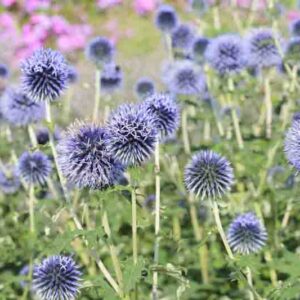
Echinops ritro ‘Veitch’s Blue’ adds cool steel-blue flower globes held above deeply cut foliage.
The round flowerheads provide a dramatic contrast with daylily trumpets, particularly beside yellow, orange, apricot, and burgundy cultivars. Globe thistle prefers full sun and sharply drained soil, so reserve this pairing for beds that are not kept continually wet.
Dry-border caution: Think drought-tolerant perennial border, not desert planting. Daylilies may survive dry periods, but dependable flowering still benefits from adequate moisture.
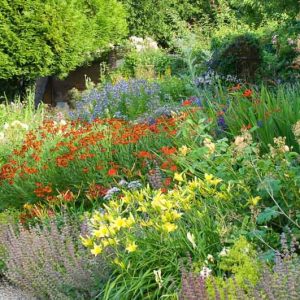
Daylilies fit naturally into cottage gardens because their informal clumps mix easily with geraniums, phlox, daisies, salvias, roses, and other traditional border plants.
The trick is to vary height and form so the result feels abundant rather than shapeless.
This is a particularly effective three-level combination. Geranium ‘Rozanne’ spreads through the foreground, daylilies occupy the middle of the planting, and taller garden phlox rises behind.
The plants differ in foliage, flower shape, and height but still feel relaxed enough for an informal cottage border.
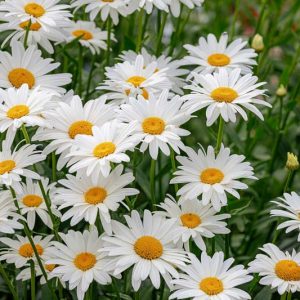
White Shasta daisies brighten strong daylily colors, while violet-blue Salvia contributes narrow vertical flower spikes.
This pairing works especially well with red, burgundy, orange, and dark purple daylilies, where the white daisies keep the border from becoming visually heavy.
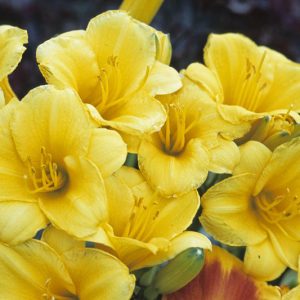
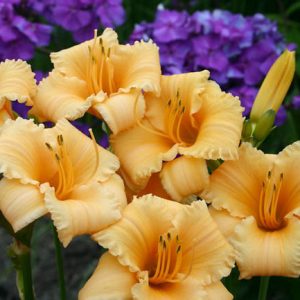
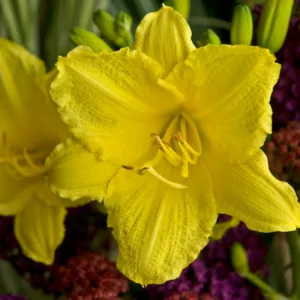
Purple and yellow sit opposite each other on the color wheel, making them naturally energetic partners. Yellow daylilies are particularly easy to use because their flowers range from pale lemon to rich gold.
This combination develops in stages. Allium ‘Purple Sensation’ provides violet globes in late spring, Salvia ‘Caradonna’ continues the purple theme with upright spikes, and yellow daylilies supply the warm counterpoint as summer builds.
Repeating purple in different flower forms creates continuity without simply repeating the same plant shape.
These 25 pairings are starting points, not fixed recipes. Use Gardenia’s Garden Design Tool to mix daylilies with your favorite companions, compare plant size and seasonal interest, and build combinations that suit your own garden conditions.
Looking for more inspiration first? Explore Gardenia’s garden ideas with daylilies to see additional planting combinations.
Cool fiery colors with blue-purple companions such as Salvia, Nepeta, hardy geraniums, or Echinops. For a hotter palette, combine them with Rudbeckia, Helenium, or warm-toned grasses.
White Phlox or Shasta daisies can calm an especially intense planting.
Lavender, violet, and blue companions tend to flatter softer daylily colors. Catmint, hardy geraniums, Salvia, and pale grasses create a romantic effect without making the border overly sweet.
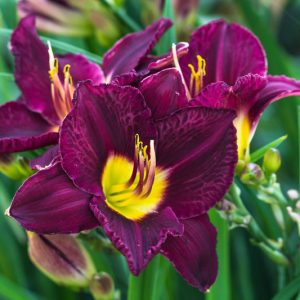
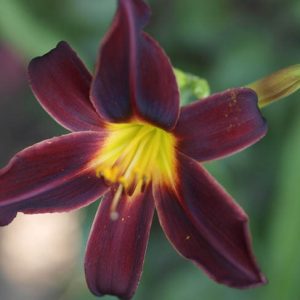
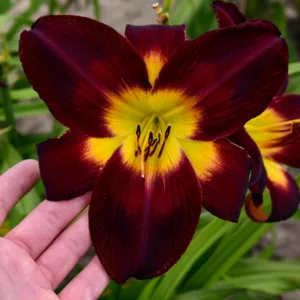
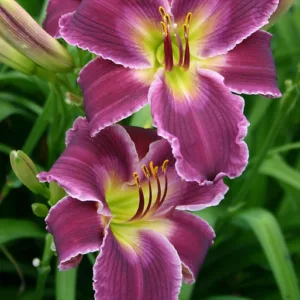
Very dark flowers can disappear against equally dark surroundings. Pale yellow Coreopsis, white Phlox, silvery foliage, and light-catching grasses help lift them visually.
A small border needs the same seasonal layering as a large one, but every plant has to work harder.
Choose compact companions that provide more than one benefit. Hardy geraniums can combine ground coverage with a long flowering season. Compact Salvia adds flowers and vertical structure. Smaller grasses contribute texture and fall interest. Compact Rudbeckia can carry color later into summer without demanding the space of a much larger perennial.
Pay attention to mature spread as well as height. A low plant that eventually reaches 4 ft. across can consume more garden space than a narrow plant twice as tall.
In a tight space, one companion should solve at least two jobs. Look for ground coverage plus long bloom, spring flowers plus attractive summer foliage, or summer bloom plus fall color.
They can be excellent companions, but only where the site suits both plants.
Hostas provide broad, substantial leaves that contrast beautifully with narrow daylily foliage. Their preferred growing conditions, however, are not identical.
Daylilies generally flower most freely with substantial sun, while many hostas are better suited to partial shade and consistent moisture.
The pairing therefore works particularly well in a bright, partly shaded border where the daylilies still receive enough light to flower well and the hostas receive some protection from intense afternoon sun.
It is much less convincing in a hot, dry, fully exposed bed.
This is why site compatibility should come before visual compatibility.
A successful mixed border usually looks better when a few companions are repeated in loose groups rather than when one specimen of every interesting plant is squeezed into the bed.
Use lower spreading plants such as hardy geraniums and catmint along the front. Position medium-height flowering perennials beside daylilies rather than directly in front of their flowers. Taller Phlox, Baptisia, asters, and grasses generally belong behind or between substantial groups.
Leave room for daylily clumps to enlarge. Companions should overlap visually without turning the crowns into a congested mass.
One useful way to organize the border is by layers:
| Garden Problem | What the Companion Should Do | Good Choices |
|---|---|---|
| Tired foliage after bloom | Soften the lower planting | Geranium ‘Rozanne’, Nepeta |
| Border finishes too early | Carry interest into late summer and fall | Asters, Rudbeckia, Sedum |
| Too much similar foliage | Add a finer texture | Amsonia, grasses, Coreopsis, Achillea |
| Planting looks flat | Introduce vertical flowers or height | Salvia, Agastache, Phlox |
| Little spring interest | Flower before the daylilies | Alliums, Baptisia, Iris, Daffodils |
| Want more pollinator activity | Add varied flower forms and bloom windows | Echinacea, Salvia, Agastache, Rudbeckia |
| Hot, relatively dry site | Share sun and drainage preferences | Coreopsis, Salvia, Achillea, Echinops |
| Small border | Perform more than one role | Compact Salvia, hardy Geranium, smaller grasses |
Choosing by flower color alone. Two flowers may look wonderful together for a few weeks but contribute very little during the rest of the year.
Ignoring growing conditions. Plants with incompatible moisture, drainage, or exposure requirements eventually create extra maintenance or disappointing growth.
Planting everything at the same height. A border made entirely from similarly sized mounds lacks depth. Use a foreground, middle layer, and taller background.
Making every companion bloom at peak daylily season. Some overlap is useful, but spring and fall companions are what turn a summer planting into a long-season border.
Crowding daylily crowns. Leave enough room for established clumps to expand and for light and air to reach the foliage.
Forgetting the plant when it is not flowering. Foliage, stems, seedheads, fall color, and overall habit determine how the border looks for far more of the year than flowers do.
Gardenia’s shortcut: Before adding any companion, ask: What will this plant contribute when neither it nor the daylily is flowering? If the answer is “very little,” another plant may work harder for the space.
Excellent daylily companions include hardy geraniums, Nepeta, Salvia, Echinacea, Rudbeckia, asters, garden Phlox, Sedum, Baptisia, Amsonia, Coreopsis, ornamental grasses, Alliums, and Iris. The best choice depends on your growing conditions and the job you want the companion to perform.
Low, spreading perennials such as Geranium ‘Rozanne’ and Nepeta work particularly well. They soften the base of daylily clumps without blocking the flower scapes and can make aging foliage less conspicuous later in summer.
Hardy geraniums, Nepeta, lower grasses, and other mounding perennials can soften the front and sides of a daylily planting. Avoid covering the daylily crown itself or planting so densely that airflow and maintenance become difficult.
Asters, Rudbeckia, Sedum, Helenium, and many ornamental grasses extend interest into late summer and fall after the main daylily display has finished.
Blue and violet companions create particularly strong contrast. Salvia ‘Caradonna’, Nepeta, purple Alliums, hardy geraniums, Agastache, and Echinops all pair beautifully with yellow and gold daylilies.
Orange daylilies can be cooled with blue-purple Salvia, Nepeta, hardy Geranium, or Echinops, intensified with Rudbeckia and Helenium, or softened with white Phlox and Shasta daisies.
They can be excellent companions in the right site. Broad hosta leaves contrast beautifully with narrow daylily foliage, but hostas usually prefer more shade and moisture. The pairing works best in bright partial shade rather than a hot, dry, fully exposed bed.
Yes. Grasses provide fine texture, movement, height, seedheads, and late-season interest. Taller grasses generally work best behind daylilies, while smaller mounding grasses can be used toward the front or between groups.
Echinacea, Salvia, Agastache, Rudbeckia, asters, Coreopsis, and Nepeta add different flower forms and overlapping bloom periods, creating a more varied pollinator planting than daylilies alone.
Yes. Daffodils and ornamental Alliums are especially useful because they bloom before the main daylily season. As their foliage ripens, expanding daylily leaves can help make it less noticeable.
Allow enough room for the mature spread of both plants and avoid burying or covering the daylily crown. Exact spacing depends on the plants involved, but aim for visual overlap without severe root and foliage congestion.
No. A strong planting combines some plants that overlap with daylily bloom and others that flower before or after it. That succession is what creates interest from spring through fall.
For sunny, well-drained borders that receive occasional deep watering, consider Salvia, Coreopsis ‘Moonbeam’, Achillea, Nepeta, and Echinops. Daylilies tolerate dry periods once established but generally flower better with adequate moisture than true xeric perennials.
Choose compact plants that perform more than one role, such as hardy geraniums for ground coverage and long bloom, compact Salvia for vertical structure and flowers, or smaller ornamental grasses for texture and fall interest.
The best companion plants for daylilies are not necessarily those with the prettiest matching flowers.
Start with the growing conditions, then identify what the border is missing.
If spring feels empty, add bulbs, Iris, or Baptisia. If the planting loses momentum in late summer, bring in asters, Rudbeckia, or Sedum. If the foliage feels monotonous, introduce Amsonia, Coreopsis, Achillea, or grasses. If the planting looks flat, use Salvia, Agastache, Phlox, or Echinops to add stronger vertical structure.
Gardenia’s Daylily Companion Test:
Match the Site → Solve the Season → Contrast the Form → Check the Scale
That shift from choosing companion plants by appearance alone to choosing them by function is what turns a collection of attractive perennials into a border that works from spring through fall.
Use the Gardenia plant cards throughout this guide to compare actual pairing examples, then open the individual profiles to check bloom season, height, spread, hardiness, sunlight, soil, moisture requirements, and other characteristics before deciding which combination fits your garden.
Updated: August 2026 • Reviewed by Gardenia Editors
| Hardiness |
3 - 9 |
|---|---|
| Heat Zones |
2 - 11 |
| Climate Zones | 2, 3, 4, 5, 6, 7, 8, 9, 10, 11, 12, 13, 14, 15, 16, 17, 18, 19, 20, 21, 22, 23, 24, H1, H2 |
| Plant Type | Perennials |
| Genus | Hemerocallis |
| Exposure | Full Sun, Partial Sun |
| Season of Interest | Summer (Early, Mid) |
| Maintenance | Low |
| Water Needs | Average |
| Soil Type | Chalk, Clay, Loam |
| Soil pH | Acid, Alkaline, Neutral |
| Soil Drainage | Moist but Well-Drained, Well-Drained |
| Characteristics | Fragrant, Plant of Merit, Showy |
| Tolerance | Drought, Rabbit |
| Attracts | Birds, Butterflies, Hummingbirds |
| Landscaping Ideas | Beds And Borders, Edging, Patio And Containers |
| Garden Styles | City and Courtyard, Informal and Cottage, Prairie and Meadow, Traditional Garden |
Create a membership account to save your garden designs and to view them on any device.
Becoming a contributing member of Gardenia is easy and can be done in just a few minutes. If you provide us with your name, email address and the payment of a modest $25 annual membership fee, you will become a full member, enabling you to design and save up to 25 of your garden design ideas.
Join now and start creating your dream garden!
Create a membership account to save your garden designs and to view them on any device.
Becoming a contributing member of Gardenia is easy and can be done in just a few minutes. If you provide us with your name, email address and the payment of a modest $25 annual membership fee, you will become a full member, enabling you to design and save up to 25 of your garden design ideas.
Join now and start creating your dream garden!