Why won't your lilac bloom? Learn how to diagnose the problem before reaching for fertilizer or pruning shears. Discover 10 common causes of poor lilac flowering, including shade, pruning mistakes, plant age, mild winters, excess nitrogen, old stems, drought, poor drainage, frost damage, pests, and disease.
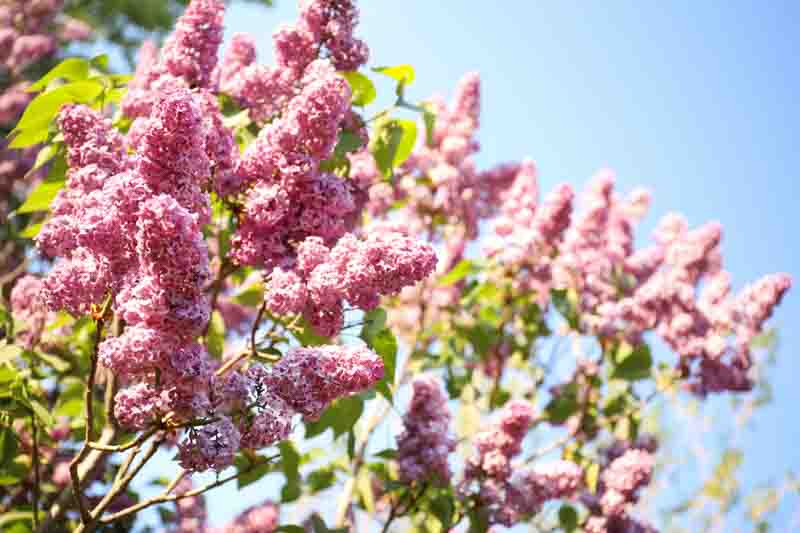


A lilac covered in healthy green leaves but almost no flowers can be baffling – particularly when another shrub nearby is overflowing with fragrant spring blooms. Yet a non-blooming lilac (Syringa) is usually giving you useful clues. The challenge is knowing which ones matter.
Not every lilac that fails to flower has the same problem. A vigorous shrub with lots of leaves but no blooms points toward sunlight, pruning, nitrogen, maturity, or climate. A lilac that formed flower buds and then lost them suggests pruning or weather damage. Yellowing leaves, wilting branches, or dieback take the diagnosis in another direction entirely.
That distinction matters because the wrong treatment can make things worse. Extra fertilizer will not replace flower buds removed by pruning. More water will not help roots already sitting in saturated soil. And no amount of feeding can provide the winter chill required by a lilac poorly matched to a mild climate.
Before choosing a remedy, determine where flowering failed.
Gardenia’s diagnostic rule: Identify the stage of bloom failure before choosing the cure. What the lilac is doing normally – healthy foliage, living stems, intact buds, or vigorous growth – can be just as revealing as the missing flowers.
Before assuming something is wrong, make sure your lilac is genuinely late. The genus Syringa includes plants with noticeably different flowering seasons.
Syringa x hyacinthiflora hybrids are among the earlier lilacs, typically opening before classic common lilacs (Syringa vulgaris). Preston lilacs flower later, while Japanese tree lilacs can continue the season into early summer.
If nearby common lilacs have already finished while your Japanese tree lilac is still in bud, there may be no problem at all. Gardenia’s Blooming Seasons of Lilacs can help determine where your plant belongs in the normal lilac flowering sequence.
Lilacs can survive in partial shade more successfully than they flower there. Most produce their strongest display with at least about six hours of direct sunlight each day.
The problem is often gradual. A lilac planted in a sunny border 15 years ago may now stand beneath the canopy of a mature maple or behind an evergreen hedge that has doubled in size. The shrub has not moved, but its environment has.
The plant produces healthy foliage and new shoots but relatively few flowers. Bloom may be concentrated on the upper branches or sunny outer side of the shrub.
Watch the site over an entire clear day and count the actual hours of direct sunlight. Selectively thinning a neighboring shrub or low tree branches may restore enough light. If the location has become permanently shaded, moving a manageable lilac to a sunnier site may be the best long-term solution.
Quick clue: If an established lilac used to bloom beautifully and has become progressively flower-poor, look up before you fertilize.
Most familiar spring-flowering lilacs prepare next year’s flowers surprisingly early. After the current display finishes, new growth develops and flower buds for the following spring form on that growth.
Pruning in late summer, fall, winter, or early spring can therefore remove branches carrying perfectly healthy flower buds. The shrub may look neatly shaped afterward – and almost flowerless the following spring.
The lilac itself remains vigorous, with normal leaves and stems, but flowering becomes sparse or disappears after substantial dormant-season or late-season pruning.
There is no way to replace flower buds once they have been cut away. Allow the shrub to grow normally through the season and perform future routine pruning shortly after flowering.
Dead, damaged, or hazardous branches can be removed when necessary, but optional shaping and thinning should wait until after bloom.
For detailed pruning and general care guidance, see Gardenia’s How to Grow and Care for Lilacs.
The simplest lilac pruning rule: If you want next spring’s flowers, do routine pruning soon after this spring’s flowers fade.
A newly planted lilac is not guaranteed to produce a nursery-catalog display immediately. Young plants often devote their first seasons to establishing roots and building a framework of stems.
There is no reliable one-size-fits-all timetable. Species, cultivar, propagation method, age at purchase, climate, sunlight, and transplant establishment all affect how quickly a lilac flowers generously.
The plant grows steadily and looks healthy but flowers lightly or not at all. There is no significant yellowing, dieback, pest damage, or stem injury.
Give the plant time. Provide full sun, well-drained soil, reliable moisture while establishing, and a modest organic mulch over the root zone.
Do not try to force a young lilac into maturity with heavy fertilizer. A steadily growing young plant is usually much less concerning than an older shrub that flowered well for years and then suddenly stopped.
Many traditional lilacs are cold-climate shrubs. They need a meaningful period of winter chill to complete dormancy and flower reliably.
This explains one of the most frustrating lilac problems: a shrub growing vigorously in a mild-winter garden but producing very few flowers year after year. The soil may be fine. The plant may receive plenty of sunlight. The missing ingredient may simply be enough winter cold for that particular cultivar.
A mature lilac remains green and vigorous, receives good sunlight, and has not been pruned incorrectly, yet flowering is consistently poor in a warm or very mild-winter climate.
Winter chill cannot be replaced with fertilizer, extra water, or special pruning. Choose lilacs with demonstrated performance in your region.
Gardenia has specific cultivar guides for the Lower South, Middle South, and Upper South because regional suitability matters more than treating every Syringa as interchangeable.
Climate before cure: If a healthy mature lilac never flowers well in a mild-winter region, changing the plant may ultimately work better than changing the care.
A lilac can look almost excessively healthy and still bloom poorly. Long shoots, large green leaves, and rapid growth accompanied by very few flowers are classic reasons to investigate nitrogen exposure.
Lawn fertilizer is an easy source to overlook. A shrub growing at the edge of regularly fertilized turf may receive far more nitrogen than intended.
The shrub looks lush rather than weak. Vigorous leafy shoots dominate, but flower production is disappointing compared with the amount of vegetative growth.
Stop routine high-nitrogen feeding and prevent lawn fertilizer from being spread through the lilac’s root zone. If the shrub appears nutritionally deficient, test the soil rather than guessing.
Avoid automatically applying a high-phosphorus “bloom booster.” Flowering depends on sunlight, climate, healthy roots, plant maturity, and intact flower buds as well as nutrition.
Old common lilacs often keep growing long after their framework has become inefficient. Flowers gradually move higher, thick gray stems dominate the center, lower growth becomes sparse, and a crowd of younger shoots develops around the base.
This is not necessarily a dying lilac. It is often an aging shrub that needs gradual renewal.
Most flowers appear high above eye level or around the outside of the plant. The center contains heavy old stems, while younger shoots compete around the base.
Renew the plant from the base rather than repeatedly cutting down the top. Remove roughly one-third of the oldest, largest stems near ground level and retain vigorous, well-positioned younger stems as replacements.
Repeat the process over several years. Severely neglected lilacs can tolerate much harder rejuvenation, but drastic renovation usually means sacrificing flowers while a new framework develops.
Read the shrub: Flowers at the top + thick old stems + crowded basal shoots usually point toward renewal pruning rather than fertilizer.
Lilacs develop the following season’s flower buds after the main spring display. Severe heat, drought, defoliation, or other major stress during this period can weaken normal growth and reduce later flowering.
Stress can also produce an unusual clue: a lilac may open some flower buds in fall. Those autumn flowers are not an additional crop. They are buds that would otherwise have remained dormant for spring.
The previous summer was exceptionally hot or dry, the plant suffered substantial leaf loss, or the lilac produced an unusual scattering of autumn flowers. The following spring display is then noticeably weaker.
Water established lilacs deeply during prolonged drought and maintain a modest organic mulch over the root zone. Avoid repeated severe water stress during the growing season.
If flower buds already opened during fall, they cannot be restored for spring. Concentrate instead on keeping the plant healthy so it can produce and retain a normal set of future buds.
Sometimes the lack of flowers is only one symptom of a larger problem.
Lilacs can grow successfully in clay soil, but they do not perform well with roots sitting for long periods in saturated ground. Clay and poor drainage are not the same thing. A clay soil that sheds excess water can support excellent lilacs; a low compacted area that remains wet is far more troublesome.
The shrub shows more than poor flowering. Leaves may yellow, growth may be weak, stems can wilt or die back, and the soil may remain wet for days after rainfall.
Correct the moisture problem rather than adding fertilizer. Reduce unnecessary irrigation, avoid piling soil or mulch against the stems, and improve drainage around the wider root zone where practical.
A lilac growing in a chronically waterlogged location may eventually need to be transplanted to better-drained ground.
Lilac stems can be extremely cold hardy, but developing flower buds are more vulnerable once they begin swelling. An unusually warm spell followed by a sharp freeze may destroy flowers while leaving the rest of the shrub largely unaffected.
Flower buds developed normally and then turned brown, shriveled, failed to open, or produced a sharply reduced display after freezing weather.
There is generally nothing useful to apply to flower buds once freeze injury has occurred. Leave healthy stems and foliage in place and allow the plant to grow normally.
If weather damage was the only cause, flowering should return the following year provided the next crop of buds develops and survives normally. Heavy fertilizer or unnecessary pruning will not speed the process.
Important clue: Dead flower buds combined with otherwise normal leaves and new growth point toward weather injury rather than a generally unhealthy lilac.
A few leaf spots do not explain every poor lilac display. Even powdery mildew, one of the most familiar lilac problems, is often mainly cosmetic when it appears late in summer.
More serious decline deserves attention. Blackened shoots, substantial dieback, damaged bark, holes in stems, sap, or sawdust-like material may indicate disease or borers. Scale insects, thrips, and leaf miners may also occur.
The shrub is not merely flower-poor. Look for significant dieback, weak growth, blackened shoots, bark injury, insect evidence, or repeated severe foliage damage.
Identify the problem before treating it. A fungicide cannot eliminate borers, fertilizer cannot correct saturated roots, and additional irrigation can make a drainage problem worse.
Remove dead or seriously damaged wood, maintain appropriate moisture and airflow, and investigate persistent decline as a plant-health problem rather than treating the lack of flowers by itself.
Use the appearance of the whole shrub to decide where to investigate first.
| What You See | Check First | Likely Direction |
|---|---|---|
| Healthy green foliage, almost no flowers | Sunlight and pruning history | Shade, mistimed pruning, nitrogen, or climate mismatch |
| Long, very lush leafy shoots | Fertilizer exposure | Excess nitrogen, including lawn fertilizer |
| Young healthy shrub with few flowers | Plant maturity | Normal establishment |
| Flowers mainly at the top of an old shrub | Age of major stems | Congestion and need for renewal pruning |
| Buds formed and then died | Recent weather | Late-freeze injury |
| Unexpected flowers in fall | Previous summer conditions | Heat, drought, defoliation, or other severe stress |
| Yellowing, wilting, weak growth, or branch dieback | Roots and stems | Drainage, borers, disease, or serious plant stress |
Gardenia’s diagnostic priority: Identify what the lilac is still doing normally before focusing on what it failed to do. Healthy foliage, stem condition, flower buds, and recent growth usually narrow the diagnosis faster than the absence of flowers alone.
Reblooming cultivars deserve slightly different expectations. Bloomerang Purple, for example, produces its strongest flowering in spring, then develops new growth before producing a later flush.
The second display is generally lighter than the first. Reblooming does not mean that the shrub remains continuously covered with flowers from spring until frost.
Give reblooming lilacs full sun and adequate moisture during dry weather so they can make strong new growth after their spring display.
Pruning is not required to trigger rebloom, although a light post-flowering trim may be used for appearance. Climate, cultivar, plant vigor, and growing conditions all influence the strength of the later flowers.
A lilac that does not flower rarely needs every possible remedy. It needs the right remedy.
A shaded shrub needs more light. A lilac pruned at the wrong time needs a season without further interference. A young shrub needs maturity. A cold-climate cultivar in a mild-winter garden may need replacing with a better-adapted plant. An old shrub may benefit from renewal pruning, while yellowing and dieback should send the investigation toward roots, stems, pests, or disease.
This is why Gardenia separates flowering failure from plant-health failure. When a shrub remains vigorous and green, investigate the factors controlling bud formation and survival. When the whole plant is declining, flowering has become secondary to the underlying health problem.
Also remember that recovery is not always immediate. Most spring lilacs prepare their flowers during the previous growing season, so improvements made today may be most visible in next year’s bloom.
For complete information on planting, soil, watering, feeding, pruning, rejuvenation, propagation, and choosing the right lilac, see Gardenia’s complete lilac growing and care guide.
A healthy lilac with abundant foliage but few flowers may receive too little sun, too much nitrogen, or have been pruned after its flower buds formed. Climate mismatch and plant maturity can also cause poor flowering. Check sunlight and pruning history before automatically adding fertilizer.
Most lilacs flower best with at least about six hours of direct sunlight per day. They may survive in partial shade but usually produce fewer flowers. If an established lilac has gradually stopped flowering well, check whether nearby trees or shrubs have begun shading it.
Yes. Most spring-flowering lilacs form their flower buds during the previous growing season. Routine pruning in late summer, fall, winter, or early spring may remove those buds. Prune shortly after flowering to preserve the following spring’s display.
There is no single timetable. Some lilacs flower while relatively young, while others need several seasons to establish. Plant age, cultivar, propagation method, sunlight, climate, and growing conditions all influence how quickly flowering becomes generous.
Excess nitrogen can encourage vigorous leafy growth without improving flowering. Lawn fertilizer applied near the shrub can be an overlooked source. If a lilac is exceptionally lush but flower-poor, stop routine feeding and investigate nitrogen exposure before adding more fertilizer.
Many traditional lilacs need substantial winter chill for reliable flowering, although climate requirements vary among species and cultivars. In mild-winter regions, choose lilacs with proven regional suitability rather than assuming every Syringa performs like common lilac.
Older lilacs can develop thick, congested stems that leave most flowers high on the plant. Gradual renewal pruning can restore a younger framework. Remove roughly one-third of the oldest stems near ground level and retain vigorous replacement shoots.
Severe drought and heat can stress lilacs while future flower buds and new growth are developing. Prolonged summer stress may weaken the following spring’s display and can sometimes trigger flower buds to open prematurely in fall.
Yes. Lilac stems may be very cold hardy, but swelling flower buds can still be damaged by a late freeze. Buds may brown, shrivel, or fail to open while the rest of the shrub remains healthy.
Usually not by itself. Powdery mildew is common on many lilacs, and late-season infections are often mainly cosmetic. A healthy green lilac with no flowers should first be checked for sunlight, pruning, excess nitrogen, climate suitability, and maturity.
Unseasonal fall flowering can follow severe summer stress such as drought, heat, heavy pruning, or defoliation. Some flower buds intended for the following spring open prematurely, leaving fewer buds available for the normal spring display.
Reblooming lilacs need healthy new growth after their spring display. Provide full sun and adequate moisture during dry periods. The second bloom is normally lighter than the spring display, and its strength varies with cultivar, climate, and plant vigor.
Updated: September 2026 • Reviewed by Gardenia Editors
| Hardiness |
3 - 7 |
|---|---|
| Plant Type | Shrubs, Trees |
| Plant Family | Oleaceae |
| Genus | Syringa |
| Exposure | Full Sun |
| Season of Interest | Spring (Mid, Late) |
| Maintenance | Low |
| Water Needs | Average |
| Soil Type | Chalk, Clay, Loam, Sand |
| Soil pH | Alkaline, Neutral |
| Soil Drainage | Moist but Well-Drained, Well-Drained |
| Characteristics | Cut Flowers, Fragrant, Showy |
| Landscaping Ideas | Beds And Borders, Hedges And Screens, Patio And Containers |
| Garden Styles | City and Courtyard, Informal and Cottage |
| Hardiness |
3 - 7 |
|---|---|
| Plant Type | Shrubs, Trees |
| Plant Family | Oleaceae |
| Genus | Syringa |
| Exposure | Full Sun |
| Season of Interest | Spring (Mid, Late) |
| Maintenance | Low |
| Water Needs | Average |
| Soil Type | Chalk, Clay, Loam, Sand |
| Soil pH | Alkaline, Neutral |
| Soil Drainage | Moist but Well-Drained, Well-Drained |
| Characteristics | Cut Flowers, Fragrant, Showy |
| Landscaping Ideas | Beds And Borders, Hedges And Screens, Patio And Containers |
| Garden Styles | City and Courtyard, Informal and Cottage |
Create a membership account to save your garden designs and to view them on any device.
Becoming a contributing member of Gardenia is easy and can be done in just a few minutes. If you provide us with your name, email address and the payment of a modest $25 annual membership fee, you will become a full member, enabling you to design and save up to 25 of your garden design ideas.
Join now and start creating your dream garden!
Create a membership account to save your garden designs and to view them on any device.
Becoming a contributing member of Gardenia is easy and can be done in just a few minutes. If you provide us with your name, email address and the payment of a modest $25 annual membership fee, you will become a full member, enabling you to design and save up to 25 of your garden design ideas.
Join now and start creating your dream garden!