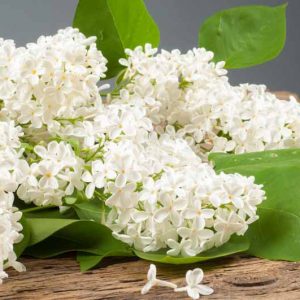
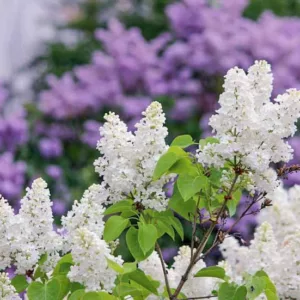
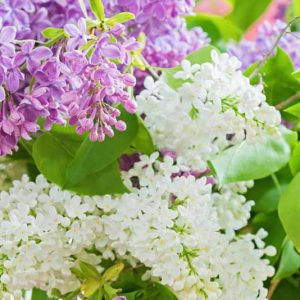
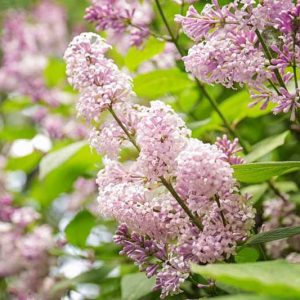
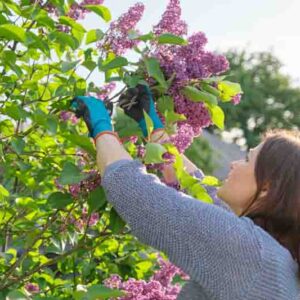
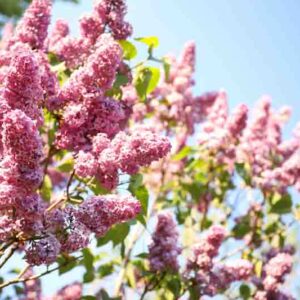
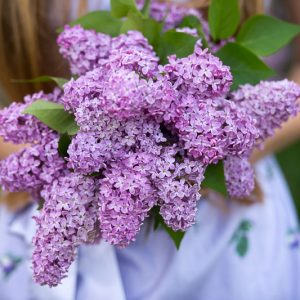
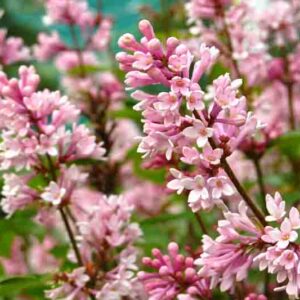
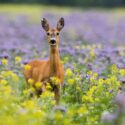
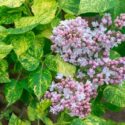
Are lilacs deer resistant? Yes - most are relatively low-browse shrubs, with common lilac and Japanese tree lilac showing particularly strong resistance records. Learn when deer may still browse lilacs, how browsing can affect future flowers, which species have less consistent ratings, and how to choose the right lilac.
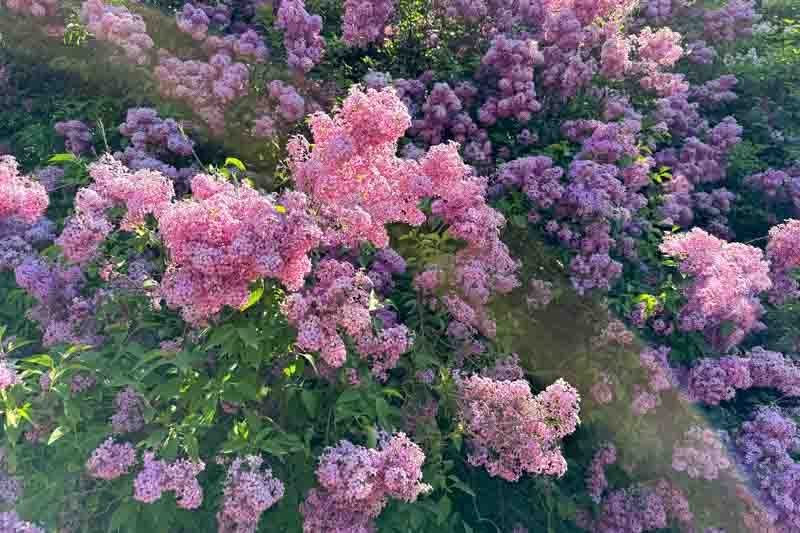


Yes. Lilacs are generally considered deer resistant and are among the flowering shrubs deer are less likely to browse. Common lilac (Syringa vulgaris) and Japanese tree lilac (Syringa reticulata) have particularly strong published resistance records. Deer may still sample lilacs under heavy pressure, but established shrubs usually require far less protection than plants deer strongly prefer.
Lilacs have a strong deer-resistance record compared with many popular flowering shrubs.
Rutgers rates common lilac (Syringa vulgaris) B – Seldom Severely Damaged. Iowa State is even more favorable, placing common lilac among plants Rarely Damaged by Deer.
Iowa State also places Japanese tree lilac (Syringa reticulata) in its Rarely Damaged group, while NC State describes it as tolerant of deer browsing.
Missouri Botanical Garden likewise includes Syringa among shrubs not favored by deer.
Together, those sources support a clear conclusion:
Lilacs are genuinely useful shrubs for deer-prone gardens, although no lilac should be guaranteed completely deer-proof.
Browsing can still occur when deer populations are high, preferred foods are scarce, or severe weather and drought reduce other forage.
They can, even though lilacs are usually lower-browse plants.
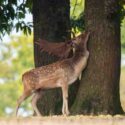
When browsing occurs, the damage is most likely to involve accessible young shoots, leaves, or twig tips. Young shrubs may be more vulnerable simply because a greater proportion of their growth is within easy reach.
The important question is not whether a deer will ever taste a lilac. It is whether the shrub is repeatedly or severely damaged.
That is what deer-resistance ratings are designed to describe.
Think “low risk,” not “never eaten.” A lilac can lose an occasional shoot under heavy deer pressure and still be genuinely deer resistant compared with shrubs that are browsed repeatedly and severely.
Published ratings suggest that deer risk is not identical across every lilac species, but the differences are not consistent enough to build a precise ranking.
Common lilac and Japanese tree lilac have particularly strong records, with favorable ratings from multiple extension sources.
Meyer or Korean lilac types are also described by NC State as deer resistant.
For some other species, the picture is less uniform. Iowa State places Persian lilac (Syringa × persica) and late lilac (Syringa villosa) in a more vulnerable category, yet NC State lists late lilac as deer resistant.
That disagreement is a good reason not to create an artificial “best to worst” ranking.
| Lilac Type | What the Evidence Suggests | Garden Role |
|---|---|---|
| Common Lilac (Syringa vulgaris) | Very strong evidence. Rutgers rates it Seldom Severely Damaged; Iowa State places it among plants Rarely Damaged by Deer; NC State lists deer resistance. | Fragrant flowering shrub, hedge, screen, specimen |
| Japanese Tree Lilac (Syringa reticulata) | Very strong evidence. Iowa State places it among plants Rarely Damaged by Deer, and NC State says it tolerates deer browsing. | Large shrub or small flowering tree, specimen, street or urban planting |
| Meyer Lilac ‘Palibin’ | Favorable evidence. Meyer/Korean lilac types are listed by NC State as deer resistant. | Small gardens, foundation planting, compact hedge |
| Persian Lilac (Syringa × persica) | Less consistent evidence. Iowa State places it in a more vulnerable category than common or Japanese tree lilac. | Smaller flowering shrub, hedge, informal border |
The safest conclusion is that common lilac and Japanese tree lilac have particularly consistent low-browse records, while published ratings for some other species are less uniform.
Established lilacs usually recover well from light browsing.
If deer remove a few leaves or shoot tips, a healthy shrub can generally continue growing normally.
The more important consequence may be loss of flowers rather than loss of the shrub.
Most traditional spring-flowering lilacs bloom on old wood. After flowering, they develop the growth and buds that will produce the following spring’s display.
If browsing removes flower-bearing stems or developing buds, the shrub may remain perfectly healthy while producing fewer flowers.
Survival and flowering are different questions. A lilac may recover easily from browsing while still losing part of its next floral display if deer remove established flower-bearing growth.
After minor damage, remove only broken or badly damaged stems. Do not respond by cutting the entire shrub back hard.
Lilacs that need pruning are generally pruned soon after flowering. Pruning much later risks removing buds for the following spring.
Deer browsing normally removes plant tissue rather than simply changing its color or texture.
Look for:
Several common lilac problems look quite different.
Powdery mildew creates a pale gray or white coating on leaves. Lilac bacterial blight can cause shoots, leaves, or flowers to brown, blacken, wilt, or die back. Frost injury can also damage tender new growth without removing it.
Gardenia’s Lilac Damage Check: missing leaves, shoots, or twig tips with rough ends suggest browsing. Tissue that remains attached but becomes brown, black, spotted, wilted, or powdery points more toward disease, frost, insects, or another plant problem.
There is not strong evidence for a useful cultivar-by-cultivar deer-resistance ranking.
Common lilac cultivars vary enormously in flower color, fragrance, bloom season, flower form, mature size, and disease performance, but those characteristics do not demonstrate that one cultivar is reliably less attractive to deer than another.
Once you have chosen a lilac species with an acceptable deer-risk profile, compare cultivars for the traits that actually determine garden performance.
Use Gardenia’s Lilac Comparisons to compare hardiness, exposure, water needs, mature height and spread, soil, flower color, season of interest, and other useful characteristics rather than searching for an unsupported “most deer-resistant cultivar.”
In most gardens, established lilacs do not need routine deer protection.
Temporary protection becomes worthwhile when a young shrub is being repeatedly browsed, flower-bearing growth is being lost, or local deer pressure is unusually severe.
Physical barriers are the most dependable option when an individual shrub needs protection. A temporary cage around a newly planted lilac may be enough until it becomes established.
Repellents may also help under lighter browsing pressure when used according to the product label.
Do not expect lilacs to protect more vulnerable neighbors. A deer-resistant shrub does not make nearby roses, hydrangeas, hostas, or other preferred plants inaccessible to deer.
Once a lilac meets your acceptable deer-risk threshold, the most important question becomes whether it fits the garden.
For the classic lilac experience, common lilac (Syringa vulgaris) combines strong deer-resistance evidence with abundant fragrant cultivars.
For a large shrub or small flowering tree, Japanese tree lilac (Syringa reticulata) also has excellent deer-resistance support and flowers later than common lilac.
For a smaller garden, compact selections such as Meyer lilac ‘Palibin’ offer fragrance and spring bloom without the mature size of many traditional common lilacs.
Gardenia’s Deer-Smart Lilac Strategy: use deer resistance as a screening criterion, not the final selection criterion. Once a lilac meets your acceptable browse-risk level, choose by climate fit + mature size + bloom season + fragrance + flower color + disease resistance + garden role.
Use Gardenia’s Lilac Comparisons to compare varieties by hardiness, light, water needs, height, spread, soil, flower color, season of interest, and other characteristics.
Explore Gardenia’s Lilac Guides for help choosing lilacs by garden size, bloom season, climate, and growing conditions.
If deer resistance is only one of several requirements, use the Gardenia Plant Finder to combine deer resistance with hardiness, sun, soil, drainage, water needs, mature size, flower color, bloom season, and garden style.
Then use the Gardenia Design Tool to check whether your lilacs and companion plants share compatible growing conditions before planting them together.
Yes. Lilacs are generally considered deer resistant. Common lilac is rated Seldom Severely Damaged by Rutgers and Rarely Damaged by Iowa State, while Japanese tree lilac is also placed by Iowa State among plants Rarely Damaged by Deer.
They can. Deer may occasionally browse lilac shoots, foliage, or twig tips, particularly under heavy deer pressure or when preferred food is scarce. Deer resistant does not mean completely deer-proof.
Yes. Common lilac (Syringa vulgaris) has a particularly strong deer-resistance record. Rutgers rates it Seldom Severely Damaged, Iowa State places it among plants Rarely Damaged by Deer, and NC State lists deer resistance.
Yes. Japanese tree lilac (Syringa reticulata) is listed by Iowa State among plants Rarely Damaged by Deer, and NC State describes it as tolerant of deer browsing.
No precise ranking is supported. Common lilac and Japanese tree lilac have particularly consistent low-browse records, while published ratings for species such as Persian and late lilac are less consistent.
Established lilacs usually recover from light browsing. However, browsing that removes flower-bearing growth or developing buds can reduce the floral display even when the shrub remains healthy.
Usually not. Temporary protection may be worthwhile for newly planted shrubs, lilacs that are already being browsed, or gardens with unusually heavy deer pressure.
There is not enough evidence for a precise ranking, but common lilac and Japanese tree lilac have particularly strong published resistance records. Once deer risk is acceptable, choose by climate, mature size, bloom season, fragrance, disease resistance, and garden role.
Updated: September 2026 – Reviewed by Gardenia Editors
| Hardiness |
3 - 7 |
|---|---|
| Plant Type | Shrubs, Trees |
| Plant Family | Oleaceae |
| Genus | Syringa |
| Exposure | Full Sun |
| Season of Interest | Spring (Mid, Late) |
| Maintenance | Low |
| Water Needs | Average |
| Soil Type | Chalk, Clay, Loam, Sand |
| Soil pH | Alkaline, Neutral |
| Soil Drainage | Moist but Well-Drained, Well-Drained |
| Characteristics | Cut Flowers, Fragrant, Showy |
| Tolerances | Deer |
| Landscaping Ideas | Beds And Borders, Hedges And Screens, Patio And Containers |
| Garden Styles | City and Courtyard, Informal and Cottage |
Create a membership account to save your garden designs and to view them on any device.
Becoming a contributing member of Gardenia is easy and can be done in just a few minutes. If you provide us with your name, email address and the payment of a modest $25 annual membership fee, you will become a full member, enabling you to design and save up to 25 of your garden design ideas.
Join now and start creating your dream garden!