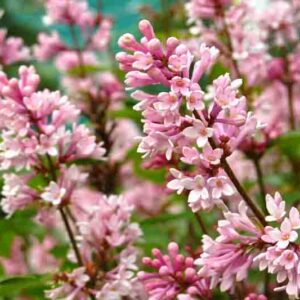
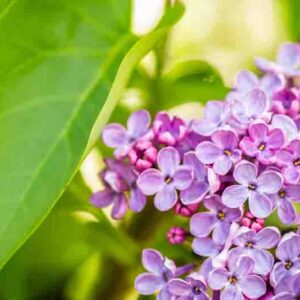
Lilacs can thrive in containers when the plant truly fits the pot. Learn which compact lilacs work best, how to choose potting mix and container size, when to water, feed and repot, how to prevent root stress, and how to protect potted lilacs from summer heat and winter cold.



Lilacs are usually associated with roomy borders, old gardens, and large flowering shrubs planted directly in the ground. So it is easy to assume that a patio, balcony, courtyard, or small urban garden is simply too small for one.
That is not necessarily true.
A carefully chosen lilac (Syringa) can grow and flower successfully in a container for many years. The key is not simply finding a large pot. It is choosing a lilac whose mature size, climate needs, root system, and long-term care requirements genuinely suit container life.
A naturally compact lilac in a generous container is very different from trying to hold a vigorous 12-foot common lilac in a decorative planter beside the front door.
Growing lilacs in pots also changes what happens below ground. Roots planted in the garden are surrounded by a large mass of soil that buffers heat, cold, moisture, and nutrient fluctuations. Container roots live in a much smaller environment that can become hotter in summer, colder in winter, wetter after overwatering, and dry again surprisingly quickly.
That makes the container itself part of the growing environment.
Before choosing a lilac for a pot, check five things:
Gardenia’s rule: Choose the lilac first and the pot second. A beautiful container cannot make an oversized or climate-mismatched shrub suitable for the space.
Yes, provided you choose the right kind.
Compact lilacs adapt far better to container culture than large, strongly suckering forms of common lilac, Syringa vulgaris. A shrub capable of becoming 10 to 15 feet tall may survive in a pot for a while, but maintaining it there indefinitely becomes increasingly difficult.
Container-grown lilacs still need the same basic conditions that make lilacs flower well in the ground:
The pot does not remove any of these requirements. It simply makes root management more demanding.
A container solves a space problem, not a climate problem. If a lilac struggles because winters are too mild or summers are unsuitable, growing it in a pot will not fix the mismatch.
For container growing, mature size matters more than flower color.
Good candidates include compact cultivars such as:
Even compact lilacs vary in mature height and spread, so check the individual cultivar before buying.
Gardenia’s Pretty Lilacs for Small Gardens can help narrow the choices, while the Lilac Comparison Tool makes it easier to compare size, flowering, and other traits.
Gardenia’s Mature-Size Rule: Buy for the shrub it will become, not the one sitting in the nursery pot today.
There is no single correct pot diameter for every lilac.
A young compact shrub can begin in a container only moderately larger than its existing root ball. As the root system develops, move it into progressively larger containers rather than starting immediately with an enormous tub.
A long-term container should be:
A larger soil volume usually dries more slowly and protects roots better from extreme heat and cold. But do not jump from a small nursery pot into an oversized container filled with poorly aerated mix. A small root ball sitting in a very large volume of wet compost may remain saturated too long.
Size the container to the root system, then grow with the plant. The goal is generous root room without surrounding a young lilac with a large reservoir of permanently wet potting mix.
Drainage holes are essential.
Lilacs appreciate moisture while actively growing, but their roots should not remain in saturated potting mix for long periods.
Choose a pot with several open drainage holes. If necessary, raise it slightly on pot feet so water can drain freely underneath.
Do not add a thick gravel layer to the bottom in the hope of improving drainage. Good drainage comes from an appropriate potting mix and unobstructed drainage holes.
If you use a saucer beneath the container, empty standing water rather than leaving the base of the pot submerged.
Use a substantial, well-drained potting mix formulated for long-term container shrubs rather than ordinary garden soil.
RHS recommends a loam-based compost such as peat-free John Innes No. 3 for lilacs grown in containers. A loam-based mix has enough body for a woody shrub while still allowing drainage and aeration when properly formulated.
Your potting medium should:
Avoid filling the container with soil dug directly from the garden. Garden soil can compact badly in pots and may drain poorly.
Lilacs generally tolerate neutral to moderately alkaline conditions and do not require the strongly acidic potting mixes used for rhododendrons, azaleas, or blueberries.
Think long term. A lightweight mix may work beautifully for annual flowers but collapse too quickly for a woody shrub expected to live in the same container for several years.
Container planting is straightforward, but planting depth still matters.
For more on correct lilac planting depth and establishment, see Gardenia’s When and How to Plant Lilacs.
Lilacs flower best in full sun.
Aim for at least about six hours of direct sunlight where climate conditions allow. Too much shade often produces leafy growth with fewer flowers and a looser habit.
But a container introduces an extra complication: the roots may become much hotter than roots growing in garden soil.
A potted lilac lives in two climates at once:
That root climate often determines whether a container lilac thrives.
A dark pot on heat-reflective stone can become surprisingly hot in summer. A small container exposed to winter wind can freeze far more deeply than the ground nearby.
When choosing a site, think about both parts of the plant.
Do not water on a rigid schedule.
A pot may remain moist for several days in cool spring weather and dry rapidly during a hot, windy summer afternoon.
Check the potting mix. When the upper portion begins to dry, water thoroughly so moisture reaches the entire root ball and excess drains from the bottom.
Watch particularly closely when:
A root-bound lilac that suddenly needs water constantly may be signaling that the pot has become too small.
On the other hand, wilt in a wet container does not mean “water more.” Waterlogged or damaged roots can also fail to supply the foliage.
Water the root ball, not the calendar. Check moisture first, then water deeply when needed.
A potted lilac has access to fewer nutrient reserves than a shrub planted in the ground, but heavy feeding is not the answer.
Too much nitrogen can encourage lush foliage at the expense of flowers and can create more growth than the container comfortably supports.
In spring, refresh the upper layer of potting mix where practical. Depending on the fertilizer already present in the compost, you can use either:
RHS advises monthly liquid feeding through the growing season for container-grown lilacs.
Avoid continuing to add fertilizer simply because the lilac is not flowering.
Poor bloom can result from:
If your lilac produces plenty of leaves but few flowers, see Gardenia’s Why Is My Lilac Not Blooming?.
Pruning helps keep a container lilac balanced, but it should not be used to force a naturally large lilac to behave like a dwarf.
Routine pruning of spring-flowering lilacs is generally done soon after bloom because flower buds for the following year develop on growth made during the current season.
Useful pruning includes:
Avoid repeatedly shearing the whole plant into a ball. Shearing encourages dense outer growth and removes flowering wood without improving the underlying structure.
For timing and technique, see Gardenia’s When to Prune Lilacs Without Losing Next Year’s Blooms.
Suckers are easier to control in a pot because the root system is confined, but the distinction between own-root and grafted lilacs still matters.
On an own-root lilac, vigorous basal shoots can become useful replacement stems. Keep a few well-positioned shoots if the shrub needs renewal and remove extras if the base becomes crowded.
On a grafted lilac, shoots arising from below the graft may belong to the rootstock and should be removed.
Gardenia’s Lilac Suckers: Should You Remove Them or Keep Them? explains how to distinguish useful renewal growth from unwanted spread or rootstock suckers.
Container lilacs eventually need more than watering and fertilizer. Their root environment itself needs renewal.
RHS recommends repotting container lilacs every three to five years, preferably in spring.
Signs that a lilac may need repotting include:
Young lilacs can usually be moved into progressively larger pots.
Once a mature specimen is already in a very large container, increasing pot size forever becomes impractical. At that stage, careful root management and renewal of part of the potting mix may help maintain the shrub.
If the root ball is badly congested, loosen or remove some circling outer roots during repotting rather than simply moving an impenetrable root mass into fresh mix.
A constantly thirsty lilac may not need more frequent watering. It may need more root room. When roots occupy most of the pot, very little potting mix remains to store water.
Winter hardiness is one of the biggest differences between growing lilacs in the ground and growing them in containers.
The stems may tolerate your winter temperatures perfectly well while the roots remain vulnerable because they are exposed inside the pot rather than insulated by garden soil.
As a conservative rule of thumb in cold climates, choose a lilac hardy to roughly two USDA zones colder than your own if the container will remain outdoors all winter.
This is not a guarantee. Winter survival also depends on:
Cold-climate protection may include:
Do not bring a hardy lilac into a heated living room. Lilacs are deciduous temperate shrubs and need winter dormancy.
Also check moisture during winter. A dormant lilac does not need summer quantities of water, but a sheltered container should not remain completely dry for months.
The branches may be hardy while the roots are not. Container winter protection is primarily about protecting the root system.
Roots in pots do not only get colder than garden roots. They can also get hotter.
During summer, a small dark container on sun-baked paving can heat rapidly. That accelerates drying and can stress roots even while the upper plant receives the bright light lilacs need for flowering.
During prolonged heat:
Container material also matters. Unglazed terracotta loses moisture faster than many glazed, fiberglass, composite, or wooden containers. That can be useful in damp climates but demanding in hot ones.
If leaves turn brown, yellow, or curl, use Gardenia’s Lilac Leaves Turning Yellow, Brown or Curling: What Is Wrong? to distinguish drought, wet roots, disease, pests, and other causes.
Start with sunlight. Then check pruning timing, cultivar age, climate, winter chilling, root restriction, drought stress, and nitrogen levels.
Check the potting mix. A root-bound plant may be drying too rapidly. If the soil is already wet, investigate drainage and root health before adding more water.
Possible causes include saturated roots, drought, nutrient availability problems, pests, or disease. Look at whether the newest leaves, oldest leaves, one branch, or the entire shrub is affected.
Heat and drought are common causes in containers, particularly on exposed patios. Check root-zone moisture and temperature before assuming disease.
Pruning can correct awkward growth, but it cannot permanently transform a naturally large lilac into a compact one. If annual size control becomes severe, the cultivar is probably wrong for the pot.
Improve light and airflow and avoid allowing the shrub to become congested. Powdery mildew is common on susceptible lilacs and may be more cosmetic than dangerous late in the season. See Gardenia’s Powdery Mildew on Lilacs.
Do not automatically blame the container. Check for borers, stem injury, vascular disease, root decline, and other problems. Gardenia’s Lilac Diseases: What’s Wrong With My Lilac? and Lilac Pests: Borers, Scale, Thrips and Leaf Miners can help narrow the cause.
| Season | What to Do |
|---|---|
| Early spring | Check drainage, repot if needed, refresh the top layer of mix, begin regular moisture checks, and start feeding if appropriate. |
| Spring bloom | Keep moisture consistent and avoid severe drought while buds and flowers are developing. |
| After flowering | Prune if needed, thin unwanted shoots, and remove damaged growth. |
| Summer | Watch water and root-zone heat closely. Check foliage for scorch, mildew, pests, and yellowing. |
| Fall | Allow growth to harden naturally, reduce feeding, and prepare the container for winter exposure. |
| Winter | Protect the roots according to climate and check occasionally that the potting mix has not become completely dry. |
A lilac does not have to remain container-grown forever.
Consider planting it in the garden if:
A healthy lilac usually has greater long-term freedom in suitable garden soil than in a pot.
The value of container culture is that it allows lilacs to be grown where in-ground planting is unavailable or space is limited. It is not inherently better for the shrub.
The best container lilac is not the one you can force to remain in a pot. It is the one whose mature size, roots, climate needs, and care requirements continue to fit container life comfortably.
Yes. Compact lilacs can grow successfully in large containers if they receive enough sun, drainage, root room, moisture, feeding, and winter protection. Naturally large common lilacs are much harder to maintain in pots long term.
Compact cultivars such as Syringa meyeri ‘Palibin’, ‘Miss Kim’, ‘Red Pixie’, and suitable compact Bloomerang or Flowerfesta selections are better choices than vigorous full-size common lilacs.
Choose a substantial container that comfortably accommodates the existing root ball with room for new roots. Increase container size gradually as the shrub grows. Mature specimens need enough soil volume for stability, moisture retention, and temperature buffering.
Lilacs generally flower best with at least about six hours of direct sun. Too much shade reduces flowering. In very hot climates, also consider how much heat the container itself absorbs around the roots.
Use a substantial, freely draining, loam-based mix suitable for long-term woody plants. RHS recommends a loam-based compost such as peat-free John Innes No. 3 for lilacs in containers.
Water according to the moisture in the root ball rather than a fixed schedule. When the upper potting mix begins to dry, water thoroughly and let excess drain. Hot, windy weather can dramatically increase watering needs.
A young common lilac may grow in a container temporarily, but many Syringa vulgaris cultivars eventually become too large for convenient long-term pot culture. Compact cultivars are usually a better choice.
Too little sun, incorrect pruning, excess nitrogen, unsuitable climate, insufficient winter chilling, root restriction, plant age, or water stress can all reduce flowering.
Yes, moderately. Refresh the upper potting mix in spring and use either an appropriate controlled-release feed or modest liquid feeding during active growth. Avoid excessive nitrogen, which can encourage leafy growth rather than flowers.
Routine pruning of spring-flowering lilacs is generally done soon after flowering. Pruning too late can remove flower buds developing for the following year.
RHS recommends repotting container lilacs every three to five years, preferably in spring. Repot sooner if the plant becomes severely root-bound, dries unusually quickly, or loses vigor because of root restriction.
Often yes, but roots in containers are more exposed to cold than roots in the ground. In cold climates, choose a very hardy cultivar and protect or insulate the pot where necessary.
A conservative cold-climate rule of thumb is to choose a lilac hardy to about two USDA zones colder than your local zone if it will remain outdoors in a container all winter. Container size, wind, snow cover, and moisture still affect survival.
Do not bring a hardy lilac into a heated room. Lilacs are deciduous shrubs that require winter dormancy. If protection is needed, use a cold, sheltered, unheated location rather than a warm indoor space.
Heat and water stress are common causes, but excessive moisture, root problems, pests, and disease can produce similar symptoms. Check soil moisture, root-zone temperature, and the distribution of damage before treating.
A compact lilac can remain container-grown for many years with adequate root room, fresh potting mix, appropriate watering, feeding, pruning, and periodic repotting. A cultivar that repeatedly outgrows its pot may eventually be better planted in the ground.
Lilacs can make excellent container shrubs, but success starts with choosing a cultivar that genuinely suits the job.
The easiest combination is a naturally compact lilac, a substantial well-drained container, a loam-based potting mix, plenty of sun, consistent moisture, moderate feeding, correct pruning, and protection from root-zone temperature extremes.
The hardest combination is the opposite: a naturally large lilac in a small decorative pot, allowed to become severely root-bound and then pruned hard every year in an attempt to keep it miniature.
Gardenia’s Container Lilac Fit Test: Climate → Mature Size → Root Volume → Water Capacity → Winter Protection. If all five fit, the lilac has a much better chance of becoming a long-term container plant rather than a temporary patio experiment.
And remember Gardenia’s Two-Climate Rule: the branches experience your regional climate, while the roots experience the much more extreme climate inside the container. Managing both is the foundation of successful long-term container growing.
For cultivar selection, explore Gardenia’s Pretty Lilacs for Small Gardens and Lilac Comparison Tool. For general growing advice, see How to Grow and Care for Lilacs. If flowering is disappointing, continue with Why Is My Lilac Not Blooming?.
Updated: September 2026 • Reviewed by Gardenia Editors
| Hardiness |
3 - 7 |
|---|---|
| Plant Type | Shrubs, Trees |
| Plant Family | Oleaceae |
| Genus | Syringa |
| Exposure | Full Sun |
| Season of Interest | Spring (Mid, Late) |
| Maintenance | Low |
| Water Needs | Average |
| Soil Type | Chalk, Clay, Loam, Sand |
| Soil pH | Alkaline, Neutral |
| Soil Drainage | Moist but Well-Drained, Well-Drained |
| Characteristics | Cut Flowers, Fragrant, Showy |
| Landscaping Ideas | Beds And Borders, Hedges And Screens, Patio And Containers |
| Garden Styles | City and Courtyard, Informal and Cottage |
| Hardiness |
3 - 7 |
|---|---|
| Plant Type | Shrubs, Trees |
| Plant Family | Oleaceae |
| Genus | Syringa |
| Exposure | Full Sun |
| Season of Interest | Spring (Mid, Late) |
| Maintenance | Low |
| Water Needs | Average |
| Soil Type | Chalk, Clay, Loam, Sand |
| Soil pH | Alkaline, Neutral |
| Soil Drainage | Moist but Well-Drained, Well-Drained |
| Characteristics | Cut Flowers, Fragrant, Showy |
| Landscaping Ideas | Beds And Borders, Hedges And Screens, Patio And Containers |
| Garden Styles | City and Courtyard, Informal and Cottage |
Create a membership account to save your garden designs and to view them on any device.
Becoming a contributing member of Gardenia is easy and can be done in just a few minutes. If you provide us with your name, email address and the payment of a modest $25 annual membership fee, you will become a full member, enabling you to design and save up to 25 of your garden design ideas.
Join now and start creating your dream garden!
Create a membership account to save your garden designs and to view them on any device.
Becoming a contributing member of Gardenia is easy and can be done in just a few minutes. If you provide us with your name, email address and the payment of a modest $25 annual membership fee, you will become a full member, enabling you to design and save up to 25 of your garden design ideas.
Join now and start creating your dream garden!