Narcissus eelworm is a microscopic stem and bulb nematode that damages daffodils from within, causing distorted yellowish leaves, spickels, poor flowering, soft bulbs, and brown rings inside cut bulbs. Learn how to identify symptoms, separate it from bulb fly, remove infestations, protect clean bulbs, and prevent spread.


If your daffodils look twisted, stunted, yellowish, or strangely blistered, the problem may not be poor soil, overcrowding, or ordinary daffodil blindness. The hidden culprit could be narcissus eelworm, a microscopic pest that lives inside plant tissue and can slowly ruin a treasured bulb planting from within.
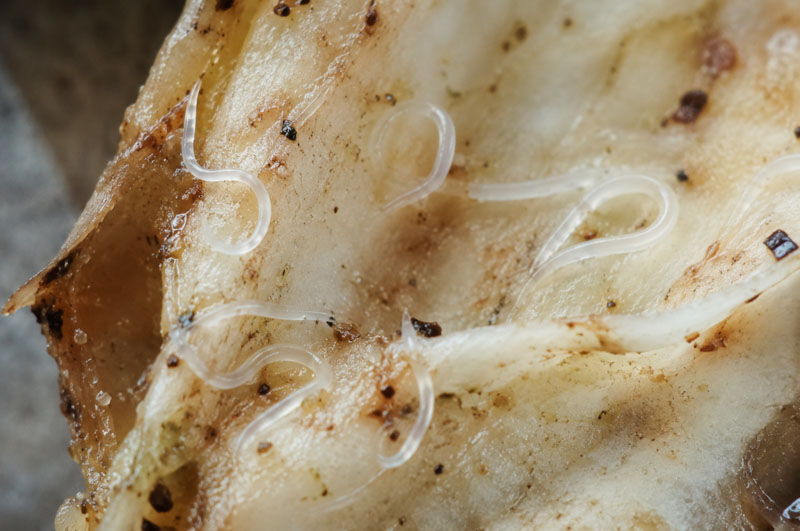
Narcissus eelworm is a common name for the stem and bulb nematode, Ditylenchus dipsaci. It is not a visible worm in the garden soil and not an insect you can pick off a leaf. It is a tiny plant-parasitic nematode, usually requiring laboratory examination for reliable confirmation. In daffodils and related bulbs, it feeds inside leaves, stems, and bulbs, breaking down cells and causing distortion, brown internal damage, rot, and gradual plant decline.
This pest is especially serious because it spreads quietly in infected bulbs, plant debris, contaminated soil, tools, water movement, and sometimes nearby host plants or weeds. A small patch of distorted daffodils can expand year after year if infested bulbs are left in place. For gardeners, the most important message is simple: do not ignore distorted leaves, yellow swollen speckles, or brown rings inside narcissus bulbs.
Scientific name: Ditylenchus dipsaci
Common names: Narcissus eelworm, stem and bulb nematode, stem nematode, bulb eelworm.
Main damage: Microscopic nematodes feed inside leaves, flower stems, and bulbs, causing distorted growth, swollen yellow speckles, brown internal rings, soft bulbs, rot, and plant loss.
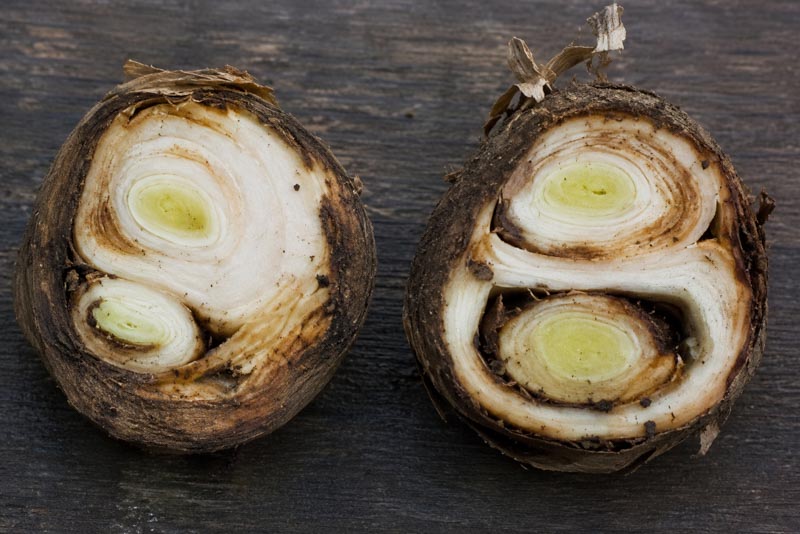
Key symptoms: Stunted daffodils, twisted or malformed leaves, yellowish foliage, swollen speckles known as spickels, roughened patches on leaf margins or keels, delayed or absent flowering, poor root development, soft bulbs, and brown arcs or rings when bulbs are cut across.
Common host plants: Narcissus species and cultivars, including daffodils and jonquils. Other affected plants may include tulips, hyacinths, snowdrops, crocus, scilla, muscari, alliums, beans, peas, strawberries, phlox, hydrangeas, and some weeds.
Favored conditions: Cool, moist conditions, infected planting stock, old bulb debris, contaminated soil, repeated bulb planting in the same site, and nearby alternative host plants.
First action: Lift and inspect suspect bulbs. Cut bulbs across and look for brown rings or arcs; check leaves for swollen yellow spickels. Confirm serious cases through a plant diagnostic laboratory where possible.
Best control strategy: Buy clean bulbs, remove and destroy infested plants and nearby host bulbs, do not compost infected material, avoid replanting susceptible hosts in contaminated soil, and use professional hot-water treatment only where appropriate.
Snippet-ready answer: Narcissus eelworm is the stem and bulb nematode, Ditylenchus dipsaci, a microscopic pest that feeds inside daffodil leaves and bulbs. It causes stunted, distorted growth, yellow swollen leaf speckles, poor flowering, soft bulbs, and brown rings or arcs inside cut bulbs. Control depends on clean bulbs, sanitation, removal of infested plants, and avoiding susceptible hosts in contaminated soil.
Narcissus eelworm is not an earthworm and not a visible grub. It is a microscopic nematode that feeds within soft plant tissues. In narcissus bulbs, it behaves as an internal parasite, moving through leaves, stems, and bulb scales while breaking down plant cells. This internal feeding causes swelling, distortion, necrosis, and rot.
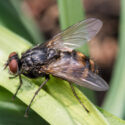
The pest is especially difficult because gardeners usually cannot see the nematodes themselves. Unlike narcissus bulb fly, which may leave a large maggot inside a hollow bulb, narcissus eelworm often leaves more subtle clues: distorted foliage, small swollen leaf patches, poor flowering, soft brown bulbs, and ring-like internal discoloration.
Stem and bulb nematode can affect many plants, but different races or biotypes may vary in host preference. Some strains are closely associated with narcissus, while others are more important on tulips, onions, beans, or other crops. For practical garden management, any suspicious daffodil planting should be treated seriously because infected bulbs are a major way the pest survives and spreads.
To the naked eye, usually nothing obvious. Individual nematodes are tiny, transparent, thread-like organisms, far too small for normal garden inspection. This is one reason the pest is often misdiagnosed as poor nutrition, daffodil blindness, basal rot, virus disease, or simple old age in the planting.
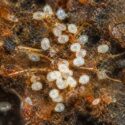
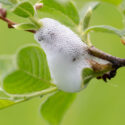
Occasionally, a mass of dormant nematodes may be seen as a glistening off-white or wool-like material on or under the outer layers of an infested bulb. This “eelworm wool” can dry to a buff color and later become active again when moistened. However, most gardeners will identify the problem by plant symptoms rather than by seeing the pest itself.
Reliable confirmation usually requires laboratory examination of affected plant tissue. If a valuable planting is involved, or if the symptoms are spreading through a collection, submitting affected bulbs to a diagnostic service is far better than guessing.
Cut a suspect daffodil bulb across. Brown rings or arcs inside the bulb point toward narcissus eelworm. A single large maggot inside a hollow bulb points more toward narcissus bulb fly.
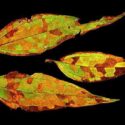
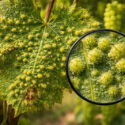
Above ground, narcissus eelworm often causes stunted, distorted, or yellowish growth. Leaves may twist, bend, thicken, or develop rough swollen patches. These small pale yellow swellings are often called spickels. They are most noticeable before flowering and may be felt by running a finger and thumb along the underside, margin, or keel of the leaf.
In heavier attacks, spickels can enlarge, turn brown in the center, merge together, and distort the entire leaf. Flower stems may also be affected, leading to delayed flowering, poor-quality blooms, or no flowers at all. In a bed or field, affected areas may appear as patches of stunted, late, missing, or distorted plants.
Below ground, the bulb often tells the clearer story. Infested bulbs may have poor root development, soft or spongy tissues, and brown internal discoloration. When cut across, affected bulbs may show brownish rings, arcs, or patches in the concentric bulb scales. In storage, infected bulbs can soften, rot, dehydrate, and eventually disintegrate.
A spreading patch of twisted, yellowish, non-flowering daffodils is not something to ignore. Lift bulbs, inspect the leaves and bulb scales, and remove suspect plants before the infestation expands.
Narcissus eelworm and narcissus bulb fly can both lead to weak growth and poor flowering, but the signs inside the bulb are different. Narcissus bulb fly usually involves one large creamy-white maggot inside a hollowed bulb. Narcissus eelworm does not leave a visible maggot. Instead, it causes internal brown rings, arcs, or patches, along with distorted leaves and swollen spickels.
Narcissus bulb fly is an insect problem. Narcissus eelworm is a nematode problem. That distinction matters because the management is different. Bulb fly control focuses on preventing egg-laying and removing maggot-infested bulbs. Eelworm control focuses more heavily on clean planting stock, sanitation, removal of nearby host material, rotation away from susceptible hosts, and avoiding contaminated soil.
Basal rot can also confuse diagnosis. Basal rot often begins at the base of the bulb and is caused by fungal infection. Eelworm damage may be associated with rot, but the classic cross-section clue is the pattern of brown rings or arcs within the bulb scales. When in doubt, laboratory diagnosis is the most reliable answer.
The life cycle of Ditylenchus dipsaci can be surprisingly fast under suitable conditions. Eggs hatch into juveniles, and several juvenile stages occur before adulthood. The fourth-stage juvenile is especially important because it can leave infected tissue, survive unfavorable conditions, and search for new host plants.
Stem and bulb nematodes feed inside living plant tissue. They can also survive in plant debris, bulb fragments, infected planting stock, and sometimes soil. In a dry dormant state, they can persist for long periods, then become active again when moisture returns. This ability makes careless composting, contaminated tools, and old bulb waste especially risky.
Spread may occur through infected bulbs, pieces of bulb tissue, contaminated soil on tools or equipment, surface water movement, and nearby host plants or weeds. In larger plantings, symptoms often expand outward from an original focus as nematodes move short distances and are carried passively by cultivation, water, or plant debris.
Label suspicious clumps while the foliage is still visible. Once leaves die down, it becomes much harder to find the exact spot that needs inspection and cleanup.
The most important ornamental host for this article is Narcissus, including daffodils, jonquils, and related cultivars. Infected bulbs may introduce the pest into a garden, and old clumps can become reservoirs if symptoms are missed.
Other bulbous ornamentals can also be affected, including tulips, hyacinths, snowdrops, crocus, scilla, muscari, and related bulbs or corms. Susceptibility can vary by nematode race, plant species, and local conditions.
The host range also extends beyond ornamental bulbs. Vegetables such as onions, garlic, carrots, beans, peas, and other crops may be affected by stem and bulb nematode strains, and some ornamentals such as phlox and hydrangea can also be involved. Some common weeds can act as alternative hosts, which is why cleanup and rotation matter.
Inspection is most useful during the growing season and again when bulbs are lifted. In spring, look for distorted or yellowish leaves, delayed flowering, weak stems, missing plants, and swollen spickels. Rub suspect leaves gently between finger and thumb; spickels may feel like tiny rough swellings.
After flowering, but before foliage disappears completely, mark suspicious clumps. Then lift bulbs carefully and examine both leaves and bulbs. Cut suspect bulbs across and look for brown rings, arcs, or patches. Cut lengthwise if needed to see whether discoloration appears to spread down from the neck.
Do not rely on appearance alone for high-value collections. Nutrient stress, viruses, basal rot, bulb fly, frost, and poor growing conditions can create overlapping symptoms. If the planting is valuable or the problem is spreading, send affected bulbs to a diagnostic laboratory for confirmation.
There is no simple spray cure for narcissus eelworm in garden soil. Once nematodes are inside bulbs and leaves, chemical rescue treatment is not a practical solution for home gardeners. The most important response is sanitation.
In commercial bulb production, hot-water treatment can kill nematodes inside dormant bulbs when temperature and timing are precisely controlled. However, this is not a casual home treatment. Too much heat damages bulbs; too little allows nematodes to survive. Professional equipment is needed to maintain the correct temperature, and bulbs affected by other diseases may be harmed or may spread pathogens during treatment.
Narcissus eelworm is not solved by a quick spray. Once confirmed, the priority is removing infested material, preventing spread, and keeping susceptible bulbs out of contaminated soil.
Narcissus eelworm is mainly a problem of bulbs and outdoor plantings, but potted narcissus or forced daffodils can be affected if the bulbs were already infested. Symptoms may include weak shoots, distorted leaves, yellowish growth, poor flowering, or bulbs that become soft and brown.
Isolate suspicious containers. Remove the bulbs and inspect them carefully. Discard any that are soft, brown internally, distorted, or show ring-like discoloration when cut open. Do not reuse the potting mix. Wash containers thoroughly before using them again, and avoid placing suspect bulb waste in compost.
For future indoor displays, buy firm, high-quality bulbs from reputable suppliers. If a batch produces distorted or suspicious growth, do not save those bulbs for the garden.
Outdoors, act quickly when symptoms appear in a patch. Lift and destroy affected narcissus bulbs, foliage, and nearby host bulbs if eelworm is confirmed or strongly suspected. Remove weeds and volunteer bulbs that could keep the pest alive. Clean tools before using them elsewhere.
Avoid replanting narcissus, tulips, hyacinths, onions, garlic, or other susceptible hosts in the same soil for several years. RHS guidance suggests leaving affected soil without host plants for at least three years where possible, and longer periods may be needed in some soils. During this time, remove weeds that could act as hosts.
In valuable collections, start again with clean bulbs in a fresh site or clean containers with new potting mix. Do not move bulbs, soil, or debris from the affected bed into uninfested areas.
Prevention is far easier than eradication. Since narcissus eelworm is commonly introduced in infected plant material, begin with clean, firm, high-quality bulbs. Avoid bargain bulbs that are soft, damaged, shriveled, moldy, or suspiciously light.
A healthy daffodil planting should become stronger over time, not slowly collapse into distorted leaves and missing flowers. If a problem patch is expanding, investigate early. With narcissus eelworm, waiting often means giving the nematode another season to spread.
Narcissus eelworm is a microscopic internal pest that can quietly ruin daffodil bulbs. Watch for distorted yellowish leaves, spickels, poor flowering, soft bulbs, and brown rings inside cut bulbs. Remove infested material quickly, avoid composting it, and replant only with clean bulbs in clean soil.
Narcissus eelworm is the stem and bulb nematode, Ditylenchus dipsaci, a microscopic plant-parasitic nematode that feeds inside daffodil leaves, stems, and bulbs.
Look for stunted, twisted, yellowish leaves, rough swollen speckles called spickels, delayed or absent flowering, soft bulbs, and brown rings or arcs inside bulbs cut across.
Individual eelworms are microscopic and usually cannot be seen without laboratory equipment. Sometimes masses of dormant nematodes may appear as off-white wool-like material on infested bulbs.
It commonly affects Narcissus and may also affect tulips, hyacinths, snowdrops, crocus, scilla, muscari, onions, garlic, beans, peas, strawberries, phlox, hydrangea, and some weeds, depending on nematode strain.
Remove and destroy infested bulbs, foliage, and nearby host plants where needed. Do not compost infected material. Avoid replanting susceptible hosts in contaminated soil for several years.
No. Narcissus bulb fly is an insect whose larva is a large maggot inside a hollow bulb. Narcissus eelworm is a microscopic nematode that causes distorted foliage and brown rings or arcs inside bulbs.
No. Do not compost infested bulbs, leaves, or bulb debris. Dispose of them securely as diseased material so nematodes are not spread back into the garden.
Professional hot-water treatment can kill nematodes in dormant bulbs when temperature and timing are precisely controlled, but it is difficult for home gardeners and can damage bulbs if done incorrectly.
Updated: June 2026 – Reviewed by Gardenia Editors
Create a membership account to save your garden designs and to view them on any device.
Becoming a contributing member of Gardenia is easy and can be done in just a few minutes. If you provide us with your name, email address and the payment of a modest $25 annual membership fee, you will become a full member, enabling you to design and save up to 25 of your garden design ideas.
Join now and start creating your dream garden!
Create a membership account to save your garden designs and to view them on any device.
Becoming a contributing member of Gardenia is easy and can be done in just a few minutes. If you provide us with your name, email address and the payment of a modest $25 annual membership fee, you will become a full member, enabling you to design and save up to 25 of your garden design ideas.
Join now and start creating your dream garden!