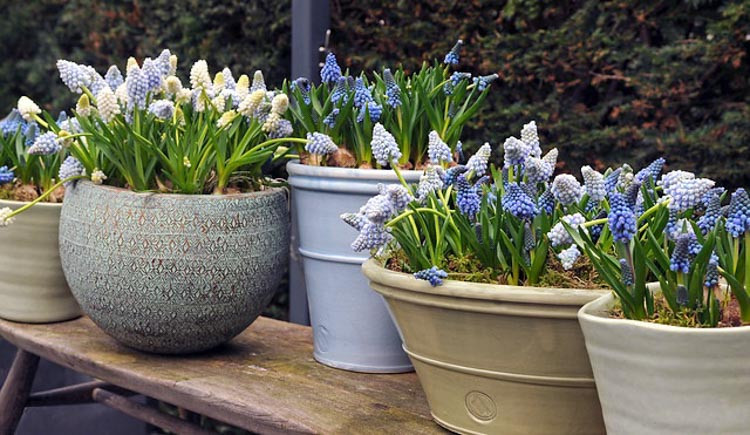
Muscari (Grape Hyacinth)
Characteristics
Muscari, commonly called grape hyacinth, is a charming spring bulb loved for compact clusters of fragrant, bead-like flowers in blue, purple, white, pale pink, or yellow. Easy to grow and excellent for naturalizing, muscari brings early color to borders, rock gardens, lawns, containers, and underplantings. For a broad overview, explore the Muscari grape hyacinth genus guide.
Why Grow Muscari?
Muscari is one of the easiest bulbs for big spring impact in a small space. Plant it in drifts for a river of blue, tuck it between perennials, or use it at the front of paths where its fragrance can be enjoyed. It belongs among the best spring flowers, classic flower bulbs, and beautiful blue flowers for the garden.
Growing Tips
Plant muscari bulbs in fall, about three times as deep as the bulb is tall, in well-drained soil and full sun to partial shade. Water after planting, then let winter do the work. After flowering, allow foliage to yellow naturally so bulbs can recharge. For longer seasonal color, combine muscari with other bulbs that brighten the garden from January through May and plan around the idea that spring is really three seasons.
Popular Varieties
For classic deep blue, choose Muscari armeniacum. For soft ocean-blue tones, try Muscari aucheri ‘Ocean Magic’. For striking two-tone flowers, plant Muscari latifolium. For pale azure charm, use Muscari armeniacum ‘Valerie Finnis’, or add bright china-blue sparkle with Muscari azureum.
Garden Uses
Use muscari as a carpeting bulb beneath tulips, daffodils, deciduous shrubs, and roses. It is especially effective for underplanting roses with low-growing spring bulbs. In pots, layer it above larger bulbs using the lasagne planting method for waves of bloom in one container.
Small, fragrant, and wonderfully easy, Muscari is a must-have spring bulb for gardeners who want blue color, naturalizing charm, container beauty, and cheerful flowers that return year after year.