Jack Of Diamonds Heartleaf Brunnera, Jack Of Diamonds Brunnera, Jack Of Diamonds Siberian Bugloss, Brunnera ‘Jack Of Diamonds’, Siberian Bugloss ‘Jack Of Diamonds’, Heartleaf Brunnera ‘Jack Of Diamonds’
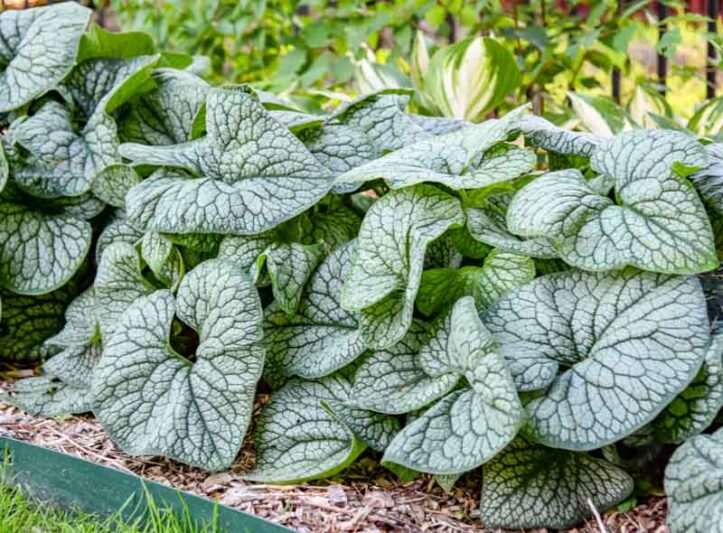


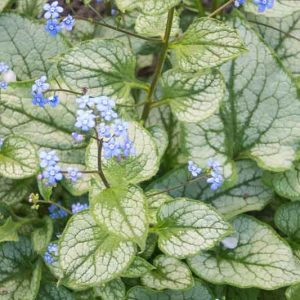
Brunnera macrophylla ‘Jack of Diamonds’, commonly called Jack of Diamonds Siberian bugloss, Jack of Diamonds heartleaf brunnera, or false forget-me-not, is a bold, clump-forming perennial grown for its oversized silver leaves, dark green veining, and airy sprays of baby-blue spring flowers. Think of it as a supersized, more dramatic cousin of Brunnera macrophylla ‘Jack Frost’, but with broader, rounder, more commanding foliage that can brighten shaded borders from spring through fall.
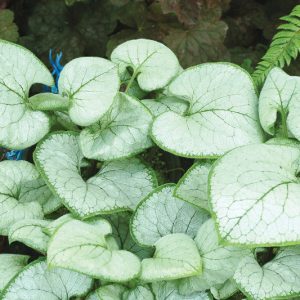
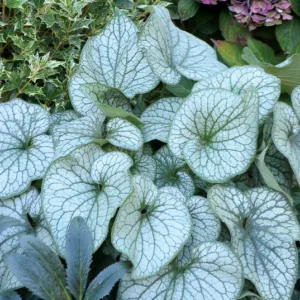
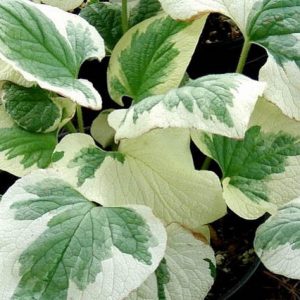
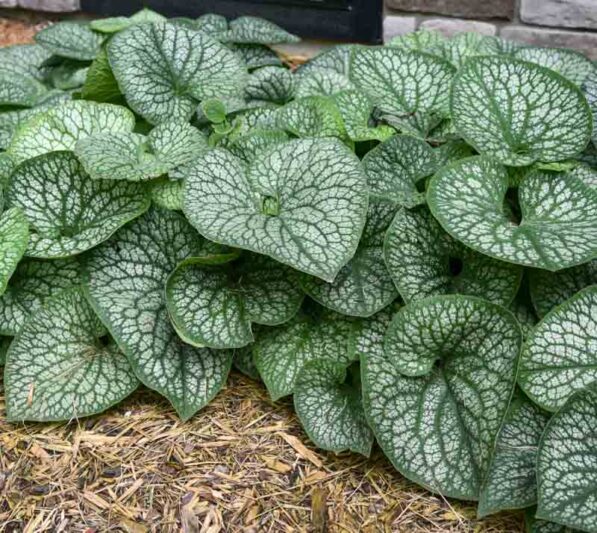
This shade-loving perennial is one of the best foliage plants for gardeners who want lasting brightness without relying on flowers alone. The huge leaves can reach up to 9 to 10 inches long (22-25 cm), overlapping at the base to form a rounded, almost sculptural mound. Their heavy silver overlay and vivid green veining make the plant glow in woodland gardens, shaded paths, underplantings, containers, and cool, moist borders.
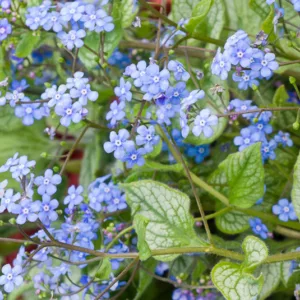
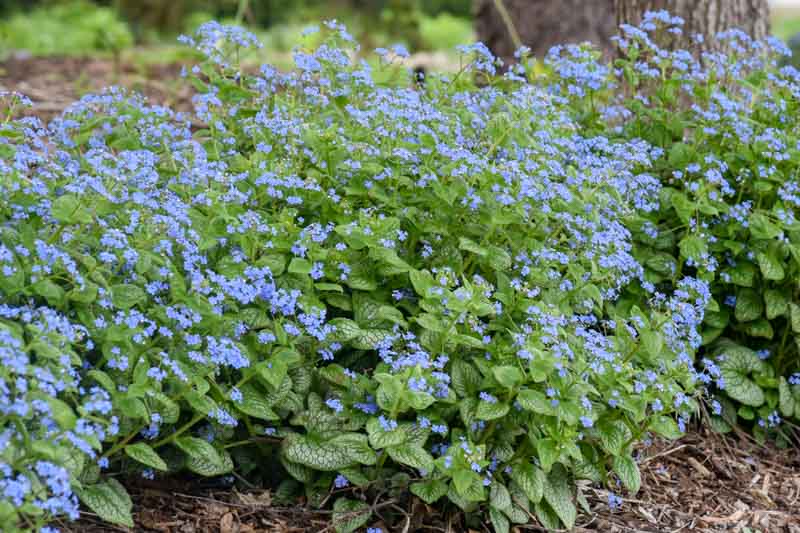
In mid to late spring, delicate blue, forget-me-not-like flowers rise above the foliage in loose sprays, giving the plant a charming, romantic softness before the leaves fully expand. After bloom, the foliage becomes the main event, providing months of texture, contrast, and luminous silver color in places where many flowering perennials struggle.
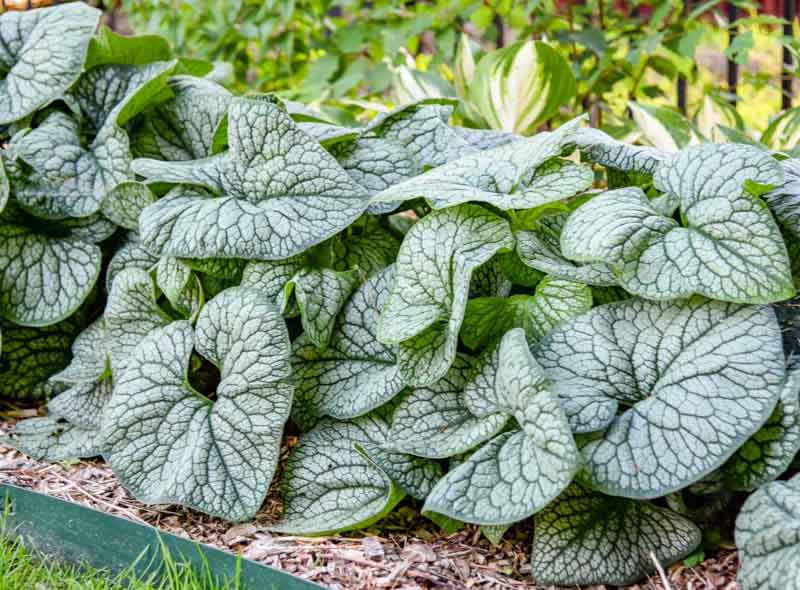
Summary: Bold herbaceous perennial brunnera with huge silver, heart-shaped leaves, dark green veining, and airy blue spring flowers.
Use: Excellent for shade gardens, woodland borders, containers, groundcover-style plantings, underplanting shrubs and roses, banks, slopes, and shaded paths.
Highlight: A giant silver-leaved brunnera with far more presence than many older cultivars.
Note: Best in part shade to full shade with humus-rich, moist but well-drained soil. Avoid hot sun and dry soil, which can scorch or stress the foliage.
| Botanical Name | Brunnera macrophylla ‘Jack of Diamonds’; PBR; CPBR7065; PP32752 |
|---|---|
| Family | Boraginaceae |
| Common Names | Jack of Diamonds Siberian bugloss, Jack of Diamonds heartleaf brunnera, false forget-me-not, Siberian bugloss |
| Plant Type and Habit | Herbaceous perennial; deciduous, clump-forming, mounded, rhizomatous habit |
| Hardiness (USDA) | Commonly listed for USDA Zones 3 to 8; best where summers are not extremely hot and dry |
| Size | About 14 to 16 in. tall and 28 to 32 in. wide; leaves may reach up to 9 to 10 in. long |
| Sun and Exposure | Part shade to full shade; avoid hot afternoon sun |
| Soil | Moderately fertile, humus-rich, moist but well-drained soil; tolerates acid, neutral, or alkaline pH |
| Bloom Time | Mid to late spring |
| Flower Color | Baby blue to bright blue, forget-me-not-like flowers |
| Foliage Color | Silver, gray, green, dark green veining; large heart-shaped to rounded leaves |
| Wildlife Value | Bee-friendly spring flowers may support early-season pollinators |
| Deer Resistance | Generally deer resistant, though no plant is completely deer-proof |
Use ‘Jack of Diamonds’ as a living spotlight. Its broad silver leaves catch low light beautifully, making dark garden corners feel brighter, cooler, and more intentional.
Brunnera macrophylla ‘Jack of Diamonds’ is a large-leaved brunnera cultivar developed for exceptional foliage presence. It is often described as a giant version of the famous ‘Jack Frost’, but the leaves are not merely bigger; they are broader, rounder, and more dramatic. Their overlapping bases create a full, circular mound that reads clearly even from a distance.
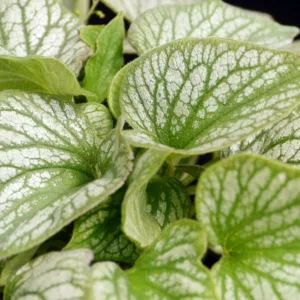
The leaves are rough-textured, heart-shaped to rounded, and heavily overlaid with silver. Wide dark green veins cut through the silver surface, giving each leaf a crisp, patterned look. In spring, sprays of small blue flowers float above the foliage, resembling forget-me-nots and softening the plant’s bold leaf architecture.
‘Jack of Diamonds’ forms a broad, mounded clump. Walters Gardens lists plants at about 14 to 16 inches tall and 28 to 32 inches wide, with flower scapes rising higher. RHS lists the ultimate spread in the 0.5 to 1 metre range. In a garden border, that means one mature plant can cover a generous patch of ground without running aggressively.
Because the leaves can reach up to 9 to 10 inches long, this cultivar has a bolder texture than many shade perennials. It is large enough to use as a focal point, but still refined enough for woodland-style planting, shaded containers, and underplanting beneath shrubs.
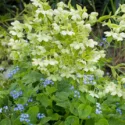
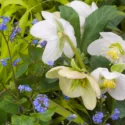
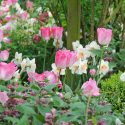
The flowers appear in mid to late spring, usually as delicate sprays of baby-blue blooms held above the foliage. They are small individually, but the cloud-like effect is charming, especially when paired with spring bulbs, hellebores, bleeding hearts, ferns, and emerging hostas.
After flowering, the huge leaves expand and become the plant’s main ornamental feature. This is one of the reasons brunnera is so useful: it offers spring flowers, then continues contributing color and structure for the rest of the growing season.
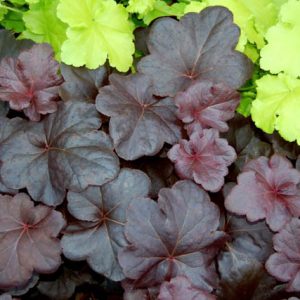
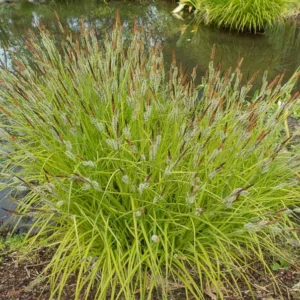
The foliage is the star. The combination of silver overlay, dark green veining, and oversized leaf shape makes ‘Jack of Diamonds’ one of the most dramatic brunneras for shade. The leaves contrast beautifully with fine-textured ferns, gold grasses, blue hostas, burgundy heucheras, and the glossy evergreen foliage of hellebores.
In mild, evenly moist sites, the leaves can remain attractive for months. In hot, dry, or sunny conditions, foliage may scorch, brown, or collapse earlier than expected. A cool, shaded position and steady moisture are the keys to keeping the plant handsome.
Big silver leaves need moisture and shade to stay beautiful. If the foliage browns at the edges, the plant is usually telling you it is too sunny, too dry, or exposed to too much reflected heat.
‘Jack of Diamonds’ is commonly listed for USDA Zones 3 to 8 and is very hardy in cold climates. It performs best in regions where summers are moderate and soil moisture is reliable. In warm zones, give it deeper shade and consistent moisture to prevent leaf scorch and summer stress.
This is not a dry-shade plant in the strict sense. It tolerates shade beautifully, but the soil should still hold moisture while draining well. Woodland conditions with leaf mold, compost, and filtered light are ideal.
The blue spring flowers are bee-friendly and may support early-season pollinators when few other shade plants are blooming. For stronger wildlife value, combine ‘Jack of Diamonds’ with a succession of shade-tolerant plants that flower at different times, such as hellebores, bleeding hearts, pulmonarias, astilbes, and native woodland perennials. For broader pollinator resources, explore bee-friendly plants and butterfly-friendly plants.
Brunneras are generally considered deer-resistant plants, and ‘Jack of Diamonds’ can be useful where hostas are heavily browsed. However, deer resistance depends on local pressure, season, and available food. Young leaves may still be sampled in difficult years.
‘Jack of Diamonds’ is not a drought plant. It prefers soil that stays evenly moist but not soggy. Dry shade can lead to smaller leaves, crispy margins, early dormancy, or weak growth. Add compost or leaf mold before planting, mulch lightly, and water during extended dry spells.
Brunnera macrophylla is not usually highlighted as a highly toxic ornamental perennial, but it should still be grown as a garden plant rather than an edible. Discourage pets and children from chewing leaves or flowers, and contact a veterinarian or medical professional if ingestion causes concern.
‘Jack of Diamonds’ is clump-forming and not generally considered invasive. It spreads slowly by rhizomes and can be divided if clumps become too large. Seedlings may occasionally appear if flowers are left to set seed, but named cultivars may not come true from seed. Deadhead if you want to reduce self-sowing.
Part shade to full shade is best. Morning sun or filtered light is usually acceptable in cool climates if soil remains moist, but hot afternoon sun can scorch the silver leaves. In warmer regions, choose bright shade, woodland shade, or the north or east side of buildings and shrubs.
Plant in moderately fertile, humus-rich soil that is moist but well-drained. RHS lists chalk, clay, loam, and sand as suitable soil types, provided moisture and drainage are right. The plant is tolerant of acid, neutral, or alkaline pH, making it adaptable in many shade gardens.
Keep soil evenly moist during establishment. Mature plants appreciate steady moisture, especially in spring and during dry summer weather. Avoid waterlogged soil, but do not allow the root zone to become bone dry for long periods.
A spring topdressing of compost or leaf mold is usually enough. Heavy feeding is unnecessary and may encourage soft growth. In containers, use a light slow-release fertilizer and refresh the potting mix as needed to maintain moisture and structure.
Plant in spring or fall, spacing plants about 28 to 32 inches apart if you want them to reach full size without crowding. Set the crown at soil level, water well after planting, and mulch lightly with leaf mold, compost, or fine bark to keep the root zone cool.
‘Jack of Diamonds’ needs little pruning. Remove spent flower stems after bloom if you want a cleaner look or want to reduce self-seeding. Trim away damaged, scorched, or tired leaves during the growing season. In late winter or early spring, clear away old foliage before fresh growth emerges.
Propagate by division in early spring or autumn. Lift mature clumps carefully, separate vigorous sections with roots and buds, and replant immediately in moist, prepared soil. Named cultivars should be propagated vegetatively to preserve their foliage pattern and leaf size.
‘Jack of Diamonds’ is generally low maintenance and has no major insect or disease problems when grown in the right conditions. Most issues come from environmental stress rather than serious pests: too much sun, dry soil, heavy wet soil, or hot, humid weather. The goal is simple: cool shade, steady moisture, and good drainage.
These companion plants suit Brunnera macrophylla ‘Jack of Diamonds’ because they share its preference for part shade to full shade, moist but well-drained soil, and humus-rich woodland conditions. They are especially effective when used to contrast the plant’s giant silver leaves, dark green veining, and blue spring flowers.
Brunnera macrophylla ‘Jack of Diamonds’ is a clump-forming perennial grown for huge silver, heart-shaped leaves with dark green veining and sprays of baby-blue, forget-me-not-like flowers in spring. It is often described as a giant, more dramatic relative of Brunnera ‘Jack Frost’.
Brunnera ‘Jack of Diamonds’ typically grows about 14 to 18 inches tall and 28 to 32 inches wide. RHS lists its ultimate spread in the 0.5 to 1 metre range, and the leaves may reach up to 9 to 10 inches long.
Part shade to full shade is best. Morning sun or filtered light may be tolerated in cool climates if the soil stays moist, but hot afternoon sun can scorch the large silver leaves.
Brunnera ‘Jack of Diamonds’ blooms in mid to late spring. The small blue flowers resemble forget-me-nots and are held in airy sprays above the developing foliage.
No. Brunnera ‘Jack of Diamonds’ is a deciduous herbaceous perennial. The foliage dies back in winter and fresh new leaves emerge from the crown in spring.
Brunnera ‘Jack of Diamonds’ is generally considered deer resistant, although no plant is completely deer-proof. It can be a useful silver-leaved shade plant where hostas are frequently browsed.
Yes. Brunnera ‘Jack of Diamonds’ can grow well in shaded containers if the pot has drainage holes and the soil is kept evenly moist. Use a broad container to show off the large leaves.
Browning leaf edges usually indicate too much sun, dry soil, reflected heat, or summer stress. Move container plants to deeper shade, water consistently, and mulch lightly to keep the root zone cool.
RHS – Brunnera macrophylla ‘Jack of Diamonds’ PBR: https://www.rhs.org.uk/plants/387407/brunnera-macrophylla-jack-of-diamonds-pbr/details
Walters Gardens – Brunnera macrophylla ‘Jack of Diamonds’: https://www.waltersgardens.com/variety.php?ID=BRUJD
Updated: June 2026 • Reviewed by Gardenia Editors
| Hardiness |
3 - 8 |
|---|---|
| Heat Zones |
1 - 7 |
| Climate Zones | 1, 1A, 1B, 2, 2A, 2B, 3, 3A, 3B, 4, 5, 6, 7, 8, 9, 10, 11, 12, 13, 14, 15, 16, 17, 18, 19, 20, 21, 22, 23, 24 |
| Plant Type | Perennials |
| Plant Family | Boraginaceae |
| Genus | Brunnera |
| Common names | Brunnera, Siberian Bugloss |
| Exposure | Partial Sun, Shade |
| Season of Interest | Spring (Mid, Late), Summer (Early, Mid, Late) |
| Height | 1' - 2' (30cm - 60cm) |
| Spread | 2' - 3' (60cm - 90cm) |
| Spacing | 36" (90cm) |
| Maintenance | Low |
| Water Needs | Average |
| Soil Type | Chalk, Clay, Loam, Sand |
| Soil pH | Acid, Alkaline, Neutral |
| Soil Drainage | Moist but Well-Drained |
| Characteristics | Showy |
| Tolerances | Full Shade, Clay Soil, Deer, Rabbit |
| Attracts | Bees |
| Garden Uses | Banks And Slopes, Beds And Borders, Ground Covers, Patio And Containers, Underplanting Roses And Shrubs |
| Garden Styles | Informal and Cottage, Pollinator Garden, Woodland Garden |
| Toxic to Humans | No known toxicity |
| Toxic to Cats | No known toxicity |
| Toxic to Dogs | No known toxicity |
| Toxic to Horses | No known toxicity |


| Hardiness |
3 - 8 |
|---|---|
| Heat Zones |
1 - 7 |
| Climate Zones | 1, 1A, 1B, 2, 2A, 2B, 3, 3A, 3B, 4, 5, 6, 7, 8, 9, 10, 11, 12, 13, 14, 15, 16, 17, 18, 19, 20, 21, 22, 23, 24 |
| Plant Type | Perennials |
| Plant Family | Boraginaceae |
| Genus | Brunnera |
| Common names | Brunnera, Siberian Bugloss |
| Exposure | Partial Sun, Shade |
| Season of Interest | Spring (Mid, Late), Summer (Early, Mid, Late) |
| Height | 1' - 2' (30cm - 60cm) |
| Spread | 2' - 3' (60cm - 90cm) |
| Spacing | 36" (90cm) |
| Maintenance | Low |
| Water Needs | Average |
| Soil Type | Chalk, Clay, Loam, Sand |
| Soil pH | Acid, Alkaline, Neutral |
| Soil Drainage | Moist but Well-Drained |
| Characteristics | Showy |
| Tolerances | Full Shade, Clay Soil, Deer, Rabbit |
| Attracts | Bees |
| Garden Uses | Banks And Slopes, Beds And Borders, Ground Covers, Patio And Containers, Underplanting Roses And Shrubs |
| Garden Styles | Informal and Cottage, Pollinator Garden, Woodland Garden |
| Toxic to Humans | No known toxicity |
| Toxic to Cats | No known toxicity |
| Toxic to Dogs | No known toxicity |
| Toxic to Horses | No known toxicity |
How many Brunnera macrophylla ‘Jack of Diamonds’ (Siberian Bugloss) do I need for my garden?
| Plant | Quantity | |
|---|---|---|
| Brunnera macrophylla ‘Jack of Diamonds’ (Siberian Bugloss) | N/A | Buy Plants |
Create a membership account to save your garden designs and to view them on any device.
Becoming a contributing member of Gardenia is easy and can be done in just a few minutes. If you provide us with your name, email address and the payment of a modest $25 annual membership fee, you will become a full member, enabling you to design and save up to 25 of your garden design ideas.
Join now and start creating your dream garden!
Create a membership account to save your garden designs and to view them on any device.
Becoming a contributing member of Gardenia is easy and can be done in just a few minutes. If you provide us with your name, email address and the payment of a modest $25 annual membership fee, you will become a full member, enabling you to design and save up to 25 of your garden design ideas.
Join now and start creating your dream garden!