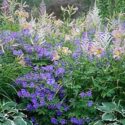
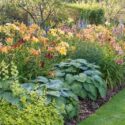
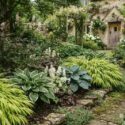
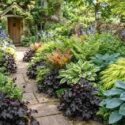
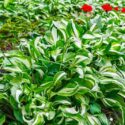
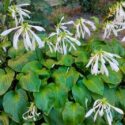
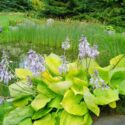
From hostas to hellebores, build a shade garden that returns every year. Learn what to plant, where to put it and how to keep it lush.
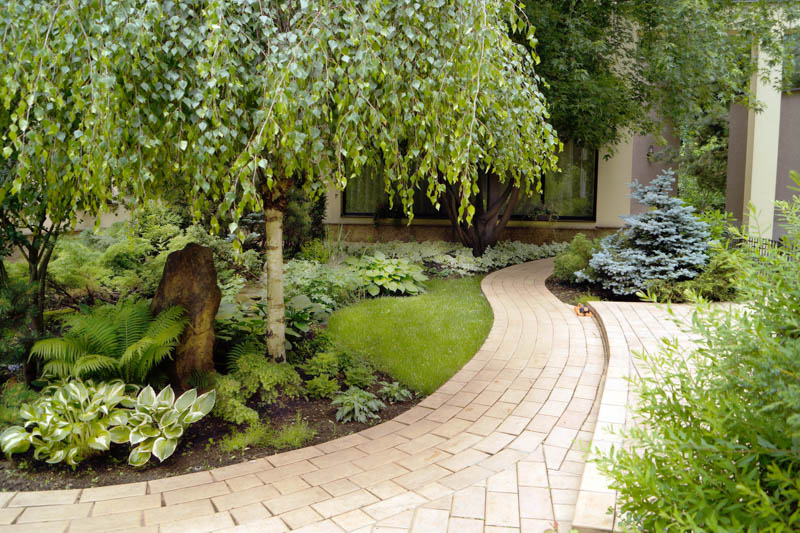


Have a place where grass gives up, hostas sulk, and the soil is full of tree roots? That is not a dead zone – it is a shade garden waiting to happen. Shade can be the calmest, most elegant part of the yard because the light is soft, the leaves are big, and everything looks deliberate. The secret is to match the plant to the kind of shade you truly have and then repeat a small palette so it looks designed. Below is a full “shade system” – hero list first, then shrubs, perennials, ferns, grasses and sedges, bulbs, annuals, and trees, plus a problem-solving section.
Most examples suit USDA Zones 4–9 (or comparable climates) and part to full shade unless noted.
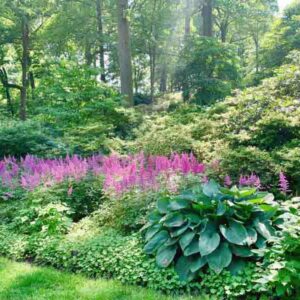
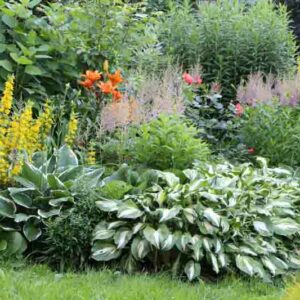
Start with structure (shrubs, taller perennials), then fill with foliage and groundcovers. Shade soil is often rooty and dry – open planting pockets, add compost, and mulch with leaves every year. If you keep the edge neat and repeat 3–5 key plants, even a mismatched shade bed looks like a designed woodland.
| Why plant for shade | Turns “nothing grows here” into an all-season focal point; cools the house; gives color in summer when sunny borders fade. |
|---|---|
| Design keys | Lead with foliage, mix leaf sizes, use light/variegated plants at the front, and repeat groups down the bed so the eye can rest. |
| Maintenance | Mulch yearly, water in droughts (deeply 1–2× weekly in first season), divide overgrown clumps, keep seedlings from maples and ash from taking over. |
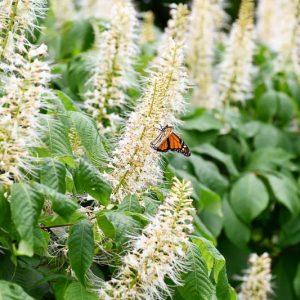
| Ecology tip | Blend in woodland natives (trillium, bloodroot, Christmas fern, bottlebrush buckeye) to feed local pollinators and birds. |
Shade comes in flavors, and your plant choice has to follow the flavor.
Watch the area for one sunny day, note when light first hits and when it disappears, and check the soil in late afternoon. If it’s dusty or hard, call it dry shade and plan accordingly.
| Shade type | Soil / moisture | Start with these |
|---|---|---|
| Dry shade under trees | Rooty, fast-drying | Epimedium, Geranium macrorrhizum, lamium, Christmas fern, hellebores |
| Bright / morning shade | Moist / average | Hostas, hydrangea (with moisture), astilbe, brunnera |
| Full / dark shade by walls | Average | Aucuba, hellebores, ferns, liriope, sedges |
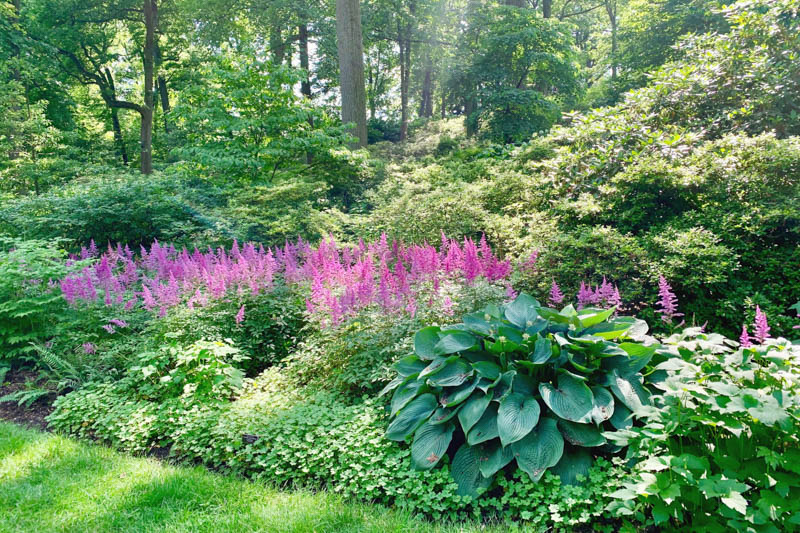
These are the shade plants you can build a whole bed around — tough, good-looking, and friendly with others.
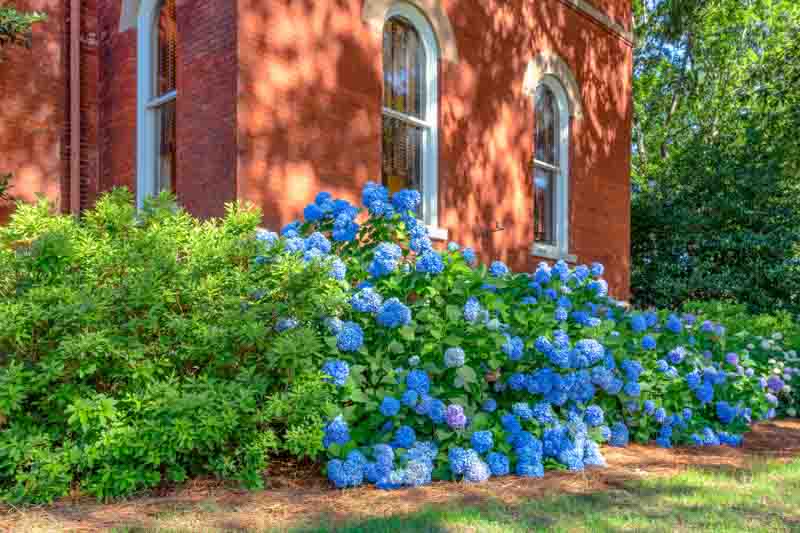
Perennials make shade pretty, but shrubs make it permanent. Drop two or three of these behind your hostas/ferns and the bed looks “finished.”
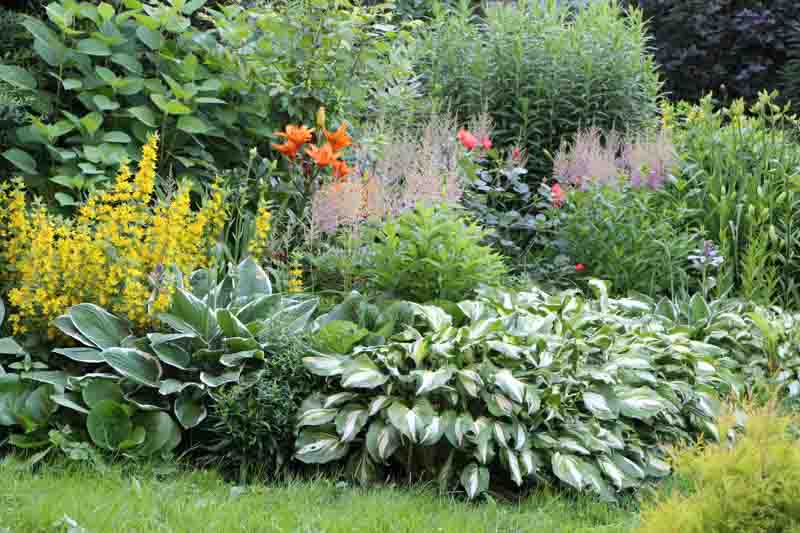
These are your “every day” plants. Plant them in 5s or 7s and repeat in two or three places so the bed looks cohesive.
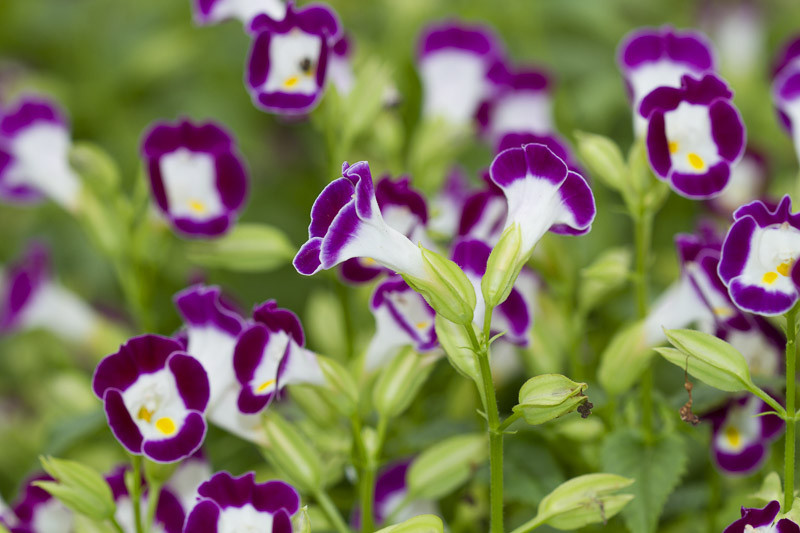
Perk up shady spots fast with these easy, high-impact annuals. Perfect for containers, borders, or filling gaps while perennials mature.
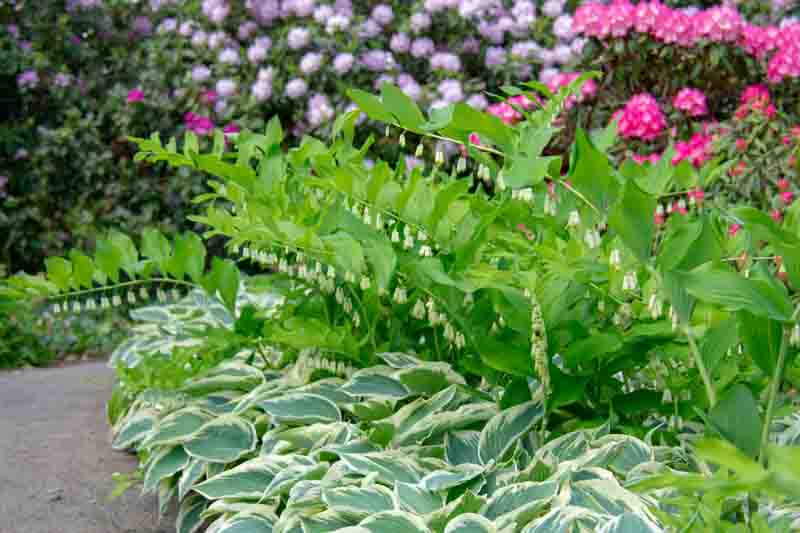
These living mulches cover bare soil, knit slopes, and connect plantings. Once established, they form lush mats that outcompete weeds beautifully. Important: several classic groundcovers are considered invasive or “garden escapees” in some North American states/provinces and parts of the UK/NZ. Where that’s the case, swap to a native creeping geranium, wild ginger, or sedge.
🔎 Find more with our Plant Finder
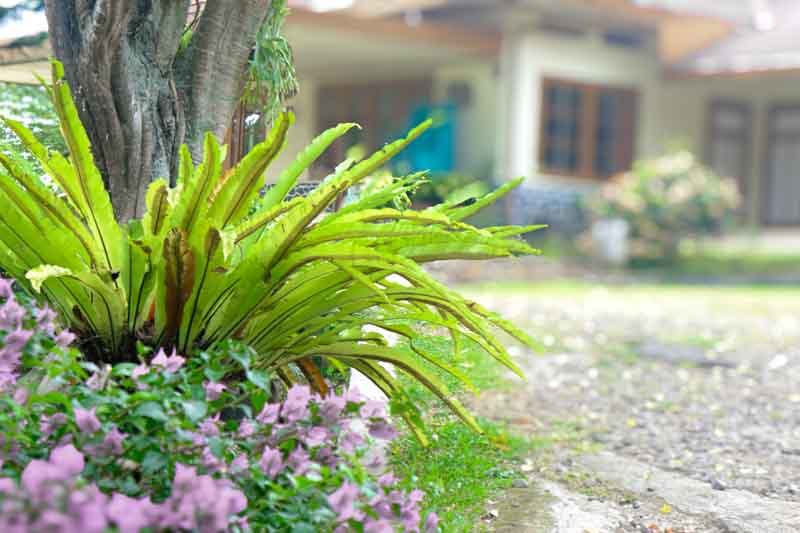
Ferns are how you make shade feel lush. Use tall ones at the back, spreading ones under trees, and colorful ones (Japanese painted) where the viewer will see them close-up.
🔎 Find more with our Plant Finder
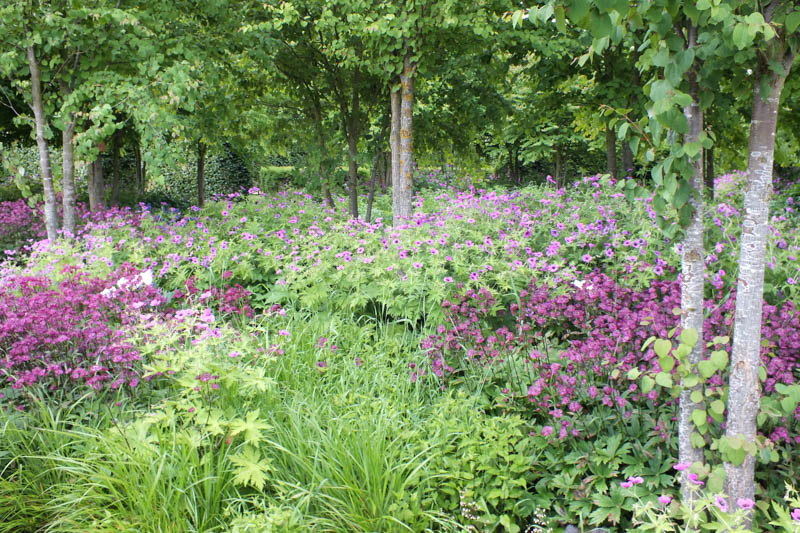
Shade can look heavy if everything has big leaves. These add fine texture, glow, or motion so the bed doesn’t feel flat.
🔎 Find more with our Plant Finder
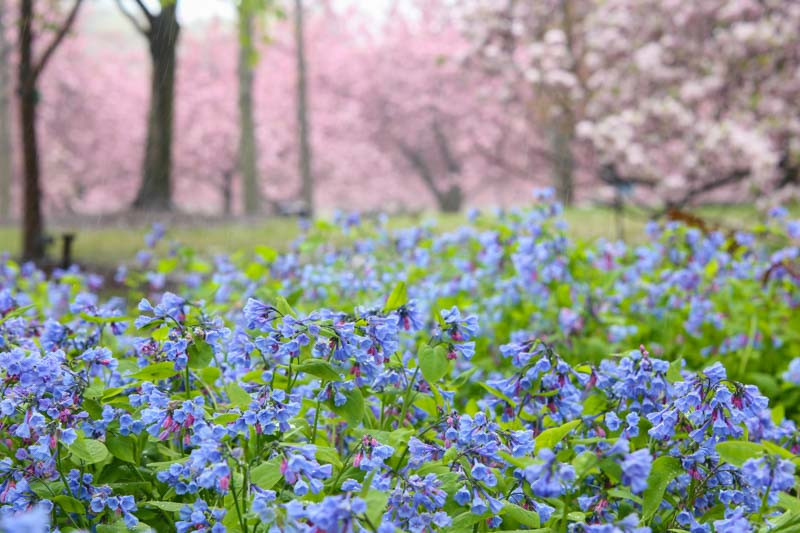
Plant these under deciduous trees — they grab spring light, bloom early, then politely vanish under hostas and ferns.
🔎 Find more with our Plant Finder
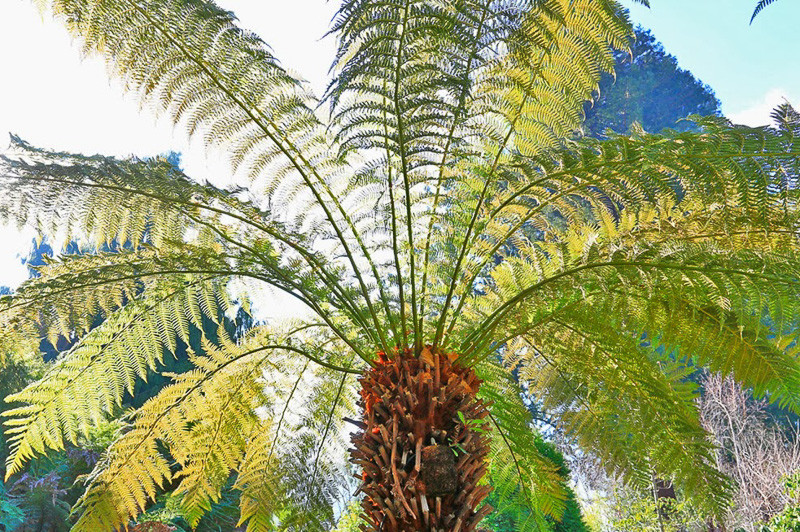
All good shade gardens start from above. These small trees, big shrubs, and airy evergreens cast the dappled light your ferns, hostas, and ephemerals love — without turning the space gloomy.
Root competition is the #1 shade complaint. Instead of fighting the tree, work around it. Open pockets between roots, add compost, water deeply but seldom, and plant fighters such as epimedium, Geranium macrorrhizum, lamium, Christmas fern, and hellebores. If coverage is still weak, accept the site and build a fern-and-mulch vignette with a path and a bench — looks intentional, very low care.
Here you need plants that will color up and hold shape with almost no direct sun. Lean on hostas, hellebores, ferns, liriope, and pale-blooming astilbes. A painted fence, white gravel, or light-colored pot nearby will bounce light back onto the leaves.
Lots of woodland perennials love moisture — you just have to give them air. Use ligularia, astilboides, Japanese iris, moisture-loving sedges, and even red osier dogwood for structure. Plant a bit high if water sits after rain.
Filter by shade level, moisture, bloom time, zone, and plant type to build out your exact woodland mix.
🔎 Explore shade plants in the Plant Finder
Shade comes in levels. Light/dappled shade = filtered sun under high trees. Part shade = 3–4 hours of morning sun or bright, indirect light. Full shade = little to no direct sun (north side, under evergreens). Dry shade = any of the above plus tree roots or roof overhangs that block rainfall.
Hosta, hellebores, ferns (lady fern, Christmas fern), lamium, and hydrangeas (in bright shade) are the reliable workhorses.
Yes, but they’ll be a little looser and may have less color contrast than in part shade. Blue hostas especially like some protection from hot sun.
Epimedium, Geranium macrorrhizum, hellebores, lamium, Christmas fern, and pachysandra are all “fighters” that handle root competition.
Those trees have greedy, surface roots and create very dry shade. Open planting pockets, add compost, water deeply to establish, and choose tough groundcovers (lamium, pachysandra, vinca, epimedium).
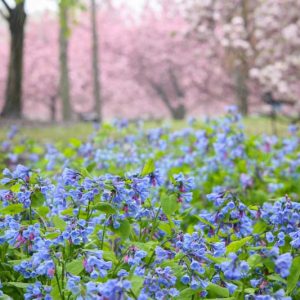
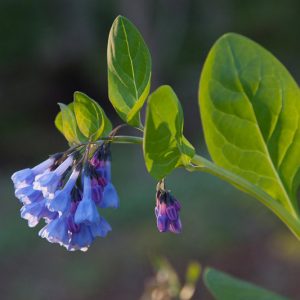
You can have flowers — just choose shade-capable bloomers: hellebores (late winter), spring ephemerals (snowdrops, Virginia bluebells), astilbe, toad lilies, hydrangea for bright shade, and annuals like impatiens or begonias.
Hostas, hellebores, ferns, liriope, aucuba, and variegated sedges. Add something light-colored nearby (pale pot, gravel) to bounce light.
Pachysandra, vinca, ajuga, liriope, and in moister woodland spots, Anemone canadensis or partridge berry. Plant closer than you think and mulch the first year.
Nothing is 100% deer-proof, but hellebores, epimedium, ferns, lamium, and many sedges are usually skipped.
Plant spring bulbs and ephemerals right under the canopy — snowdrops, bloodroot, Virginia bluebells, trillium, erythronium. They bloom early and disappear under later foliage.
Updated: November 2025 • Reviewed by Gardenia Editors
| Hardiness |
3 - 10 |
|---|---|
| Plant Type | Annuals, Bulbs, Ferns, Herbs, Ornamental Grasses, Perennials, Shrubs, Trees |
| Genus | Actaea, Astilbe, Astrantia, Brunnera, Buxus, Camellia, Dicentra, Epimedium, Hakonechloa, Helleborus, Heuchera, Heucherella, Hosta, Hydrangea, Pieris, Pulmonaria, Rhododendron, Tiarella |
| Exposure | Partial Sun, Shade |
| Season of Interest | Spring (Early, Mid, Late), Summer (Early, Mid, Late), Fall, Winter |
| Garden Styles | Woodland Garden |
| Hardiness |
3 - 10 |
|---|---|
| Plant Type | Annuals, Bulbs, Ferns, Herbs, Ornamental Grasses, Perennials, Shrubs, Trees |
| Genus | Actaea, Astilbe, Astrantia, Brunnera, Buxus, Camellia, Dicentra, Epimedium, Hakonechloa, Helleborus, Heuchera, Heucherella, Hosta, Hydrangea, Pieris, Pulmonaria, Rhododendron, Tiarella |
| Exposure | Partial Sun, Shade |
| Season of Interest | Spring (Early, Mid, Late), Summer (Early, Mid, Late), Fall, Winter |
| Garden Styles | Woodland Garden |
Create a membership account to save your garden designs and to view them on any device.
Becoming a contributing member of Gardenia is easy and can be done in just a few minutes. If you provide us with your name, email address and the payment of a modest $25 annual membership fee, you will become a full member, enabling you to design and save up to 25 of your garden design ideas.
Join now and start creating your dream garden!
Create a membership account to save your garden designs and to view them on any device.
Becoming a contributing member of Gardenia is easy and can be done in just a few minutes. If you provide us with your name, email address and the payment of a modest $25 annual membership fee, you will become a full member, enabling you to design and save up to 25 of your garden design ideas.
Join now and start creating your dream garden!