Mini Monstera, Philodendron minima
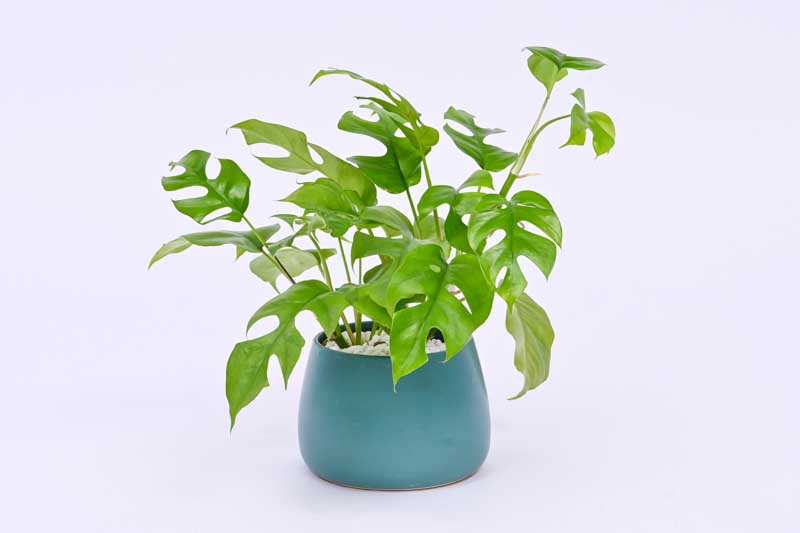
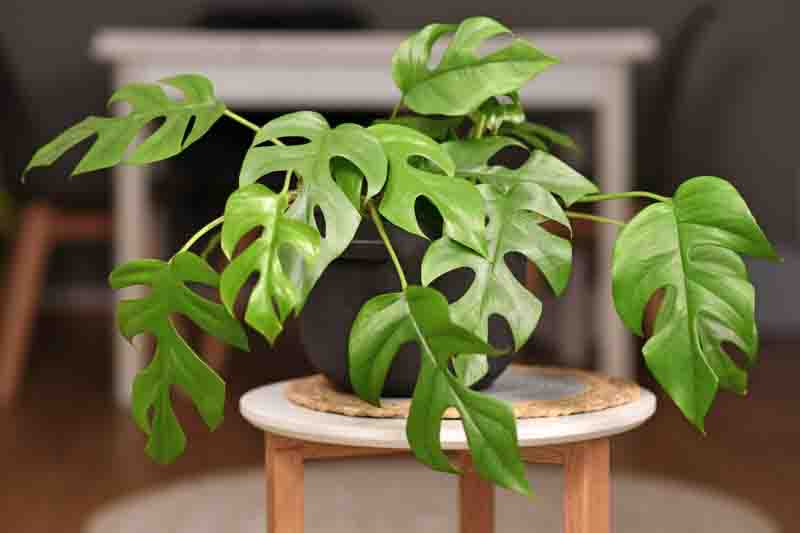
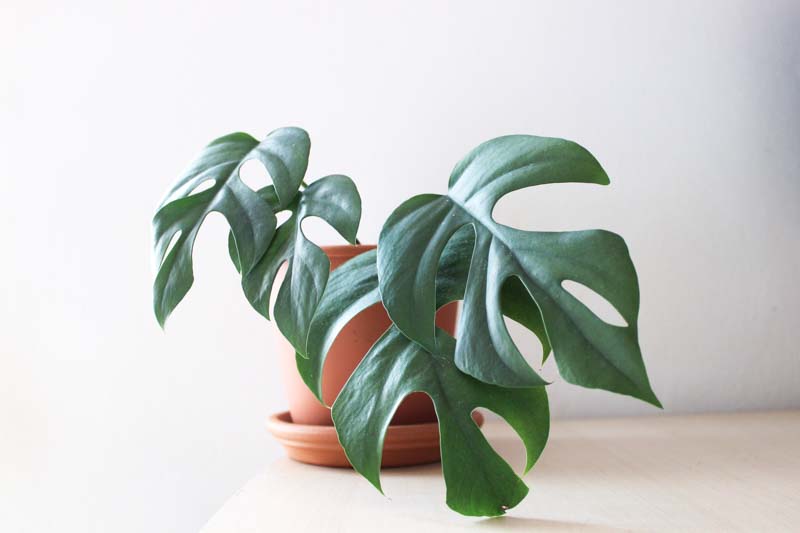
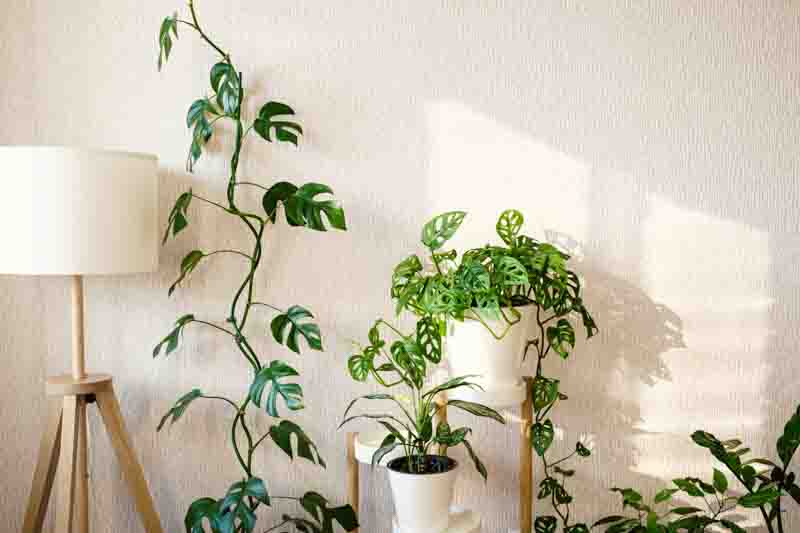


Rhaphidophora tetrasperma, better known as Mini Monstera, has the dramatic split leaves of a tropical climber without the enormous proportions of a mature Monstera. Its glossy, deeply divided foliage and slender, climbing stems make it a striking choice for bright rooms, narrow corners, and vertical plant displays.
Despite its nickname, this is neither a true Monstera nor a Philodendron. It is a different tropical vine with its own growth habits. Give it bright indirect light, a well-drained potting mix, and something to climb, and it can quickly become one of the most rewarding foliage plants in your home.
Summary: Fast-growing tropical evergreen climbing vine with glossy, naturally split leaves.
Use: Perfect for indoor climbing displays, moss poles, trellises, bright offices, and hanging planters.
Highlight: Develops distinctive leaf divisions while relatively young and responds well to vertical support.
Safety: Toxic to cats, dogs, and humans if ingested.
| Botanical Name | Rhaphidophora tetrasperma Hook.f. |
|---|---|
| Family | Araceae (Arum Family) |
| Common Names | Mini Monstera, Dwarf Monstera, Monstera Ginny, Philodendron Ginny |
| Plant Type and Habit | Evergreen tropical perennial vine; climbing or trailing |
| Hardiness | USDA Zones 9-12 outdoors; protect from frost, especially in Zone 9 |
| Size | Indoors often 3-6 ft. (90-180 cm) or taller with support; vines may reach 15 ft. (4.5 m) under favorable conditions |
| Exposure | Bright indirect light indoors; partial shade outdoors |
| Soil | Organic-rich, airy, moist but well-drained potting mix |
| Foliage | Glossy, green, ovate to lance-shaped leaves with deep splits and occasional openings |
| Flowers | Small white spadix enclosed by a pale spathe; rarely flowers indoors |
Native to peninsular Thailand and Malaysia, Rhaphidophora tetrasperma belongs to the Araceae family, alongside Monsteras, Philodendrons, and Pothos. In its tropical forest habitat, it uses aerial roots to climb nearby supports. The species name tetrasperma refers to its four-seeded fruits.
This vigorous vine produces slender stems with distinct nodes and aerial roots. Indoors, it can climb several feet with suitable support and eventually become too tall for a small space unless regularly trimmed. Unlike bushy houseplants, it naturally grows upward or outward rather than forming a compact mound.
The glossy green leaves develop deep cuts along their margins, creating the distinctive split-leaf appearance. Juvenile leaves may be smaller and less divided. Under favorable conditions, mature foliage can reach 6-12 in. (15-30 cm) long, occasionally larger.
Like other members of the arum family, this species produces a spadix enclosed by a spathe. Flowering is extremely unusual indoors. The plant is cultivated for its foliage rather than its blooms or fruit.
Mini monstera is listed USDA Zones 9-12 for outdoor cultivation, but this tropical vine is frost-sensitive. Protected, frost-free conditions are safest, particularly near the colder end of that range. Indoors, it remains evergreen and may produce new growth throughout the year when light and warmth are adequate.
Little species-specific information is available about its wildlife relationships. Indoor plants rarely flower or fruit, so its main value in cultivation is ornamental rather than ecological.
Reliable browsing-resistance data are lacking. Its irritating tissues should not be taken as proof that deer or rabbits will avoid it.
Mini Monstera is not a drought-loving succulent. It tolerates brief drying of the potting mix but can develop curled leaves, brown edges, and stalled growth when repeatedly left without adequate moisture.
The plant contains insoluble calcium oxalate crystals that can irritate the mouth and digestive tract if chewed. Symptoms may include drooling, oral discomfort, and difficulty swallowing. Its sap can also irritate sensitive skin. Keep it away from children and pets, and seek medical or veterinary advice after ingestion.
This is a vigorous climbing plant in suitable tropical conditions, but reliable evidence establishing it as a widespread invasive species is limited. In frost-free regions, follow local planting guidance and avoid allowing exotic vines to escape into natural habitats.
The names are misleading: Rhaphidophora tetrasperma is not a miniature form of Monstera deliciosa. Mini Monstera develops smaller leaves with deep marginal splits, often while young. True Monstera eventually develops much larger foliage, frequently with enclosed holes as well as splits.
For smaller indoor spaces, Rhaphidophora is usually easier to train vertically. For broad, dramatic foliage, Monstera deliciosa offers a different effect.
If a plant is sold as “Philodendron Ginny” or “Mini Monstera,” check the botanical label. Rhaphidophora tetrasperma is a distinct species, and recognizing it correctly helps you choose appropriate support, spacing, and care.
Bright indirect light is ideal. An east-facing window or a position near a bright, lightly shaded south-facing window usually works well. Insufficient light causes longer gaps between leaves and weak growth, while sudden exposure to strong afternoon sunlight can scorch the foliage.
Use a well-aerated houseplant mix containing potting compost, orchid bark, and perlite. Water thoroughly when the upper inch feels dry, then drain excess water. A climbing plant in a warm, bright room may need water much more frequently than one in winter conditions.
Keep temperatures around 65-80°F (18-27°C), preferably with moderate to high humidity. A humidifier can help prevent crispy leaf edges in dry homes. Avoid cold windows and heating vents.
If new leaves become smaller while the stem grows longer, examine both the light and the climbing support. A secure vertical surface helps the plant maintain its natural climbing habit. Simply adding fertilizer will not correct a poorly supported, light-starved vine.
Choose a pot with drainage holes and a stable base that can support a climbing pole. Repot when roots become crowded, generally moving up only one pot size. Install the support early so stems can be trained without excessive bending.
Guide stems loosely onto a moss pole or trellis, positioning aerial-root nodes toward the support. Prune overly long vines just above a node to encourage branching. If growth becomes sparse at the base, rooted cuttings can be planted back into the same pot to create a fuller display.
Cut a healthy stem below a node, ensuring the cutting includes at least one node and preferably a leaf. Root it in water, moist sphagnum moss, or an airy propagation mix. Keep warm and in bright indirect light. A detached leaf without a viable stem node will not produce a new vine.
Most problems are linked to light, watering, or a lack of climbing support. Check the growing conditions before reaching for fertilizer.
| What You See | Likely Cause | Check First |
|---|---|---|
| Yellow leaves, wet soil | Excess water or root stress | Drainage and root condition |
| Brown, crispy edges | Dryness, low humidity, or heat | Soil moisture and nearby heat sources |
| Long stems, small leaves | Low light or inadequate support | Light exposure and climbing structure |
| Brown, soft stem base | Possible rot | Roots and continuously wet compost |
| Speckled leaves or fine webs | Spider mites | Leaf undersides |
| New leaves without splits | Juvenile growth or stress | Plant maturity, light, and support |
Scale insects, fungus gnat, and occasional leaf spots may also occur. Remove badly affected material, improve growing conditions, and treat pests with appropriately labeled products when necessary.
Young leaves can be entire or only lightly divided. Better light and climbing support may encourage more mature foliage, but existing leaves will not acquire new splits. Look at the newest leaves to judge whether conditions are improving.
Mini Monstera is especially attractive when allowed to climb above contrasting foliage. Combine it with plants suited to bright indirect light, keeping each in a separate pot to accommodate different watering needs.
Train Mini Monstera up a slim moss pole behind a low planter of Satin Pothos, then allow Golden Pothos to trail from a nearby shelf. The contrast between deeply divided leaves, silver markings, and golden variegation creates a layered display without requiring a large room.
No. Rhaphidophora tetrasperma belongs to the Araceae family, like Monsteras and Philodendrons, but is a different genus. Mini Monstera is only a common name.
Young leaves may have few or no splits. Bright indirect light, adequate warmth, and a vertical support can help the plant produce mature foliage. Existing leaves will not develop new splits.
Water when the upper inch of potting mix begins to dry. Water thoroughly, let excess drain, and adjust to light, temperature, and pot size rather than following a fixed calendar.
A moss pole is not essential, but a trellis, pole, or plank supports its natural climbing habit and may help it produce larger, more mature leaves.
Yes. It contains irritating calcium oxalate crystals and should be kept away from pets. Chewing it can cause oral discomfort, drooling, and difficulty swallowing.
Royal Botanic Gardens, Kew – Rhaphidophora tetrasperma: Taxonomy and Native Distribution.
Royal Botanic Gardens, Kew – Botanical Description and Natural Habitat.
North Carolina State Extension – Mini Monstera, Growing Conditions and Toxicity.
Updated: October 2026
| Hardiness |
9 - 12 |
|---|---|
| Plant Type | Houseplants, Climbers |
| Plant Family | Araceae |
| Genus | Philodendron |
| Exposure | Partial Sun |
| Season of Interest | Spring (Early, Mid, Late), Summer (Early, Mid, Late), Fall, Winter |
| Height | 2' - 15' (60cm - 4.6m) |
| Spread | 2' - 4' (60cm - 120cm) |
| Spacing | 24" - 48" (60cm - 120cm) |
| Maintenance | Low |
| Water Needs | Average |
| Soil Type | Loam |
| Soil pH | Acid, Neutral |
| Soil Drainage | Moist but Well-Drained |
| Characteristics | Showy, Evergreen |
| Tolerances | Humidity |
| Garden Uses | Patio And Containers |
| Garden Styles | Woodland Garden |
| Toxic to Humans | Low severity |
| Toxic to Cats | Toxic |
| Toxic to Dogs | Toxic |
| Toxic to Horses | No known toxicity |


| Hardiness |
9 - 12 |
|---|---|
| Plant Type | Houseplants, Climbers |
| Plant Family | Araceae |
| Genus | Philodendron |
| Exposure | Partial Sun |
| Season of Interest | Spring (Early, Mid, Late), Summer (Early, Mid, Late), Fall, Winter |
| Height | 2' - 15' (60cm - 4.6m) |
| Spread | 2' - 4' (60cm - 120cm) |
| Spacing | 24" - 48" (60cm - 120cm) |
| Maintenance | Low |
| Water Needs | Average |
| Soil Type | Loam |
| Soil pH | Acid, Neutral |
| Soil Drainage | Moist but Well-Drained |
| Characteristics | Showy, Evergreen |
| Tolerances | Humidity |
| Garden Uses | Patio And Containers |
| Garden Styles | Woodland Garden |
| Toxic to Humans | Low severity |
| Toxic to Cats | Toxic |
| Toxic to Dogs | Toxic |
| Toxic to Horses | No known toxicity |
How many Rhaphidophora tetrasperma (Mini Monstera) do I need for my garden?
| Plant | Quantity | |
|---|---|---|
| Rhaphidophora tetrasperma (Mini Monstera) | N/A | Buy Plants |
Create a membership account to save your garden designs and to view them on any device.
Becoming a contributing member of Gardenia is easy and can be done in just a few minutes. If you provide us with your name, email address and the payment of a modest $25 annual membership fee, you will become a full member, enabling you to design and save up to 25 of your garden design ideas.
Join now and start creating your dream garden!